
Sleep Tracking Accuracy Explained: PSG, Deep Sleep & HRV (2026)
Learn what your sleep tracker’s stages, HRV, and sleep score actually measure — and what they can’t detect. Medically reviewed by Dr. Rishav Das, M.B.B.S.
✓ Medically reviewed by Dr. Rishav Das, M.B.B.S.
Wellness Device Data Analyst | Consumer Device Accuracy Specialist
Last updated: June, 2026 | Reading time: 10 minutes
Medically reviewed according to the standards outlined on our About page
Introduction
Your wearable gave you a sleep score. Maybe it said 74. Maybe it showed 18% deep sleep and 6% REM. Maybe it flagged a breathing irregularity. And now you want to know: Is this accurate? Is this normal? Should I be worried?
The answer depends on what your device actually measures — which is different from what most users assume.
This guide, medically reviewed by Dr. Rishav Das, M.B.B.S., explains what the numbers in your sleep app genuinely reflect, where the accuracy limits are, and which patterns warrant medical attention versus behavioral adjustment. peer-reviewed research on sleep disturbance health impacts.
Key Points
- Medical-grade sleep studies remain the diagnostic standard for sleep disorders
- Sleep trackers measure movement, heart rate, and sometimes respiratory patterns—not direct brain activity
- Tracking is associated with improved sleep awareness but does not replace clinical evaluation
- Obsessive tracking (“orthosomnia”) may paradoxically worsen sleep anxiety in some individuals
When to Consult a Healthcare Provider
- Concerns about sleep data patterns
- Chronic snoring with breathing pauses (possible sleep apnea)
- Persistent daytime fatigue despite adequate sleep duration
- Insomnia lasting more than 3 weeks
- Unusual movements or behaviors during sleep
Educational Framework
This page provides evidence-based information about sleep physiology and monitoring technology. It is not intended for self-diagnosis or treatment of sleep disorders. Independent comparative study of seven consumer devices
Key Facts — Medically Reviewed by Dr. Rishav Das, M.B.B.S. (June 2026)
Consumer sleep trackers classify sleep stages with approximately 60–70% accuracy compared to polysomnography (PSG), the clinical gold standard, based on a 2021 study by Chinoy et al. published in Sleep journal.
Individual nights can vary from true physiological values by 15–20 percentage points.
Trends over 2–4 weeks are more clinically meaningful than any single night’s reading.
- Consumer sleep trackers classify sleep stages with approximately 60–70% accuracy compared to polysomnography (PSG), the clinical gold standard.
- No consumer wearable is currently FDA-cleared to diagnose sleep apnea or any other sleep disorder.
- Adults typically need 15–25% deep sleep (N3) and 20–25% REM sleep per night.
- Sleep scores are proprietary algorithms — an Oura score of 80 is not equivalent to a Garmin or Apple Watch score of 80.
- Orthosomnia (sleep tracking anxiety that worsens insomnia) affects a subset of high-engagement wearable users.
- HRV during sleep is measured as RMSSD — a reflection of autonomic recovery capacity, not sleep quality directly.
- Trends across 2–4 weeks are clinically more meaningful than any single night’s data.
Table Of Contents
- What Consumer Sleep Trackers Actually Measure (and What They Don't)
- How to Read Your Sleep Stages: N1, N2, N3, and REM Explained
- What Is a Good Sleep Score? How to Interpret Your Nightly Number
- Sleep Tracker Accuracy vs. a Sleep Study: What the Research Shows
- HRV During Sleep: What Your Wearable's Recovery Metric Means
- Age-Specific Deep Sleep and REM Norms: Is Your Data Normal?
- Sleep Consistency: Why Your Bedtime Variability Matters More Than Your Score
- Orthosomnia: When Sleep Tracking Becomes Counterproductive
- ⚠ Warning Signs in Your Sleep Data That Warrant a Doctor's Visit
- Sleep Tracking for Specific Concerns
- Choosing the Right Sleep Tracker: Wrist vs. Ring vs. Bedside Devices
- Beyond Tracking: Evidence-Based Strategies for Better Sleep
- Frequently Asked Questions About Sleep Tracking
- How accurate are consumer sleep trackers at measuring deep sleep?
- Is 15% deep sleep bad?
- Why does my sleep tracker show less REM sleep than I expected?
- Can a Fitbit or Apple Watch diagnose sleep apnea?
- What is orthosomnia and how do I know if I have it?
- Is wrist-worn heart rate accurate enough for sleep tracking?
- How much does alcohol affect sleep staging on a wearable?
- What should I do if my tracker shows frequent breathing irregularities?
- When should I get a sleep study instead of relying on my tracker?
- References
What Consumer Sleep Trackers Actually Measure (and What They Don’t)
💡 QUICK TIP: Focus on these 3 metrics first if you’re new to tracking: (1) Total Sleep Time, (2) Deep Sleep %, (3) Sleep Consistency. Ignore the rest until you understand these fundamentals.
What is actigraphy and how does it affect accuracy?
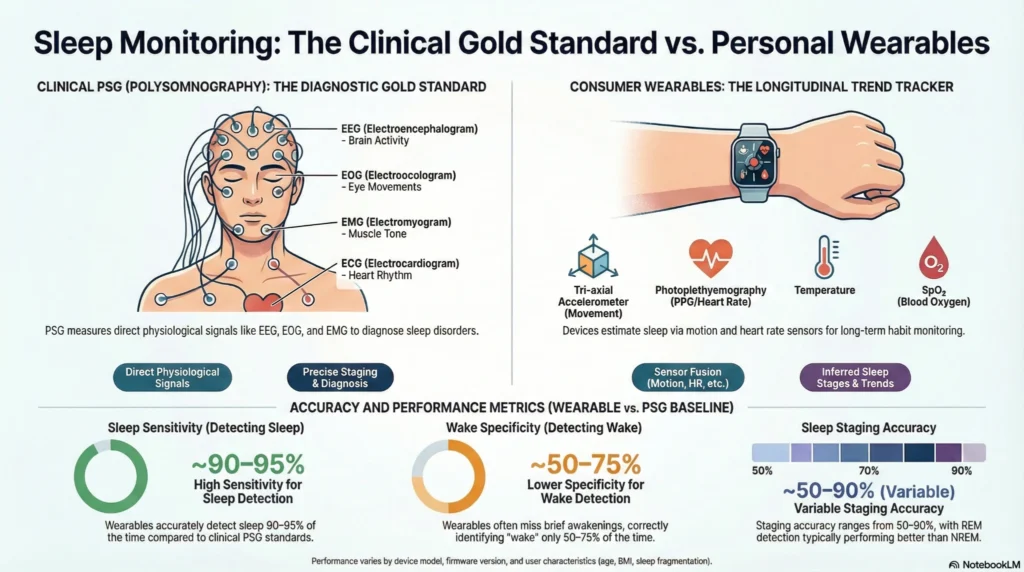
Actigraphy is the clinical term for using wrist movement detection to infer sleep-wake states. Your wearable’s accelerometer measures the frequency and intensity of wrist movement; the algorithm classifies periods of low movement as sleep and high movement as wakefulness.
The problem: humans are frequently still while awake. Lying in bed anxious, resting while ill, or scrolling on a phone without moving your wrist — all of these can register as sleep in an actigraphy-based algorithm.
This is the primary mechanism behind the 10–30 minute overestimation of total sleep time that consumer trackers produce compared to PSG.
Modern devices combine actigraphy with PPG heart rate data to reduce this error, but the fundamental limitation remains: wrist-based actigraphy cannot reliably detect sleep onset or nighttime awakenings shorter than 3–5 minutes.
PPG Sensors: How Your Wrist Tracker Reads Heart Rate During Sleep
How does your wrist tracker actually read your heart rate during sleep?
The sensor on the back of your wearable uses photoplethysmography (PPG) — a non-invasive optical technique that shines green LED light into your skin and measures how much light is absorbed by blood flowing through your capillaries. When your heart beats, blood volume in the wrist increases slightly; the sensor detects this pulse.
Your device infers sleep stages from the resulting heart rate pattern combined with accelerometer (wrist movement) data. This is why wrist-worn trackers are less accurate than chest-worn ECG monitors during sleep: PPG is indirect, and wrist movement from restlessness, a loose fit, or cold skin can introduce measurement artifact.
Ring-worn devices (Oura Ring) use the same PPG technology at the finger, where blood vessels are closer to the surface — resulting in modestly improved signal quality compared to wrist placement.
→ [Heart rate monitor buying guide: PPG sensor accuracy by device category]
Why Sleep Stage Accuracy Is Only 60–70% Compared to Polysomnography
The 60–70% accuracy figure is real — but understanding the mechanism behind it helps you interpret your data more intelligently rather than dismissing it entirely.
Polysomnography determines sleep stages using three simultaneous biosignals that directly measure brain and body state:
- EEG (electroencephalogram) — brain electrical activity that definitively distinguishes N1, N2, N3, and REM by wave frequency and amplitude
- EOG (electrooculogram) — eye movement detection that identifies REM sleep by its characteristic rapid conjugate movements
- EMG (electromyogram) — chin muscle tone measurement that confirms the near-complete skeletal muscle paralysis defining REM
Consumer wearables have none of these. They substitute the EEG + EOG + EMG signal stack with two far less specific inputs: wrist accelerometry and PPG-derived heart rate and HRV. These signals loosely correlate with sleep stage transitions — but they cannot reconstruct what direct brain electrical activity measures.
| Signal | Polysomnography (PSG) | Consumer Wearable |
|---|---|---|
| Brain activity | EEG — direct measurement | Not measured |
| Eye movements | EOG — direct measurement | Not measured |
| Muscle tone | EMG — direct measurement | Not measured |
| Heart rate | ECG — direct measurement | PPG — optical inference |
| Movement | Actigraphy + video | Wrist actigraphy only |
| Sleep staging | Manual technologist + algorithm | Proprietary algorithm only |
| Overall accuracy | Clinical gold standard | ~60–70% vs PSG |
The accuracy gap is largest for N1 (light sleep) and REM — the two stages that share the most overlapping movement and heart rate characteristics.
Deep sleep (N3) is relatively better detected because it correlates more consistently with physical stillness, lower heart rate, and elevated HRV. This asymmetry is why your tracker tends to misclassify light sleep as deep sleep or REM as light sleep more often than it misidentifies deep sleep.
An important caveat: the 60–70% figure represents population-level epoch-by-epoch agreement in controlled studies. Some devices — particularly those with stronger independent validation (see: Which Devices Have Published Clinical Validation Data?) — perform modestly above this floor in specific cohorts.
How to Read Your Sleep Stages: N1, N2, N3, and REM Explained
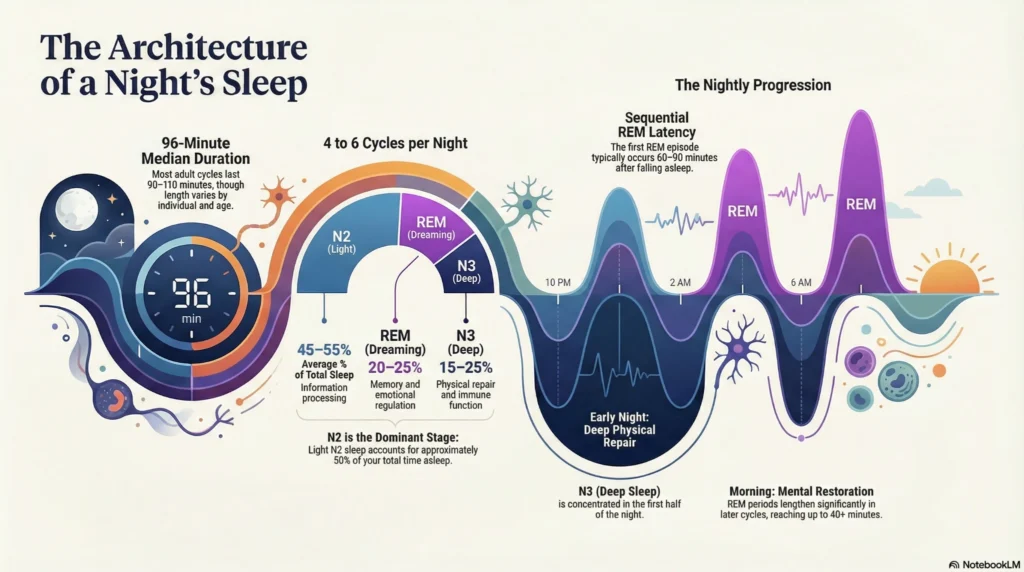
Sleep architecture consists of distinct physiological states, each serving specific restorative functions. American Academy of Sleep Medicine classification system
| Sleep Stage | Brain Wave Pattern | Physiological Characteristics | Primary Functions | Typical Duration (per cycle) |
| Wake | Beta/Gamma waves | Full consciousness, muscle tone present | Alertness, environmental awareness | Variable |
| N1 (Light Sleep) | Theta waves | Transitional state, easily disrupted | Sleep initiation | 1-7 minutes |
| N2 (Light Sleep) | Sleep spindles, K-complexes | Reduced heart rate, body temperature drops | Memory consolidation, sensory gating | 10-25 minutes |
| N3 (Deep Sleep) | Delta waves | Lowest heart rate, muscle relaxation | Physical restoration, immune function, growth hormone release | 20-40 minutes |
| REM Sleep | Mixed frequency, similar to wake | Rapid eye movements, muscle atonia, vivid dreams | Emotional processing, memory integration, learning | 10-30 minutes (increases in later cycles) |
Evidence Base:
- Stage classifications defined by American Academy of Sleep Medicine (AASM) scoring manual American Academy of Sleep Medicine and Sleep Research Society recommendation
- Each stage is associated with distinct electroencephalography (EEG) patterns
- Clinical sleep studies measure brain activity directly; consumer devices infer stages from movement and heart rate
Sleep Score Calculations
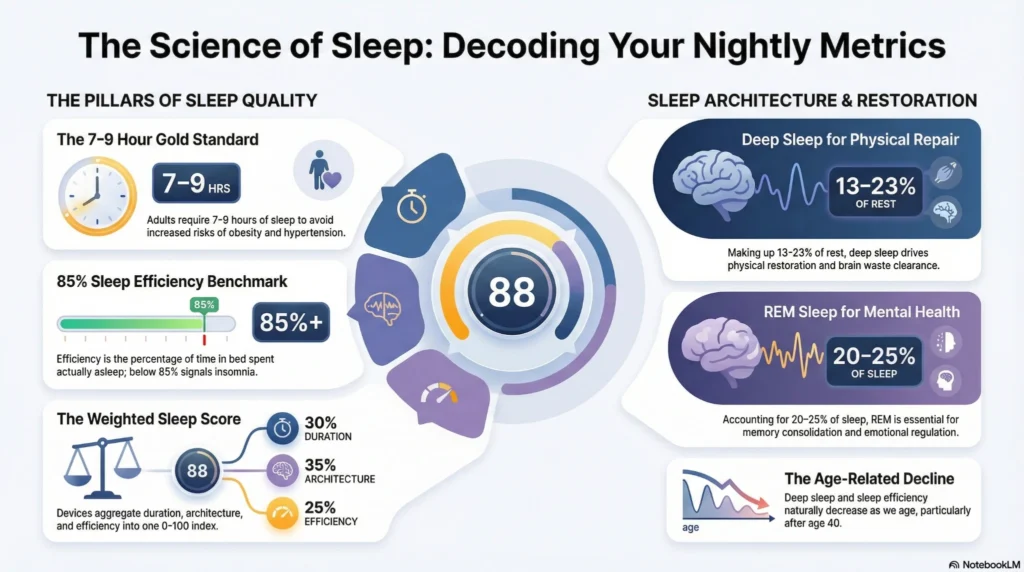
Clinical Perspective:
- Subjective sleep quality does not always correlate with objective measurements
- Adults generally need 7-9 hours of sleep, but individual variation exists (consensus guidelines for adult sleep duration)
- Sleep efficiency above 85% is typically considered normal
- Fragmented sleep (high WASO) may impair restorative functions even with adequate duration
⚠️ WARNING: Don’t compare sleep scores across different brands. A “75” on Fitbit ≠ “75” on Oura ≠ “75” on Whoop. Each company uses proprietary algorithms. Only compare your scores to your own historical data within the same device.
What Percentage of Deep Sleep (N3) Is Normal by Age?
What percentage of deep sleep is normal?
Adults typically spend 15–25% of total sleep time in deep sleep (N3, or slow-wave sleep), per AASM scoring guidelines — approximately 63–105 minutes for a 7-hour night.
Deep sleep naturally declines with age; adults over 60 often see 10–15% N3, which remains clinically normal.
Consistent readings below 10%, combined with daytime fatigue, warrant medical evaluation.
What percentage of deep sleep is normal?
Adults typically spend 15–25% of total sleep time in deep sleep (N3, or slow-wave sleep), according to the American Academy of Sleep Medicine (AASM) scoring guidelines. For a 7-hour night, that equals approximately 63–105 minutes in N3.
Deep sleep naturally declines with age. Adults over 60 often see 10–15% N3 on their wearable — a reading that can appear alarming on a device screen but remains clinically normal for that age group.
If you are under 50 and your tracker consistently reports less than 13% deep sleep, combined with daytime fatigue or difficulty concentrating, that pattern warrants attention.
A single night of low deep sleep is not diagnostically significant. Your tracker’s N3 detection can vary by 10–15 percentage points from true physiological values (Chinoy et al. 2021).
What matters is the 2–4 week trend, not last night’s number. (study in Journal of Clinical Sleep Medicine) (evidence for slow wave sleep’s restorative role)
What about 20% deep sleep?
For most adults under 60, a reading of 20% N3 falls within the normal range.
A reading of 15% is at the lower end of normal.
Below 10%, persistent across multiple weeks and accompanied by daytime symptoms, is the threshold worth discussing with a physician.
Sleep stage percentages vary by age, individual factors, and measurement accuracy.
Deep Sleep (N3) Functions
Physical Restoration:
- Tissue repair and muscle growth
- Immune system strengthening
- Metabolic regulation
Hormonal Regulation:
- Growth hormone secretion peaks during deep sleep
- Cortisol levels reach lowest point
Brain Maintenance:
- Glymphatic system clearance (waste removal from brain)
- Synaptic homeostasis.
Clinical Perspective:
- Concerning changes: Consult healthcare provider rather than self-interpreting device data
- Consumer devices may misclassify stages (remember 60-70% accuracy)
- Normal variation exists; percentages outside typical ranges may still be normal for an individual
- Stage distribution should be interpreted as general patterns, not precise measurements
REM Sleep: What Your Tracker Detects and What It Misses
REM is the sleep stage most associated with dreaming, emotional memory consolidation, and creative cognition. It is also the stage consumer trackers detect least accurately — and the one most sensitive to behavioral and pharmacological disruption.
What clinically defines REM: In a PSG laboratory, REM requires three simultaneous signals: low-voltage, mixed-frequency EEG waves (similar to wakefulness), rapid conjugate eye movements detected by EOG electrodes, and near-complete skeletal muscle atonia confirmed via chin EMG. Your wrist wearable measures none of these directly.
What your tracker uses instead: Consumer devices infer REM from its physiological correlates — a slight elevation in heart rate compared to N3, transient HRV variability, and reduced wrist movement relative to N1/N2. Because these patterns overlap substantially with light sleep, REM is frequently misclassified in either direction.
Normal REM percentage: Healthy adults spend approximately 20–25% of total sleep time in REM — roughly 85–105 minutes for a 7-hour night — cycling through 4–5 REM periods of progressively longer duration through the night. The final REM period, occurring in the last 60–90 minutes before waking, is typically the longest. Cutting your night short by even one hour disproportionately reduces REM.
Factors that suppress REM — and how your wearable registers them:
| Factor | Physiological Effect on REM | Typical Wearable Signal |
|---|---|---|
| Alcohol (within 3 hrs of sleep) | Suppresses REM in first half; rebound fragmentation in second | HRV drop + elevated HR in recovery window |
| SSRIs / SNRIs | Chronic, significant REM suppression | Persistently low REM % across weeks |
| Benzodiazepines / Z-drugs | REM and N3 suppression | Flat sleep architecture; low deep + REM |
| Acute sleep debt | REM pressure accumulates; tracker may undercount | Elevated HR, variable HRV |
| Obstructive sleep apnea | Micro-arousals fragment REM continuity | Breathing alerts + HRV suppression |
| Stress / elevated cortisol | Reduced REM bout duration | Suppressed overnight HRV |
If your tracker consistently shows less than 15% REM across multiple weeks — especially in combination with mood changes, poor concentration, or heightened emotional reactivity — that trend is worth discussing with a physician. The tracker number is not diagnostic. The trend may point to a genuine REM disruption worth investigating.
REM Sleep Functions
Cognitive Processing:
- Memory consolidation (especially procedural and emotional memories)
- Learning integration
- Creative problem-solving
Emotional Regulation:
- Processing emotional experiences
- Mood regulation
Brain Development:
- Critical for neural development in infants and children
Evidence-Based Observations:
- Both stages appear necessary; selective deprivation of either impacts health
- REM sleep deprivation is associated with mood disturbances and impaired learning
- Deep sleep deprivation may affect immune function and physical recovery
What Is a Good Sleep Score? How to Interpret Your Nightly Number
Common Score Components
| Component | Typical Weight | What It Measures | Influencing Factors |
| Total Sleep Time | 20-30% | Hours of sleep detected | Time in bed, sleep efficiency |
| Sleep Stages | 25-35% | Distribution of deep/REM/light sleep | Age, sleep debt, alcohol |
| Sleep Efficiency | 15-25% | Percentage of time in bed spent asleep | Sleep latency, WASO |
| Disturbances | 10-20% | Frequency of detected wake/movement | Environment, stress, health |
| Timing/Consistency | 10-15% | Alignment with circadian rhythm | Bedtime regularity, schedule |
Interpretation Guidelines:
- Scores are relative to proprietary algorithms, not medical standards
- Different devices use different scoring methods (scores are not comparable across brands)
- Trends matter more than individual night scores
- A “poor” score with good subjective sleep quality may not be concerning
What Scores Cannot Tell You:
- Root causes of poor sleep (multiple factors may contribute)
- Whether you have a sleep disorder (medical diagnosis required)
- Exact sleep stage percentages (estimation only)
Why Sleep Scores Are Not Comparable Across Device Brands
Sleep scores are proprietary algorithms and are not standardized across brands.
An Oura score of 80 does not reflect the same measurements as a Garmin, Fitbit, or Apple Watch score of 80.
Each device weights HRV, sleep stages, duration, and resting heart rate differently.
Compare your score to your own recent baseline on the same device, not to scores on other brands.
Why you can’t compare your Oura score to your friend’s Garmin score
Sleep scores are proprietary algorithms, and they are not standardized across brands. Each manufacturer calculates its score from a different weighted combination of sleep duration, stage percentages, HRV, resting heart rate, and respiratory rate — with different baseline calibration methods.
| Device | Score Name | Primary Inputs | Range |
|---|---|---|---|
| Oura Ring | Sleep Score | HRV, sleep stages, timing consistency | 0–100 |
| Garmin | Sleep Score | Sleep stages, respiration, HRV | 0–100 |
| Fitbit | Sleep Score | Sleep stages, restoration, duration | 0–100 |
| Apple Watch | Sleep Quality | Duration + consistency (no stages in native app) | % time asleep |
| WHOOP | Recovery Score | HRV, resting HR, sleep performance, strain | 0–100% |
An Oura score of 80 does not reflect the same measurements as a Garmin or Fitbit score of 80. Comparing scores across devices provides no useful clinical information.
What a score reliably tells you is how last night compared to your own recent baseline on the same device.
Track the trend; ignore the absolute number.
Sleep Efficiency: The 85% Threshold Explained
What is sleep efficiency and what percentage is healthy?
Sleep efficiency is the percentage of time you spent actually asleep versus the total time you spent in bed. The clinical benchmark, per AASM guidelines, is ≥85% sleep efficiency for healthy adults.
If you were in bed for 8 hours and your tracker recorded 6 hours 48 minutes of sleep, your sleep efficiency is exactly 85% — the lower threshold of the healthy range.
Most wearables do not display sleep efficiency as a labeled metric, but the component data is in your app: divide tracked sleep time by total time in bed.
Consistently below 80% over multiple weeks suggests prolonged sleep onset, frequent nighttime awakening, or early waking — each with different behavioral and clinical implications.
Sleep Tracker Accuracy vs. a Sleep Study: What the Research Shows
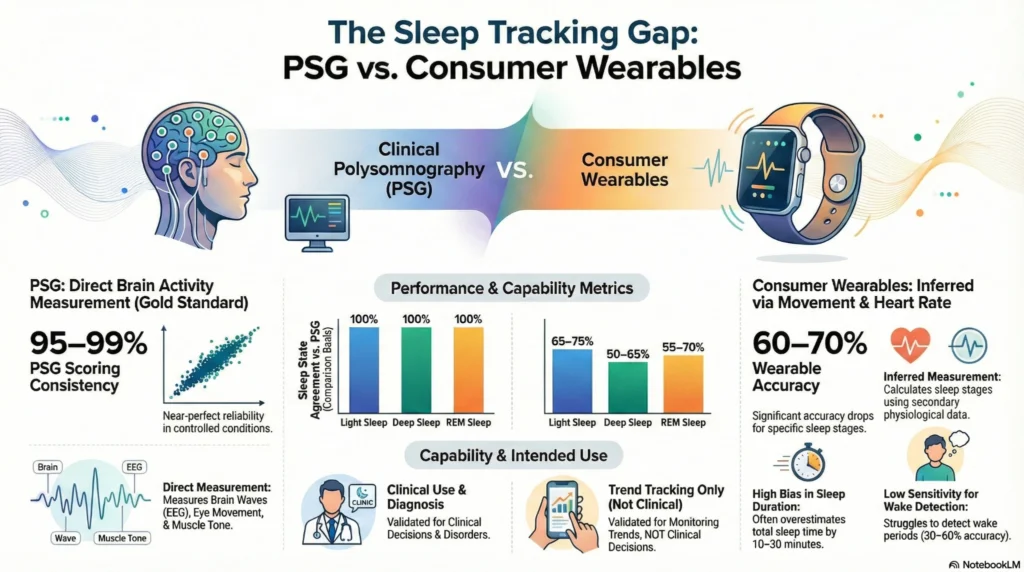
How Consumer Sleep Trackers Compare to Polysomnography (PSG)
How accurate are consumer sleep trackers at measuring sleep stages?
Consumer sleep trackers classify sleep stages with approximately 60–70% accuracy compared to polysomnography (PSG) — the clinical gold standard, conducted by trained technologists in a sleep laboratory. This figure comes from a 2021 peer-reviewed study by Chinoy et al., published in Sleep journal, which evaluated seven consumer devices across multiple nights of simultaneous lab recording.
The gap matters in practice. A device reporting 22% deep sleep when your true N3 percentage is 14% is not malfunctioning — it is performing within its expected accuracy range. These devices measure sleep indirectly: wrist-based actigraphy (movement detection) combined with photoplethysmography (PPG) optical sensors interprets your heart rate patterns and stillness as sleep stage proxies. Quiet wakefulness — lying still while anxious or stressed — can register as sleep.
Consumer trackers also overestimate total sleep time by an average of 10–30 minutes because the algorithm cannot reliably distinguish between physical stillness and sleep onset.
What this means for your data: individual nights can vary by 15–20 percentage points from true physiological values. Trends across 2–4 weeks are meaningful. A single night’s reading is not.
Which Devices Have Published Clinical Validation Data?
Not all consumer sleep trackers are backed by the same standard of evidence. Understanding which devices have been independently validated in peer-reviewed research — versus those relying entirely on proprietary internal testing — matters when you are deciding how much interpretive weight to give your data.
The table below reflects the published validation landscape as of mid-2026. “Independent” means at least one peer-reviewed study conducted without manufacturer-controlled methodology. “Proprietary only” means accuracy claims originate from internal testing not independently replicated in a peer-reviewed journal.
| Device | Validation Level | Key Published Evidence | Notes |
|---|---|---|---|
| Oura Ring | Strongest published | de Zambotti et al. (2017, JCSM); multiple independent lab comparisons | Best-validated consumer ring; epoch-by-epoch staging accuracy in some cohorts approaches 79%; HRV/RMSSD measurement well-studied |
| Fitbit (Sense / Charge series) | Moderate | Manufacturer-associated validation studies; limited independent replication | Sleep staging accuracy varies by model generation; HR tracking more validated than staging; older models under-studied |
| Withings Sleep Analyzer | Moderate (respiratory) | Independent respiratory event detection studies; received FDA Breakthrough Device Designation for sleep apnea screening | Bedside mat form factor; respiratory monitoring more validated than wrist staging; not a wrist wearable |
| Apple Watch | Limited for staging | No large independent sleep staging trials as of mid-2026; watchOS sleep stage algorithm (watchOS 9+) not independently replicated | SpO2 monitoring more studied than staging; more validated for HR accuracy than sleep stages |
| Garmin (Forerunner / Venu series) | Limited | No major independent peer-reviewed staging trials; manufacturer-claimed validation for Advanced Sleep Monitoring (ASM) | Internal validation cited; independent replication limited as of mid-2026 |
| WHOOP | Limited for staging | No large independent staging trials; proprietary training data cited; used in athlete performance research | Recovery and HRV scoring more studied than sleep stage accuracy; strong in recovery trend tracking |
Two important caveats:
First, validation studies measure how a device performs on average across a controlled study population — not how it performs on your specific wrist, in your specific sleeping environment. Even the best-validated device carries the 60–70% overall accuracy ceiling on a given night.
Second, the validation landscape changes as manufacturers update their algorithms. A study conducted on a 2021 firmware version may not reflect a 2025 device’s performance. Treat this table as a starting framework, not a final verdict — and cross-reference against the most recent peer-reviewed literature in Sleep, Journal of Clinical Sleep Medicine, or npj Digital Medicine before making clinical or purchasing decisions.
HRV During Sleep: What Your Wearable’s Recovery Metric Means
Heart rate variability (HRV) during sleep is measured as RMSSD — the root mean square of successive differences between heartbeats — and reflects autonomic nervous system recovery capacity overnight.
A higher RMSSD indicates stronger parasympathetic activity.
Wrist-worn PPG sensors approximate this measurement; trends over multiple nights are more reliable than single-night values.
What is HRV during sleep, and what does your wearable actually measure?
Heart rate variability (HRV) during sleep is your body’s recovery signal — a measurement of the variation in time between consecutive heartbeats. Your wearable expresses this as RMSSD: the root mean square of successive differences between heartbeats. A higher RMSSD generally indicates stronger parasympathetic (rest-and-digest) nervous system activity and better overnight recovery capacity.
Your wearable does not measure HRV the same way a clinical ECG does. Wrist-worn PPG sensors detect blood volume changes to infer heartbeat timing — a technique that correlates moderately with laboratory ECG measurements but is subject to motion artifact, wrist positioning, and skin tone variability.
What does a good HRV look like?
There is no universal normal range. HRV values vary substantially by age, fitness level, and individual baseline. What matters is your personal trend: a consistent decline in overnight RMSSD over 2–3 consecutive nights typically signals accumulated recovery debt — from illness, overtraining, poor sleep, or stress — regardless of your absolute number.
Your wearable’s readiness or recovery score on devices like Oura, WHOOP, and Garmin is largely calculated from this overnight RMSSD value, combined with resting heart rate and sleep duration data.
What Is RMSSD and Why Does It Appear on Your App?
Your wearable reports HRV as a single number — usually without explaining what it measures, why that particular metric was chosen, or what it cannot tell you. The number is RMSSD. Its appearance on consumer devices is a deliberate technical choice, not an arbitrary one.
What RMSSD measures: RMSSD stands for root mean square of successive differences between consecutive heartbeat intervals. Your heart does not beat with perfect metronomic regularity — the time between each beat (the R-R interval) fluctuates slightly from one beat to the next. RMSSD quantifies the magnitude of those beat-to-beat fluctuations. A higher value indicates greater variability; a lower value indicates more rigid, uniform timing.
Why manufacturers chose RMSSD over other HRV metrics:
Multiple HRV metrics exist. Consumer devices standardized on RMSSD for three practical reasons: it specifically reflects parasympathetic (vagal) nervous system activity, which correlates reliably with recovery state and restful sleep; it is less sensitive to breathing rate variability than frequency-domain measures like the LF/HF ratio, making it more stable across a night; and it can be calculated accurately from PPG optical sensor data without the electrode contact precision required by clinical ECG.
| HRV Metric | What It Measures | Requires | Consumer Device Use |
|---|---|---|---|
| RMSSD | Beat-to-beat variability; parasympathetic activity | PPG or ECG | Primary metric: Oura, WHOOP, Garmin, Apple Watch |
| SDNN | Total HRV across entire recording window | ECG preferred | Rare on consumer devices; some clinical monitors |
| LF/HF ratio | Sympathetic/parasympathetic balance | ECG-grade precision | Not used in consumer PPG devices |
| pNN50 | % of successive intervals varying >50ms | PPG or ECG | Correlates strongly with RMSSD; rarely displayed alone |
What RMSSD cannot tell you: A single overnight RMSSD value does not diagnose any cardiac or sleep condition. RMSSD varies substantially by age — values that indicate excellent recovery in a 25-year-old may be the personal ceiling for a 55-year-old.
What RMSSD tracks well, consistently over time, is how much your autonomic nervous system is in a parasympathetically dominant — rest, recover, repair — state during sleep. This is why Oura, WHOOP, and Garmin weight overnight RMSSD heavily in their readiness and recovery scores.
Track your RMSSD trend over 2–4 weeks. A sustained decline of 20–30% below your personal baseline, without an obvious explanatory cause (illness, travel, overtraining), is a more meaningful signal than any single number.
What HRV Values Indicate Adequate Recovery?
HRV Sleep Patterns
| Sleep Stage | Autonomic State | Heart Rate Pattern | HRV Pattern | Tracker Application |
| Wake | Sympathetic dominance | Variable, responsive | Lower HRV | Baseline comparison |
| Light Sleep (N1-N2) | Parasympathetic increase | Gradual decrease | Moderate HRV | Transition detection |
| Deep Sleep (N3) | Maximum parasympathetic activity | Lowest, most stable | Highest HRV | Deep sleep estimation |
| REM Sleep | Mixed autonomic activity | Variable, elevated | Lower HRV, irregular | REM sleep detection |
Measurement Considerations:
- Nocturnal HRV trends may indicate recovery status or stress levels. study published in NPJ Digital Medicine
- Optical heart rate sensors (photoplethysmography) may have reduced accuracy during sleep
- HRV measurements require sufficient sampling rate and accuracy
Clinical Context:
- HRV is one of multiple inputs for sleep stage algorithms
- Reduced HRV during sleep is associated with cardiovascular risk and stress
- Significant HRV changes may warrant medical evaluation
Age-Specific Deep Sleep and REM Norms: Is Your Data Normal?
Approximate Stage Distributions (Adults 18-64)
| Sleep Stage | Typical Percentage | Normal Range | Factors Affecting Distribution |
| Light Sleep (N1+N2) | 45-55% | 40-60% | Age, sleep pressure, medications |
| Deep Sleep (N3) | 15-25% | 10-25% | Age (decreases with aging), sleep debt, alcohol |
| REM Sleep | 20-25% | 15-30% | Time of night, alcohol, antidepressants, sleep debt |
| Wake | 2-5% | 0-10% | Sleep quality, age, health conditions |
Age-Related Changes
| Age Group | Deep Sleep % | REM Sleep % | Notable Patterns |
| Infants (0-1 year) | 20-25% | 50% (including active sleep) | REM dominates early development |
| Children (3-12 years) | 20-30% | 20-25% | High deep sleep for growth |
| Young Adults (18-25) | 15-25% | 20-25% | Peak sleep quality period |
| Middle Adults (26-64) | 10-20% | 20-25% | Gradual deep sleep decline |
| Older Adults (65+) | 5-15% | 15-20% | Reduced deep sleep, more fragmentation |
Sleep Consistency: Why Your Bedtime Variability Matters More Than Your Score
Your sleep score can read well one night and poorly the next with no meaningful change in sleep duration, stress, or behavior. One underappreciated explanation: when you sleep — and how consistently you sleep at the same time — may have as much impact on your sleep architecture as any other variable.
Most wearable users focus on optimizing their sleep score. The data consistently suggests they would see greater improvement by optimizing their sleep schedule first.
| Metric | How It’s Calculated | Target | Health Relevance |
| Bedtime Variability | Standard deviation of sleep onset times | <30 minutes variation | Circadian rhythm stability |
| Wake Time Variability | Standard deviation of wake times | <30 minutes variation | Social jet lag prevention |
| Sleep Duration Variability | Standard deviation of total sleep time | <60 minutes variation | Consistent sleep pressure |
| Weekend Sleep Debt | Difference between weekday and weekend sleep | <1 hour difference | Social jet lag indicator |
How Circadian Rhythm Alignment Affects Your Sleep Score
What your circadian rhythm controls:
Your circadian rhythm is a genetically programmed 24-hour biological clock, regulated by the suprachiasmatic nucleus (SCN) in the hypothalamus and synchronized primarily by morning light exposure.
It orchestrates the release of melatonin (onset at dusk, suppressed by morning light), the drop in core body temperature that facilitates deep sleep onset, and the morning cortisol rise that drives natural awakening. These processes unfold on a predictable biological schedule — one your wearable’s sleep score is partly measuring.
When your sleep window aligns with this schedule, your sleep architecture optimizes naturally: deep sleep (N3) dominates the first third of the night, and REM lengthens progressively through the second half.
When your sleep window is shifted, fragmented, or inconsistent, the circadian clock and sleep pressure (adenosine accumulation) fall out of phase — and both N3 and REM suffer, even if your total time in bed remains unchanged.
How variability directly suppresses your sleep score:
A shift of as little as 45–60 minutes from your habitual sleep timing — sustained across 3–4 consecutive nights — is sufficient to delay melatonin onset, elevate core body temperature at sleep initiation, and blunt the early-night deep sleep window. Your wearable registers this as reduced N3 percentage, lower HRV, and a suppressed sleep score.
| Bedtime Variability | Circadian Impact | Typical Wearable Signal |
|---|---|---|
| < 30 minutes | Minimal; circadian clock remains entrained | Stable scores; consistent HRV baseline |
| 30–60 minutes | Moderate phase disruption; melatonin onset delayed | Slightly reduced REM and HRV |
| 60–90 minutes | Significant misalignment; N3 and REM both compressed | Reduced deep sleep + lower recovery score |
| > 90 minutes | Acute social jet lag equivalent | Noticeably suppressed sleep score; HRV decline |
Chronotype and realistic targets:
Circadian timing is partly genetic — chronotype (your natural tendency toward early or late sleep) is heritable and shifts predictably with age (later in adolescence, progressively earlier after 50). Forcing an early-rising chronotype to sleep at 9 PM is physiologically counterproductive. The goal is not an early bedtime; it is a consistent bedtime within ±30 minutes, aligned with your natural sleep window rather than against it.
If your sleep scores are erratic week to week despite no changes in exercise, diet, or stress, inconsistent sleep timing is the most common overlooked explanation. Stabilizing your bedtime window is typically the highest single-variable circadian intervention available without clinical support — and the one that requires no device upgrade.
Social Jet Lag: What Happens When Your Weekend Schedule Shifts
What is social jet lag, and why does it appear in your sleep data?
Social jet lag is the discrepancy between your body’s natural sleep-wake timing (your circadian rhythm) and the schedule imposed by social and work obligations. If you sleep from 11 PM to 7 AM on weekdays but stay up until 2 AM on weekends, you create a 3-hour circadian phase shift — the equivalent of flying across three time zones every Friday night and flying back every Monday morning.
Your wearable typically reflects this as:
- Lower HRV on Monday and Tuesday mornings
- Reduced deep sleep percentage on post-late-night nights
- Elevated resting heart rate on mornings following late bedtimes
Research published in Current Biology (Roenneberg et al.) found that social jet lag of ≥2 hours is associated with higher rates of obesity, metabolic syndrome, and cardiovascular risk — independent of total sleep duration.Study on circadian misalignment and obesity
When you sleep matters as much as how much you sleep.
A bedtime that varies by more than 45–60 minutes across a week is enough to depress your sleep score and disrupt circadian alignment.
Orthosomnia: When Sleep Tracking Becomes Counterproductive
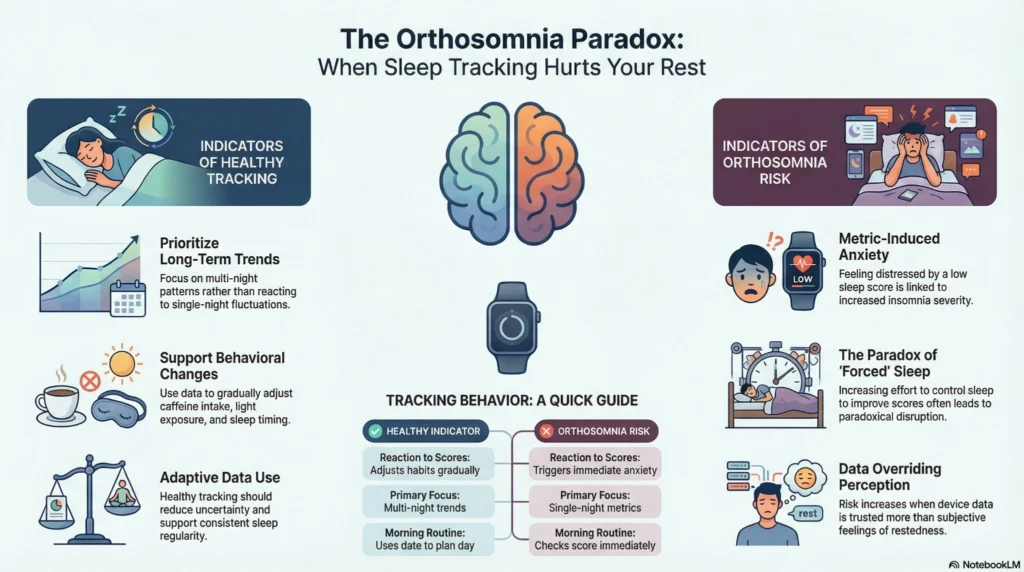
Orthosomnia is a clinical phenomenon in which a person’s preoccupation with achieving a perfect sleep score on a wearable device paradoxically causes or worsens insomnia.
Signs include checking sleep scores immediately upon waking, anxiety when scores fall below a personal threshold, and making lifestyle decisions based on a single night’s data.
First described by Baron et al. in the Journal of Clinical Sleep Medicine (2017).
What is Orthosomnia?
Orthosomnia is a clinical phenomenon in which a person’s preoccupation with achieving a “perfect” sleep score on a wearable device paradoxically causes or worsens insomnia. The term was first described in a 2017 case report by Baron et al. published in the Journal of Clinical Sleep Medicine.a clinically documented phenomenon called orthosomnia
It is most common among high-achieving adults who are highly engaged with quantified-self data — precisely the demographic most likely to own and closely monitor a wearable sleep tracker.
Signs you may have orthosomnia:
- You check your sleep score immediately upon waking, before getting out of bed
- You feel anxious, disappointed, or preoccupied when your score falls below your personal threshold
- You make major lifestyle decisions — skipping social events, adjusting medications, changing your diet — based on a single night’s tracker data
- You continue to sleep poorly despite your data showing technically adequate stage percentages
- Sleep tracking has increased your sleep-related anxiety rather than reducing it
If these signs are familiar, the evidence-based first-line treatment is cognitive behavioral therapy for insomnia (CBT-I) — a structured program that addresses the thought patterns and behaviors driving sleep difficulty.
CBT-I has a stronger long-term evidence base than sleep medications for chronic insomnia and does not require abstaining from your tracker.
→ [Orthosomnia: When Sleep Tracking Hurts More Than It Helps — Full Guide]
Warning Signs of Problematic Tracking:
- Checking sleep score immediately upon waking with anxiety
- Making major life decisions based on nightly scores
- Inability to sleep without tracking
- Dismissing how you feel in favor of device data
- Comparing scores obsessively with others
Healthy Approach:
- Take breaks from tracking if it causes stress
- Use tracking periodically (e.g., one week per month) rather than continuously
- Focus on weekly trends, not individual nights
- Prioritize subjective sleep quality and daytime function
Signs You May Have Orthosomnia
Orthosomnia exists on a spectrum. At the mild end, it is a habit of over-interpreting nightly data. At the clinical end, described by Baron et al. (2017), it is a genuine iatrogenic sleep disorder in which the monitoring device intended to improve sleep has become a driver of it.
These signs suggest your relationship with your sleep tracker may have crossed from informational to counterproductive:
Behavioral signs:
- Score-first mornings. You check your sleep score before you assess how you actually feel. The number, not your subjective energy, determines your expectation for the day.
- Compensatory avoidance. You decline evening social events, alcohol, exercise, or late meals based primarily on protecting that night’s score rather than general wellbeing.
- Retroactive explanation. You explain daytime fatigue, mood, or cognitive performance by pointing to the previous night’s data — regardless of whether you noticed those effects before checking the score.
- Score-chasing behaviors. You have experimented with sleep position, temperature, white noise, supplements, or sleep timing specifically to improve your tracker number, with diminishing or absent subjective benefit.
Psychological signs:
- Pre-sleep anxiety. You feel anticipatory anxiety about sleep as bedtime approaches — not because you are worried about rest, but because you are worried about the score.
- Threshold fixation. You have a personal minimum score (e.g., 75, 80) below which you feel the night was a failure, independent of how you feel physically.
- Proportional distress. A poor score produces mood disruption, irritability, or hopelessness disproportionate to your actual functional impairment.
- Worsening despite optimization. Your sleep has measurably deteriorated since you began tracking — more difficulty falling asleep, more nighttime waking, more time lying in bed awake.
The orthosomnia population tends to be high-achieving, quantified-self-oriented adults aged 28–45 who are also good sleepers by history. If tracking started from curiosity and has become a source of distress, the pattern is worth naming — because the evidence-based treatment path is different from standard sleep hygiene advice.
CBT-I — The Evidence-Based Treatment Beyond Sleep Tracking
Cognitive behavioral therapy for insomnia (CBT-I) is the first-line treatment recommended by the American Academy of Sleep Medicine (AASM), the American College of Physicians (ACP), and the European Sleep Research Society for chronic insomnia — including insomnia driven by orthosomnia.
What CBT-I involves:
CBT-I is a structured, multi-component program typically delivered over 6–8 sessions (in-person, video, or digitally). Its core components address the behavioral and cognitive drivers of insomnia rather than its symptoms:
| Component | What It Addresses | Mechanism |
|---|---|---|
| Sleep restriction therapy | Consolidates fragmented sleep by temporarily reducing time in bed to match actual sleep time | Builds homeostatic sleep pressure; reduces sleep onset latency |
| Stimulus control | Breaks the conditioned association between bed and wakefulness/anxiety | Restores bed as a cue for sleep only |
| Cognitive restructuring | Challenges catastrophic beliefs about sleep consequences | Reduces pre-sleep anxiety and hyperarousal |
| Sleep hygiene education | Addresses behavioral factors (caffeine, light, schedule) | Removes circadian disruptors |
| Relaxation techniques | Reduces physiological arousal at bedtime | Lowers cortisol and sympathetic tone |
How CBT-I applies specifically to orthosomnia:
In addition to the standard protocol, CBT-I for orthosomnia typically includes a tracker abstinence period — temporarily removing score-checking behavior to break the feedback loop driving anticipatory anxiety. This is not about permanently abandoning your device; it is about resetting your relationship with the data from anxiety-driven to informational.
CBT-I vs. sleep medication — what the evidence shows:
Multiple meta-analyses confirm CBT-I produces equivalent short-term outcomes to sleep medication, with substantially better long-term durability. Sleep medications (benzodiazepines, Z-drugs, melatonin receptor agonists) lose efficacy with chronic use and do not address the underlying behavioral and cognitive drivers. CBT-I effects persist at 6–12 month follow-up; medication effects typically do not without continued use.
Accessing CBT-I:
- Therapist-delivered: Sleep medicine specialists and clinical psychologists trained in CBT-I. AASM’s provider directory at sleepeducation.org lists credentialed practitioners.
- Digital CBT-I (dCBT-I): Platforms such as Sleepio and Somryst (FDA-cleared for chronic insomnia) deliver structured CBT-I digitally with comparable efficacy to therapist delivery for mild-to-moderate insomnia in independent trials.
- Self-guided programs: Books including Say Good Night to Insomnia (Gregg Jacobs) and The Sleep Book (Guy Meadows) follow evidence-based CBT-I frameworks.
If orthosomnia signs are present, raising the pattern explicitly with your physician — rather than requesting a sleep study or medication — is the appropriate first step. Most physicians are familiar with CBT-I but may not spontaneously connect tracker anxiety to insomnia without that framing from the patient.
📊 RESEARCH STAT: 27% of sleep tracker users report increased sleep anxiety related to tracking. If you check your score immediately upon waking with worry, you may be developing orthosomnia. Take a 2-week break from tracking. a clinically documented phenomenon called orthosomnia
⚠ Warning Signs in Your Sleep Data That Warrant a Doctor’s Visit
Important
No consumer wearable is currently FDA-cleared to diagnose obstructive sleep apnea (OSA) or any other sleep disorder.
Some devices flag respiratory rate irregularities or blood oxygen drops that may warrant further evaluation, but these readings do not constitute a diagnosis.
A home sleep apnea test or in-lab polysomnography ordered by a physician is required for clinical confirmation.
Your tracker cannot diagnose a sleep disorder — but it can flag patterns that should prompt a physician conversation.
See a doctor if you notice any of the following consistently over 2 or more weeks:
- SpO2 (blood oxygen) readings consistently below 90% — this range can indicate breathing disruption during sleep and warrants evaluation for obstructive sleep apnea (OSA).
- More than 5 breathing irregularity or respiratory rate alerts per night, sustained across multiple consecutive weeks.
- Persistent deep sleep below 10% combined with daytime fatigue, difficulty concentrating, or morning headaches — despite 7+ hours in bed.
- Daytime sleepiness or cognitive difficulty that does not improve after 4–6 weeks of consistent sleep hygiene changes.
- Sleep score anxiety that is worsening your insomnia rather than motivating behavioral change — this may indicate orthosomnia (see above).
Important: No consumer wearable is currently FDA-cleared to diagnose obstructive sleep apnea (OSA) or any other sleep disorder.
Breathing irregularity alerts are screening flags, not diagnoses.
A home sleep apnea test or in-lab polysomnography ordered by a physician is required for clinical confirmation.
See a doctor about your sleep tracker data if you notice, consistently over 2+ weeks:
- (1) SpO2 readings below 90%;
- (2) more than 5 breathing irregularity alerts per night;
- (3) persistent deep sleep below 10% with daytime fatigue;
- (4) morning headaches or cognitive difficulty despite adequate sleep time , or
- (5) sleep score anxiety worsening insomnia rather than improving behavior.
Can a Smartwatch Screen for Obstructive Sleep Apnea? What the Evidence Shows
The short answer is no — not yet, and not reliably. No consumer smartwatch or fitness tracker is currently FDA-cleared to diagnose obstructive sleep apnea (OSA) or any other sleep disorder. Devices that flag “breathing irregularities” or “elevated breathing rate” during sleep are detecting proxy signals — not performing a diagnostic test.
What consumer wearables actually detect
Smartwatches and rings monitor OSA-adjacent signals through two sensor pathways:
Blood oxygen saturation (SpO2): PPG-based pulse oximetry detects dips in peripheral oxygen saturation. OSA characteristically causes cyclical SpO2 drops — typically below 90% — during apneic episodes. Consumer devices can surface these dips, but with important caveats: wrist-worn SpO2 measurement is less accurate than fingertip pulse oximetry, particularly during sleep when movement and perfusion vary. Devices running SpO2 spot-checks (not continuous monitoring) will miss many transient dips entirely.
Respiratory rate estimation: Several devices (Fitbit Sense series, Garmin Fenix/Forerunner, Withings ScanWatch) estimate breathing rate using HRV-derived respiratory sinus arrhythmia or accelerometer chest-movement analysis. Elevated or irregular respiratory rate during sleep is a correlate of disordered breathing — but not a diagnostic equivalent.
Heart rate pattern irregularities: Apneic episodes trigger a characteristic heart rate response — bradycardia during the apnea, followed by tachycardia on arousal. Some devices flag this as a “breathing disturbance” alert. This is a plausible OSA proxy signal, but sensitivity and specificity across consumer devices have not been validated in peer-reviewed trials at a level meeting clinical standards.
The evidence gap
As of mid-2026, no independent peer-reviewed study has validated a consumer smartwatch as a reliable OSA screening tool against polysomnography (PSG) at a sensitivity/specificity threshold acceptable for clinical triage. The studies that do exist show high false-negative rates for mild-to-moderate OSA (AHI 5–15), which is precisely the severity range where early detection matters most.
The FDA 510(k) pathway requires demonstrated clinical equivalence to a predicate device. No wrist-worn consumer wearable has cleared this pathway for OSA screening. This is distinct from FDA-cleared home sleep apnea tests (HSATs) such as the WatchPAT One, which use peripheral arterial tonometry (PAT) — a different, clinically validated sensor modality — and are prescribed by physicians.
Clinical note (Dr. Rishav Das, M.B.B.S.): A patient presenting with daytime sleepiness, witnessed apneas, morning headaches, or unexplained hypertension should be referred for a home sleep apnea test or in-lab polysomnography regardless of what their smartwatch shows. A “normal” tracker reading does not rule out clinically significant OSA. Conversely, persistent SpO2 dip alerts from a consumer device — even unvalidated ones — are a reasonable trigger for a clinical conversation.
What your device’s breathing alert actually means
| Alert type | What the device detects | Clinical interpretation |
|---|---|---|
| SpO2 below 90% (single night) | Transient peripheral oxygen dip | Confirm with continuous overnight oximetry; single readings can be positional or motion artifact |
| SpO2 below 90% on 3+ consecutive nights | Repeated dips in peripheral saturation | Warrants physician evaluation; consistent with OSA pattern but not diagnostic |
| “Breathing irregularity” alert | Estimated respiratory rate variation | Correlate with subjective symptoms; not equivalent to an AHI reading |
| Elevated breathing rate during sleep | Algorithm-inferred rate increase | Note if recurrent; discuss with a physician if accompanied by fatigue or snoring |
The diagnostic pathway your tracker cannot replace
A formal OSA diagnosis requires one of:
- In-laboratory polysomnography (PSG): Full overnight recording of EEG, EOG, EMG, airflow, respiratory effort, SpO2, and body position. The clinical gold standard. Required for complex presentations or when HSAT is inconclusive.
- Home sleep apnea test (HSAT) / Type 3 portable monitor: FDA-cleared devices measuring airflow, respiratory effort, and SpO2. Prescribed by a physician; appropriate for patients with high pretest probability of moderate-to-severe OSA without significant comorbidities.
A consumer smartwatch is neither of these. It occupies a different category: a wellness monitoring device capable of generating hypothesis-forming observations, not diagnostic conclusions.
When to act on your device’s sleep-breathing data
See a physician if your tracker shows any of the following patterns over 2 or more consecutive weeks:
- SpO2 readings consistently below 90% during sleep
- More than 5 breathing irregularity or respiratory disturbance alerts per week
- Elevated resting heart rate with fragmented sleep architecture and low HRV
- Daytime fatigue, morning headaches, or cognitive difficulty despite adequate total sleep time reported by the device
- Bed partner reporting witnessed apneas, choking, or loud snoring — regardless of device readings
You do not need to wait for your tracker to flag a problem. OSA is underdiagnosed precisely because patients assume a “good” sleep score rules out a disorder. It does not.
Sleep Tracking for Specific Concerns
General Sleep Quality Improvement
Sleep tracking may support behavior change when used appropriately.
Evidence-Based Applications
| Use Case | How Tracking Helps | Limitations | Additional Strategies |
| Identifying Short Sleep | Objective duration tracking | Doesn’t identify why sleep is short | Sleep hygiene education, schedule planning |
| Consistency Monitoring | Quantifies schedule variability | Doesn’t address root causes | Gradual schedule adjustment |
| Behavior Impact Assessment | Before/after comparison for changes | Placebo effects possible | Control for other variables |
| Sleep Debt Awareness | Cumulative duration tracking | Doesn’t determine optimal individual need | Pay attention to daytime alertness |
Behavior Changes Supported by Evidence:
- Fixed wake time (7 days/week): Stabilizes circadian rhythm, may improve sleep quality over weeks
- Pre-sleep routine: 30-60 minute wind-down period, consistent signals to body
- Limitation of time in bed: Sleep efficiency improvement, used in cognitive behavioral therapy for insomnia (CBT-I)
When Tracking May Not Help:
- If medical sleep disorder is suspected
- If data causes anxiety or obsession
- When sleep problems persist despite behavior changes
Shift Work and Irregular Schedules
Shift workers and those with irregular schedules face circadian disruption challenges.
Tracking Applications for Shift Work
| Application | Potential Benefit | Key Metrics | Considerations |
| Documenting Sleep Patterns | Identifies total sleep obtained across shifts | Total daily sleep, timing patterns | Multiple sleep periods may be needed |
| Optimizing Sleep Windows | Finds best times for recovery sleep | Sleep quality by timing | Individual variation in adaptation |
| Monitoring Cumulative Debt | Tracks sleep deficit over work periods | Weekly total sleep time | Chronic partial sleep restriction risk |
| Recovery Period Planning | Assesses time needed for circadian realignment | Consistency restoration | May take several days post-shift cycle |
Special Considerations:
- Night shift work is associated with increased health risks even with adequate sleep duration
- Light exposure timing critically affects circadian adaptation
- Some individuals never fully adapt to night shift work
- Rotating shifts may be more challenging than permanent night shifts
Evidence-Based Strategies (beyond tracking):
- Strategic light exposure (bright light during work, darkness for sleep)
- Consistent sleep schedule on workdays
- Napping strategies for shift transitions
- Medical evaluation for persistent fatigue
Travel and Time Zone Changes
Sleep tracking may help assess jet lag recovery and inform adjustment strategies.
Jet Lag Tracking
| Metric | What to Monitor | Typical Recovery | Optimization Strategy |
| Sleep Timing | Gradual alignment with new time zone | ~1 day per time zone crossed | Gradual pre-travel adjustment |
| Sleep Quality | Fragmentation and efficiency | Normalizes as circadian adjusts | Light exposure timing at destination |
| Total Sleep Time | May be reduced during adjustment | Returns to baseline with adjustment | Napping strategy for large time shifts |
| Subjective Function | Alertness and performance | Lags behind sleep adjustment | Caffeine timing, activity scheduling |
Direction Matters:
- Eastward travel (phase advance): Generally more difficult
- Westward travel (phase delay): Usually easier to adapt
Evidence-Based Recommendations:
- Stay hydrated
- Adjust sleep schedule 1-2 hours/day before departure for large time shifts
- Strategic light exposure at destination (bright light when alertness needed)
- Avoid alcohol during flights (disrupts sleep architecture)
When Tracking Might Indicate a Sleep Disorder
Consumer tracking cannot diagnose sleep disorders but may identify patterns warranting medical evaluation.
Warning Patterns Requiring Medical Consultation
| Pattern Observed | Possible Condition | Why Medical Evaluation Is Critical | What Evaluation Involves |
| Frequent breathing irregularities (if detected) | Obstructive sleep apnea | Untreated OSA increases cardiovascular risk | Polysomnography, possible home sleep test |
| Consistently low sleep efficiency (<75%) | Insomnia disorder | Chronic insomnia affects mental and physical health | Clinical interview, sleep diary, possible PSG |
| Excessive movements/awakenings | Periodic limb movement disorder, REM sleep behavior disorder | May indicate neurological conditions | PSG with EMG monitoring |
| Very short REM periods or absence | REM sleep suppression | May relate to medication effects or disorders | Medication review, PSG |
| Chronic insufficient sleep despite adequate opportunity | Circadian rhythm disorder, hypersomnia | Impacts function and may have underlying causes | Sleep diary, actigraphy, PSG, possibly MSLT |
Red Flags Beyond Tracker Data:
- Inability to sleep despite fatigue (chronic insomnia)
- Witnessed breathing pauses during sleep (apnea indicator)
- Excessive daytime sleepiness despite adequate sleep time (possible narcolepsy or hypersomnia)
- Acting out dreams (REM sleep behavior disorder)
- Uncomfortable leg sensations preventing sleep (restless legs syndrome)
Important Limitation: Consumer devices cannot rule out sleep disorders. Medical evaluation remains necessary for persistent concerns. Randomized trial on lifestyle modifications
Choosing the Right Sleep Tracker: Wrist vs. Ring vs. Bedside Devices
Wrist-Worn vs. Ring vs. Bedside Devices
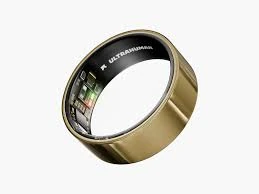
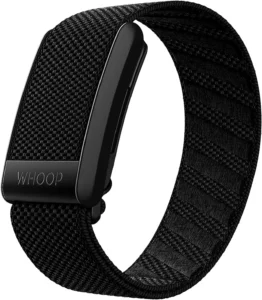
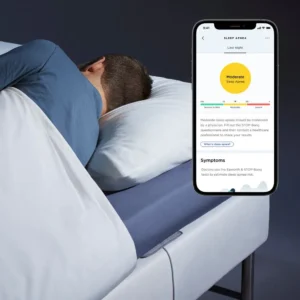
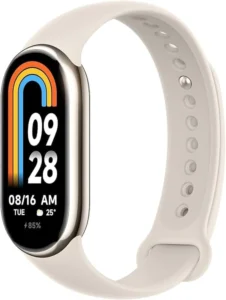
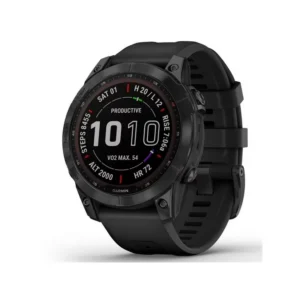
Device form factor affects user experience and data quality.
Wrist-Worn Devices (Smartwatches, Fitness Bands)
Advantages:
- Established technology with extensive validation data
- Heart rate monitoring from wrist pulse
- Integration with exercise and activity tracking
- Large screen for data display (watches)
- Notification and smart features (watches)
Limitations:
- Some individuals find wrist wear uncomfortable during sleep
- May interfere with sleep for those sensitive to devices
- Optical HR accuracy may be reduced at wrist (vs. finger/chest)
- Daily charging may be required (smart watches)
Smart Rings
Advantages:
- Minimal form factor; less obtrusive than wrist devices
- Often better HR accuracy than wrist (finger pulse is stronger)
- Multi-day battery life (4-7 days typical)
- Sleep-focused design
Limitations:
- Limited exercise tracking (no GPS, small accelerometer)
- Finger swelling may affect fit and accuracy
- Smaller device = smaller battery (despite efficiency)
- More expensive than basic fitness bands
- Ring sizing critical; weight changes affect fit
Bedside/Non-Contact Devices
Advantages:
- Nothing worn; eliminates comfort concerns
- May also monitor room environment (temperature, humidity, air quality)
- Suitable for individuals who cannot tolerate wearables
Limitations:
- Accuracy varies significantly by technology
- May be affected by bedpartner movement
- Requires bedside placement and power
- Limited to sleep tracking only (no daytime data)
- Validation data often limited compared to wearables
Technology Types:
Acoustic: Analyzes sounds (snoring, breathing)
Ballistocardiography: Detects mattress movement from heartbeat and respiration
Radar/RF: Detects micro-movements for breathing and heart rate
Built-In Phone Apps vs. Wearable Devices
Different tracking approaches have distinct capabilities and limitations. Our independent evaluation is conducted without manufacturer funding or affiliate relationships.
Technology Comparison
| Tracking Method | Movement Detection | Heart Rate | Additional Sensors | Best Use Case |
| Phone Apps (Microphone/Accelerometer) | Bed movement (if phone on mattress) | Not measured | Snoring detection possible | Basic sleep duration, no physiological data |
| Smartwatches | Wrist movement (actigraphy) | Optical HR (PPG) | Some: SpO₂, skin temp | Continuous wear, integrated health tracking |
| Fitness Bands | Wrist movement | Optical HR | Limited | Budget-friendly multi-day battery |
| Smart Rings | Finger movement (very limited) | Optical HR (finger pulse) | Skin temperature | Discreet wear, minimal form factor |
| Bedside Devices | Ballistocardiography or radar | Non-contact HR detection | Respiratory rate, room environment | No device worn during sleep |
| Chest Straps | No movement (requires pairing) | ECG-grade HR | None (requires separate device) | High HR accuracy (not typically for sleep) |
Considerations
| Factor | Phone Apps | Wearables (Watch/Band) | Smart Rings | Bedside Devices |
| Cost | Free to low cost | $100-$500 | $250-$400 | $100-$400 |
| Comfort | No device worn | Some find wrist wear uncomfortable | Minimal awareness | Nothing worn |
| Accuracy | Movement only, limited | Moderate for sleep/wake, HR | Similar to wrist wearables | Variable by technology |
| Daytime Integration | None | Activity tracking included | Limited activity data | None |
| Battery Life | Phone battery dependent | 1-7 days typical | 4-7 days typical | Plugged in |
Selection Considerations:
- Most important factor: Will you actually wear/use it consistently?
- Prioritize comfort and wearability compliance
- Consider integration with other health tracking goals
- Accuracy differences between consumer devices are generally small
When Not to Track Your Sleep
Sleep tracking is not appropriate for all individuals or situations.
Scenarios Where Tracking May Be Unhelpful or Harmful
| Situation | Why Tracking May Not Help | Better Alternative |
| Sleep Anxiety/Orthosomnia | Tracking reinforces obsession and performance anxiety | Focus on how you feel; consider CBT-I if insomnia present |
| Diagnosed Sleep Disorder Under Treatment | Consumer devices don’t measure treatment efficacy | Follow-up polysomnography or clinical sleep studies as recommended |
| Perfectionism/Compulsive Tendencies | Risk of fixation on scores | Behavior-focused approach without numerical feedback |
| Already Sleeping Well | No actionable information gained | Maintain good sleep habits without tracking |
| Wearing Device Disrupts Sleep | Tracking itself becomes sleep disruptor | Try different form factor or discontinue |
Beyond Tracking: Evidence-Based Strategies for Better Sleep
Evidence-Based Sleep Hygiene
Sleep hygiene encompasses behavioral and environmental practices that support quality sleep as validated by a comprehensive review of sleep hygiene evidence.
Core Sleep Hygiene Practices
| Practice | Evidence Level | Implementation | Expected Impact Timeline |
| Consistent Sleep Schedule | Strong evidence | Same wake time 7 days/week, bedtime within 30-minute window | 2-4 weeks for circadian stabilization |
| Light Exposure Timing | Strong evidence | Bright light in morning, dim lighting 2 hours before bed | 1-2 weeks |
| Caffeine Limitation | Strong evidence | No caffeine 8-10 hours before bedtime | Immediate (within 1-2 days) |
| Alcohol Avoidance Before Bed | Strong evidence | No alcohol 3-4 hours before sleep | Immediate |
| Exercise Timing | Moderate evidence | Regular exercise, but not within 2-3 hours of bedtime | 4-6 weeks for sleep improvements |
| Bedroom Environment | Moderate evidence | Cool (60-67°F), dark, quiet | Immediate |
National Institutes of Health guide to healthy sleep
Practices with Limited Evidence:
- Specific dietary restrictions (beyond caffeine/alcohol)
- Sleep supplements without medical guidance
- Particular sleep positions
- Weighted blankets (may help some individuals)
When Sleep Hygiene Alone Is Insufficient:
- If sleep problems predate poor sleep habits
- If practices followed consistently for 4-6 weeks without improvement
- If daytime impairment is significant
Medical evaluation indicated when behavior changes are insufficient.
Environmental Factors (Temperature, Light, Noise)
Sleep environment significantly affects sleep initiation and maintenance.
Temperature
| Factor | Optimal Range | Physiological Basis | Practical Adjustments |
| Bedroom Temperature | 60-67°F (15.6-19.4°C) | Core body temperature decreases during sleep | Thermostat adjustment, breathable bedding |
| Individual Variation | May vary ±3°F | Personal thermoregulation differences | Experimentation within range |
| Seasonal Adjustment | Lower in winter, cooling in summer | Humidity affects perceived temperature | Humidity control, appropriate bedding |
Light
| Light Exposure | Timing | Effect on Sleep | Management Strategy |
| Blue Light | Evening (2 hours before bed) | Suppresses melatonin, delays circadian rhythm | Dim screens, blue light filters, avoid screens |
| Bright Light | Morning | Advances circadian rhythm, promotes alertness | Outdoor exposure or light therapy box |
| Darkness | During sleep period | Supports melatonin production | Blackout curtains, eye mask |
| Night Lights | If needed for safety | Red/amber light less disruptive than white/blue | Red bulbs for night lights |
Noise
| Noise Level | Impact | Solutions | Evidence |
| >40 dB | May fragment sleep | Earplugs, white noise, address source | Studies show increased awakenings |
| Intermittent Noise | More disruptive than constant | White/pink noise masking | Consistent background sound may help |
| Individual Sensitivity | Varies significantly | Personal assessment needed | Adaptation occurs for some noise types |
Behavioral Factors (Timing, Routine, Caffeine)
Behavioral patterns strongly influence sleep quality.
Sleep Timing
| Factor | Recommendation | Rationale | Common Pitfalls |
| Wake Time Consistency | ±30 minutes, 7 days/week | Anchors circadian rhythm | Weekend sleep-in >2 hours causes social jet lag |
| Bedtime Window | Consistent 30-minute range | Trains sleep drive association | Going to bed only when sleepy (variable timing) |
| Time in Bed | Match sleep need (typically 7-9 hours opportunity) | Prevents low sleep efficiency | Excessive time in bed weakens sleep drive |
Pre-Sleep Routine
| Activity Type | Timing Before Bed | Effect on Sleep | Examples |
| Relaxing Activities | 30-60 minutes | Signals transition to sleep | Reading, gentle stretching, meditation |
| Screen Use | Avoid 1-2 hours | Blue light and mental stimulation | TV, phone, computer work |
| Stimulating Work | Avoid 1-2 hours | Arousal interferes with sleep onset | Problem-solving, arguments, intense exercise |
| Heavy Meals | Avoid 2-3 hours | Discomfort and metabolism disruption | Large dinners, spicy foods |
Caffeine Pharmacology
| Timeframe | Caffeine Action | Sleep Impact | Individual Variation |
| Half-life | 5-6 hours average | 50% remains in system | Slower metabolism in some individuals |
| Quarter-life | 10-12 hours | 25% still active | Evening coffee may affect sleep onset |
| Genetic Variation | CYP1A2 enzyme activity | Fast vs. slow metabolizers | Slow metabolizers more affected |
| Tolerance | Develops to alerting effects | Sleep disruption may persist despite tolerance | Chronic users may not notice impact |
Alcohol Effects
| Consumption Pattern | Sleep Onset | Sleep Architecture | Sleep Quality |
| Moderate (1-2 drinks) | May shorten latency | Suppresses REM sleep first half, REM rebound later | Fragmentation increases |
| Heavy (3+ drinks) | Sedation, faster onset | Significant REM suppression, increased N3 initially | Poor quality, frequent awakenings |
| Late Evening | Metabolism during sleep | Sleep disruption as alcohol clears | Awakenings 3-4 hours after consumption |
When Lifestyle Changes Aren’t Enough
Persistent sleep problems despite behavior modification require medical evaluation.
Indications for Medical Consultation
| Scenario | Duration Before Seeking Help | Possible Underlying Issues | Typical Evaluation Path |
| Insomnia Despite Sleep Hygiene | 4-6 weeks of consistent practice | Primary insomnia, anxiety, medical conditions | Clinical interview, sleep diary, possible CBT-I referral |
| Excessive Daytime Sleepiness | >2 weeks with adequate sleep opportunity | Sleep apnea, narcolepsy, insufficient sleep syndrome | Sleep history, PSG, possibly MSLT |
| Breathing-Related Sleep Disturbance | Any duration of concern | Obstructive/central sleep apnea | Sleep study (PSG or home sleep test) |
| Unusual Sleep Behaviors | Any occurrence | REM behavior disorder, sleepwalking, other parasomnias | PSG with video monitoring |
| Chronic Partial Sleep | Despite adequate time in bed | Circadian rhythm disorders, poor sleep efficiency | Actigraphy, sleep diary, melatonin timing assessment |
Medical Treatments May Include:
- Cognitive Behavioral Therapy for Insomnia (CBT-I): First-line treatment for chronic insomnia
- Positive Airway Pressure (PAP): Standard treatment for obstructive sleep apnea
- Medication: Short-term use for specific indications under medical supervision
- Light Therapy: For circadian rhythm disorders
- Dental Appliances: For mild-moderate sleep apnea
Important Principle: Sleep trackers may support behavior change but cannot replace medical diagnosis or treatment for sleep disorders.
Not Sure If Your Tracker Is Accurate Enough to Trust?
Device accuracy varies significantly by sensor quality, algorithm validation, and published clinical evidence.
Our physician-reviewed comparison guide breaks down which wearables have peer-reviewed validation data — and which rely entirely on proprietary algorithms.
→ [Compare Sleep Tracker Accuracy: Oura vs. Garmin vs. Apple Watch vs. Fitbit]
Concerned About a Pattern in Your Sleep Data?
If your tracker has flagged consistent breathing irregularities, SpO2 drops, or you’re experiencing daytime fatigue despite high sleep scores, use our red-flag checklist or speak with a sleep medicine specialist.
→ [When Your Sleep Tracker Data Warrants a Doctor’s Visit — Checklist]
Quick Guide: Choose Your Sleep Tracker in 3 Minutes
Answer These 3 Questions:
1. What’s your primary goal?
- General wellness / curiosity → Start with free phone app or budget fitness band ($50-100)
- Athletic recovery optimization → Whoop, Garmin, or Polar with HRV tracking ($200-500)
- Detect potential sleep disorder → Apple Watch or Fitbit with SpO₂ monitoring ($200-400)
- Minimize cost → Free phone app (Sleep Cycle, Sleep as Android) or Mi Band ($30-50)
2. What’s your comfort preference?
- Wrist device OK → Smartwatch or fitness band (most options, $50-800)
- Prefer minimal/no awareness → Smart ring ($250-400)
- Can’t sleep with anything worn → Bedside monitor ($100-400)
3. What’s your budget?
- Under $100: Phone app (free), Mi Band ($35-50), Fitbit Inspire ($100)
- $100-300: Fitbit Versa/Charge, Garmin Venu, basic Apple Watch SE
- $300+: Oura Ring ($299-549), Apple Watch Series, Garmin Fenix, Whoop (subscription $30/month)
Our Top Picks by Use Case:
→ Best for Beginners: Fitbit Inspire 3 ($100) — accurate, affordable, easy app
→ Best for Athletes: Whoop 4.0 ($30/month) — recovery metrics, strain tracking, no screen
→ Best for Comfort: Oura Ring Gen 3 ($299) — minimal form factor, excellent accuracy
→ Best Budget: Sleep as Android app (Free/$5) — start here before buying hardware
→ Best All-Around: Apple Watch SE ($249) or Series 9 ($399) — comprehensive health tracking
Not sure? Start free. Download Sleep Cycle or Sleep as Android. Track for 1-2 weeks. If you want more detailed heart rate and recovery data, upgrade to a wearable.
Frequently Asked Questions About Sleep Tracking
How accurate are consumer sleep trackers at measuring deep sleep?
Consumer sleep trackers measure sleep stages with approximately 60–70% accuracy compared to polysomnography (PSG), based on a 2021 study by Chinoy et al. in Sleep journal.
Deep sleep (N3) detection is particularly variable — devices may over- or under-report N3 percentages by 10–15 percentage points on a given night.
Is 15% deep sleep bad?
It depends on age.
Adults typically spend 15–25% of total sleep in deep sleep.
For adults over 60, 10–15% N3 is clinically normal — deep sleep declines naturally with age.
For adults under 50, consistent readings below 13–15% combined with daytime fatigue may warrant evaluation.
A single night’s low reading is not diagnostically significant.
Why does my sleep tracker show less REM sleep than I expected?
Consumer trackers detect REM using heart rate variability patterns and movement data from PPG sensors.
REM detection is the least accurate stage for consumer devices — REM shares movement characteristics with light sleep (N1/N2).
Alcohol, certain antidepressants, and accumulated sleep debt all suppress REM and reduce your tracker’s reported percentage.
Can a Fitbit or Apple Watch diagnose sleep apnea?
No.
No consumer wearable is currently FDA-cleared to diagnose obstructive sleep apnea (OSA) or any sleep disorder.
Some devices flag respiratory rate irregularities or SpO2 drops — these are screening alerts, not diagnoses.
A home sleep apnea test or in-lab polysomnography ordered by a physician is required for diagnosis.
What is orthosomnia and how do I know if I have it?
Orthosomnia is a clinical phenomenon in which preoccupation with achieving a perfect sleep score paradoxically worsens insomnia, first described by Baron et al. in the Journal of Clinical Sleep Medicine (2017).
Signs include checking your score immediately upon waking, anxiety when it falls below your threshold, making major behavioral decisions from a single night’s data, and worsening sleep despite optimizing for tracker metrics.
Is wrist-worn heart rate accurate enough for sleep tracking?
Wrist-worn PPG sensors are sufficient for behavioral trend tracking but not clinical-grade measurement.
Consumer devices achieve 60–70% agreement with PSG for sleep stage classification.
Heart rate data is more reliable than sleep stage data; overnight HRV trends correlate moderately with laboratory measurements across multiple weeks.
How much does alcohol affect sleep staging on a wearable?
Significantly.
Alcohol suppresses REM sleep in the first half of the night and increases apparent deep sleep early, followed by fragmented lighter sleep in the second half.
Wearables detect this indirectly through HRV suppression — alcohol measurably reduces RMSSD.
Even 1–2 standard drinks within 3 hours of bedtime can alter sleep staging data by 15–20%.
What should I do if my tracker shows frequent breathing irregularities?
Track the pattern for 2–3 consecutive weeks before drawing conclusions.
If breathing irregularity alerts appear on more than 5 nights per week, or if you experience morning headaches, daytime sleepiness, or your bed partner reports snoring or breathing pauses, consult a physician.
Request a sleep medicine evaluation, which may include a home sleep apnea test or in-lab polysomnography.
When should I get a sleep study instead of relying on my tracker?
Consider polysomnography if:
(1) you have persistent daytime fatigue despite 7–9 hours in bed and high sleep scores;
(2) your tracker flags consistent SpO2 below 90%;
(3) you receive frequent breathing irregularity alerts over 2+ weeks;
(4) you experience morning headaches or cognitive difficulty despite adequate sleep time;
or
(5) a physician suspects a sleep disorder based on symptoms.
References
Centers for Disease Control and Prevention. Sleep and Sleep Disorders. https://www.cdc.gov/sleep/index.html. Accessed February 2026.
American Academy of Sleep Medicine. (2014). International Classification of Sleep Disorders, 3rd edition (ICSD-3). Darien, IL.
Hirshkowitz M, Whiton K, Albert SM, et al. National Sleep Foundation’s sleep time duration recommendations: methodology and results summary. Sleep Health. 2015;1(1):40-43.
de Zambotti M, Cellini N, Goldstone A, Colrain IM, Baker FC. Wearable sleep technology in clinical and research settings. Med Sci Sports Exerc. 2019;51(7):1538-1557.
Chinoy ED, Cuellar JA, Huwa KE, et al. Performance of seven consumer sleep-tracking devices compared with polysomnography. Sleep. 2021;44(5):zsaa291.
Perez-Pozuelo I, Zhai B, Palotti J, et al. The future of sleep health: a data-driven revolution in sleep science and medicine. NPJ Digit Med. 2020;3:42.
Baron KG, Abbott S, Jao N, Manalo N, Mullen R. Orthosomnia: Are some patients taking the quantified self too far? J Clin Sleep Med. 2017;13(2):351-354.
Irish LA, Kline CE, Gunn HE, Buysse DJ, Hall MH. The role of sleep hygiene in promoting public health: A review of empirical evidence. Sleep Med Rev. 2015;22:23-36.
Watson NF, Badr MS, Belenky G, et al. Recommended amount of sleep for a healthy adult: a joint consensus statement of the American Academy of Sleep Medicine and Sleep Research Society. Sleep. 2015;38(6):843-844.
Roenneberg T, Allebrandt KV, Merrow M, Vetter C. Social jetlag and obesity. Curr Biol. 2012;22(10):939-943.
Walker MP. The role of slow wave sleep in memory processing. J Clin Sleep Med. 2009;5(2 Suppl):S20-S26.
Dijk DJ. Regulation and functional correlates of slow wave sleep. J Clin Sleep Med. 2009;5(2 Suppl):S6-S15.
Grandner MA, Jackson NJ, Pak VM, Gehrman PR. Sleep disturbance is associated with cardiovascular and metabolic disorders. J Sleep Res. 2012;21(4):427-433.
Mendelson M, Lyons OD, Yadollahi A, Inami T, Oh P, Bradley TD. Effects of exercise training on sleep apnoea in patients with coronary artery disease: a randomised trial. Eur Respir J. 2016;48(1):142-150.
National Heart, Lung, and Blood Institute. Your Guide to Healthy Sleep. NIH Publication No. 11-5271. 2011.
Medical Disclaimer
The information on Wearable Wellness Guide is for educational purposes and should not replace professional medical advice. Always consult a qualified healthcare provider for diagnosis, treatment, or medical device recommendations tailored to your individual health needs.
- Last Updated: June, 2026
- Medical Review: Dr. Rishav Das, M.B.B.S. — June, 2026
- Medical Reviewer Credentials: Available on About page
This content has been medically reviewed according to the standards outlined on our About page. Dr. Rishav Das serves as Wellness Device Data Analyst and Consumer Device Accuracy Specialist for Wearable Wellness Guide.