
How to Choose the Best Stress Tracker for Your Specific Goals
Compare best stress tracker. Our evidence-based analysis evaluates HRV accuracy, physiological tracking features, and total cost of ownership.
Written by Dr. Rishav Das, M.B.B.S. — see About page for full credentials and qualifications.
Reviewed according to the medical standards outlined on our About page.
Whether you are a burned-out professional tracking recovery between meetings, an endurance athlete fine-tuning training load, or simply someone who wants to understand why they feel perpetually exhausted — the right stress tracker can turn vague physiological noise into actionable daily data. The seven devices below were evaluated against clinical benchmarks so you do not have to interpret the research yourself.
Quick Picks — Best Stress Trackers 2026
| Device | Best For | Our Rating | Subscription? |
|---|---|---|---|
| Garmin Fenix 7 Pro Solar | Best Overall | ⭐ 4.6 / 5 | No |
| Oura Ring Gen 3 | Best Smart Ring | ⭐ 4.4 / 5 | Yes |
| Polar H10 | Best HRV Accuracy | ⭐ 4.5 / 5 | No |
| Muse 2 Headband | Best Biofeedback | ⭐ 4.1 / 5 | Optional |
| Fitbit Charge 6 | Best Budget | ⭐ 4.0 / 5 | Optional |
| Muse S Gen 2 | Best for Meditation | ⭐ 4.2 / 5 | Optional |
| WHOOP 4.0 | Best for Athletes | ⭐ 4.3 / 5 | Yes (required) |
⚠️ SCOPE OF THIS ANALYSIS
This content explains device measurement accuracy and physiological tracking capabilities. It is not medical diagnosis, health advice, or a substitute for clinical evaluation. Consumer wellness devices are not FDA-cleared to diagnose stress disorders or any related condition. If you have health concerns, consult a qualified healthcare provider.
Why Track Your Stress? (And When to Start)
Chronic stress is one of the most underdiagnosed contributors to fatigue, disrupted sleep, and reduced performance — and most of us only recognise it after the damage is done. The problem is not that stress is invisible; it is that the signals are physiological before they are psychological. Your heart rate variability drops, your resting heart rate climbs, your sleep efficiency declines — often days before you consciously feel overwhelmed.
A stress tracker gives you objective, continuous physiological data so you can intervene before burnout sets in — not after. The devices on this page measure those signals. Used consistently, they do not eliminate stress; they make it legible.
- How to Choose the Best Stress Tracker for Your Specific Goals
- Quick Picks — Best Stress Trackers 2026
- ⚠️ SCOPE OF THIS ANALYSIS
- Why Track Your Stress? (And When to Start)
- How We Evaluate Wellness Devices
- Best Overall Stress Tracker in 2026: Garmin Fenix 7 Pro Solar Review
- Best Smart Ring for Stress Tracking: Oura Ring Gen 3 Review
- Best HRV Monitor for Stress & Recovery: Polar H10 Review
- Best Biofeedback Device for Stress Relief: Muse 2 Headband Review
- Best Budget Stress Tracker Under $100: Fitbit Charge 6 Review
- Best for Meditation Practice
- Best Stress Tracker for Athletes: WHOOP 4.0 Recovery Monitor Review
- Quick Comparison Table
- How to Choose
- Common Concerns Answered
- Our Final Recommendation
- References
How We Evaluate Wellness Devices
Our evaluation process is designed to prioritize physiological accuracy, user safety, and clinical relevance over commercial considerations. Every device listed on this page has been assessed against a standardized framework before inclusion.
Core Evaluation Criteria
| Criterion | What We Assess | Weight |
| Sensor Accuracy | Validity of physiological measurements against clinical or research benchmarks | High |
| HRV & Stress Metrics | Methodology behind stress scoring algorithms; transparency of calculations | High |
| Scientific Backing | Peer-reviewed validation studies for device-specific sensors or algorithms | High |
| Wearability & Comfort | Form factor suitability for all-day or overnight wear | Medium |
| App Quality & Data Clarity | Interpretability of insights; clarity of stress and recovery dashboards | Medium |
| Privacy & Data Governance | Data storage policies, user control over health data, third-party sharing practices | Medium |
| Battery Life | Practical real-world duration under standard tracking conditions | Medium |
| Price-to-Value Ratio | Cost relative to measurable feature benefit | Medium |
| Subscription Dependency | Whether core health features require ongoing paid plans | Medium |
| Accessibility | Compatibility with diverse wrist sizes, skin tones, and mobility needs | Lower |
What We Do Not Evaluate
The following are explicitly outside the scope of this assessment:
- Diagnostic capability — No consumer wearable is FDA-cleared to diagnose stress disorders, anxiety, or autonomic nervous system pathology
- Treatment efficacy — Device recommendations do not constitute medical advice
- Brand partnerships — No device is included based on commercial relationships
See the About page for a full description of our editorial independence standards, medical review process, and conflict-of-interest policy.
Evidence Standards Applied
| Claim Type | Sourcing Requirement |
| Sensor accuracy claims | Peer-reviewed validation study or manufacturer-published clinical data |
| HRV methodology claims | Published algorithm documentation or referenced research |
| Biofeedback effectiveness | PubMed-indexed journals; minimum one randomized controlled trial noted |
| General stress physiology | NIH, APA, WHO, or equivalent authority |
Best Overall Stress Tracker in 2026: Garmin Fenix 7 Pro Solar Review
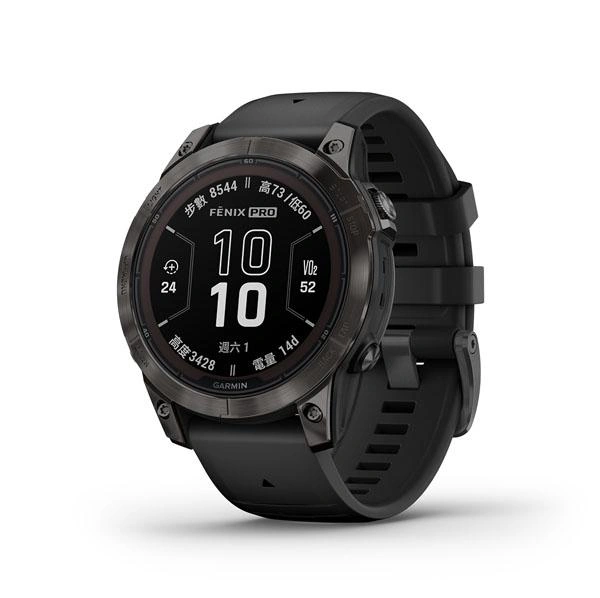
| Attribute | Detail |
| Device Type | GPS Multisport Smartwatch |
| Key Stress Feature | All-day Body Battery™ energy monitoring; continuous HRV Status |
| Stress Measurement Method | Heart rate variability (HRV) via optical wrist sensor |
| HRV Tracking | Overnight HRV Status; nightly average benchmarked against personal baseline |
| Additional Metrics | Pulse Ox (SpO₂), respiration rate, sleep staging, training load |
| Battery Life | Up to 22 days (smartwatch mode); up to 37 days (GPS off, solar) |
| App Platform | Garmin Connect (iOS / Android) |
| Price Range | $$$ (mid–premium tier) |
| Subscription Required | No — core health features included without subscription |
| Water Resistance | 10 ATM |
Value at a Glance: No subscription. No charging gaps. Daily clarity on your energy and recovery — in one wrist-worn device.
Why It Ranks Best Overall
- Continuous stress monitoring is derived from HRV-based algorithms running throughout the day, not only during discrete measurement windows
- Body Battery™ integrates stress, sleep, and activity data into a single 0–100 energy reserve indicator, which evidence suggests may correlate with subjective fatigue [1]
- Nightly HRV tracking provides longitudinal baseline data, enabling trend detection over weeks and months
- No mandatory subscription for health features distinguishes this device from several competitors
- Suitable for a broad range of users: sedentary, moderately active, and highly athletic
Bottom Line: If you want one device that tracks stress, sleep, and recovery without a subscription or daily charging, the Garmin Fenix 7 Pro Solar is the clearest choice in 2026:
- No recurring fees
- No gaps in data
- One number — Body Battery — that tells you how hard to push today
Pros & Cons
| Pros | Cons |
| No subscription required for core metrics | Larger form factor; may not suit smaller wrists |
| Long battery life supports continuous longitudinal data | Optical HRV accuracy is lower than chest-strap reference standard |
| Robust sleep and recovery integration | Premium price point |
| Transparent algorithm documentation from Garmin | Solar charging benefit is environment-dependent |
| Broad ecosystem: compatible with third-party apps | Learning curve for full feature utilization |
Who This Is Best For
If you are running on empty but cannot explain why — tracking too hard, sleeping poorly, or simply feeling flat — the Fenix 7 Pro Solar turns vague exhaustion into a daily number. Body Battery tells you, in concrete terms, whether today is a push day or a recovery day.
- Users wanting a single device that consolidates stress, sleep, activity, and recovery data
- Those who require long battery life and are resistant to daily charging routines
- Individuals building a multi-week baseline for stress trend awareness
- Individuals building a multi-week baseline for stress trend awareness
- Users wanting a single device that consolidates stress, sleep, activity, and recovery data
- Those who require long battery life and are resistant to daily charging routines
When to Consult a Healthcare Provider: HRV data and stress scores from consumer devices are informational only. If you are experiencing persistent symptoms associated with high stress — such as disrupted sleep, elevated resting heart rate, or significant mood changes — consult a qualified healthcare professional. See our About page for the medical oversight standards applied to this content.
Best Smart Ring for Stress Tracking: Oura Ring Gen 3 Review
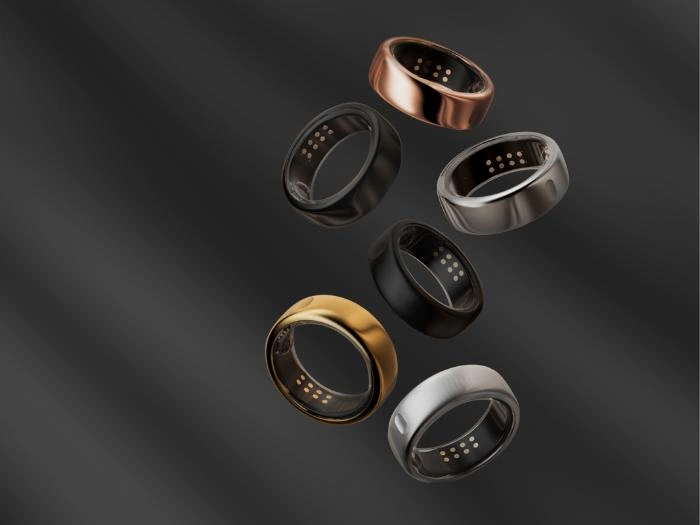
| Attribute | Detail |
| Device Type | Smart Ring |
| Key Stress Feature | Stress Resilience Score; daytime stress detection via HRV and skin temperature |
| Stress Measurement Method | HRV, skin temperature deviation, activity, and respiratory rate synthesis |
| HRV Tracking | Continuous overnight HRV; daytime HRV spot-checks |
| Additional Metrics | Readiness Score, Sleep Score, SpO₂, cycle tracking, cardiovascular age estimate |
| Battery Life | 4–7 days |
| App Platform | Oura App (iOS / Android) |
| Price Range | $$ + mandatory subscription (monthly fee required for full feature access) |
| Subscription Required | Yes — comprehensive insights require active membership |
| Water Resistance | 100m |
Value at a Glance: Discreet, subscription-powered recovery data for people who never want to think about wearing a tracker.
Why It Ranks Best Smart Ring
- The ring form factor places sensors in close proximity to blood vessels of the finger, which may yield higher accuracy for skin temperature and SpO₂ than wrist-based optical sensors [2]
- Passive, ringless design reduces social and aesthetic barriers to continuous wear, supporting higher data completeness
- Oura’s Readiness Score integrates overnight HRV, skin temperature deviation, and sleep data into a daily recovery metric
- Research has examined Oura’s temperature sensors in the context of illness detection and menstrual cycle tracking [3]
Bottom Line:
If you want a discreet, screenless ring that continuously tracks sleep and recovery via fingertip sensors without looking like a tech device , the Oura Ring Gen 3 is the top choice , provided you are ready for a mandatory monthly subscription to access full feature insights.
Pros & Cons
| Pros | Cons |
| Discreet, jewelry-like form factor | Requires paid subscription for full insight access |
| High wear compliance due to comfort | No real-time GPS or display screen |
| Strong sleep and recovery tracking | Limited actionable guidance within app |
| Finger-based sensors may improve SpO₂ accuracy | Battery life shorter than most full smartwatches |
| Suitable for users who find wristbands uncomfortable | Ring sizing requires physical kit; cannot be adjusted |
Who This Is Best For
- Users who prioritize discreet, all-day wear without a visible display
- Those focused primarily on sleep quality and overnight recovery metrics
- Individuals tracking menstrual cycle–related physiological patterns
Best HRV Monitor for Stress & Recovery: Polar H10 Review
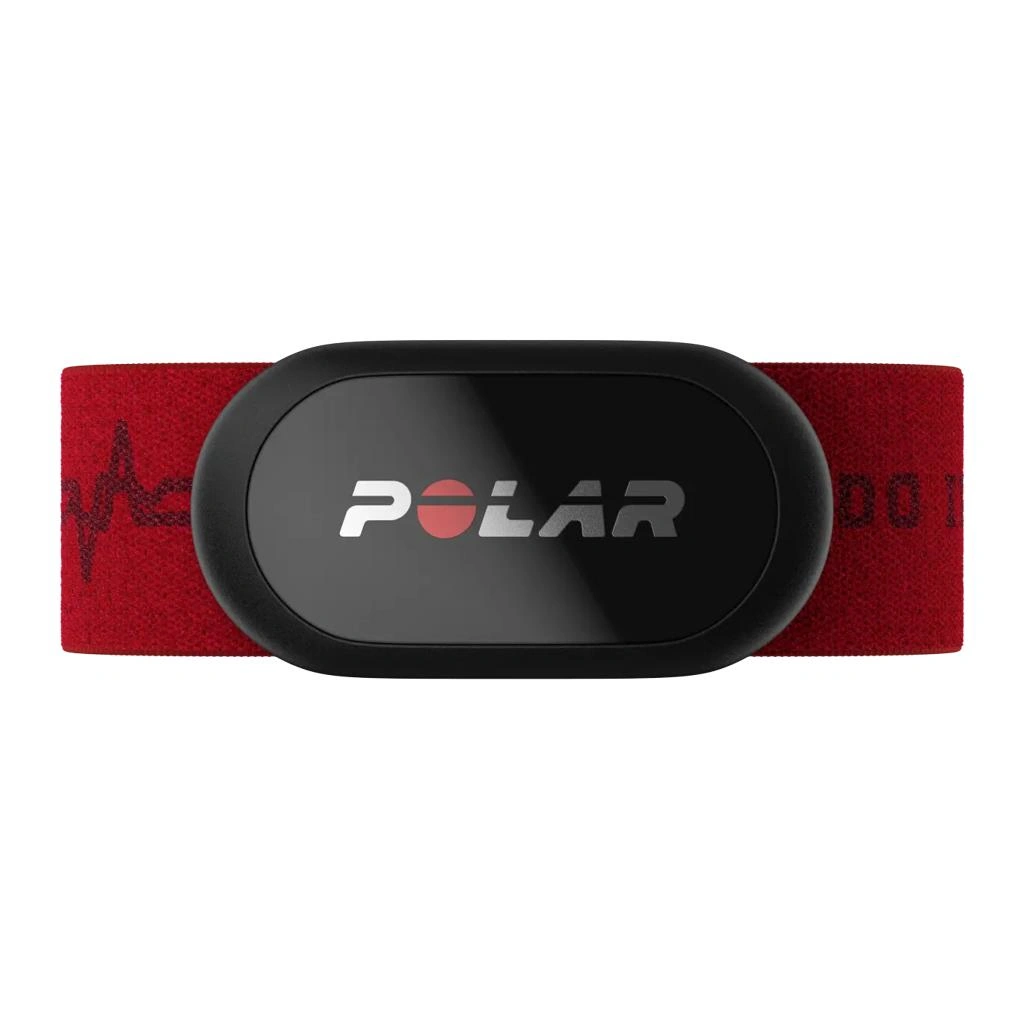
| Attribute | Detail |
| Device Type | Chest Strap Heart Rate Monitor |
| Key Stress Feature | Clinical-grade HRV capture suitable for RMSSD and frequency-domain analysis |
| Stress Measurement Method | Electrocardiography (ECG)-grade R-R interval detection |
| HRV Tracking | Beat-to-beat R-R interval recording; compatible with third-party HRV apps |
| Additional Metrics | Real-time heart rate; VO₂ max estimation (with compatible apps) |
| Battery Life | Up to 400 hours (replaceable CR2025 battery) |
| App Platform | Polar Flow; compatible with Elite HRV, HRV4Training, Kubios |
| Price Range | $ (entry–mid tier) |
| Subscription Required | No — device captures raw data; third-party app costs vary |
| Water Resistance | Yes (pool use rated) |
Value at a Glance: Research-grade HRV data at a budget price — ideal if accuracy matters more than all-day passive wear.
Why It Ranks Best for HRV
- ECG-grade electrode contact significantly reduces motion artifact compared to optical photoplethysmography (PPG), yielding R-R interval data closer to clinical Holter monitor standards [4]
- Multiple published studies have validated the Polar H10 against laboratory-grade ECG equipment for HRV metric calculation [5]
- Raw R-R interval data can be exported for use with validated HRV analysis software (e.g., Kubios HRV Standard), enabling SDNN, RMSSD, LF/HF ratio calculations
- The device captures HRV during both guided sessions and free-form activities
Bottom Line:
If your primary goal is absolute, research-grade HRV accuracy for structured training readiness protocols or data export , the Polar H10 Chest Strap is the premier choice. It trades passive all-day wear comfort for clinical-grade ECG precision without any mandatory subscription fees.
HRV Metric Reference
| HRV Metric | What It Reflects | Measurement Requirement |
| RMSSD | Short-term HRV; parasympathetic (vagal) tone | R-R interval data (beat-to-beat) |
| SDNN | Overall HRV variability; autonomic balance | R-R interval data |
| LF/HF Ratio | Sympathovagal balance (note: interpretation debated) [6] | Frequency-domain analysis of R-R data |
| pNN50 | Proportion of consecutive R-R intervals >50ms apart | R-R interval data |
Clinical Note: HRV indices are research tools. Interpretation of HRV data for health decision-making should involve a qualified clinician. Evidence for consumer HRV monitoring as a standalone clinical tool remains limited and evolving.
Pros & Cons
| Pros | Cons |
| Highest accuracy of any non-clinical wearable for HRV | Requires chest strap; less convenient for passive daily wear |
| Compatible with multiple third-party HRV analysis apps | No display; requires paired device |
| Replaceable battery (no charging cable required) | Not suited as a primary all-day stress tracker |
| Validated in peer-reviewed research | Best suited for dedicated HRV measurement sessions |
| Cost-effective entry point | Some users find chest strap uncomfortable during sleep |
Who This Is Best For
- Researchers, coaches, or highly engaged individuals wanting research-grade HRV data
- Athletes conducting structured HRV-guided training readiness protocols
- Users pairing this device with validated analysis software for longitudinal autonomic monitoring
Best Biofeedback Device for Stress Relief: Muse 2 Headband Review
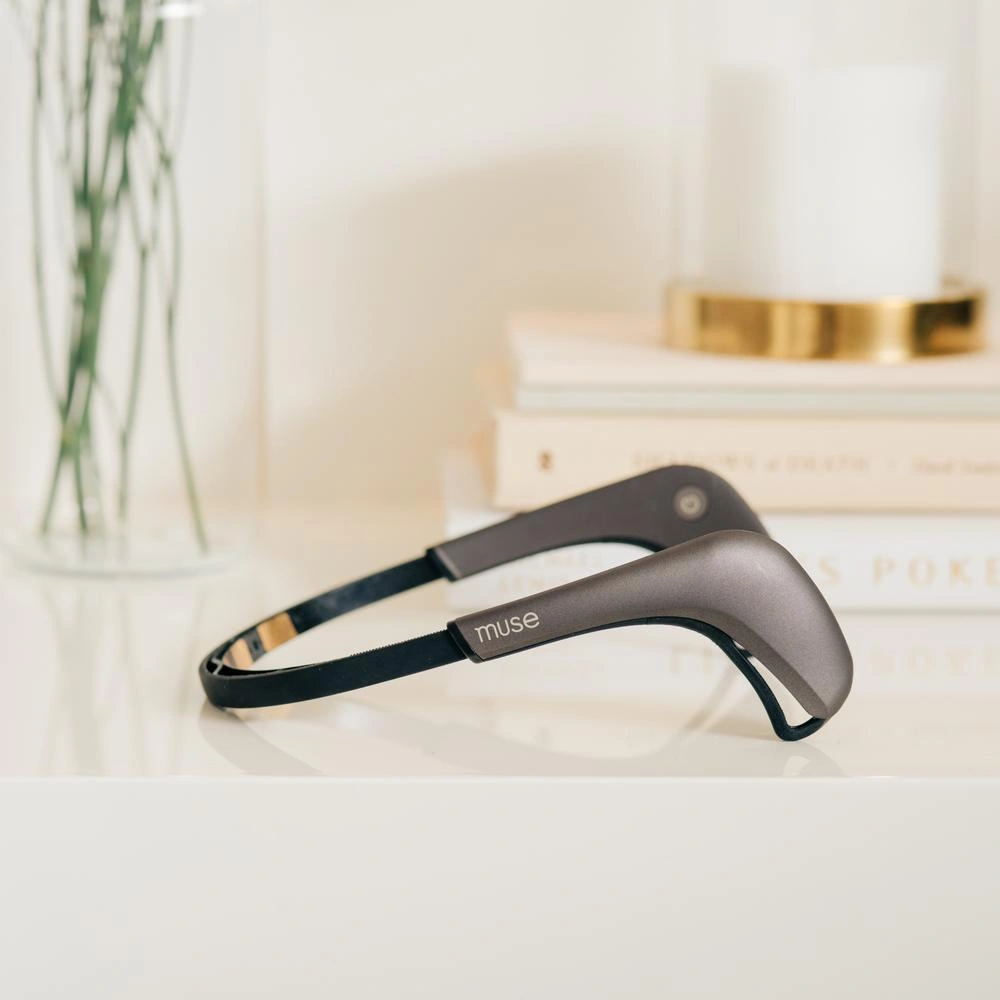
| Attribute | Detail |
| Device Type | EEG-Based Meditation and Biofeedback Headband |
| Key Stress Feature | Real-time brainwave (EEG) feedback during guided meditation sessions |
| Biofeedback Modalities | EEG (brain activity), heart rate, breathing pattern, body movement |
| Stress Measurement Method | EEG signal analysis categorized as calm, neutral, or active mind states |
| Session Format | Guided meditation with real-time audio feedback (ambient soundscapes shift with mental state) |
| Battery Life | Up to 5 hours per charge |
| App Platform | Muse app (iOS / Android); subscription available for extended content library |
| Price Range | $$ |
| Subscription Required | Optional — core session tracking is included; extended content library requires subscription |
| Biofeedback Type | Neurofeedback (EEG) + cardiac + respiratory |
Value at a Glance: Real-time EEG and cardiac biofeedback to turn meditation guesswork into an objective, data-tracked habit.
Important Distinction: Consumer vs. Clinical Biofeedback
| Feature | Muse 2 (Consumer) | Clinical Biofeedback |
| Setting | Home / personal use | Clinical environment with trained therapist |
| Modalities | EEG, HR, respiration | EMG, EEG, GSR, temperature, HRV (therapist-selected) |
| Regulatory Status | Consumer wellness device | Varies; some modalities are adjunct treatments with clinical evidence |
| Evidence Level | Emerging; limited RCTs specific to Muse device | Moderate for specific conditions (e.g., tension headache, anxiety) [7] |
| Personalization | Algorithm-driven | Therapist-customized protocol |
Why It Ranks Best Biofeedback
- The Muse 2 is among the few consumer devices to incorporate EEG-based feedback alongside cardiac and respiratory data within a single session
- Evidence suggests biofeedback and mindfulness-based interventions may be associated with reductions in perceived stress and physiological stress markers [7, 8]
- The real-time feedback loop during meditation sessions provides immediate reinforcement, which is central to biofeedback’s proposed mechanism of action
- Session data is logged for trend review over time
Bottom Line:
If you want to establish or deepen a structured meditation practice using objective, real-time brainwave and respiratory feedback , the Muse 2 Headband is the premier biofeedback tool. It logs your longitudinal relaxation progress without requiring a mandatory ongoing subscription.
Pros & Cons
| Pros | Cons |
| Multi-modal feedback (EEG + HR + respiration) | Headband form factor may reduce compliance for long-term daily use |
| Real-time audio feedback during sessions | Effectiveness specific to Muse device requires further RCT evidence |
| Session-based design encourages structured practice | EEG signal quality is consumer-grade, not clinical-grade |
| Tracks meditation progress longitudinally | Not suitable as a passive all-day stress monitor |
| No mandatory subscription for core features | Limited use case outside dedicated meditation sessions |
Who This Is Best For
If you have tried to meditate but cannot tell whether it is actually working — or you abandon sessions because nothing feels measurable — the Muse 2 closes that feedback loop with real-time data your brain can respond to.
- Individuals establishing or deepening a meditation practice who benefit from objective session feedback
- Users who have found it difficult to sustain meditation without performance data
- Those exploring biofeedback as a self-regulation support tool (not a medical treatment)
- Individuals establishing or deepening a meditation practice who benefit from objective session feedback
- Users who have found it difficult to sustain meditation without performance data
- Those exploring biofeedback as a self-regulation support tool (not a medical treatment)
When to Consult a Healthcare Provider: Consumer biofeedback devices are not substitutes for clinically supervised biofeedback therapy. If you are managing a diagnosed anxiety disorder, PTSD, or other condition in which biofeedback may be a treatment consideration, consult a licensed mental health professional. See our About page for editorial medical oversight details.
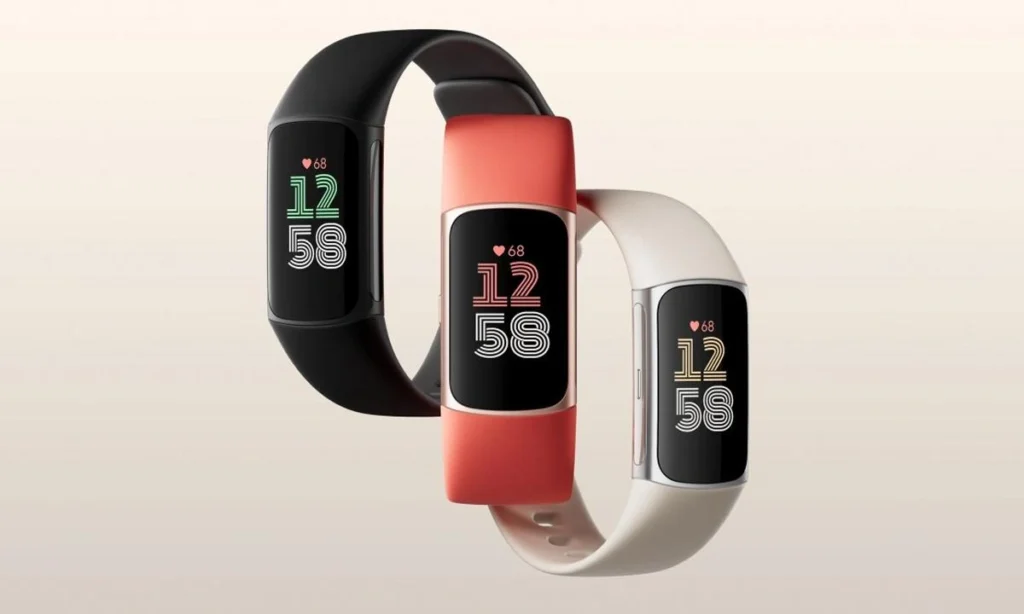
Best Budget Stress Tracker Under $100: Fitbit Charge 6 Review
| Attribute | Detail |
| Device Type | Fitness and Wellness Tracker (Wristband) |
| Key Stress Feature | EDA (Electrodermal Activity) Scan for stress response detection; Daily Stress Management Score |
| Stress Measurement Method | EDA sensor (measures electrodermal activity as a proxy for sympathetic nervous system arousal) + HRV-based Stress Management Score |
| HRV Tracking | Nightly HRV (overnight average); not continuous intraday |
| Additional Metrics | Heart rate, SpO₂, sleep stages, Active Zone Minutes, ECG (AFib detection) |
| Battery Life | Up to 7 days |
| App Platform | Fitbit app (iOS / Android); Google integration |
| Price Range | $ (budget–mid tier) |
| Subscription Required | Fitbit Premium recommended for full data access; core tracking is included |
| Water Resistance | 5 ATM |
Value at a Glance: Stress awareness on a budget, with EDA sensing most devices at this price point do not include.
EDA Sensor — What It Measures
Increased sympathetic nervous system activation — the body’s fight-or-flight response during perceived stress — is associated with increased sweat gland activity at the skin surface, which EDA sensors can detect as a change in electrical conductance [9].
Evidence Note: EDA measurement via wrist-worn devices is an emerging area. Accuracy and contextual sensitivity of wrist-based EDA sensors for stress detection in naturalistic settings is less established than laboratory EDA measurement. Evidence suggests correlation with acute stress states is possible but that individual variability is significant [9, 10].
Pros & Cons
| Pros | Cons |
| Lower price point relative to premium competitors | Fitbit Premium subscription adds to total cost of ownership |
| EDA sensor adds a stress-specific modality absent in many budget devices | Wrist EDA accuracy in naturalistic settings has limitations |
| Google Pixel Watch ecosystem integration | Google’s long-term Fitbit platform commitment has been questioned |
| 7-day battery life | Nightly HRV only; no continuous intraday HRV tracking |
| Stress Management Score provides accessible summary metric | Stress score algorithm is not fully transparent |
Who This Is Best For
- Users new to wellness tracking who want to explore stress-related metrics at a lower investment
- Those already within the Google / Fitbit ecosystem
- Individuals who want a general-purpose fitness tracker with added stress awareness features
Bottom Line:
If you are looking for an affordable fitness tracker that introduces acute stress detection through EDA scanning alongside an accessible daily score , the Fitbit Charge 6 is the standout budget option. Just keep in mind that continuous intraday HRV is absent and full data access favors a Premium subscription.
Best for Meditation Practice
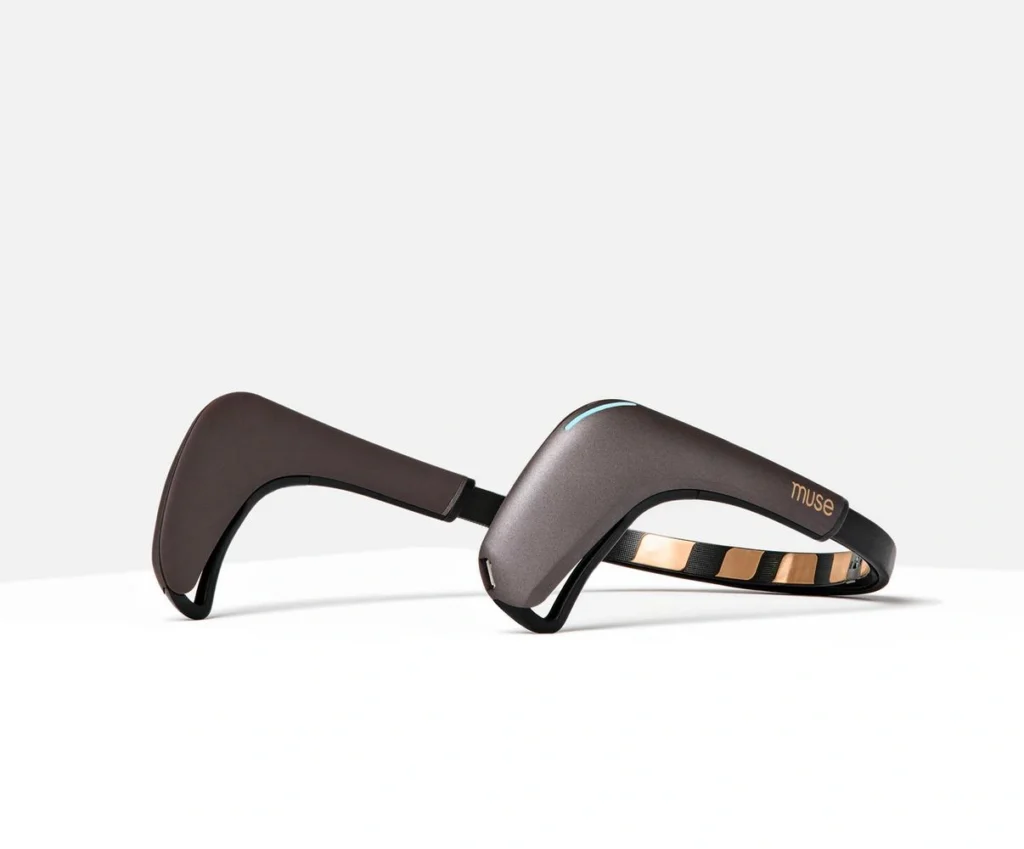
Muse S (Gen 2) — Best for Meditation Practice
| Attribute | Detail |
| Device Type | EEG + PPG Meditation and Sleep Headband |
| Key Stress Feature | Guided meditation with real-time brainwave feedback; sleep position and movement tracking |
| Stress / Relaxation Measurement | EEG (brain activity); Heart Rate; Breathing; Body movement |
| Unique Feature | Digital Sleeping Pill™ — real-time audio guidance that responds to brain activity during sleep onset |
| Session Format | Guided sessions (meditation, sleep); Go-to-Sleep Journeys |
| Battery Life | Up to 10 hours |
| Comfort | Soft textile headband designed for sleep and extended wear |
| App Platform | Muse app (iOS / Android) |
| Price Range | $$ |
| Subscription Required | Optional (extended content library); core session tracking included |
Value at a Glance: Soft-band EEG sleep and meditation tracking that guides your mind from active stress to deep sleep in real time.
Muse S vs. Muse 2 — Comparison
| Feature | Muse S (Gen 2) | Muse 2 |
| Form Factor | Soft textile headband | Rigid sensor band |
| Best Use | Sleep onset + extended meditation | Active guided meditation |
| Sleep Tracking | Yes — sleep position + brain activity during sleep | Limited |
| Comfort for Sleep | Designed for sleep wear | Not recommended for sleep |
| Battery Life | ~10 hours | ~5 hours |
| Price | Higher | Lower |
| EEG Channels | 4 | 4 |
Why It Ranks Best for Meditation
- The Muse S is specifically engineered for extended wear, including during sleep onset, making it one of the few consumer devices providing EEG-informed feedback across the relaxation-to-sleep continuum
- Go-to-Sleep Journeys provide audio content that adapts in real time based on detected brain activity, representing a consumer application of closed-loop neurofeedback principles
- Soft headband design significantly improves wearability compared to rigid sensor formats for users engaging in extended stillness or sleep
Bottom Line:
If you need an objective feedback tool specifically engineered for extended relaxation and sleep-onset support , the Muse S (Gen 2) soft textile headband is your best fit. It utilizes adaptive, closed-loop audio journeys to smoothly guide you across the relaxation-to-sleep continuum.
Who This Is Best For
- Individuals with an established or developing meditation practice seeking objective session feedback
- Those exploring sleep-onset support through audio-guided relaxation with biofeedback
- Users who prioritize extended wear comfort for relaxation-focused tracking
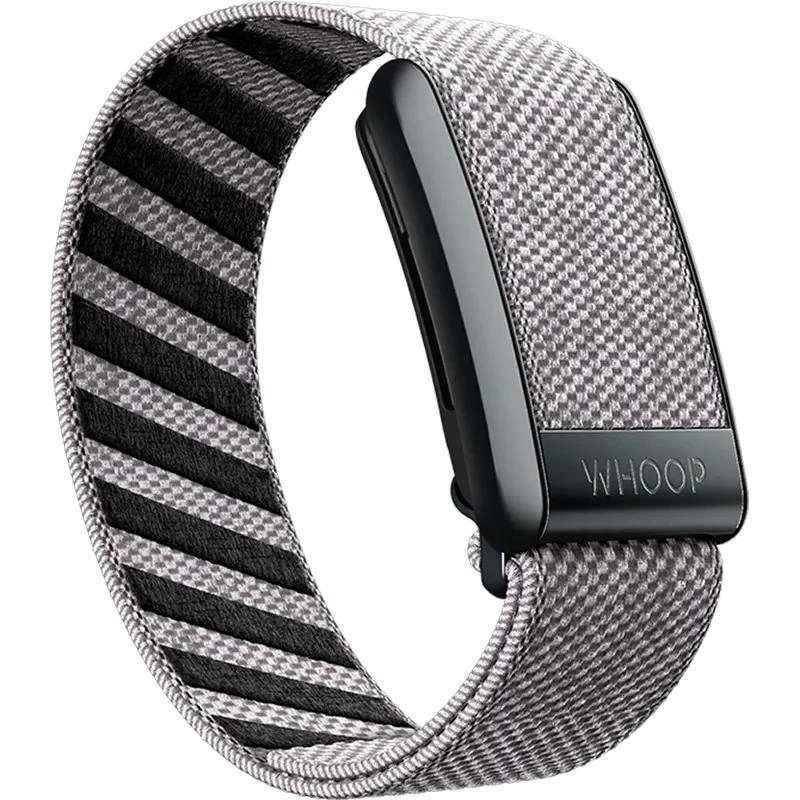
Best Stress Tracker for Athletes: WHOOP 4.0 Recovery Monitor Review
| Attribute | Detail |
| Device Type | Continuous Health and Recovery Monitor (Wristband / Bicep Band) |
| Key Stress Feature | Recovery Score (0–100%) integrating HRV, RHR, sleep performance, and respiratory rate |
| Stress Measurement Method | Overnight HRV (RMSSD-based); Resting Heart Rate; Sleep staging; Strain Score |
| HRV Tracking | Overnight HRV; continuous 24/7 HR monitoring; 5-minute HRV spot check (manual) |
| Additional Metrics | Sleep Coach, Strain Coach, Blood Oxygen (SpO₂), Skin Temperature, Respiratory Rate |
| Battery Life | 4–5 days; charged via slide-on battery pack (no removal required) |
| App Platform | WHOOP app (iOS / Android) |
| Price Range | Subscription model — hardware included with active membership |
| Subscription Required | Yes — device access requires active WHOOP membership |
| Display | None — screenless by design |
| Water Resistance | IP68 + water resistant to 10m |
Value at a Glance: Built for athletes who train with data — your daily recovery score tells you whether to push or protect today.
Recovery Score Components
| Component | Physiological Basis | Weight in Recovery Score |
| HRV | Cardiac autonomic tone; indicator of readiness for physiological challenge | Highest |
| Resting Heart Rate (RHR) | Baseline cardiovascular demand; elevates with illness, overtraining, or high stress | High |
| Sleep Performance | Sleep duration vs. need; consistency and stage distribution | High |
| Respiratory Rate | Sensitive to systemic stress, illness, and respiratory load | Moderate |
Evidence Note: HRV-guided training is a recognized area of sports science research. Evidence suggests that adjusting training load in response to HRV status may be associated with improved athletic adaptation and reduced overtraining risk [11, 12]. However, the specific WHOOP algorithm has not been independently validated in peer-reviewed literature against clinical reference standards.
Pros & Cons
| Pros | Cons |
| Continuous 24/7 monitoring without a display | Mandatory subscription — no one-time purchase option |
| Overnight HRV integrated with sleep staging and strain | No GPS; limited standalone functionality |
| Screenless design eliminates notification distraction | Smaller community and ecosystem than Garmin or Apple |
| Slide-on charging allows uninterrupted wear | Algorithm transparency is limited |
| Strong appeal for structured athletic training periodization | Fitness features more limited than multisport GPS watches |
Who This Is Best For
- Endurance athletes, strength athletes, or team sport players using structured periodization
- Individuals prioritizing recovery metrics over activity tracking features
- Users seeking a screenless device to reduce digital notification exposure
Bottom Line:
If you are an athlete focused entirely on optimizing training periodization and recovery through a screenless, continuous 24/7 monitor , the WHOOP 4.0 delivers an unparalleled recovery metric ecosystem. It eliminates screen distractions entirely, though it requires a commitment to a subscription-only model.
Quick Comparison Table
All Reviewed Devices at a Glance
| Device | Best For | Stress Method | HRV Type | Battery | Subscription | Price Tier |
| Garmin Fenix 7 Pro Solar | Best Overall | HRV (optical wrist) | Overnight + Continuous | Up to 22–37 days | No | $$$ |
| Oura Ring Gen 3 | Smart Ring | HRV + Skin Temp (finger PPG) | Overnight + daytime spot | 4–7 days | Yes | $$ + sub |
| Polar H10 | HRV Accuracy | ECG-grade R-R interval | Session-based (dedicated) | ~400 hours | No (apps vary) | $ |
| Muse 2 Headband | Biofeedback | EEG + HR + Breathing | Session-based | ~5 hours | Optional | $$ |
| Fitbit Charge 6 | Budget | EDA + HRV (optical wrist) | Overnight | 7 days | Optional | $ |
| Muse S (Gen 2) | Meditation & Sleep | EEG + HR + Breathing | Session + Sleep onset | ~10 hours | Optional | $$ |
| WHOOP 4.0 | Athletic Recovery | HRV + RHR + Sleep (wrist PPG) | Overnight | 4–5 days | Yes (required) | Sub-only |
Stress Measurement Method Comparison
| Method | Devices Using It | Accuracy Level | Best Context |
| ECG / R-R Interval (chest) | Polar H10 | Highest (near-clinical) | Dedicated HRV sessions |
| Optical PPG (wrist) | Garmin Fenix 7, Fitbit Charge 6, WHOOP | Moderate | Passive all-day + overnight monitoring |
| Optical PPG (finger ring) | Oura Ring | Moderate–High | Overnight and passive wear |
| EEG (headband) | Muse 2, Muse S | Consumer-grade | Meditation and sleep sessions only |
| EDA / GSR (wrist) | Fitbit Charge 6 | Emerging evidence; high individual variability | Acute stress response detection |





How to Choose
Step 1 — Define Your Primary Goal
| If Your Priority Is… | Consider |
| General stress awareness throughout the day | Garmin Fenix 7 Pro Solar or Fitbit Charge 6 |
| Maximum HRV accuracy for training or research | Polar H10 |
| Recovery monitoring alongside athletic training | WHOOP 4.0 |
| Meditation practice with objective feedback | Muse 2 or Muse S (Gen 2) |
| Discreet wear without a wrist device | Oura Ring Gen 3 |
| Lowest upfront cost of entry | Fitbit Charge 6 or Polar H10 |
Step 2 — Assess Your Wear Preference
| Form Factor | Devices | Best For |
| Wristband / Smartwatch | Garmin Fenix 7, Fitbit Charge 6, WHOOP 4.0 | All-day passive monitoring with display |
| Smart Ring | Oura Ring Gen 3 | Discreet, all-day wear; no display |
| Chest Strap | Polar H10 | Session-based HRV accuracy; not for passive wear |
| EEG Headband | Muse 2, Muse S | Meditation and sleep sessions only |
Step 3 — Evaluate Total Cost of Ownership
| Device | Hardware Cost | Subscription Required | Estimated 12-Month Cost |
| Garmin Fenix 7 Pro Solar | $$$ (one-time) | No | Hardware cost only |
| Oura Ring Gen 3 | $$ (one-time) | Yes | Hardware + subscription (verify current pricing) |
| Polar H10 | $ (one-time) | No (third-party apps vary) | Hardware + optional app costs |
| Muse 2 | $$ (one-time) | Optional | Hardware + optional content subscription |
| Fitbit Charge 6 | $ (one-time) | Optional (Premium) | Hardware + optional subscription (verify current pricing) |
| Muse S (Gen 2) | $$ (one-time) | Optional | Hardware + optional content subscription |
| WHOOP 4.0 | No hardware fee | Yes (required) | Subscription only (verify current pricing) |
All pricing figures must be verified against current manufacturer pricing before relying on cost comparisons. Subscription rates change frequently.
Step 4 — Evaluate Data Privacy Per Device
| Device | Cloud-dependent? | Third-party data sharing | Key compliance note |
|---|---|---|---|
| Garmin Fenix 7 Pro Solar | Yes (Garmin Connect) | Limited; review current policy | No mandatory external subscription |
| Oura Ring Gen 3 | Yes (Oura Cloud) | Review current policy | Subscription model; data tied to account |
| Polar H10 | Optional (Polar Flow) | Varies by third-party app used | Raw R-R data exportable locally |
| Fitbit Charge 6 | Yes (Google ecosystem) | Google data practices apply | Review Google account data settings |
| Muse 2 / Muse S | Yes (Muse app) | Review current policy | Session data stored in app cloud |
| WHOOP 4.0 | Yes (WHOOP platform) | Review current policy | Subscription account required |
All privacy policies are subject to change. Verify current terms on each manufacturer’s website before purchase. Healthcare-sensitive users (clinical staff, researchers) should confirm HIPAA alignment independently.
Key Questions Before You Buy
- Do you want passive, all-day tracking or dedicated session-based feedback?
- Is overnight data (sleep and HRV) sufficient, or do you need intraday stress monitoring?
- Are you willing to pay an ongoing subscription for full feature access?
- What is your comfort tolerance for form factor (wristband, ring, chest strap, headband)?
- Do you need GPS, display, or smartphone notifications from the device?
Common Concerns Answered
“Will I actually wear it every day?”
Compliance is the most common reason wearables end up in a drawer. Devices like the Oura Ring and WHOOP were specifically engineered to disappear into your routine — no screen competing for your attention, no daily removal for charging (WHOOP charges via a slide-on pack while you wear it). The Garmin Fenix 7’s 22-day battery means you remove it roughly once a month.
“Is my health data private?”
Each manufacturer has distinct data practices. Before purchasing, confirm: whether data is processed locally or on cloud servers; whether it is shared with third-party advertisers or research partners; and, for users in healthcare-sensitive roles, whether the app platform aligns with applicable data protection requirements (GDPR, HIPAA, CCPA). Links to each manufacturer’s current privacy policy should be verified before purchase — these terms change.
“I’m not particularly tech-savvy — will I understand what the data means?”
Ease of interpretation varies significantly. The Fitbit app and Oura app present simplified summary scores (Stress Management Score; Readiness Score) accessible to most users. The Polar H10 paired with third-party HRV analysis software is better suited to users comfortable with physiological data. Each product section above includes a usage complexity indicator.
“What if it doesn’t work for me?”
Check each manufacturer’s current return and warranty policy before purchasing — these vary and change. Subscription-based models (WHOOP, Oura) typically offer trial periods; confirm terms on the manufacturer’s site before committing.
Our Final Recommendation
After evaluating seven devices against clinical benchmarks and real-world usability, here is where we land:
If you want one device that does everything without ongoing fees: → Garmin Fenix 7 Pro Solar. No subscription. Long battery. The most complete stress-plus-recovery picture available in a no-subscription wearable.
If you want discreet, passive tracking with strong sleep data: → Oura Ring Gen 3. The form factor disappears completely. The trade-off is a mandatory subscription and no real-time display.
If you are an athlete who trains with data and wants recovery to drive load decisions: → WHOOP 4.0. Built specifically for this use case. Subscription required, but the recovery-first design is unmatched in its category.
If budget is your primary constraint: → Fitbit Charge 6. The only sub-$100 device on this list with EDA stress sensing. Solid starting point before committing to a premium tier.
Still deciding between two options? See our Device Comparisons page for head-to-head breakdowns.
References
- Shaffer F, Ginsberg JP. An Overview of Heart Rate Variability Metrics and Norms. Front Public Health. 2017;5:258. doi:10.3389/fpubh.2017.00258
- Menghini L, Cellini N, Goldstone A, Baker FC, de Zambotti M. A standardized framework for testing the performance of sleep-tracking technology: Step-by-step guidelines and open-source code. Sleep. 2021;44(2):zsaa170. doi:10.1093/sleep/zsaa170
- de Zambotti M, Goldstone A, Claudatos S, Colrain IM, Baker FC. A validation study of Fitbit Charge 2™ compared with polysomnography in adults. Chronobiol Int. 2018;35(4):465-476.
- Gilgen-Ammann R, Schweizer T, Wyss T. RR interval signal quality of a heart rate monitor and an ECG Holter at rest and during exercise. Eur J Appl Physiol. 2019;119(7):1525-1532. doi:10.1007/s00421-019-04132-5
- Plews DJ, Scott B, Altini M, Wood M, Kilding AE, Laursen PB. Comparison of Heart-Rate-Variability Recording With Smartphone Photoplethysmography, Polar H7 Chest Strap, and Electrocardiography. Int J Sports Physiol Perform. 2017;12(10):1324-1328. doi:10.1123/ijspp.2016-0668
- Billman GE. The LF/HF ratio does not accurately measure cardiac sympatho-vagal balance. Front Physiol. 2013;4:26. doi:10.3389/fphys.2013.00026
- Tan G, Shaffer F, Lyle R, Teo I (eds). Evidence-Based Practice in Biofeedback and Neurofeedback (3rd ed). Association for Applied Psychophysiology and Biofeedback (AAPB); 2016.
- Khoury B, Lecomte T, Fortin G, et al. Mindfulness-based therapy: A comprehensive meta-analysis. Clin Psychol Rev. 2013;33(6):763-771. doi:10.1016/j.cpr.2013.05.005
- Boucsein W. Electrodermal Activity (2nd ed). Springer; 2012.
- Greco A, Valenza G, Lanata A, Scilingo EP, Citi L. cvxEDA: A convex optimization approach to electrodermal activity processing. IEEE Trans Biomed Eng. 2016;63(4):797-804. doi:10.1109/TBME.2015.2474131
- Kiviniemi AM, Hautala AJ, Kinnunen H, Tulppo MP. Endurance training guided individually by daily heart rate variability measurements. Eur J Appl Physiol. 2007;101(6):743-751. doi:10.1007/s00421-007-0552-2
- Plews DJ, Laursen PB, Kilding AE, Buchheit M. Heart rate variability in elite triathletes, is variation in variability the key to effective training? A case comparison. Eur J Appl Physiol. 2012;112(11):3729-3741. doi:10.1007/s00421-012-2354-4
- Bent B, Goldstein BA, Kibbe WA, Dunn JP. Investigating sources of inaccuracy in wearable optical heart rate sensors. NPJ Digit Med. 2020;3:18. doi:10.1038/s41746-020-0226-6
Last Updated: 2026-05-15
Written by Dr. Rishav Das, M.B.B.S. — see About page for full author credentials.
Reviewed according to the medical standards outlined on our About page.
Medical Disclaimer: The information on this page is for educational purposes and should not replace professional medical advice. Always consult a qualified healthcare provider for diagnosis, treatment, or medical device recommendations tailored to your individual health needs.