How to Track Stress and Support Overall Wellness
Understand the science and limitations of wearable stress tracking. Learn how to interpret physiological markers like HRV to identify personal wellness trends.
Written by Dr. Rishav Das, M.B.B.S. — Wellness Device Data Analyst | Consumer Device Accuracy Specialist
See our About page for full credentials, scope of review, and editorial governance.
Medical Review: Reviewed according to the medical standards outlined on our About page.
Introduction
If you’ve noticed you’re sleeping worse, feeling wired but exhausted even on rest days, or you’re trying to make sense of what the stress score on your smartwatch actually means — this guide is for you.
It explains how your body responds to stress, what consumer wearables can and cannot measure, and what the evidence actually says about managing stress. The technical terms are here because the science matters, but each one is explained in plain language the first time it appears.
Who this guide is for
- The stressed professional or parent who wants to understand what their wearable’s recovery and stress scores are actually telling them
- The new wearable owner who just got a Garmin, Apple Watch, or Oura Ring and wants to use it beyond step counting
- Anyone experiencing persistent stress who wants to understand when self-monitoring is enough and when it’s time to speak to someone
| Topic | Summary |
| Scope of this guide | Evidence-based overview of stress physiology, wellness tracking technology, and practical stress management approaches |
| Who this is for | Adults seeking to understand and monitor stress; individuals evaluating wellness tracking tools |
| Tracking as one tool | Wearable and app-based stress tracking may complement — but does not replace — established stress management practices or professional mental health care |
| Important limitation | Consumer stress tracking devices measure physiological proxies (e.g., HRV, skin conductance) and do not directly measure psychological stress or diagnose anxiety disorders |
| When to seek professional support | Persistent stress, anxiety, or depressive symptoms warrant evaluation by a licensed mental health professional or physician — see Mental Health and Professional Support below |
Key Takeaways
- If stress has persisted for more than two weeks or is affecting your daily functioning, professional support — not tracking — is the appropriate next step
- Consumer wearables measure physiological signals associated with stress — they do not directly measure psychological stress or diagnose any condition
- HRV (the variation between your heartbeats) is the most widely used stress proxy in wearables; trends over weeks matter far more than any single reading
- Chronic stress is linked to sleep disruption, cardiovascular strain, immune changes, and metabolic effects — many of which are partially visible in tracking data over time
- Effective stress management is well-evidenced: slow breathing, regular moderate exercise, and quality sleep have the strongest and most consistent support
- How to Track Stress and Support Overall Wellness
- Introduction
- Key Takeaways
- Understanding Stress and Its Effects
- What Your Wearable Stress Score Actually Measures — And What It Can't
- Wellness Tracking Beyond Stress
- Using Stress Data for Wellness
- Evidence-Based Stress Management
- How to Choose a Stress and Wellness Tracker: A Buyer's Guide
- Common Questions
- Mental Health and Professional Support
- Our Recommended Starting Points
- What to Do Next
- References
Understanding Stress and Its Effects
Do you feel “on” even when you’re resting? Wake at 3am with your mind running? Notice your sleep getting worse despite being exhausted? These are common patterns when the nervous system is under sustained load — and the data from your wearable, if you have one, may be reflecting exactly that.
Understanding what stress actually does in the body helps explain both the symptoms you might be experiencing and what tracking data can and cannot tell you about them.
Stress is a normal physiological and psychological response to perceived demands or threats. The body’s stress response involves multiple systems, including the nervous, endocrine, and immune systems. Understanding these mechanisms provides the foundation for interpreting wellness tracking data accurately.
The Stress Response in Your Body
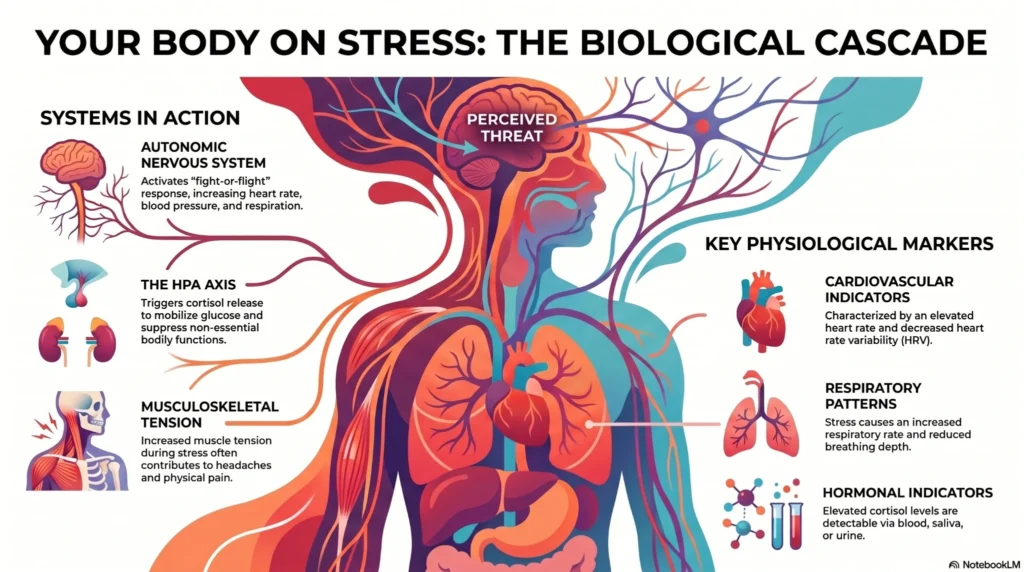
When the body perceives a threat or significant demand, a coordinated cascade of biological responses is initiated across several interconnected systems.
| System Involved | Response | Associated Mechanism |
| Autonomic Nervous System | Activates “fight-or-flight” via sympathetic branch | Increased heart rate, blood pressure, respiration |
| Hypothalamic-Pituitary-Adrenal (HPA) Axis | Triggers cortisol release from adrenal glands | Mobilizes glucose, suppresses non-essential functions |
| Endocrine System | Releases epinephrine (adrenaline) and norepinephrine | Rapid cardiovascular and metabolic changes |
| Immune System | Short-term enhancement; chronic suppression over time | Altered inflammatory response with prolonged activation |
| Musculoskeletal System | Increased muscle tension | May contribute to headaches and musculoskeletal pain |
Key Physiological Markers Associated with the Stress Response:
- Elevated heart rate
- Decreased heart rate variability (HRV)
- Increased skin conductance (electrodermal activity)
- Elevated cortisol levels (detectable via blood, saliva, or urine — not consumer wearables)
- Altered breathing patterns (increased respiratory rate, reduced depth)
Sources: Chrousos GP. Stress and disorders of the stress system. Nature Reviews Endocrinology. 2009;5(7):374–381. | McEwen BS. Neurobiological and systemic effects of chronic stress. Chronic Stress. 2017;1.
Acute Stress vs. Chronic Stress
Not all stress is equivalent in its duration, triggers, or health implications. The distinction between acute and chronic stress is important for understanding both the body’s responses and the limitations of tracking data.
| Feature | Acute Stress | Chronic Stress |
| Duration | Short-term (minutes to hours) | Prolonged (weeks, months, years) |
| Trigger | Specific, identifiable event | Ongoing demands, unresolved challenges |
| Physiological Response | Rapid activation and recovery | Sustained HPA axis activation |
| Health Impact | Generally adaptive; may enhance performance | Associated with increased risk of cardiovascular disease, immune dysfunction, metabolic disorders, and mental health conditions |
| HRV Pattern | Temporary depression with recovery | Persistently reduced HRV in some studies |
| Psychological Effect | Heightened alertness, focus | May contribute to anxiety, depression, burnout |
| Trackability | May be detectable via acute HRV or EDA changes | Harder to isolate via wearables; trends more informative |
⚠️ Important: Research indicates that chronic stress is associated with increased risk of adverse health outcomes. However, correlation between consumer wearable stress metrics and clinically defined chronic stress has not been definitively established. See Limitations of Stress Tracking Technology below.
Sources: Cohen S, et al. Psychological stress and disease. JAMA. 2007;298(14):1685–1687. | Kivimäki M, Kawachi I. Work as a risk factor for cardiovascular disease. Current Cardiology Reports. 2015;17(9):74.
How Stress Affects Physical Health
Research across multiple body systems has identified associations between chronic stress and adverse health outcomes. The evidence base varies by system and outcome.
| Body System | Associated Effects of Chronic Stress | Evidence Level |
| Cardiovascular | Elevated blood pressure; increased risk of coronary artery disease | Well-established (meta-analytic evidence) |
| Immune | Altered cytokine production; increased susceptibility to infection | Established in laboratory and longitudinal studies |
| Metabolic | Cortisol-mediated insulin resistance; visceral fat accumulation | Moderate evidence |
| Gastrointestinal | Exacerbated IBS symptoms; altered gut microbiome | Emerging evidence |
| Sleep | Disrupted sleep architecture; insomnia risk | Well-established |
| Musculoskeletal | Chronic tension headaches; exacerbated musculoskeletal pain | Moderate evidence |
| Reproductive | Disrupted menstrual cycles; reduced fertility in some studies | Moderate evidence |
By the numbers: Chronic stress has been associated with a substantially elevated risk of cardiovascular disease across multiple large longitudinal studies. Research published in Scandinavian Journal of Work, Environment & Health found that work-related stress was among the most consistently documented risk factors for coronary heart disease. Your HRV trend may be one of the earliest detectable physiological signals of cumulative stress load.
Sources: Kivimäki M, et al. Work stress in the etiology of coronary heart disease. Scandinavian Journal of Work, Environment & Health. 2006;32(6 Suppl):1–112. | Segerstrom SC, Miller GE. Psychological stress and the human immune system: a meta-analytic study. Psychological Bulletin. 2004;130(4):601–630.
Stress, Anxiety, and Mental Health
It is important to distinguish between everyday stress and clinical mental health conditions. This distinction affects appropriate next steps and is not one that consumer wellness technology can make.
| Concept | Definition | Example | When Professional Help Is Indicated |
| Everyday Stress | Normal response to demands; typically resolves when stressor resolves | Work deadline pressure | Not typically required for isolated episodes |
| Stress Disorder (Acute) | Intense short-term response to a traumatic event | Following an accident or bereavement | Yes, if symptoms persist beyond 3 days and significantly impair functioning |
| Anxiety Disorder | Persistent, disproportionate worry or fear not linked to a specific stressor; DSM-5 diagnosable conditions | Generalized Anxiety Disorder (GAD), panic disorder | Yes — diagnosis and treatment require a licensed mental health professional |
| Burnout | Occupational phenomenon involving emotional exhaustion, depersonalization, and reduced efficacy (WHO ICD-11) | Chronic work-related exhaustion | Yes, if significantly impairing daily functioning |
| Depression | Persistent low mood, anhedonia, and associated symptoms lasting ≥2 weeks (DSM-5 criteria) | Major Depressive Disorder | Yes — evaluation by a licensed clinician is essential |
⚠️ Tracking Limitation: Consumer wellness devices cannot diagnose anxiety disorders, depression, burnout, or any other mental health condition. If you are experiencing persistent emotional distress, consult a licensed mental health professional — see Mental Health and Professional Support below.
Sources: American Psychiatric Association. Diagnostic and Statistical Manual of Mental Disorders, 5th ed. (DSM-5). 2013. | World Health Organization. Burn-out an “occupational phenomenon”: International Classification of Diseases. 2019.
What Your Wearable Stress Score Actually Measures — And What It Can’t
Consumer stress tracking technology measures physiological signals that may be associated with the stress response. Understanding what these signals represent — and their limitations — is essential for appropriate interpretation.
HRV as a Stress Indicator
Heart rate variability (HRV) refers to the variation in time intervals between consecutive heartbeats. It is influenced by the balance between sympathetic (stress-activating) and parasympathetic (rest-and-digest) branches of the autonomic nervous system.
| HRV Concept | Explanation |
| What HRV reflects | Autonomic nervous system balance; higher HRV generally associated with parasympathetic dominance and physiological readiness |
| Relationship to stress | Acute and chronic stress are associated with reduced HRV in research literature |
| Common metric: RMSSD | Root mean square of successive differences — most common short-term HRV metric used in wearables; reflects parasympathetic activity |
| Common metric: SDNN | Standard deviation of normal-to-normal intervals — longer-term HRV metric; less commonly used in consumer devices |
| Measurement window | Consumer devices typically measure over 1–5 minutes during sleep or rest; research-grade HRV typically uses 24-hour Holter monitoring |
| Individual variation | HRV ranges vary substantially between individuals; absolute values are less meaningful than personal trends over time |
| Confounders | Alcohol, illness, poor sleep, intense exercise, menstrual cycle phase, and age all influence HRV independently of psychological stress |
Sources: Task Force of the European Society of Cardiology and the North American Society of Pacing and Electrophysiology. Heart rate variability: standards of measurement. Circulation. 1996;93(5):1043–1065. | Shaffer F, Ginsberg JP. An overview of heart rate variability metrics and norms. Frontiers in Public Health. 2017;5:258.
Physiological Stress Markers
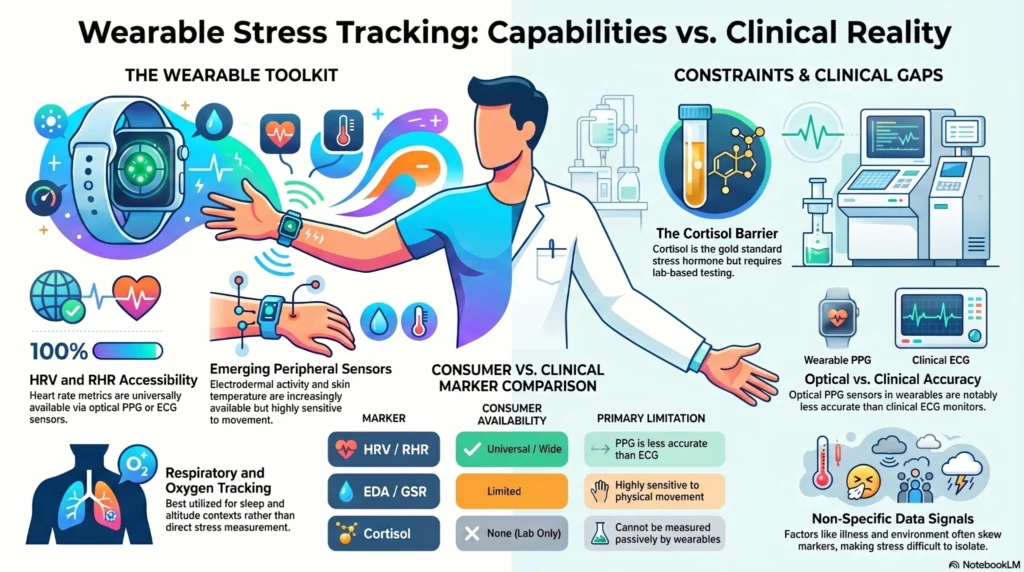
The table below summarises the key physiological signals that consumer devices may track, together with their measurement method, availability, and key limitations.
| Marker | What It Measures | Consumer Device Availability | Limitations |
| Heart Rate Variability (HRV) | Autonomic nervous system balance | Widely available (optical PPG or ECG) | Optical PPG less accurate than ECG; many confounders |
| Resting Heart Rate (RHR) | Cardiovascular demand at rest | Universally available | Non-specific; elevated by many factors beyond stress |
| Electrodermal Activity (EDA) / GSR | Skin sweat gland activity (sympathetic arousal) | Limited consumer availability (e.g., some Fitbit models) | Highly sensitive to movement; requires calibration |
| Skin Temperature | Peripheral blood flow changes | Increasingly available | Affected by environment, illness, hormonal changes |
| Respiratory Rate | Breathing pattern | Available on select wearables | Lower accuracy in consumer devices vs. clinical monitors |
| Blood Oxygen Saturation (SpO2) | Oxygen levels | Widely available | Not a direct stress marker; useful for sleep and altitude contexts |
| Cortisol | Primary stress hormone | Not available in consumer wearables (lab test only) | Gold standard for HPA axis activation; not passively measurable |
Subjective vs. Objective Stress Measurement
Effective stress awareness often involves both physiological data and self-reported experience. Neither approach alone provides a complete picture.
| Measurement Type | Examples | Strengths | Limitations |
| Subjective (Self-Reported) | Mood logs, perceived stress scale (PSS), journals, stress ratings | Captures psychological experience directly; low cost | Recall bias; influenced by current mood state |
| Objective (Physiological) | HRV, EDA, cortisol (lab), blood pressure | Not affected by self-report bias; continuous monitoring possible | Measures proxies, not stress itself; many confounders |
| Combined Approach | Pairing wearable data with mood logging | Identifies patterns linking physiology and perception | Requires consistency; interpretation still complex |
Validated Subjective Stress Tools (Clinical/Research Context):
- Perceived Stress Scale (PSS) — Cohen et al., 1983; widely used 10- or 14-item questionnaire
- State-Trait Anxiety Inventory (STAI) — Spielberger, 1983
- General Health Questionnaire (GHQ)
- Burnout Inventory (MBI) — Maslach, 1981
Editorial Note: These validated tools are referenced for educational context only. This page does not administer or interpret diagnostic questionnaires.
Sources: Cohen S, et al. A global measure of perceived stress. Journal of Health and Social Behavior. 1983;24(4):385–396.
What Stress Tracking Can Actually Do For You
Consumer stress tracking has real constraints — covered in detail below. But used appropriately, it offers something genuinely useful: a consistent, objective window into how your body is responding to life over time.
Even with its limitations, tracking HRV trends over four to eight weeks can:
- Show you which days your nervous system is recovering well — and which it isn’t
- Help you spot lifestyle habits that consistently depress your resilience (alcohol, poor sleep, high workload periods)
- Give you an objective reference point beyond how you subjectively feel on any given morning
- Flag accumulating physiological load before it becomes symptomatic
Many users notice, for example, that alcohol — even one to two drinks — reliably suppresses their overnight HRV by a measurable margin that becomes clearly visible only across weeks of data. That kind of pattern is difficult to perceive without a consistent external signal.
The value of stress tracking is in the trend, not the number. The sections below explain what the data represents and how to interpret it honestly.
Limitations of Stress Tracking Technology
Consumer stress tracking carries important constraints that readers should understand before drawing conclusions from device data.
| Limitation | Detail |
| No direct psychological measurement | Devices measure physiological proxies; cannot detect emotional experience, cognitive stress, or worry |
| High individual variability | HRV baselines differ substantially between people; population norms have limited individual applicability |
| Multiple confounders | Alcohol, caffeine, exercise, illness, sleep quality, hydration, and ambient temperature all influence readings |
| Algorithm opacity | Proprietary “stress scores” use undisclosed algorithms; peer-reviewed validation is limited for most consumer products |
| Measurement timing constraints | Most consumer HRV measurements occur during sleep, limiting daytime stress capture |
| Accuracy of optical PPG vs. ECG | Photoplethysmography (optical sensors on wrists) is less accurate than electrocardiography for HRV, particularly during movement |
| Risk of increased anxiety | For some individuals, frequent monitoring of physiological data may increase — not decrease — perceived stress |
⚠️ User Wellbeing Note: Research and clinical observation suggest that for some individuals — particularly those prone to health anxiety — close monitoring of physiological data may amplify stress rather than support wellness. If tracking feels anxiety-provoking, reducing monitoring frequency or discontinuing use may be appropriate. See When Tracking Becomes Counter-Productive below.
Wellness Tracking Beyond Stress
Wellness tracking encompasses multiple domains beyond stress measurement. The following categories reflect features available across consumer wearable devices and apps.
Readiness and Recovery Scores
Many wearable platforms synthesise multiple physiological inputs into a single composite score intended to reflect daily physiological preparedness or recovery status.
| Concept | What It Represents | Common Inputs Used |
| Readiness Score | Composite daily metric indicating physiological preparedness for activity | HRV, resting heart rate, sleep quality/duration, previous activity load |
| Recovery Score | Assessment of how well the body has recovered from previous physical stress | Similar to readiness; may weight training load more heavily |
| HRV Trend | Day-over-day change in HRV relative to personal baseline | Rolling average vs. most recent HRV reading |
| Body Battery / Energy Reserve | Estimated energy available for the day (proprietary term, Garmin) | HRV, sleep, activity, stress score inputs |
Interpretation Guidance:
- Scores reflect physiological readiness, not necessarily psychological readiness.
- Day-to-day variation is normal; trends over 1–2 weeks are more informative than single readings.
- Low readiness scores do not necessarily indicate the need to rest; context matters.
Mindfulness and Meditation Tracking
Several wearable platforms offer features designed to support or log mindfulness and breathing practices.
| Feature Type | Description | Devices / Platforms Offering |
| Guided breathing exercises | Paced breathing prompts to support HRV biofeedback or relaxation | Garmin, Apple Watch, Fitbit, Samsung Galaxy Watch |
| Mindfulness session logging | Tracks duration and frequency of meditation sessions | Apple Watch (Mindfulness app), Fitbit, Oura |
| Stress response during sessions | Some devices track HRV or EDA changes during mindfulness exercises | Fitbit Sense (EDA scan) |
| Breathing rate monitoring | Tracks respiratory rate during rest and sleep | Garmin, Polar, Oura Ring |
| Third-party app integration | Connects meditation apps (Calm, Headspace) to wearable platforms | Apple Health, Google Fit, Garmin Connect |
Evidence Context for Mindfulness: Evidence suggests mindfulness-based stress reduction (MBSR) is associated with reductions in self-reported stress and anxiety. Wearable tracking of mindfulness sessions provides behavioural data (frequency, duration) but does not directly measure mindfulness quality or its psychological effects.
Sources: Khoury B, et al. Mindfulness-based stress reduction for healthy individuals. Journal of Psychosomatic Research. 2015;78(6):519–528.
Mood and Energy Logging
Some wearable companion apps and standalone wellness platforms offer features for manually recording mood or perceived energy levels throughout the day.
| Feature | Function | Limitations |
| Manual mood logging | User rates mood, energy, or stress on a numerical or categorical scale | Relies on self-report; dependent on consistent engagement |
| Energy level logging | User records perceived energy throughout the day | Subjective; influenced by current state at time of logging |
| Contextual tagging | Allows users to tag stressors, activities, or life events alongside physiological data | Requires consistent behaviour to generate useful patterns |
| Correlation display | Some apps overlay mood logs with physiological data to identify patterns | Correlational; does not establish causation |
Clinical Mood Tracking Context: Mood logging in consumer apps is not equivalent to validated clinical mood monitoring tools used in the diagnosis or management of mood disorders. If mood disturbances are persistent or severe, clinical assessment is recommended — see Mental Health and Professional Support below.
Sleep’s Role in Stress Management
Sleep and stress have a bidirectional relationship: poor sleep increases physiological and psychological stress responses, and stress commonly disrupts sleep.
| Sleep Factor | Relationship to Stress | Tracking Availability |
| Total sleep duration | Insufficient sleep is associated with elevated cortisol and reduced stress tolerance | Widely tracked |
| Sleep efficiency | Lower efficiency associated with poorer next-day stress recovery | Available on most wearables |
| Deep (slow-wave) sleep | Associated with physical recovery and HPA axis regulation | Estimated on most wearables (accuracy varies) |
| REM sleep | Associated with emotional memory processing and psychological recovery | Estimated on most wearables |
| Sleep onset | Delayed sleep onset is a common symptom of stress and anxiety | Tracked |
| HRV during sleep | Reflects overnight autonomic recovery; commonly used for readiness scores | Available on HRV-capable devices |
Cross-Pillar Link: For detailed guidance on sleep tracking and sleep quality metrics, see our Sleep & Recovery pillar.
Sources: Akerstedt T, et al. Sleep and subjective sleepiness in relation to stress and disengagement in work and leisure. Biological Psychology. 2007;76(3):228–233.
Using Stress Data for Wellness
Stress tracking data is most useful when interpreted as part of a broader pattern over time, rather than as a real-time diagnostic measure.
Identifying Your Stress Patterns
Establishing a meaningful personal baseline before interpreting stress tracking data is an important first step.
| Step | Action | What to Look For |
| 1. Establish baseline | Track consistently for 2–4 weeks without changing behaviours | Personal HRV range; typical resting heart rate; average sleep duration |
| 2. Identify recurring low-HRV days | Review weekly patterns | Consistent dips on specific days (e.g., Monday mornings, high-demand periods) |
| 3. Overlay lifestyle factors | Use mood or context logging alongside physiological data | Correlation between high-stress events and physiological changes |
| 4. Review trends, not single days | Use rolling 7- or 14-day averages | Downward trends in HRV or readiness over extended periods |
| 5. Note recovery patterns | Assess how quickly metrics return to baseline after stress | Slow recovery may indicate cumulative stress accumulation |
Recognising Early Warning Signs
The following patterns in tracking data may warrant attention, though they are not diagnostic.
| Signal | Possible Interpretation | Recommended Action |
| Sustained HRV decline (>2 weeks) | Possible physiological stress accumulation, illness, or overtraining | Evaluate sleep, activity load, and lifestyle; consult physician if unexplained |
| Persistently elevated resting heart rate | Possible stress, illness, dehydration, or overtraining | Review hydration, sleep, and illness status |
| Worsening sleep quality trend | Possible stress response, anxiety, or circadian disruption | Evaluate sleep hygiene; consult clinician if persistent |
| Decline in readiness score trend | Accumulation of physiological load | Prioritise recovery; review lifestyle factors |
⚠️ Important Caveat: These signals are physiological patterns and do not constitute medical diagnoses. Unexplained changes in physiological metrics should be discussed with a qualified healthcare provider, not self-diagnosed using tracking data.
Connecting Stress to Behaviour and Health
Tracking data becomes more actionable when considered alongside modifiable lifestyle factors.
| Behaviour / Factor | Potential Relationship to Stress Metrics | Actionability |
| Alcohol consumption | Acutely suppresses HRV; disrupts sleep architecture | Directly modifiable |
| Caffeine intake | May elevate heart rate; timing affects sleep | Directly modifiable |
| Physical activity | Acute load reduces HRV; regular moderate exercise associated with improved HRV over time | Modifiable with guidance |
| Work schedule / load | High-demand periods may correlate with sustained HRV reduction | Partially modifiable |
| Social interaction | Evidence suggests positive social connection is associated with reduced stress response | Modifiable |
| Nutrition | Meal timing and composition may affect HRV and autonomic function | Modifiable |
A pattern many trackers discover: Alcohol — even one to two drinks — is consistently associated with measurable suppression of overnight HRV. This effect is typically only visible when comparing trend data across multiple weeks, not in any single night’s reading. For many users, this becomes one of the most concrete, personally motivating data points from tracking.
When Tracking Becomes Counter-Productive
Research and clinical observation suggest tracking may be unhelpful or harmful for some users.
| Scenario | Description | Recommended Action |
| Health anxiety escalation | Frequent checking of scores leads to increased worry about health | Reduce monitoring frequency; consider discontinuing |
| Orthosomnia | Excessive focus on sleep data increases sleep anxiety and worsens sleep (clinical term recognised in literature) | Reduce sleep tracking reliance; consult sleep specialist if persistent |
| Data-driven rigidity | Skipping beneficial activities (social events, exercise) based on “low readiness” scores | Recalibrate use; treat data as one input, not a directive |
| Metric obsession | Persistent anxiety about daily scores regardless of subjective wellbeing | Consider suspension of tracking; discuss with mental health professional |
| Worsening existing anxiety | Tracking exacerbates pre-existing anxiety or OCD tendencies | Discontinue use; consult mental health professional |
Sources: Kolla BP, et al. Orthosomnia: are some patients taking the healthy sleep movement too far? Journal of Clinical Sleep Medicine. 2019;15(2):351–354.
Evidence-Based Stress Management
Stress management encompasses a broad range of approaches with varying levels of supporting evidence. The following is an educational overview; this content does not constitute personalised medical or psychological advice.
New to stress management? Start here.
Before exploring the full range of approaches below, these three actions have the strongest evidence base and the lowest barrier to entry:
- One sleep hygiene change — Consistent wake time (even on weekends) is the single most evidence-supported intervention for sleep quality. Start there before addressing anything else.
- 5-minute slow breathing exercise — Exhale twice as long as you inhale (e.g., 4 seconds in, 8 seconds out). Repeat for five minutes. This acutely activates the parasympathetic nervous system and can reduce perceived stress within a single session.
- Establish a two-week HRV baseline — If you have a wearable, track without changing your behaviour for two weeks. You need a baseline before any reading is meaningful.
Lifestyle Factors That Affect Stress
Several modifiable lifestyle factors are associated with how the body responds to and recovers from stress.
| Lifestyle Factor | Association with Stress Response | Evidence Level |
| Sleep quantity and quality | Insufficient sleep is associated with elevated cortisol, reduced HRV, and impaired stress regulation | Well-established |
| Physical activity | Regular moderate exercise is associated with reduced perceived stress and improved autonomic regulation | Well-established |
| Alcohol | Acute and chronic alcohol use is associated with HRV suppression and disrupted HPA axis function | Established |
| Caffeine | High caffeine intake may exacerbate anxiety and physiological stress responses in sensitive individuals | Moderate evidence |
| Nutrition | Dietary patterns may influence inflammatory markers associated with chronic stress | Emerging/moderate evidence |
| Screen time and news consumption | Associated with elevated perceived stress in observational studies | Limited/emerging evidence |
| Nature exposure | Some evidence suggests time in natural environments may reduce cortisol and perceived stress | Emerging evidence |
Relaxation Techniques and Their Effectiveness
A range of relaxation-based approaches have been studied in relation to stress and anxiety. Evidence strength varies by technique and population.
| Technique | Mechanism | Evidence Summary |
| Diaphragmatic breathing / slow breathing | Activates parasympathetic nervous system; increases HRV acutely | Well-supported for acute stress reduction; limited long-term efficacy data |
| Progressive Muscle Relaxation (PMR) | Sequential muscle tension and release; reduces physiological arousal | Moderate evidence for anxiety and stress reduction |
| Mindfulness-Based Stress Reduction (MBSR) | 8-week structured programme; combines mindfulness meditation and body scan | Good evidence for perceived stress and anxiety reduction in adults |
| Yoga | Combines physical movement, breathing, and mindfulness | Moderate evidence for stress and HRV improvement |
| Biofeedback (HRV biofeedback) | Real-time HRV feedback to guide slow-paced breathing | Moderate evidence; may reduce anxiety and improve HRV |
| Guided imagery / visualisation | Cognitive technique for relaxation response | Limited high-quality evidence; may complement other approaches |
| Autogenic training | Self-induced relaxation using verbal self-suggestion | Limited modern evidence; may reduce anxiety |
Sources: Khoury B, et al. Mindfulness-based stress reduction for healthy individuals. Journal of Psychosomatic Research. 2015. | Lehrer PM, Gevirtz R. Heart rate variability biofeedback: how and why does it work? Frontiers in Psychology. 2014;5:756.
Exercise for Stress Reduction
Physical activity is among the most consistently supported lifestyle factors for stress and mood regulation, though intensity, type, and individual context affect outcomes.
| Exercise Type | Evidence-Based Relationship to Stress | Recommended Guidance |
| Aerobic exercise (moderate intensity) | Associated with reduced perceived stress, anxiety, and depression; associated with improved HRV with regular practice | 150 min/week moderate aerobic activity (WHO guideline) |
| Resistance training | Evidence suggests mental health benefits including stress reduction | 2+ sessions/week (WHO guideline) |
| High-intensity interval training (HIIT) | Acutely stresses the body; mixed evidence for psychological stress reduction; requires adequate recovery | Not recommended during acute high stress or low readiness periods without professional guidance |
| Yoga and mind-body exercise | Combined physical and mindfulness benefits | Supported as complementary approach |
| Walking in nature | Associated with cortisol reduction and improved mood in observational studies | Accessible for most adults |
Cross-Pillar Link: For detailed guidance on exercise tracking and activity monitoring, see our Fitness & Activity pillar.
Sources: Rebar AL, et al. A meta-meta-analysis of the effect of physical activity on depression and anxiety. Health Psychology Review. 2015;9(3):366–378. | World Health Organization. Global Recommendations on Physical Activity for Health. 2010.
Social Connection and Support
Evidence suggests that social support plays a significant role in stress regulation and resilience.
| Type of Social Support | Association with Stress | Evidence Notes |
| Perceived social support | Higher perceived support is associated with lower stress reactivity and faster cortisol recovery | Well-established in social neuroscience |
| Social isolation | Associated with elevated inflammatory markers and heightened stress response | Growing evidence base; loneliness classified as a public health concern in multiple countries |
| Disclosure / talking | Expressive writing and verbal disclosure associated with reduced rumination | Moderate evidence |
| Community belonging | Sense of belonging associated with psychological resilience | Observational/longitudinal evidence |
Sources: Uchino BN. Social support and health: a review of physiological processes potentially underlying links to disease outcomes. Journal of Behavioral Medicine. 2006;29(4):377–387.
How to Choose a Stress and Wellness Tracker: A Buyer’s Guide
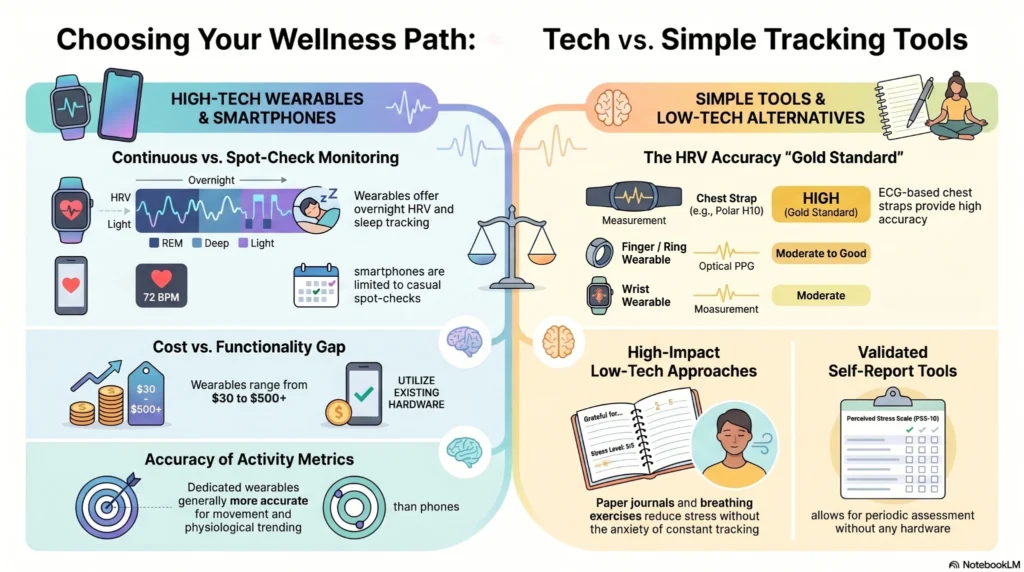
Selecting a stress or wellness tracking tool should be guided by individual goals, existing habits, and an accurate understanding of what each tool type measures.
Built-In Phone Features vs. Wearables
Smartphone-based and dedicated wearable approaches offer different capabilities and are best suited to different use cases.
| Feature Category | Smartphone (Built-In) | Dedicated Wearable |
| Stress / HRV measurement | Limited; some models support spot-check HRV (e.g., via camera PPG) | Most HRV-capable wearables measure overnight continuously |
| Step and activity tracking | Available; moderate accuracy | Generally more accurate for activity metrics |
| Sleep tracking | Not possible without wearing the phone; limited utility | Purpose-built for overnight continuous tracking |
| Mindfulness / breathing prompts | Available via apps (Calm, Headspace) | Available on many wearables with haptic reminders |
| Mood logging | Available via apps | Some wearables support companion app mood logging |
| Cost | No additional cost if phone already owned | Ranges from ~$30 (basic fitness bands) to $500+ (advanced health wearables) |
| Best for | Casual wellness app use; mindfulness; mood logging | Continuous physiological monitoring; sleep tracking; HRV trending |
New to tracking? Start with two free weeks before spending anything.
- Week 1–2: Log your mood (1–10), sleep duration, and one contextual tag (work stress, travel, illness) each morning. A notes app or paper is sufficient.
- Week 3–4 (optional): If you have a wearable, enable overnight HRV or sleep tracking without changing your habits. Compare your device data to your self-reported patterns.
- After 4 weeks: Review whether the data revealed anything you didn’t already know. If yes, a dedicated wearable is worth evaluating. If not, free tools may be sufficient for your goals.
Many users find that consistent mood logging alone identifies their primary stressors before they ever invest in hardware.
Best Devices for HRV and Stress Tracking: How They Compare
Devices vary meaningfully in how they measure HRV, and this affects the accuracy and utility of the data they produce.
| Device Category | HRV Measurement Method | Accuracy Relative to ECG | Notes |
| Chest strap (e.g., Polar H10) | ECG (electrocardiography) | High | Gold standard for consumer HRV; requires wearing during measurement |
| Optical wrist wearable (e.g., Garmin, Apple Watch, Fitbit) | Photoplethysmography (PPG) | Moderate | Accuracy varies by device and conditions; wrist movement degrades signal |
| Finger/ring (e.g., Oura Ring) | Optical PPG | Moderate to Good | Better contact point than wrist; commonly used for overnight HRV |
| Dedicated HRV apps with chest strap | ECG via Bluetooth | High | Best accuracy for short-term HRV measurements |
Editorial Note: Accuracy comparisons are based on published validation studies; specific device validation data should be cited and verified by editorial team before publication.
For readers evaluating specific devices: our detailed reviews cover how the Apple Watch handles overnight HRV and stress scoring, how Garmin’s Body Battery synthesises biometric data for daily readiness, the Oura Ring Gen 3’s ring-based overnight HRV methodology, and the Fitbit Sense 2’s electrodermal activity (EDA) scan feature — one of the few consumer tools to measure skin conductance alongside HRV. For the most accurate short-term HRV measurement available to consumers, the Polar H10 chest strap remains the reference standard. (Internal link placeholder: individual device review pages)
Cross-Pillar Link: For detailed cardiovascular and HRV measurement guidance, see our Heart & Cardiovascular pillar.
Apps for Mood and Wellness Logging
App-based tools extend wellness tracking into areas that wearables alone may not cover, particularly mood, mindfulness, and journalling.
| App Category | Primary Function | Clinical Relevance |
| General mood logging | Manual daily mood rating; journalling | Useful for identifying patterns; not clinically validated for diagnosis |
| Mindfulness / meditation | Guided sessions; session tracking | Evidence supports mindfulness practice; app tracking provides frequency data only |
| Journalling apps | Freeform or structured written reflection | Expressive writing has some evidence base for stress reduction |
| Breathing exercise apps | Guided paced breathing; some with HRV biofeedback | Paced breathing is well-supported; biofeedback accuracy varies |
| Combined wellness platforms | Integrates mood, sleep, activity, and physiological data | Depends on data quality from connected devices |
Your data and privacy: what to check before committing to an app or platform
Wellness and stress tracking apps collect sensitive biometric data. Before selecting a platform, it is worth verifying: whether the company sells or licenses data to third parties; whether data is stored locally or in the cloud; what the data deletion policy is; and whether the platform complies with relevant data protection frameworks (GDPR in Europe, HIPAA considerations in the US for any clinically adjacent features). Most reputable device manufacturers publish a dedicated health data privacy policy — check it before you buy.
Editorial Note: This section does not include specific app recommendations. The app landscape changes frequently — all recommendations should undergo editorial review of current app accuracy, data privacy practices, and clinical claims before publication.
When Simple Tools Are Sufficient
Not every individual requires a wearable device for stress management. Simple tools may be appropriate for many users.
| Approach | Best For | Example |
| Paper journal | Reflecting on stressors and emotional responses | Daily gratitude or stress log |
| Basic mood app | Identifying emotional patterns without physiological data | Manual daily rating apps |
| Free breathing exercises | Acute stress reduction without technology | 4-7-8 breathing, box breathing |
| Validated self-report questionnaire | Periodic perceived stress assessment | Perceived Stress Scale (PSS-10) — freely available |
| Lifestyle behaviour tracking | Monitoring sleep duration, exercise, caffeine without a wearable | Paper or basic app log |
User Wellbeing Note: Individuals who find wearable tracking increases anxiety or adds pressure may benefit from simpler, non-technological approaches to wellness.
Ready to compare specific devices? Our device comparison hub covers accuracy data, pricing, and use-case verdicts for the most widely used stress and HRV trackers — including Garmin, Apple Watch, Oura Ring, Fitbit Sense, and the Polar H10. (device review hub)
Common Questions
Can a smartwatch really detect stress? Consumer wearables don’t measure stress directly — they measure physiological proxies, most commonly heart rate variability (HRV), resting heart rate, and in some models, electrodermal activity (EDA). These signals are associated with the stress response, but they’re also influenced by alcohol, illness, caffeine, exercise, and sleep. Trends over two or more weeks are significantly more informative than any single reading.
Is HRV tracking accurate on wrist-worn devices? Wrist optical sensors (PPG) are moderately accurate for overnight HRV when the wrist position is stable — accuracy degrades during movement. Chest-strap ECG readers such as the Polar H10 provide higher accuracy for short-term HRV measurement. For most people tracking lifestyle trends rather than clinical precision, wrist-based overnight HRV is adequate.
What’s the difference between a stress score and HRV? HRV is a measurable physiological variable with a scientific evidence base. A “stress score” is a proprietary composite calculated from HRV and other inputs using an algorithm that device manufacturers typically do not fully disclose. Treat stress scores as a directional signal, not a precise measurement.
What’s the best free option for stress tracking? If you don’t have a wearable, a daily mood and energy log — even paper-based — provides surprisingly useful pattern data. For app-based tracking, the Perceived Stress Scale (PSS-10) is a validated, freely available self-report tool that takes under two minutes to complete. See When Simple Tools Are Sufficient above.
At what point should I stop tracking and see a professional? If your symptoms — poor sleep, persistent low mood, anxiety, physical symptoms — have lasted more than two weeks and are affecting your daily life, wearable data is not the right tool. See When Stress Requires Professional Help above for specific indicators.
Mental Health and Professional Support
⚠️ Important Notice: The following section provides educational information about mental health resources. This content does not constitute mental health diagnosis, treatment, or crisis intervention. If you are experiencing a mental health emergency, contact emergency services or a crisis line immediately.
When Stress Requires Professional Help
If stress feels like it’s running your life — affecting your relationships, how you show up at work, or simply how you feel in your body most days — that’s not just “life.” It’s not something you need to push through alone. The signals below suggest that professional support is likely to help more than self-monitoring.
The following signals suggest that professional evaluation — rather than self-monitoring alone — is appropriate.
| Signal | Description | Recommended Action |
| Duration > 2 weeks | Persistent stress or low mood lasting more than two weeks | Consult a primary care physician or mental health professional |
| Functional impairment | Stress affecting work, relationships, daily activities, or self-care | Seek evaluation from a licensed mental health professional |
| Physical symptoms without explanation | Unexplained chest pain, shortness of breath, persistent headaches, GI disturbance | Consult a physician to rule out medical causes |
| Sleep disruption > 2 weeks | Persistent insomnia or hypersomnia linked to stress | Consult a physician or sleep specialist |
| Substance use increase | Increased alcohol, drug, or medication use to manage stress | Consult a physician or addiction specialist |
| Thoughts of self-harm or suicide | Any thoughts of harming oneself | Contact emergency services or a crisis line immediately |
| Tracking data alone is concerning | Significant, unexplained changes in physiological metrics over weeks | Consult a healthcare provider |
Anxiety Disorders vs. Normal Stress
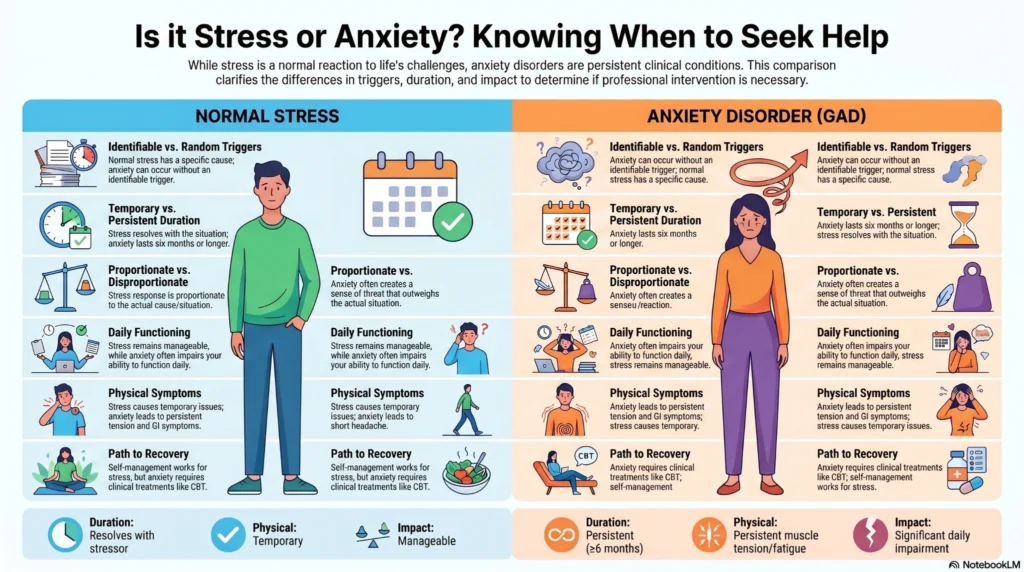
Understanding the distinction between normal stress responses and clinically recognised anxiety disorders helps clarify when self-management approaches are sufficient and when professional evaluation is needed.
| Feature | Normal Stress | Anxiety Disorder (e.g., GAD) |
| Trigger | Specific, identifiable stressor | May occur without identifiable trigger; persistent across contexts |
| Duration | Resolves when stressor resolves | Persistent (DSM-5: ≥6 months for GAD) |
| Proportionality | Generally proportionate to stressor | Often disproportionate to actual threat |
| Functional impact | Generally manageable | May significantly impair daily functioning |
| Physical symptoms | Temporary | May include persistent muscle tension, fatigue, sleep disturbance, GI symptoms |
| Diagnosis | Not a clinical diagnosis | Requires assessment by a licensed clinician |
| Treatment | Self-management strategies often effective | Evidence-based treatments include CBT, medication, and combined approaches |
Sources: American Psychiatric Association. Diagnostic and Statistical Manual of Mental Disorders, 5th ed. (DSM-5). 2013. | National Institute of Mental Health. Anxiety Disorders. Available at: nimh.nih.gov.
Depression Screening and Resources
Depression is a clinical condition with established diagnostic criteria and effective evidence-based treatments. Consumer wellness technology does not screen for or diagnose depression.
| Item | Information |
| Definition | Major Depressive Disorder (MDD) is characterised by persistent depressed mood and/or loss of interest or pleasure in activities, present most of the day, nearly every day, for ≥2 weeks, accompanied by associated symptoms (DSM-5) |
| Prevalence | Depression is among the most prevalent mental health conditions globally (WHO estimates) |
| Screening tool | The PHQ-9 (Patient Health Questionnaire-9) is a widely used, validated depression screening tool — available in clinical settings |
| Tracking relevance | Consumer wearables cannot screen for or diagnose depression; physiological changes (sleep disruption, reduced activity) may accompany depression but are non-specific |
| Evidence-based treatments | Psychotherapy (particularly CBT), pharmacotherapy, and combined approaches are established treatments — per licensed clinical guidance |
| Self-help limitations | Self-management strategies are not sufficient for moderate-to-severe depression — professional evaluation is essential |
⚠️ Clarification: Depression is a clinical condition requiring professional evaluation and treatment. Consumer wellness tracking is not a therapeutic or diagnostic tool for depression.
Sources: Kroenke K, Spitzer RL, Williams JB. The PHQ-9: validity of a brief depression severity measure. Journal of General Internal Medicine. 2001;16(9):606–613. | World Health Organization. Depression fact sheet. who.int.




Finding Mental Health Support
Editorial Note: Resource contact details, URLs, and availability must be verified by the editorial team before publication. Mental health resources vary by country and region. The following should be treated as placeholder categories pending localisation and verification.
| Resource Type | Description | Examples |
| Crisis lines | Immediate support for mental health emergencies | 988 Suicide & Crisis Lifeline (US) | Crisis Text Line (Text HOME to 741741 — US) | Samaritans (UK: 116 123) | Lifeline (Australia: 13 11 14) Outside these regions: search “[your country] mental health crisis line” for verified local support. |
| Primary care physician | First point of contact for mental health referral | GP or family medicine provider |
| Licensed therapist / psychologist | Ongoing psychological support; evidence-based therapies (CBT, ACT, etc.) | Psychology Today therapist finder; Open Path Collective |
| Psychiatrist | Medication management and complex mental health conditions | Referral via primary care |
| Employee Assistance Programs (EAPs) | Employer-sponsored mental health support; often free sessions | Check with employer HR |
| Online therapy platforms | Accessible therapy options; quality and licensure vary | Verify provider credentials before recommending |
| Community mental health centres | Sliding-scale or low-cost options | Local/regional services |
Seeking mental health support is a recognised and evidence-supported response to persistent stress and mental health challenges. The decision to seek help reflects self-awareness and proactive health management.
Our Recommended Starting Points
If you’ve read this far and you’re still not sure where to begin, here’s what we suggest based on goal:
- Not ready for a wearable yet: Start with a free mood and sleep log (paper or app) for four weeks. Many users find that self-reported patterns alone are enough to identify their highest-stress triggers before investing in hardware.
- For most people: If you already own a Garmin, Apple Watch, or Fitbit, start there. Enable overnight HRV tracking, leave it for two weeks without changing your habits, and review your baseline trend before buying anything new.
- For serious HRV tracking: The Polar H10 chest strap paired with the Elite HRV app gives the most accurate consumer-grade short-term HRV readings available outside a clinical setting.
- For passive, ring-based tracking: The Oura Ring Gen 3 is purpose-built for overnight HRV and recovery — well-suited for those who want data without wearing a wristband.
What to Do Next
- Talk to your doctor or a mental health professional if you’re concerned — especially if symptoms have persisted for more than two weeks or are affecting your daily functioning. See Mental Health and Professional Support above.
- Establish your HRV baseline — track for 2–4 weeks without changing your routine. Your personal trend, not a population average, is what matters.
- Try a free mood and sleep log for two weeks — even a basic daily rating reveals patterns that device data alone won’t show.
- Compare top devices — see our stress tracker reviews and device comparison hub for verdict-led guidance on specific models. (device review hub)
References
- Chrousos GP. Stress and disorders of the stress system. Nature Reviews Endocrinology. 2009;5(7):374–381. https://doi.org/10.1038/nrendo.2009.106
- McEwen BS. Neurobiological and systemic effects of chronic stress. Chronic Stress. 2017;1:2470547017692328. https://doi.org/10.1177/2470547017692328
- Cohen S, Janicki-Deverts D, Miller GE. Psychological stress and disease. JAMA. 2007;298(14):1685–1687. https://doi.org/10.1001/jama.298.14.1685
- Segerstrom SC, Miller GE. Psychological stress and the human immune system: a meta-analytic study of 30 years of inquiry. Psychological Bulletin. 2004;130(4):601–630.
- Task Force of the European Society of Cardiology and the North American Society of Pacing and Electrophysiology. Heart rate variability: standards of measurement, physiological interpretation and clinical use. Circulation. 1996;93(5):1043–1065.
- Shaffer F, Ginsberg JP. An overview of heart rate variability metrics and norms. Frontiers in Public Health. 2017;5:258. https://doi.org/10.3389/fpubh.2017.00258
- Cohen S, Kamarck T, Mermelstein R. A global measure of perceived stress. Journal of Health and Social Behavior. 1983;24(4):385–396.
- Khoury B, Sharma M, Rush SE, Fournier C. Mindfulness-based stress reduction for healthy individuals: a meta-analysis. Journal of Psychosomatic Research. 2015;78(6):519–528.
- Kolla BP, Mansukhani SS, Mansukhani MP. Consumer sleep tracking devices: a review of mechanisms, validity and utility. Expert Review of Medical Devices. 2016;13(5):497–506.
- Rebar AL, Stanton R, Geard D, et al. A meta-meta-analysis of the effect of physical activity on depression and anxiety in non-clinical adult populations. Health Psychology Review. 2015;9(3):366–378.
- Lehrer PM, Gevirtz R. Heart rate variability biofeedback: how and why does it work? Frontiers in Psychology. 2014;5:756.
- Uchino BN. Social support and health: a review of physiological processes potentially underlying links to disease outcomes. Journal of Behavioral Medicine. 2006;29(4):377–387.
- Kroenke K, Spitzer RL, Williams JB. The PHQ-9: validity of a brief depression severity measure. Journal of General Internal Medicine. 2001;16(9):606–613.
- Kolla BP, et al. “Orthosomnia”: Are some patients taking the healthy sleep movement too far? Journal of Clinical Sleep Medicine. 2019;15(2):351–354.
- American Psychiatric Association. Diagnostic and Statistical Manual of Mental Disorders, 5th ed. (DSM-5). Washington, DC: APA; 2013.
- World Health Organization. Global Recommendations on Physical Activity for Health. Geneva: WHO; 2010.
- Akerstedt T, Kecklund G, Axelsson J. Impaired sleep after bedtime stress and worries. Biological Psychology. 2007;76(3):228–233.
- Kivimäki M, Kawachi I. Work as a risk factor for cardiovascular disease. Current Cardiology Reports. 2015;17(9):74.
Last reviewed in accordance with the editorial standards published on 2026-15-05