
Respiratory Metrics Explained: SpO₂, AHI, Respiratory Rate & More — Normal Ranges and What They Mean
Understand six key respiratory metrics including SpO2. Learn normal ranges and when to seek medical attention.
Written by Dr. Rishav Das, M.B.B.S. — Wellness Device Data Analyst | Consumer Device Accuracy Specialist
Medically reviewed under the standards described on our About page.
Introduction
Whether you just picked up a pulse oximeter at the pharmacy, received a sleep study report with numbers you don’t recognise, or you’re managing asthma day-to-day with a peak flow meter — this guide translates the data into plain English. You’ll learn what each metric actually measures, what the numbers mean for you, and when a reading warrants a call to your doctor.
This page is for educational purposes only and does not constitute medical advice.
📋 This page is written for:
- Adults using a pulse oximeter at home and unsure what their reading means
- People reviewing a sleep study report and trying to understand their AHI or ODI score
- Anyone managing asthma or a chronic lung condition with a peak flow meter
- Caregivers interpreting a family member’s respiratory data
It is not a substitute for medical advice. If you are experiencing symptoms now, go to the emergency warning signs section.
| Metric | What It Measures | Primary Device |
| SpO₂ | Blood oxygen saturation | Pulse oximeter |
| Respiratory Rate | Breaths per minute | Wearable / clinical monitor |
| AHI | Sleep apnea severity (events/hour) | Polysomnography (a full overnight sleep study conducted in a specialist lab) / home sleep test |
| PEF (Peak Flow) | Airflow speed on exhalation | Peak flow meter |
| ODI | Frequency of oxygen drops during sleep | Sleep oximetry |
| Perfusion Index | Signal strength of pulse at sensor | Pulse oximeter |
Jump to your question: → What is a normal blood oxygen (SpO₂) level? → What does my AHI score mean? → Is my peak flow reading dangerous? → When should I see a doctor? → Can I trust my smartwatch oxygen reading? → Which monitoring device should I buy?
Common Reasons People Check This Page
Seeing a number on a pulse oximeter or sleep study report can raise more questions than it answers. What counts as normal? Should you be worried? Is your device even accurate? This guide answers those questions for each key metric — with plain-English ranges, accuracy warnings, and clear guidance on when to act.
People read this page when:
- They want to help a family member understand a medical report
- They got an unexpected reading on a home pulse oximeter
- Their doctor mentioned sleep apnea and gave them an AHI score
- They have asthma and were told to monitor peak flow
- Their Apple Watch or Fitbit showed a low SpO₂ and they want to know what it means
- Respiratory Metrics Explained: SpO₂, AHI, Respiratory Rate & More — Normal Ranges and What They Mean
- Introduction
- Common Reasons People Check This Page
- Blood Oxygen Saturation (SpO₂): Normal Levels, Low Readings & When to Worry
- Respiratory Rate
- AHI Score Explained: Sleep Apnea Severity Levels and What Your Number Means
- Peak Flow Reading (PEF): Asthma Zones, Normal Ranges & How to Use Your Meter
- Oxygen Desaturation Index (ODI)
- Perfusion Index
- When to Seek Medical Attention
- Ready to choose a device? Here's where to go next.
- References
Blood Oxygen Saturation (SpO₂): Normal Levels, Low Readings & When to Worry
What SpO₂ Measures
If you’ve glanced at a pulse oximeter and wondered whether 94% is fine or cause for concern — you’re not alone. SpO₂ (peripheral oxygen saturation, pronounced “S-P-O-2”) is the percentage of your red blood cells currently carrying oxygen. Pulse oximeters estimate this by shining two wavelengths of light — red and infrared — through your fingertip or earlobe and measuring how much is absorbed by oxygenated versus deoxygenated blood. Here’s what different readings actually mean.
The terminology table below defines the clinical terms used throughout this section.
| Term | Definition |
| SpO₂ | Peripheral capillary oxygen saturation — measured non-invasively |
| SaO₂ | Arterial oxygen saturation — measured directly via arterial blood gas (ABG) test; clinical gold standard |
| Hemoglobin | Protein in red blood cells responsible for oxygen transport |
| Oxyhemoglobin | Hemoglobin that is bound to oxygen |
| Deoxyhemoglobin | Hemoglobin that has released its oxygen |
SpO₂ provides a continuous, non-invasive approximation of SaO₂. Studies suggest typical agreement between SpO₂ and direct SaO₂ measurements is within ±2 percentage points under normal physiological conditions (Jubran, 2015, Critical Care).
Normal SpO₂ Ranges
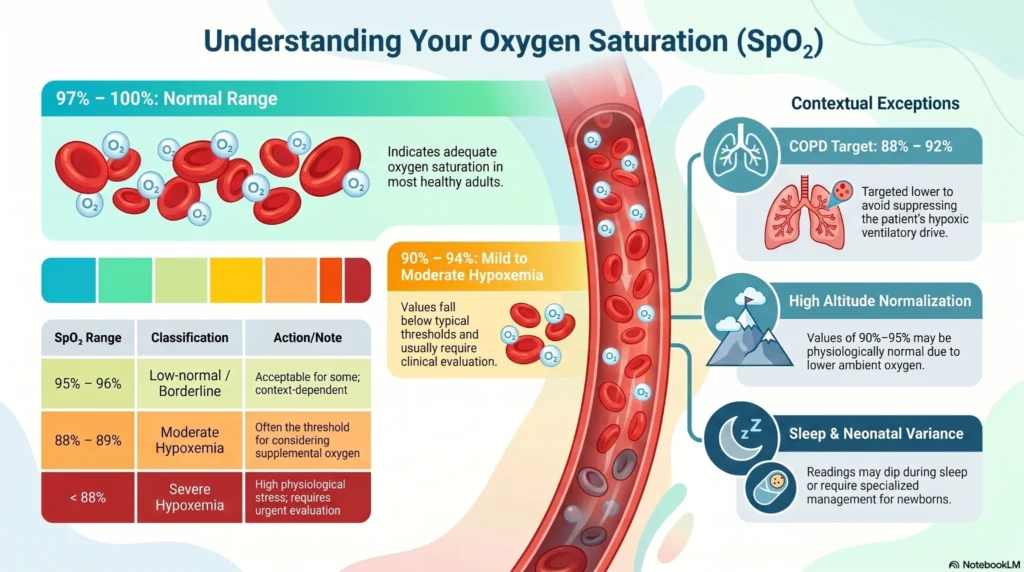
Respiratory rate varies significantly across the lifespan. Normal ranges are established for resting, awake states.
| SpO₂ Range | Clinical Classification | General Interpretation |
| 97% – 100% | Normal | Adequate oxygen saturation in most healthy adults |
| 95% – 96% | Low-normal / borderline | May be acceptable in some individuals; context-dependent |
| 90% – 94% | Mild to moderate hypoxemia (low blood oxygen) | Below typical acceptable thresholds; evaluation recommended |
| 88% – 89% | Moderate hypoxemia | Threshold at which supplemental oxygen is frequently considered clinically |
| Below 88% | Severe hypoxemia | Associated with significant physiological stress; requires prompt medical evaluation |
Important context-specific notes:
- In individuals with COPD, clinicians may target SpO₂ of 88–92% to avoid suppression of the hypoxic ventilatory drive (the body’s reflex to breathe faster when oxygen levels drop — this reflex can be suppressed in some COPD patients at higher oxygen levels) — clinical targets are individualized (Global Initiative for Chronic Obstructive Lung Disease [GOLD], 2024).
- At high altitudes, SpO₂ values of 90–95% may be physiologically normal due to reduced ambient oxygen partial pressure.
- Newborns and neonates have distinct target ranges managed exclusively in clinical settings.
- Values during sleep may transiently dip below waking baselines and are interpreted differently (see ODI section below).
Sources: Jubran A. Pulse oximetry. Crit Care. 2015;19(1):272. | GOLD 2024 Guidelines.
What to do with your SpO₂ reading
| Your Reading | What It Generally Means | Suggested Next Step |
|---|---|---|
| 97% – 100% | Normal | No action needed. Continue routine monitoring if you have a chronic condition. |
| 95% – 96% | Low-normal | Note if this is persistent across multiple readings. Mention to your doctor at your next scheduled appointment. |
| 93% – 94% | Below typical normal | If this persists at rest across several readings, schedule a GP or primary care evaluation within 1–2 weeks. Do not ignore a consistent trend in this range. |
| 90% – 92% | Mild to moderate concern | Seek a medical evaluation — do not wait for a routine appointment if readings are persistent. |
| Below 90% at rest | Significant concern | Seek same-day or emergency medical evaluation. Do not rely on home monitoring alone. |
These are general reference ranges only. Your clinician may set individualised targets that differ — particularly if you have COPD, live at high altitude, or have a known baseline.
When Low Oxygen Is Dangerous
Hypoxemia — abnormally low blood oxygen — exists on a spectrum. The degree of clinical urgency depends on multiple factors: the absolute SpO₂ value, the rate of decline, the presence of symptoms, and the individual’s baseline health status.
Emergency-level indicators (seek immediate care):
| Sign or Reading | Clinical Concern |
| SpO₂ persistently below 90% | Indicates inadequate tissue oxygenation |
| SpO₂ below 88% at rest | Threshold frequently associated with clinical intervention |
| Rapid decline in SpO₂ over minutes | May indicate acute cardiopulmonary deterioration |
| SpO₂ drop accompanied by chest pain | Possible cardiac or pulmonary emergency |
| SpO₂ drop accompanied by confusion or altered mentation | Possible central nervous system hypoxia |
| Cyanosis (blue discoloration of lips or fingernails) | Visual indicator of severe deoxygenation |
⚠️ Warning: If SpO₂ drops below 90% and does not recover with rest, or if any reading falls below 85%, treat this as a potential medical emergency. Call emergency services or go to the nearest emergency department. Do not rely solely on an at-home oximeter for diagnosis.
Source: Kane B, et al. Pulse oximetry. Clin Med (Lond). 2021.
Factors Affecting Accuracy
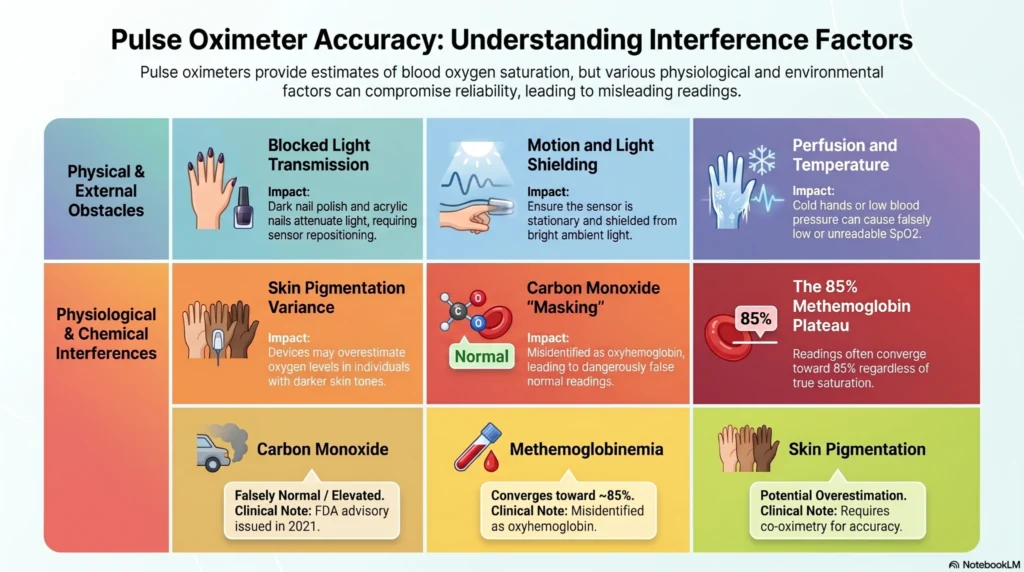
Pulse oximeter readings are estimates, not direct measurements. Several physiological and environmental variables may reduce accuracy:
| Factor | Effect on Reading | Notes |
| Poor peripheral perfusion | May cause falsely low or unreadable values | Cold hands, low blood pressure, shock states |
| Nail polish (dark colors) | May attenuate light transmission | Remove or reposition sensor to unpolished finger |
| Acrylic / gel nails | May reduce signal | Use alternative site (earlobe) |
| Motion artifact | Produces erroneous readings | Ensure device is stationary during measurement |
| Skin pigmentation | May cause overestimation in darker skin tones | FDA issued advisory in 2021; clinical awareness warranted |
| Carbon monoxide exposure | Causes falsely normal or elevated readings | Carboxyhemoglobin (haemoglobin that has bonded with carbon monoxide instead of oxygen — not detectable by a standard pulse oximeter) is misidentified as oxyhemoglobin |
| Methemoglobinemia (a rare blood disorder in which abnormal haemoglobin cannot carry oxygen properly) | Readings may converge toward ~85% regardless of true saturation | Requires co-oximetry (a laboratory blood test that distinguishes between different types of haemoglobin, unlike a standard pulse oximeter) for accurate assessment |
| Anemia | May affect accuracy at very low hemoglobin levels | Clinical context required |
| Ambient light interference | Sensor exposed to bright light may produce error | Shield sensor from direct light |
Sources: Sjoding MW et al. Racial Bias in Pulse Oximetry. N Engl J Med. 2020. | FDA Safety Communication on Pulse Oximeter Accuracy, 2021.
Getting an accurate reading at home
The table above explains what can go wrong with a pulse oximeter reading. Here is the practical checklist for minimising those variables before you interpret a result:
- Sit still and breathe normally for 2 minutes before measuring
- Use your index or middle finger — the thumb produces weaker signals on most devices
- Remove nail polish, or use an unpolished finger or your earlobe if nails are gel-coated
- Check the Perfusion Index (PI) on your device if it is displayed — below 1% means the signal is too weak for a reliable SpO₂ reading; warm your hand or reposition the sensor
- Take three readings and use the consistent value — ignore single outliers in either direction
- Avoid measuring immediately after exercise or while cold — wait for your body to return to a resting state
When home monitoring is appropriate — and when to escalate
✅ Home monitoring is appropriate for:
- Tracking asthma symptoms and medication response using a peak flow meter as part of a clinician-directed plan
- General SpO₂ trend monitoring if you have a diagnosed chronic lung condition and a baseline established by your provider
- Post-sleep-study follow-up with CPAP therapy (tracking overnight ODI if your device supports it)
⚠️ Contact your healthcare provider when:
- SpO₂ readings are consistently outside the range your clinician has set for you, across multiple measurements
- Your peak flow is in the Yellow Zone persistently or drops to Red Zone
- You are experiencing new or worsening symptoms (breathlessness, chest tightness, morning headaches)
🚨 Go to emergency care when:
- Your peak flow is in the Red Zone and does not respond to rescue medication
- SpO₂ drops and stays below 90% at rest
- You have chest pain, confusion, or cannot speak in full sentences
Choosing a Pulse Oximeter: What the accuracy data tells you
Not all oximeters perform equally. The variables above — nail polish, skin tone, low perfusion — affect cheaper consumer devices far more than medical-grade ones. When selecting a home oximeter, look for:
- FDA 510(k) clearance — confirms the device has been reviewed for accuracy as a medical measurement tool
- Stated accuracy of ±2% or better — the clinical standard; many budget devices do not publish this figure
- Perfusion Index (PI) display — lets you know in real time whether the signal quality is sufficient for a reliable reading
- Bluetooth data logging — critical for trend tracking if you manage a chronic condition such as COPD or heart failure
→ See our tested oximeter recommendations with accuracy ratings for each device.
Respiratory Rate
Respiratory rate (RR) refers to the number of complete breathing cycles — one inhalation and one exhalation — occurring per minute. It is one of the four primary vital signs assessed in clinical settings and may provide early indication of physiological stress, respiratory compromise, or systemic illness.
Normal Breathing Rates by Age
Respiratory rate varies significantly across the lifespan. Normal ranges are established for resting, awake states.
| Age Group | Normal Resting Respiratory Rate (breaths/min) |
| Newborn (0–1 month) | 30 – 60 |
| Infant (1–12 months) | 30 – 53 |
| Toddler (1–3 years) | 24 – 40 |
| Preschool (3–5 years) | 22 – 34 |
| School age (6–12 years) | 18 – 30 |
| Adolescent (13–17 years) | 12 – 20 |
| Adult (18+ years) | 12 – 20 |
| Older adult (65+) | 12 – 28 (broader acceptable range) |
Source: Fleming S, et al. Normal ranges of heart rate and respiratory rate in children. Lancet. 2011. | Mimoza A, et al. Respiratory rate reference values. BMJ Open. 2019.
Tachypnea and Bradypnea
Deviations above or below the normal respiratory rate range are classified clinically as tachypnea (breathing too fast — above 20 breaths per minute) or bradypnea (breathing too slowly — below 12 breaths per minute).
| Term | Definition | Rate (Adults) | Common Associated Conditions |
| Tachypnea | Respiratory rate above normal | >20 breaths/min | Fever, infection, pneumonia, pulmonary embolism, anxiety, metabolic acidosis, heart failure |
| Bradypnea | Respiratory rate below normal | <12 breaths/min | Opioid or sedative effect, CNS depression, hypothyroidism, severe metabolic alkalosis |
| Apnea | Complete cessation of breathing | 0 breaths for ≥10 seconds | Sleep apnea, neurological events, drug-induced respiratory depression |
| Hyperpnea | Increased depth of breathing (volume, not just rate) | Rate may be normal | Exercise, metabolic acidosis (Kussmaul breathing in DKA) |
⚠️ Warning: A persistent resting respiratory rate above 25 breaths per minute in an adult, or below 10 breaths per minute, may indicate a medical emergency. Seek prompt evaluation, especially if accompanied by difficulty breathing, altered consciousness, or low SpO₂.
What Affects Respiratory Rate
Respiratory rate responds to numerous physiological and environmental inputs:
| Category | Factors That May Increase RR | Factors That May Decrease RR |
| Physiological | Exercise, fever, pregnancy (third trimester), pain | Sleep (minor), deep relaxation |
| Cardiovascular | Heart failure, pulmonary hypertension | — |
| Respiratory | Pneumonia, asthma exacerbation, COPD, pulmonary embolism | — |
| Neurological / CNS | Anxiety, panic disorder, stroke, traumatic brain injury | Opioid or sedative medication, CNS depression, brainstem injury |
| Metabolic | Diabetic ketoacidosis (DKA), metabolic acidosis, sepsis | Metabolic alkalosis |
| Environmental | High altitude (initial response) | — |
AHI Score Explained: Sleep Apnea Severity Levels and What Your Number Means
What AHI Measures
The Apnea-Hypopnea Index (AHI) is the primary metric used to diagnose and classify the severity of sleep-disordered breathing, including obstructive sleep apnea (OSA), central sleep apnea (CSA), and mixed apnea.
| Term | Definition |
| Apnea | Complete cessation of airflow lasting ≥10 seconds |
| Hypopnea | Partial reduction in airflow (typically ≥30% reduction) lasting ≥10 seconds, associated with oxygen desaturation (≥3–4%) and/or arousal |
| AHI | Total number of apneas plus hypopneas per hour of sleep |
| Obstructive event | Airway physically collapses or is blocked despite continued respiratory effort |
| Central event | Brain temporarily fails to send the signal to breathe; no respiratory effort |
| Mixed event | Begins as central, ends as obstructive |
AHI is calculated during a sleep study (polysomnography, or PSG) or a home sleep apnea test (HSAT). The calculation method — particularly the hypopnea scoring criteria — may vary between sleep labs and scoring systems, which can affect comparability of results across studies.
Source: American Academy of Sleep Medicine (AASM) Scoring Manual, Version 3.
Sleep Apnea Severity Categories
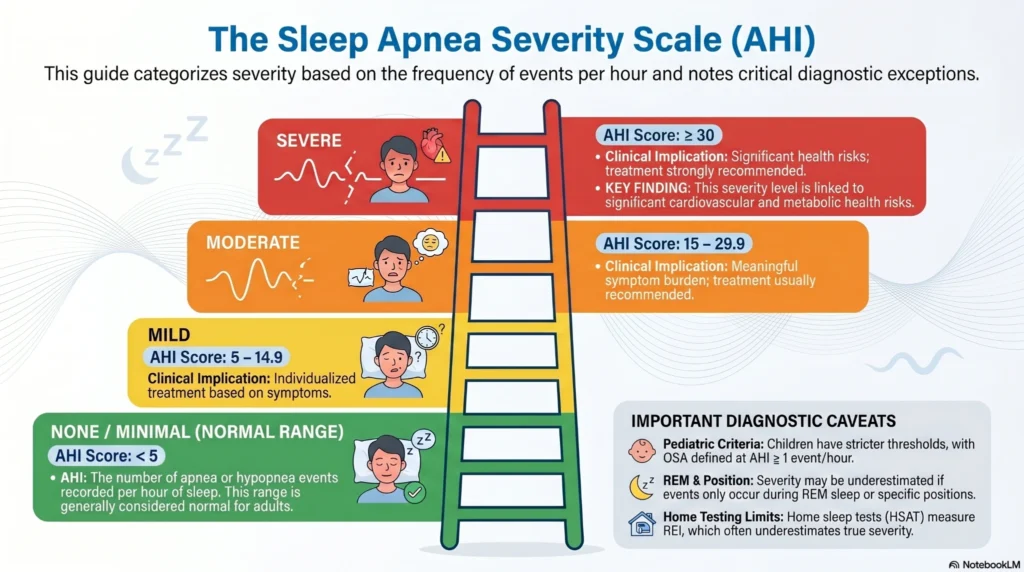
| AHI Score | Severity Classification | General Clinical Implication |
| < 5 events/hour | None / Minimal | Generally within normal range for adults |
| 5 – 14.9 events/hour | Mild sleep apnea | May be associated with symptoms; treatment decision individualized |
| 15 – 29.9 events/hour | Moderate sleep apnea | Typically associated with meaningful symptom burden; treatment usually recommended |
| ≥ 30 events/hour | Severe sleep apnea | Associated with significant cardiovascular and metabolic risk; treatment strongly recommended |
Key caveats:
- AHI thresholds may differ for children — pediatric criteria define OSA at AHI ≥1 event/hour.
- Positional and REM-related sleep apnea may show AHI values that fluctuate significantly depending on sleep position or stage — an overall AHI may underrepresent severity during REM sleep.
- Home sleep tests (HSAT) typically yield a REI (Respiratory Event Index — similar to AHI but calculated differently by home sleep test devices, which may slightly undercount events), not a true AHI, as total recording time (not total sleep time) forms the denominator — this may underestimate severity.
Source: American Academy of Sleep Medicine. Clinical Guideline for Diagnostic Testing for Adult Obstructive Sleep Apnea. JCSM. 2017.
What to do with your AHI score
| AHI Score | Severity | Suggested Next Step |
|---|---|---|
| Below 5 | None / Minimal | Generally normal. If symptoms persist (snoring, daytime fatigue, morning headaches), discuss with your GP. |
| 5 – 14.9 | Mild | Discuss with a sleep medicine provider. Treatment decisions depend on symptoms, cardiovascular risk, and individual factors — not AHI alone. |
| 15 – 29.9 | Moderate | A follow-up with a sleep specialist is recommended. Treatment (CPAP, positional therapy, oral appliance) is typically discussed at this level. |
| 30 or above | Severe | Prompt follow-up with a sleep medicine provider is strongly recommended. Untreated severe sleep apnea carries significant cardiovascular risk. |
Home sleep tests produce a Respiratory Event Index (REI), not a true AHI — this may underestimate severity. If your home test shows moderate or severe results, ask your provider whether a full lab study (polysomnography) is warranted.
Interpreting Your Sleep Study
A sleep study report contains more than AHI. Understanding the report structure may help patients have more informed conversations with their providers.
| Report Element | What It Represents |
| AHI / REI | Overall apnea-hypopnea burden per hour |
| Total sleep time (TST) | Hours of actual sleep recorded (PSG only) |
| Sleep efficiency | Percentage of time in bed spent asleep |
| Sleep architecture | Distribution across N1, N2, N3 (deep), and REM stages |
| Oxygen nadir | Lowest recorded SpO₂ during the study |
| % time below 90% SpO₂ | Cumulative time with oxygen saturation under 90% |
| ODI (see below) | Oxygen desaturation index |
| Arousal index | Number of brief awakenings per hour |
| Positional AHI | AHI broken down by sleeping position (supine vs. lateral) |
| REM AHI | AHI occurring specifically during REM sleep |
Sleep study reports are interpreted in the context of clinical history, symptoms, and individual factors. Numeric values alone do not determine treatment decisions — those are made by a qualified sleep medicine physician or other licensed clinician.
Questions to ask your doctor or sleep specialist after a sleep study
Bring these questions to your follow-up appointment to make the most of your consultation time:
- “What does my oxygen nadir (lowest SpO₂ during the study) tell us about my risk?”
- “What is my AHI, and what does it mean for my cardiovascular health at my age?”
- “Would a home sleep test have given the same result, or should I have an in-lab study?”
- “What treatment options are appropriate for my AHI level and symptoms?”
- “Should I be tracking my SpO₂ nightly while I wait for my follow-up appointment?”
- “Is my ODI consistent with my AHI, or is there a discrepancy that needs investigation?”
Tracking AHI after a sleep apnea diagnosis
If your AHI indicates moderate or severe sleep apnea, your sleep physician will discuss treatment options including CPAP therapy. Many modern CPAP machines and home nocturnal oximeters track nightly AHI or ODI data automatically — giving you and your doctor an ongoing picture of how treatment is working.
→ See our guide to home sleep test devices and nightly oximeters for post-diagnosis monitoring.
📥 Free download: Respiratory Health Tracker (PDF)
A printable log for daily SpO₂ readings, peak flow measurements, and sleep quality notes — designed to bring to your doctor’s appointments so your monitoring data can inform your care.
→ [Download Free — Enter your email]
Peak Flow Reading (PEF): Asthma Zones, Normal Ranges & How to Use Your Meter
What Peak Flow Measures
Peak Expiratory Flow (PEF) — commonly called peak flow — is the maximum speed at which air is expelled from the lungs during a forced exhalation, measured in liters per minute (L/min). It reflects the degree of airway narrowing or obstruction at a given moment.
| Characteristic | Detail |
| Unit of measurement | Liters per minute (L/min) |
| Measurement device | Peak flow meter (handheld mechanical or digital) |
| Primary clinical use | Asthma monitoring and management |
| What it detects | Large airway obstruction; narrows before symptoms in some individuals |
| What it does NOT detect | Small airway disease, early interstitial lung disease |
| Effort-dependent? | Yes — technique and effort significantly affect results |
PEF correlates with Forced Expiratory Volume in 1 second (FEV₁) measured by spirometry, but is not interchangeable. Peak flow meters provide a practical at-home monitoring tool; spirometry remains the standard for diagnostic lung function assessment.
Source: National Heart, Lung, and Blood Institute (NHLBI). Expert Panel Report 3: Guidelines for the Diagnosis and Management of Asthma. 2007.
Personal Best and Zones
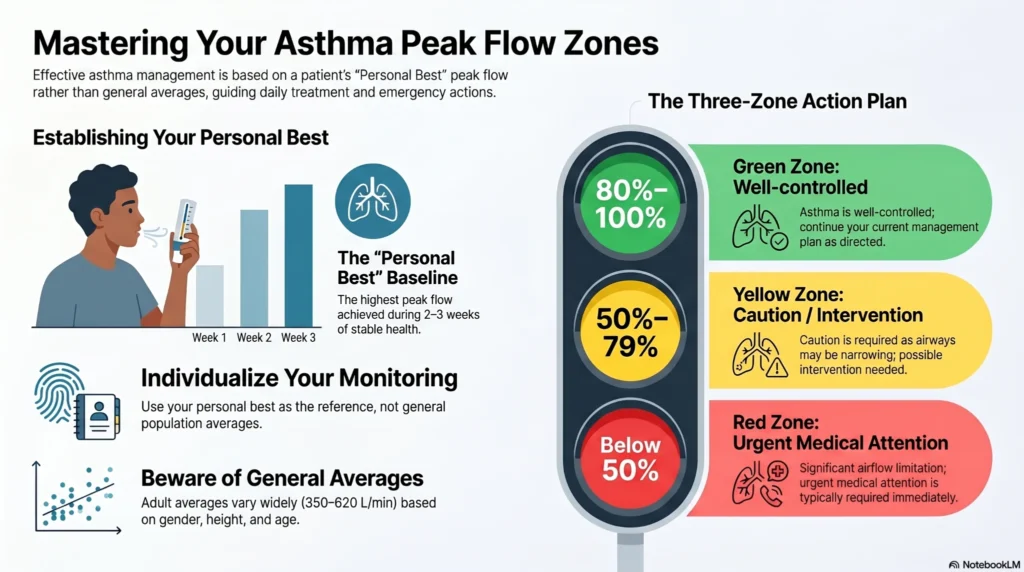
Peak flow interpretation is individualized. Rather than relying solely on population-based predicted values, guidelines recommend each person with asthma establish their personal best — the highest PEF consistently achieved over a 2–3 week period of stable asthma — and use that value as the reference for zone calculations.
| Zone | PEF % of Personal Best | Color Code | General Implication |
| Green Zone | 80% – 100% | 🟢 Green | Asthma appears well-controlled; continue current management plan |
| Yellow Zone | 50% – 79% | 🟡 Yellow | Airway narrowing may be occurring; caution and possible intervention |
| Red Zone | Below 50% | 🔴 Red | Significant airflow limitation; urgent medical attention typically required |
Population-predicted PEF reference values (not a substitute for personal best):
| Group | Approximate Adult Average PEF |
| Adult men (20–40 years) | 490 – 620 L/min (varies by height) |
| Adult women (20–40 years) | 350 – 460 L/min (varies by height) |
| Older adults (60+) | Values typically lower; use individualized personal best |
Source: Nunn AJ, Gregg I. New regression equations for predicting peak expiratory flow in adults. BMJ. 1989.
What to do with your Peak Flow Reading
| Zone | % of Personal Best | What to Do |
|---|---|---|
| 🟢 Green (80–100%) | Good control | Continue your current asthma management plan. No immediate action needed. |
| 🟡 Yellow (50–79%) | Caution | Follow the Yellow Zone instructions in your personalised asthma action plan. This may include taking a reliever inhaler and monitoring closely. Contact your provider if Yellow Zone readings persist beyond 24 hours. |
| 🔴 Red (Below 50%) | Urgent | Follow your Red Zone emergency instructions immediately. Take your reliever medication and seek urgent medical attention if breathing does not improve. Do not wait. |
If you do not have a personalised asthma action plan from your healthcare provider, ask for one at your next appointment. Zone guidance without a plan tailored to your condition is incomplete.
Asthma Management with Peak Flow
Regular peak flow monitoring, when incorporated into a written asthma action plan provided by a clinician, may help identify airway narrowing before symptoms become severe.
Typical at-home monitoring protocol (as directed by a clinician):
| Step | Action |
| 1 | Measure peak flow at the same time each day (typically morning, before medications) |
| 2 | Record all values in a diary or app |
| 3 | Compare each reading to personal best percentage |
| 4 | Act according to the zone the reading falls in, per your individualized asthma action plan |
| 5 | Bring the diary to all asthma-related appointments |
Factors affecting peak flow accuracy:
- Effort and technique (seal around mouthpiece, full exhalation)
- Time of day (typically lowest in early morning — “morning dipping” is a hallmark of poorly controlled asthma)
- Recent bronchodilator use
- Calibration and condition of the device
⚠️ Warning: A reading in the Red Zone may indicate a medical emergency. Follow your asthma action plan and seek emergency care if breathing is severely labored, you cannot speak in full sentences, or rescue medications are not providing relief.
Oxygen Desaturation Index (ODI)
The Oxygen Desaturation Index (ODI) quantifies how frequently blood oxygen levels drop by a defined threshold during sleep, expressed as the number of desaturation events per hour of recording.
| Characteristic | Detail |
| Measurement unit | Events per hour (of recording or sleep) |
| Standard threshold | SpO₂ drop of ≥3% (ODI-3) or ≥4% (ODI-4) from baseline |
| Measurement device | Nocturnal pulse oximetry (standalone or integrated in HSAT) |
| Relationship to AHI | ODI often correlates with AHI but is not equivalent — it measures oxygenation consequence, not airflow events |
| Primary clinical use | Sleep apnea screening, COPD nocturnal monitoring, supplemental oxygen assessment |
ODI interpretation (general reference — clinical context required):
| ODI Value | General Classification |
| < 5 events/hour | Generally considered normal |
| 5 – 14 events/hour | Mild desaturation burden |
| 15 – 29 events/hour | Moderate desaturation burden |
| ≥ 30 events/hour | Severe desaturation burden |
ODI thresholds used clinically may vary depending on the scoring definition (3% vs. 4% drop), the recording device, and the clinical question being addressed. An elevated ODI in the absence of a formal sleep study does not confirm a diagnosis of sleep apnea; it may indicate the need for further evaluation.
Source: Lévy P, et al. Obstructive sleep apnoea syndrome. Nat Rev Dis Primers. 2015.
Perfusion Index
Signal Quality Indicator
Perfusion Index (PI) is a measure of the relative strength of the pulsatile signal detected by a pulse oximeter sensor at the measurement site. It is expressed as a percentage representing the ratio of pulsatile blood flow to non-pulsatile blood flow at the sensor.
| Characteristic | Detail |
| Range | 0.02% (very weak signal) to 20%+ (very strong signal) |
| Typical acceptable range | ≥ 1% is generally associated with more reliable SpO₂ readings |
| What a LOW PI indicates | Weak pulse at the sensor site — readings may be unreliable |
| What a HIGH PI indicates | Strong pulsatile signal — more favorable for accurate measurement |
| Not a diagnostic metric | PI does not reflect cardiovascular health or disease severity on its own |
Why PI matters for SpO₂ accuracy:
| PI Level | Likely Signal Quality | Action |
| < 0.3% | Poor — high risk of inaccurate SpO₂ reading | Reposition sensor; try alternative site; warm the extremity |
| 0.3% – 1% | Marginal — interpret SpO₂ with caution | Consider repositioning; verify reading |
| ≥ 1% | Adequate — SpO₂ reading more likely reliable | Proceed with measurement |
| > 5% | Strong signal | Optimal conditions for SpO₂ accuracy |
Common causes of low perfusion index:
- Peripheral vasoconstriction (cold hands, hypothermia)
- Hypotension or low cardiac output
- Peripheral vascular disease
- Shock states
- Poor sensor placement or motion artifact
Perfusion Index is not universally displayed on all consumer-grade pulse oximeters. Devices that do display PI allow users to assess whether the SpO₂ reading is being generated under favorable signal conditions. A low PI should prompt repositioning or site change before interpreting the SpO₂ value.
Source: Reisner AT, et al. Utility of the Perfusion Index. J Clin Monit Comput. 2014.
When to Seek Medical Attention
Emergency Warning Signs
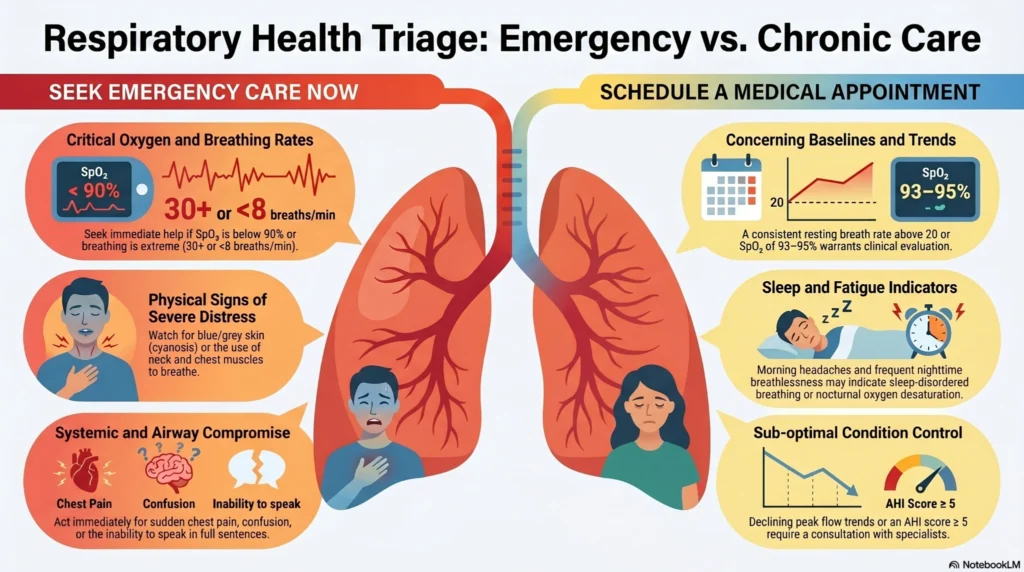
⚠️ The following signs and readings may indicate a medical emergency. Do not wait — seek emergency care immediately.
| Warning Sign | Possible Concern |
| SpO₂ persistently below 90% at rest | Clinically significant hypoxemia |
| SpO₂ below 85% at any measurement | Severe hypoxemia requiring urgent evaluation |
| Respiratory rate above 30 breaths/min (adults, at rest) | Possible respiratory failure or severe distress |
| Respiratory rate below 8 breaths/min | Possible respiratory depression |
| Labored breathing: use of neck, chest, or abdominal accessory muscles | Respiratory distress |
| Inability to speak in full sentences due to breathlessness | Severe airway compromise |
| Blue or grey discoloration of lips, fingernails, or skin | Cyanosis — severe oxygen deprivation |
| Sudden chest pain with difficulty breathing | Possible pulmonary embolism, cardiac event |
| Confusion, altered consciousness, or unresponsiveness | Possible hypoxic brain compromise |
| Peak flow in the Red Zone with no improvement after rescue medications | Severe asthma exacerbation |
If you observe any of these signs — in yourself or another person — call emergency services immediately.
Chronic Symptom Management
The following symptoms are not typically emergencies but may warrant a scheduled consultation with a qualified healthcare provider:
| Symptom | Potential Respiratory Relevance |
| Persistent SpO₂ readings of 93–95% without explanation | May indicate need for baseline evaluation |
| Frequent nighttime awakenings with breathlessness | Possible sleep-disordered breathing |
| Morning headaches, unrefreshing sleep, daytime fatigue | Associated with nocturnal oxygen desaturation and sleep apnea |
| AHI ≥ 5 on home sleep test without follow-up | Warrants discussion with a sleep medicine provider |
| Consistently low peak flow readings without identified triggers | Suboptimally controlled asthma — reassess action plan |
| Respiratory rate consistently above 20 at rest | Warrants clinical evaluation |
| Declining peak flow trend over weeks | May indicate worsening asthma control |
Ready to choose a device? Here’s where to go next.
| Your Goal | Page |
|---|---|
| 🔬 Compare respiratory monitors | Side-by-side accuracy specs, feature ratings, and price ranges for pulse oximeters, peak flow meters, and sleep monitors. → [Compare monitors] |
| ⭐ Best pulse oximeters for home use | Our tested picks for SpO₂ accuracy, Perfusion Index display, and Bluetooth logging — across budget and medical-grade categories. → [Best oximeters] |
| 📋 Device guide | Not sure which type of monitor fits your condition? This guide matches devices to use cases: asthma, sleep apnea, COPD, and general wellness. → [Device guide] |
References
- Jubran A. Pulse oximetry. Critical Care. 2015;19(1):272. https://doi.org/10.1186/s13054-015-0984-8
- Sjoding MW, Dickson RP, Iwashyna TJ, Gay SE, Valley TS. Racial bias in pulse oximetry measurement. New England Journal of Medicine. 2020;383(25):2477–2478. https://doi.org/10.1056/NEJMc2029240
- U.S. Food and Drug Administration. Pulse oximeter accuracy and limitations: FDA safety communication. 2021. https://www.fda.gov/medical-devices/safety-communications/pulse-oximeter-accuracy-and-limitations-fda-safety-communication
- Global Initiative for Chronic Obstructive Lung Disease (GOLD). Global Strategy for Prevention, Diagnosis and Management of COPD: 2024 Report. https://goldcopd.org
- Fleming S, Thompson M, Stevens R, et al. Normal ranges of heart rate and respiratory rate in children from birth to 18 years of age: a systematic review of observational studies. Lancet. 2011;377(9770):1011–1018. https://doi.org/10.1016/S0140-6736(10)62226-X
- American Academy of Sleep Medicine. AASM Scoring Manual, Version 3. https://aasm.org/clinical-resources/scoring-manual/
- American Academy of Sleep Medicine. Clinical guideline for the evaluation, management and long-term care of obstructive sleep apnea in adults. Journal of Clinical Sleep Medicine. 2009;5(3):263–276.
- National Heart, Lung, and Blood Institute. Expert Panel Report 3 (EPR-3): Guidelines for the Diagnosis and Management of Asthma. NIH Publication No. 08-4051. 2007. https://www.nhlbi.nih.gov/files/docs/guidelines/asthma_qrg.pdf
- Nunn AJ, Gregg I. New regression equations for predicting peak expiratory flow in adults. BMJ. 1989;298(6680):1068–1070.
- Lévy P, Kohler M, McNicholas WT, et al. Obstructive sleep apnoea syndrome. Nature Reviews Disease Primers. 2015;1:15015. https://doi.org/10.1038/nrdp.2015.15
- Reisner AT, Chen L, Liu S, Reifman J. Utility of the Perfusion Index as a predictor of vascular tone in critically ill patients. Journal of Clinical Monitoring and Computing. 2014;28(4):445–451.
- Kane B, Decalmer S, Ronan O’Driscoll B. S@TS: intermittent O₂ saturation targets. Clinical Medicine (Lond). 2013.
- World Health Organization. Pulse oximetry training manual. WHO Press. 2011. https://www.who.int/patientsafety/safesurgery/pulse_oximetry/en/
Found this guide helpful?
If someone you know is managing sleep apnea, asthma, or COPD — or has received a respiratory device reading they don’t understand — share this page with them.
The information on this page is for educational purposes only and should not replace professional medical advice. Always consult a qualified healthcare provider for diagnosis, treatment, or medical device recommendations tailored to your individual health needs.
Page last updated: [2026-05-15]
Medical review: Dr. Rishav Das, M.B.B.S. — [2026-05-15]