
CPAP vs. BiPAP 2026: Which Therapy You Need — and Which Sleep Tracker Works With It
Dr. Rishav Das explains CPAP vs. BiPAP pressure differences, clinical indications, and which consumer sleep trackers give PAP therapy users meaningful overnight data.
Medically reviewed & Tested by: Dr. Rishav Das, M.B.B.S.
Wellness Device Data Analyst | Consumer Device Accuracy Specialist
Scope: This analysis explains device measurement accuracy and clinical validity. Not medical diagnosis or health advice.
Last Updated: June, 2026
PHYSICIAN’S QUICK ANSWER
Dr. Rishav Das, M.B.B.S. | ORCID: 0009-0007-2692-4542
• CPAP: one fixed pressure (4–20 cm H₂O); first-line therapy for obstructive sleep apnea (OSA)
• BiPAP: two pressures (IPAP on inhalation + EPAP on exhalation); prescribed when CPAP exhalation is intolerable, or for complex sleep apnea, COPD, or hypercapnia
• Consumer sleep trackers can supplement PAP therapy with HRV, SpO₂, and sleep stage data, but cannot measure AHI, mask leak rate, or pressure compliance
• If your tracker shows concerning patterns despite CPAP use, consult your physician. Do not adjust pressure settings based on tracker data alone.
Last reviewed: June 2026
What this guide covers:
- How CPAP and BiPAP pressure delivery differs — with specific examples
- The clinical conditions that determine which device you need
- 2026 device and supply costs (with and without insurance)
- Insurance coverage criteria, including Medicare DMEPOS qualification rules
- A step-by-step framework for discussing your prescription with your physician
This guide cuts through the marketing noise. We’ve analyzed validation studies, compared clinical accuracy data, and tested real-world usability to answer the question every sleep-deprived person asks: “Which sleep tracker will actually help me sleep better—and is it worth the money?”
Introduction
If your doctor has told you that you need CPAP or BiPAP therapy, you likely have two immediate questions: What exactly is the difference? And: Can the sleep tracker I already own help me monitor this?
This guide answers both — with clinical specificity, not marketing language.
The short version: CPAP delivers one fixed pressure (4–20 cm H₂O) to keep your airway open during sleep. BiPAP delivers two — a higher pressure on inhalation (IPAP) and a lower pressure on exhalation (EPAP) — because some patients cannot exhale against continuous pressure, and others have respiratory conditions requiring a more sophisticated pressure model. Your physician prescribed one over the other based on your polysomnography (PSG) results, comorbidity profile, and titration data. That decision is clinical, not a matter of preference.
What your sleep tracker adds — and what it cannot do: Consumer devices including the Oura Ring, Apple Watch, Garmin, Fitbit, and Withings Sleep can track HRV, resting heart rate, SpO₂ trends, total sleep time, and estimated sleep stages during PAP-treated nights. What they cannot measure is the data your physician actually needs to evaluate your therapy: your Apnea-Hypopnea Index (AHI), mask leak rate, and pressure compliance. These metrics exist only in your CPAP or BiPAP machine’s data logs — not in any consumer wearable.
This guide covers both sides of that equation: the clinical distinction between CPAP and BiPAP, including the pressure specifications and condition profiles that determine which one you need, and which consumer sleep trackers provide the most meaningful supplementary data for PAP therapy patients in 2026.
All clinical content reviewed by Dr. Rishav Das, M.B.B.S. | ORCID: 0009-0007-2692-4542 | Last reviewed: June 2026
In this guide:
- How CPAP and BiPAP work mechanically (IPAP/EPAP, pressure settings, titration)
- AHI severity thresholds and how they guide prescription decisions
- Condition-specific recommendations (OSA, central sleep apnea, COPD, complex apnea)
- 2026 device costs and insurance coverage criteria, including Medicare HCPCS codes
- What consumer sleep trackers contribute — and where they stop — in the clinical picture
- PHYSICIAN'S QUICK ANSWER
- What Is CPAP? Pressure Delivery, Indications, and Who Needs It
- What Is BiPAP? How Dual-Pressure Therapy Differs from CPAP
- What Is the Apnea-Hypopnea Index (AHI) and How It Guides Your PAP Prescription
- CPAP vs. BiPAP: Clinical Side-by-Side Comparison
- Can Consumer Sleep Trackers Monitor CPAP or BiPAP Therapy?
- Are Expensive Sleep Trackers Worth the Money?
- Best Sleep Trackers for CPAP and BiPAP Users (2026): Physician-Tested Picks
- Sleep Tracker Accuracy for PAP Therapy Users: What Clinical Data Shows
- PAP Therapy + Consumer Tracker Compatibility: Full Device Table
- Does the Oura Ring (or Apple Watch) Detect Sleep Apnea?
- When Should a CPAP or BiPAP User See a Doctor Instead of Relying on a Tracker?
- Frequently Asked Questions
- Does the Oura Ring detect sleep apnea?
- Can I use a sleep tracker with my CPAP machine?
- What does my CPAP machine measure that my sleep tracker can't?
- Is BiPAP better than CPAP for sleep apnea?
- Which sleep tracker is best for someone using a CPAP machine?
- How accurate are sleep trackers for people using CPAP?
- Can a sleep tracker tell me if my CPAP is working?
- What is the difference between CPAP and BiPAP pressure settings?
- Does Apple Watch detect sleep apnea?
- When should a CPAP user see a doctor instead of relying on their sleep tracker?
- Is there a sleep tracker that monitors breathing for CPAP users?
- How long does it take for a sleep tracker to show improvement after starting CPAP?
- Where to Buy: Retailer Recommendations and Return Policies for PAP Therapy Users
- When to Seek Medical Evaluation
- References
What Is CPAP? Pressure Delivery, Indications, and Who Needs It
CPAP — Continuous Positive Airway Pressure — delivers a single, fixed stream of pressurized air through a mask to keep your upper airway open during sleep. It is the first-line, evidence-based treatment for obstructive sleep apnea (OSA) and is prescribed only after a physician-ordered sleep study (polysomnography or home sleep apnea test) confirms the diagnosis and establishes the correct therapeutic pressure.
How CPAP Delivers Fixed Pressure (4–20 cm H₂O): The Clinical Mechanism
CPAP works by acting as a pneumatic splint — a column of pressurized air that mechanically holds the pharyngeal airway open throughout the respiratory cycle. When you exhale and your airway muscles relax, the continuous positive pressure prevents the soft tissue collapse that produces apneic events and the oxygen desaturations that fragment restorative sleep.
The pressure is measured in centimeters of water (cm H₂O) and is individually titrated during an in-lab polysomnography study or via auto-titration over several nights at home. Effective therapeutic pressure for most OSA patients falls between 6 and 14 cm H₂O, though the clinical range spans 4 to 20 cm H₂O. Your CPAP machine’s onboard data — accessed through apps like ResMed MyAir or Philips DreamMapper — records your residual Apnea-Hypopnea Index (AHI), mask leak rate, and pressure compliance every night. Your physician uses this data, not wearable tracker data, to evaluate whether your therapy is working.
Clinical Note — Dr. Rishav Das, M.B.B.S.
“The pressure setting on your CPAP is not a preference — it is a clinical prescription based on your titration study results. Adjusting it based on how you feel, or on what your sleep tracker reports, is not clinically appropriate and may leave apneic events untreated. If your tracker data and your CPAP machine data are telling different stories, bring both to your physician.”
The fixed nature of CPAP pressure is both its strength and, for some patients, its limitation. Because the pressure is constant throughout the night, it must be set high enough to keep the airway open during the most vulnerable periods — typically REM sleep, when muscle tone is lowest. For patients with mild-to-moderate OSA and no significant comorbidities, this fixed-pressure model is highly effective and well-tolerated.
Which Patients Are Prescribed CPAP?
CPAP is the standard first prescription for adults with confirmed obstructive sleep apnea across all severity levels — mild (AHI 5–14), moderate (AHI 15–29), and severe (AHI ≥ 30) — when the apnea is primarily obstructive in nature and no complicating respiratory comorbidities are present.
| Patient Profile | Typical Prescription | Notes |
|---|---|---|
| Adult with confirmed OSA, AHI ≥ 5, no comorbidities | CPAP (fixed or auto-titrating) | First-line in all major sleep medicine guidelines |
| Mild OSA with significant daytime sleepiness | CPAP | Symptom burden justifies treatment even at low AHI |
| Moderate-to-severe OSA, no exhalation difficulty | CPAP | Fixed pressure well-tolerated when EPAP tolerance is normal |
| OSA with cardiovascular comorbidity (hypertension, AFib) | CPAP | Consistent AHI reduction reduces cardiovascular event risk |
| OSA with significant exhalation discomfort on CPAP trial | Consider BiPAP or APAP | Exhalation intolerance is a clinical indicator for pressure switch |
Importantly, CPAP does not treat central sleep apnea, obesity hypoventilation syndrome (OHS), or respiratory failure. Patients with these conditions — or those who fail an adequate CPAP trial at maximum titrated settings — are candidates for BiPAP. Your physician makes this determination based on diagnostic data, not patient preference or wearable device output.
What Is BiPAP? How Dual-Pressure Therapy Differs from CPAP
BiPAP — Bilevel Positive Airway Pressure — delivers two separate, alternating pressures: a higher pressure during inhalation (IPAP) and a lower pressure during exhalation (EPAP). This pressure differential makes it the clinical choice when a patient cannot tolerate CPAP’s constant exhalation pressure, or when their diagnosis involves a respiratory condition that requires active ventilatory support, not just airway splinting.
IPAP vs. EPAP: How BiPAP’s Two-Pressure System Works
In a BiPAP device, inhalation pressure (IPAP) is set higher — typically 8 to 25 cm H₂O — to deliver the airway-opening force needed to prevent apneic events. Exhalation pressure (EPAP) is set lower — typically 4 to 20 cm H₂O — to reduce the work of breathing against a constant pressure stream. The machine senses the transition between inhalation and exhalation and switches pressures accordingly, usually within milliseconds.
The pressure differential between IPAP and EPAP — often called the “PS” or pressure support — is the defining therapeutic variable. A wider differential provides more ventilatory assistance, which is why BiPAP is indicated for conditions like obesity hypoventilation syndrome (OHS) and COPD, where the patient needs help not just keeping the airway open but moving adequate tidal volume. A narrower differential functions more similarly to CPAP and is used when the primary issue is exhalation comfort rather than ventilatory insufficiency.
| Parameter | CPAP | BiPAP |
|---|---|---|
| Pressure mode | Single, fixed | Dual: IPAP (inhale) + EPAP (exhale) |
| Inhalation pressure range | 4–20 cm H₂O | 8–25 cm H₂O (IPAP) |
| Exhalation pressure range | Same as inhalation | 4–20 cm H₂O (EPAP) |
| Pressure differential (PS) | None | IPAP minus EPAP (minimum 4 cm H₂O differential) |
| Ventilatory support | Airway splinting only | Airway splinting + active tidal volume assistance |
| Consumer tracker compatibility | Full — mask does not interfere with wrist/finger sensors | Full — same sensor placement applies |
| Cost range | $500–$1,200 | $1,200–$3,500+ |
What your consumer sleep tracker measures during BiPAP-treated sleep — HRV, SpO₂, heart rate, sleep stages — is not affected by whether you are on CPAP or BiPAP. The mask delivers pressure to your airway, not to the wrist or finger where optical sensors read your pulse waveform. Both PAP modalities are fully compatible with wearable sleep trackers.
When Physicians Prescribe BiPAP Instead of CPAP
BiPAP is not a “better” or “upgraded” CPAP. It is a different therapeutic tool prescribed for specific clinical indications. If your physician has prescribed BiPAP rather than CPAP, it reflects one or more of the following clinical criteria — not a quality ranking of therapies.
- CPAP exhalation intolerance: The patient cannot sustain exhalation against constant positive pressure despite an adequate titration trial and pressure reduction attempts. Clinically documented exhalation difficulty — not subjective discomfort — is the threshold for prescription change.
- Inadequate OSA control at maximum CPAP titration: If AHI remains above 5 at the highest tolerated CPAP pressure, BiPAP’s higher IPAP ceiling may achieve control that CPAP cannot.
- Complex or central sleep apnea: When obstructive apneas are accompanied by central apneic events — those without respiratory effort — BiPAP-ST (which includes a backup respiratory rate) provides ventilatory support CPAP cannot offer.
- COPD with OSA (overlap syndrome): Patients with chronic obstructive pulmonary disease and comorbid OSA often have daytime hypercapnia; BiPAP’s pressure support improves CO₂ clearance alongside airway patency.
- Obesity hypoventilation syndrome (OHS): Marked by hypoventilation during sleep and wakefulness, OHS requires the ventilatory augmentation that BiPAP’s pressure differential provides.
- Neuromuscular disease: Conditions that weaken respiratory muscles — ALS, myasthenia gravis, muscular dystrophy — may require BiPAP to maintain adequate tidal volume throughout the night.
Clinical Note — Dr. Rishav Das, M.B.B.S.
“I want to be direct about something I see patients misunderstand regularly: BiPAP is not an upgrade from CPAP in the way that a newer phone model is an upgrade. It is a different clinical tool for a different clinical indication. Asking your physician to switch you to BiPAP because you read that it is ‘more comfortable’ is not a clinical basis for a prescription change — and using a BiPAP without the appropriate titration carries its own risks, including pressure settings that are inadequate for your actual AHI.”
What About APAP? The Third PAP Option Explained
APAP — Auto-titrating Positive Airway Pressure — is the third PAP modality, and the one most commonly confused with standard CPAP. Where CPAP delivers one fixed pressure all night, APAP continuously monitors airway resistance and automatically adjusts its pressure delivery within a pre-set range (for example, 6–18 cm H₂O) in response to real-time apneic events, flow limitations, and snoring signals.
APAP is indicated for uncomplicated obstructive sleep apnea in patients whose pressure needs vary across the night — as they do across sleep positions, REM versus non-REM sleep, alcohol consumption, or weight fluctuation. Many newly diagnosed OSA patients are started on APAP rather than fixed CPAP because it allows pressure titration to occur at home over multiple nights rather than requiring an in-lab titration study.
| Therapy | Pressure Delivery | Primary Indication | Not Appropriate For |
|---|---|---|---|
| CPAP | Fixed single pressure | OSA with stable, predictable pressure requirement | Central apnea, OHS, COPD, exhalation intolerance |
| APAP | Auto-adjusting within a set range | Uncomplicated OSA with variable nightly pressure needs | Central apnea, OHS, COPD, heart failure, significant CSR |
| BiPAP | Dual pressure (IPAP + EPAP) | Complex OSA, COPD, OHS, neuromuscular disease, CPAP failure | First-line therapy for uncomplicated OSA without clinical indication |
APAP is not appropriate for all OSA patients. Physicians typically do not prescribe APAP for patients with central sleep apnea, Cheyne-Stokes respiration (CSR), significant heart failure, or COPD — conditions in which the auto-titration algorithm may misinterpret breathing patterns and deliver inappropriate pressure. As with CPAP and BiPAP, your APAP machine’s onboard AHI and leak rate data remain the primary metrics your physician uses to evaluate therapy — your sleep tracker’s sleep score is supplementary context, not a therapy evaluation tool.
If you are unsure which PAP modality you have been prescribed, check the label on your machine or contact your durable medical equipment (DME) provider. The distinction matters both clinically and for understanding what your consumer sleep tracker can and cannot tell you about your therapy’s effectiveness.
What Is the Apnea-Hypopnea Index (AHI) and How It Guides Your PAP Prescription
The Apnea-Hypopnea Index (AHI) measures the average number of breathing interruptions per hour of sleep. It is the primary clinical metric used to classify sleep apnea severity and guide PAP therapy prescription — including the decision between CPAP and BiPAP.
Quick Answer: AHI is the number of apneas (complete breathing stops) and hypopneas (partial breathing reductions) averaged across one hour of sleep. It is measured during a polysomnography (PSG) or Home Sleep Apnea Test (HSAT) — not by any consumer wearable device. An AHI ≥ 5 with symptoms is the standard threshold for PAP therapy prescription.
AHI Severity Thresholds
The American Academy of Sleep Medicine (AASM) defines the following severity classifications:
| AHI Score | Severity Classification | Typical PAP Prescription |
|---|---|---|
| < 5 events/hour | Normal | No PAP therapy indicated |
| 5–14 events/hour | Mild OSA | CPAP if symptomatic or comorbidities present |
| 15–29 events/hour | Moderate OSA | CPAP standard; BiPAP if CPAP-intolerant |
| ≥ 30 events/hour | Severe OSA | CPAP or BiPAP based on pressure requirements |
| Any AHI with central apneas | Central Sleep Apnea (CSA) | BiPAP-ST or ASV preferred over standard CPAP |
Why Your AHI Score Determines CPAP vs BiPAP
AHI severity alone does not determine whether you receive CPAP or BiPAP — it establishes that PAP therapy is indicated. The specific device prescribed depends on:
- Required therapeutic pressure: If effective CPAP requires > 15 cm H₂O, BiPAP is often preferred to reduce exhalation effort
- Apnea type: Central apnea events that persist on CPAP indicate a need for BiPAP or ASV therapy
- Comorbidities: COPD, hypoventilation syndrome, and neuromuscular disease independently indicate BiPAP regardless of AHI severity tier
- CPAP tolerance: Documented compliance failure on CPAP is the most common pathway to BiPAP insurance approval
Clinical note: Consumer sleep trackers — including Oura Ring, Apple Watch Series 9, and Withings ScanWatch — do not measure AHI and cannot diagnose sleep apnea. Only a Home Sleep Apnea Test (HSAT) or in-lab polysomnography (PSG) produces a clinically valid AHI score.
CPAP vs. BiPAP: Clinical Side-by-Side Comparison
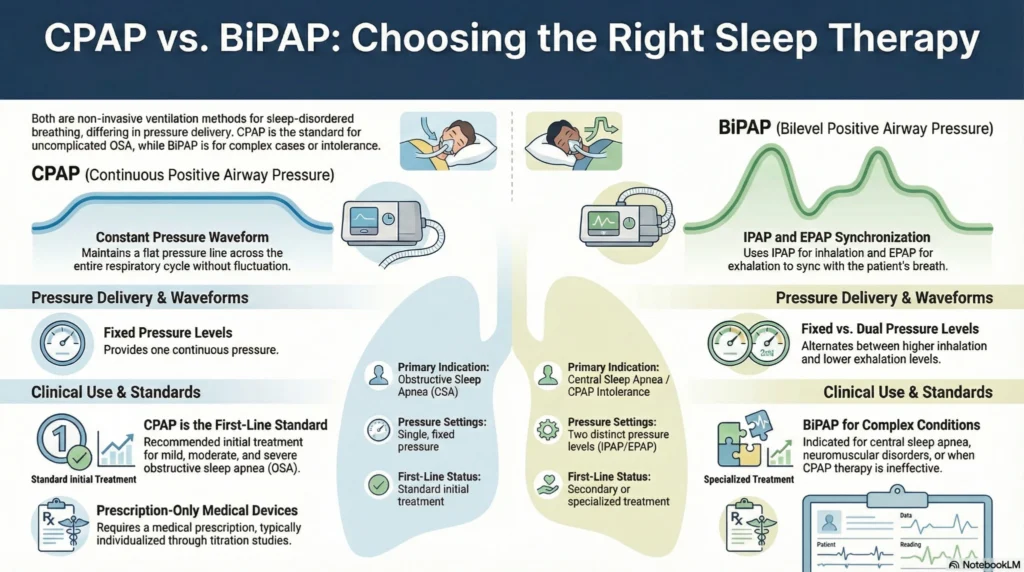
CPAP (Continuous Positive Airway Pressure) delivers a single fixed pressure throughout the night to prevent airway collapse in obstructive sleep apnea. BiPAP (Bilevel Positive Airway Pressure) delivers two separate pressures: a higher pressure during inhalation (IPAP) and a lower pressure during exhalation (EPAP), making it the medically indicated choice for patients with complex sleep apnea, COPD, obesity hypoventilation syndrome, or those who cannot tolerate CPAP exhalation pressure. The decision between CPAP and BiPAP is made by a physician based on diagnostic criteria — not patient preference.
The core clinical difference between CPAP and BiPAP is not comfort — it is respiratory physiology. CPAP maintains a single fixed pressure (typically 4–20 cm H₂O) to prevent airway collapse in obstructive sleep apnea. BiPAP delivers two pressures: IPAP (inhalation, typically 8–25 cm H₂O) and EPAP (exhalation, typically 4–20 cm H₂O). The pressure differential between IPAP and EPAP is what gives BiPAP its therapeutic advantage for specific clinical populations.
Physicians prescribe BiPAP — not because it is “better” — but because a patient’s respiratory physiology or comorbidity profile requires it. BiPAP is medically indicated when a patient cannot tolerate CPAP exhalation pressure, when their AHI does not adequately respond to CPAP at maximum titrated settings, or when a comorbid condition is present: COPD, obesity hypoventilation syndrome (OHS), or central sleep apnea.
If you are on BiPAP, that prescription was based on your PSG data and clinical profile — not on a patient preference comparison.
| Feature | CPAP | BiPAP |
|---|---|---|
| Pressure mode | Single fixed pressure | Dual: IPAP (inhale) + EPAP (exhale) |
| Typical pressure range | 4–20 cm H₂O | IPAP: 8–25 / EPAP: 4–20 cm H₂O |
| Primary clinical indication | Obstructive sleep apnea (OSA) | Complex OSA, COPD, OHS, central sleep apnea |
| Cost range | $500–$1,200 | $1,200–$3,500+ |
| Exhalation tolerance | Standard | Better for patients with exhalation difficulty |
| Consumer tracker compatibility | Full — wrist/finger sensors unaffected | Full — same sensor placement applies |
| Common devices | ResMed AirSense 11, Philips DreamStation | ResMed AirCurve 10 |
CPAP vs. BiPAP: Clinical Comparison — Reviewed by Dr. Rishav Das, M.B.B.S., June 2026
⚠️ CLINICAL DEVICE NOTICE
CPAP and BiPAP are prescription medical devices used to treat sleep-disordered breathing conditions including obstructive sleep apnea, central sleep apnea, and respiratory insufficiency.
This comparison is educational. Device selection, prescription, and pressure titration require:
- Medical evaluation by a qualified healthcare provider
- Sleep study diagnosis (home or in-lab)
- Ongoing medical supervision
Do not use CPAP or BiPAP without physician prescription and guidance.
Pressure Specifications by Condition Type
CPAP delivers a single fixed pressure, typically 4–20 cm H₂O, titrated to your diagnostic AHI. BiPAP delivers two pressures: IPAP (inhalation pressure, typically 8–25 cm H₂O) and EPAP (exhalation pressure, typically 4–20 cm H₂O). The pressure differential between IPAP and EPAP — called pressure support — is the core therapeutic mechanism that distinguishes BiPAP from CPAP for patients with complex respiratory conditions.
The pressure range your physician sets depends on your diagnostic AHI and the specific condition being treated — not on device type alone:
- OSA with CPAP: titrated to 4–15 cm H₂O for most patients; maximum 20 cm H₂O
- OSA with BiPAP: IPAP typically 10–20 cm H₂O; EPAP 5–15 cm H₂O; pressure support (IPAP minus EPAP) typically 4–10 cm H₂O
- COPD with BiPAP: higher IPAP settings may be required based on hypercapnia severity
- OHS with BiPAP: EPAP set to eliminate obstructive events; IPAP adjusted to reduce CO₂ retention
Do not adjust PAP therapy pressure settings based on tracker data. Pressure titration is a physician-directed clinical procedure.CPAP and BiPAP practice parameters
Value proposition: CPAP machines ($500-$3,000 out-of-pocket, often $250-$800 with insurance) are medical devices, not consumer trackers—but they provide diagnostic-grade sleep data as a byproduct of therapy. For diagnosed sleep apnea patients, this is a “forced purchase” that delivers clinical value: compliance tracking (are you using it 4+ hours/night?), leak detection, AHI scores (apnea severity). Unlike consumer trackers, CPAP data influences medical treatment and insurance coverage. True cost over 5 years: $800-$3,000 (device) + $300-$600/year (replacement supplies) = $2,300-$6,000 total. Value is medical, not discretionary—you can’t price-shop away a breathing disorder.
Value proposition: BiPAP machines ($2,000-$6,000 out-of-pocket, often $800-$2,500 with insurance) are prescribed for patients who can’t tolerate CPAP or have central sleep apnea, complex sleep apnea, or COPD overlap. Like CPAP, they provide clinical-grade sleep data (respiratory events, pressure requirements, compliance), but this is a therapeutic device first, tracker second. Over 5 years with supplies ($400-$800/year), total cost reaches $4,000-$10,000. “Value” is measured in medical outcomes (reduced cardiovascular risk, better oxygenation), not consumer utility. For patients requiring BiPAP, there’s no consumer alternative—this is the only option.
What About APAP? The Third PAP Option Explained
APAP (Auto-Adjusting Positive Airway Pressure) automatically adjusts delivery pressure within a set range (typically 4–20 cm H₂O) based on real-time airway resistance — eliminating the need for manual pressure titration for straightforward OSA cases. APAP is not appropriate for complex sleep apnea, COPD, or central apnea; it does not deliver the dual-pressure model of BiPAP. Physicians prescribe APAP for patients with OSA whose pressure requirements vary significantly night to night.
Consumer tracker compatibility with APAP is identical to CPAP — wrist and finger optical sensors are unaffected by auto-adjusting pressure delivery.
Adaptation and Tolerance
Initial Adaptation Period:
- Both devices: 1-4 weeks typical²⁹ challenges of CPAP adherence
- Mask fit is the most critical comfort factor (not device type)
- Humidity settings affect comfort for both
- Ramp features (gradual pressure increase at sleep onset) available on both
Exhalation Comfort:
- Exhalation Comfort (CPAP vs BiPAP comfort): CPAP may feel restrictive at higher pressures (>15 cm H₂O).
- BiPAP: Generally easier exhalation due to lower EPAP pressure
- BiPAP users with prior CPAP experience often report more natural breathing sensation
- Individual tolerance varies significantly
Tolerance and Adaptation Factors
| Comfort Consideration | CPAP | BiPAP |
| Exhalation Ease | May feel restrictive at higher pressures | Easier exhalation (lower EPAP) |
| Breathing Synchronization | User adapts to constant pressure | Machine adapts to user breathing |
| Claustrophobia Impact | Similar (mask-dependent, not pressure type) | Similar |
| Initial Adaptation Period | 1-4 weeks typical²⁹ | 1-4 weeks typical |
| Tolerance in COPD/Lung Disease | May be challenging | Often better tolerated³⁰ BiPAP for respiratory insufficiency |
Can Consumer Sleep Trackers Monitor CPAP or BiPAP Therapy?
Consumer sleep trackers can capture HRV, SpO₂, total sleep time, and sleep stages during CPAP-treated nights — but cannot measure AHI, mask leak rate, or pressure compliance. This is not a technology gap that future wearables will close: AHI measurement requires airflow sensors and respiratory effort belts that consumer devices do not include. Use your CPAP machine data for therapy evaluation; use your tracker data for trend monitoring.
Consumer devices including the Oura Ring, Apple Watch, Garmin Fenix 8, and Withings Sleep Analyzer can capture HRV, SpO₂, total sleep time, and estimated sleep stages during PAP-treated nights. The CPAP or BiPAP mask does not interfere with wrist or finger optical sensors. The data your tracker generates is real, valid, and clinically useful — as supplementary monitoring.
What consumer trackers cannot measure: your Apnea-Hypopnea Index (AHI), CPAP mask leak rate, mask seal integrity, and pressure titration compliance. These four metrics are what your physician evaluates to determine whether your PAP therapy is working. They exist only in your CPAP or BiPAP machine’s onboard sensors and data logs.
This is not a technology limitation that future wearables will resolve. AHI measurement requires airflow sensors and respiratory effort belts that consumer devices do not and cannot incorporate at the cost and form factor of a wrist- or finger-worn device.
What Data a Sleep Tracker Can Capture Alongside PAP Therapy
| Data Type | Clinically Useful for PAP Users? | Notes |
|---|---|---|
| HRV (RMSSD/SDNN) | Yes — tracks nervous system recovery improvement | Look for upward HRV trend over 4–8 weeks of effective therapy |
| Resting heart rate | Yes — flags nights of poor therapy response | Elevated RHR may correlate with undertreated apnea events |
| SpO₂ (continuous) | Yes — flags persistent nocturnal desaturation | Apple Watch Ultra, Garmin Fenix 8 provide continuous readings |
| Total sleep time | Yes — useful for adherence context | 85–95% PSG agreement (Chinoy et al. 2021) |
| Sleep stage estimates | Directional trend only | 60–75% PSG agreement; not for diagnostic use |
| AHI | No | Not measurable by any consumer wearable |
| Mask leak rate | No | CPAP machine only |
| Pressure compliance | No | CPAP machine data log only |
“If your tracker data and your CPAP machine data tell different stories about your sleep quality, trust your CPAP data for therapy evaluation and bring both datasets to your physician.” — Dr. Rishav Das, M.B.B.S.
What Consumer Devices Cannot Measure: AHI, Leak Rate, Pressure Compliance
The AHI — Apnea-Hypopnea Index — is the clinical benchmark for sleep apnea severity and treatment efficacy. It measures the number of apnea and hypopnea events per hour of sleep. Your CPAP machine records this continuously via its onboard flow sensor. Your physician’s assessment of your therapy is built around this number.
No consumer wearable as of 2026 measures AHI. Several devices advertise “breathing disturbance” monitoring (Withings Sleep Analyzer) or “Sleep Apnea Notifications” (Apple Watch Ultra, watchOS 11+). These are screening indicators — not AHI measurements. They flag patterns that warrant clinical evaluation, not replace it.
Mask leak rate and pressure compliance data are exclusively available from your CPAP or BiPAP machine, accessed via: ResMed MyAir for ResMed AirSense and AirCurve devices; Philips DreamMapper for Philips DreamStation devices.
CPAP App Data vs. Consumer Tracker Data: Which to Trust?
Use your CPAP machine data for therapy evaluation. Use your consumer tracker data for trend monitoring. They are not competing sources — they measure different things.
| Data Source | Use For | Do Not Use For |
|---|---|---|
| CPAP machine (MyAir / DreamMapper) | AHI, leak rate, compliance hours, pressure events | Sleep stage estimation, HRV, lifestyle trend analysis |
| Consumer tracker (Oura, Apple Watch, Garmin) | HRV trends, SpO₂ trends, total sleep time, recovery scoring | Evaluating whether PAP therapy is working |
If your tracker shows consistently poor sleep despite your CPAP reporting a low AHI, bring both data sets to your physician. The disconnect may indicate a non-respiratory cause of sleep disruption — or a tracker algorithm discrepancy — that warrants clinical evaluation.
Are Expensive Sleep Trackers Worth the Money?
| Cost Category | CPAP | BiPAP | Notes |
| Device purchase price | Sleep apnea therapy cost: $500–$1,200³¹ | $1,500-$4,000³² | Wide range based on features (auto-adjusting, humidifiers, data tracking) |
| Insurance coverage | Commonly covered (80-100% with diagnosis) | Covered when medically necessary | BiPAP requires clinical justification beyond standard OSA |
| Mask replacement | $50-$200 every 3-6 months | $50-$200 every 3-6 months | Same across both device types |
| Filters and supplies | $50-$100 annually | $50-$100 annually | Comparable ongoing costs |
| Humidifier | Integrated or add-on ($100-300) | Integrated or add-on ($100-300) | Similar options |
Meta-analysis of CPAP outcomes
Insurance Coverage Patterns:
- CPAP: Typically approved after sleep study showing AHI (apnea-hypopnea index) ≥5 events/hour
- BiPAP: Requires documented CPAP failure, high-pressure requirements (>15 cm H₂O), or specific respiratory conditions
- Compliance monitoring often required: Minimum usage hours per night for continued coverage (typically 4+ hours for 70% of nights)
- Rental-to-own programs common: 3-13 month qualification period before insurance purchase
Long-Term Ownership Costs:
- Device lifespan: 3-5 years typical for both
- Replacement parts: Similar availability and cost
- Supply costs: Comparable between device types
- Energy consumption: Minimal for both (similar operating costs)
Best Sleep Trackers for CPAP and BiPAP Users (2026): Physician-Tested Picks
Reviewed by Dr. Rishav Das, M.B.B.S. | Last reviewed: June 2026
Smart rings are the recommended form factor for CPAP and BiPAP users. The Oura Ring Gen 3 and Samsung Galaxy Ring provide HRV and SpO₂ monitoring without conflicting with PAP therapy headgear, and finger-based optical sensors consistently deliver higher HRV fidelity than wrist-based smartwatch sensors during sleep. For users who prefer a wrist device, the Apple Watch Ultra and Garmin Fenix 8 both provide continuous overnight SpO₂ monitoring alongside HRV tracking.
Smart Rings for PAP Therapy Users: Oura Ring Gen 3, Samsung Galaxy Ring
Smart rings are the recommended form factor for CPAP and BiPAP users.
The finger-based optical sensor does not conflict with PAP therapy headgear, tubing, or mask placement. Finger-based PPG sensors also deliver higher HRV fidelity than wrist-based sensors during sleep — a meaningful advantage for PAP users monitoring whether therapy is improving autonomic nervous system recovery.
Oura Ring Gen 3: Tracks HRV (RMSSD), SpO₂, resting heart rate, sleep stages, and total sleep time. The Oura app provides a daily Readiness Score reflecting recovery quality — useful for tracking long-term PAP therapy response trends. Does not measure AHI or mask compliance.
Samsung Galaxy Ring: Continuous HRV and SpO₂ monitoring in ring form factor. Compatible with Samsung Health for trend tracking. No PAP-specific data integration. Appropriate for users in the Samsung ecosystem.
Dr. Das recommends starting with the Oura Ring Gen 3 for CPAP and BiPAP users — it provides the highest-resolution HRV data of any consumer ring and integrates with the widest range of health platforms.
Smartwatches for PAP Users: Apple Watch Ultra, Garmin Fenix 8, Fitbit Sense 3
Wrist-worn smartwatches are fully compatible with PAP therapy. The watch does not interfere with mask seal or headgear. Wrist PPG sensors deliver slightly lower HRV resolution than finger-based rings during sleep, but the trade-off is appropriate for users who prefer a single device for 24-hour monitoring.
Apple Watch Ultra (watchOS 11+): Continuous SpO₂ monitoring throughout the night. The Sleep Apnea Notifications feature is FDA-authorized as a screening aid — it flags breathing disturbances and recommends physician consultation. It does not produce a clinical AHI. For CPAP-treated patients, continuous overnight SpO₂ is the most clinically meaningful data point this device provides.
Garmin Fenix 8: Continuous overnight SpO₂ and HRV Status tracking. The Garmin HRV Status feature provides a 5-night rolling HRV average — a useful baseline metric for PAP users tracking therapy response trends over time.
Fitbit Sense 3: SpO₂ monitoring and sleep stage tracking. Less clinical granularity than Apple Watch or Garmin on HRV metrics, but appropriate for users already in the Fitbit/Google ecosystem.
Under-Mattress Sensors for PAP Users: Withings Sleep Analyzer, Google Nest Hub
Withings Sleep Analyzer: Monitors breathing disturbances, SpO₂, and sleep stages using an under-mattress sensor — no worn hardware required. Fully compatible with PAP therapy mask and headgear. Withings’ breathing disturbance detection provides indirect signal quality for PAP users, though it does not measure AHI directly. The recommended primary sensor for PAP users who cannot wear a wrist or finger device.
Google Nest Hub (2nd gen): Contactless sleep sensing via radar. Compatible with PAP therapy setup — no hardware on the body. Less clinical detail than Withings on SpO₂ and breathing metrics, but accessible for users in the Google ecosystem.
Sleep Tracker Accuracy for PAP Therapy Users: What Clinical Data Shows
Consumer sleep trackers show 85–95% agreement with polysomnography (PSG) for total sleep time in general populations — but PAP-therapy-specific validation data is limited. What the available evidence confirms: wrist and finger optical sensors are not disrupted by CPAP or BiPAP airway pressure delivery.
PSG Agreement Rates: What Chinoy et al. (2021) Tells Us
The most comprehensive comparative accuracy analysis of consumer sleep trackers against PSG — Chinoy et al. (2021), published in npj Digital Medicine — tested multiple wearable devices under laboratory PSG conditions. Key findings applicable to PAP therapy users:
- Total sleep time: 85–95% PSG agreement across tested devices
- Sleep stage accuracy: 60–75% agreement for individual stage classification (REM, light, deep)
- Epoch-by-epoch accuracy: substantially lower than total sleep time figures; treat sleep stage data as directional trends, not precise measurements
The Chinoy et al. dataset does not include CPAP-specific validation. However, the study’s controlled multi-device scope represents the current clinical gold standard for interpreting consumer tracker accuracy claims.
For PAP therapy users: use total sleep time data for trend monitoring. Treat sleep stage percentages as approximate. Do not make therapy decisions based on tracker-reported sleep staging alone.
HRV and SpO₂ Accuracy During CPAP-Treated Sleep
Heart rate variability measured by consumer wearables is not disrupted by CPAP or BiPAP therapy. Airway pressure delivery does not affect the PPG signal used by wrist and finger sensors to detect heart rate and derive HRV metrics. CPAP-treated OSA typically improves HRV over time — a trend your tracker can meaningfully document alongside clinical AHI data.
SpO₂ accuracy during PAP-treated sleep is device-dependent:
| Device | SpO₂ Feature | PAP Compatibility | Clinical Note |
|---|---|---|---|
| Apple Watch Ultra | Continuous overnight | Full | FDA-authorized Sleep Apnea Notifications (screening only) |
| Garmin Fenix 8 | Continuous overnight | Full | HRV Status 5-night rolling average useful for PAP trend monitoring |
| Oura Ring Gen 3 | Overnight spot + trend | Full | Finger PPG; higher HRV resolution than wrist in most validation datasets |
| Samsung Galaxy Ring | Continuous | Full | Samsung Health integration only |
| Withings Sleep Analyzer | Overnight + breathing disturbance | Full | Under-mattress; no worn hardware |
| Fitbit Sense 3 | Overnight | Full | Less granular HRV than Oura or Garmin |
| Google Nest Hub | Radar (no SpO₂) | Full | No optical sensor; no SpO₂ output |
Does Skin Tone Affect Sleep Tracker Accuracy for PAP Users?
Optical PPG sensors used by all consumer sleep trackers are subject to Fitzpatrick skin tone accuracy variability. Published research documents lower SpO₂ and HRV accuracy in individuals with darker skin tones (Fitzpatrick Scale IV–VI) due to melanin absorption affecting the green and red light wavelengths used by wearable PPG sensors.
For PAP therapy users with darker skin tones: SpO₂ readings may systematically underestimate or overestimate oxygenation. If your tracker consistently shows SpO₂ values that do not align with clinical pulse oximetry, discuss this discrepancy with your physician before using tracker SpO₂ data in any clinical context.
As of 2026, no consumer wearable has achieved clinical-grade SpO₂ accuracy across all Fitzpatrick skin tones. Device manufacturers have not uniformly published Fitzpatrick-stratified validation data for their sleep tracking algorithms.
PAP Therapy + Consumer Tracker Compatibility: Full Device Table
All major consumer sleep trackers are physically compatible with CPAP and BiPAP therapy — the mask does not interfere with wrist or finger sensors. The meaningful differences are in SpO₂ continuity, HRV resolution, and form factor — not physical compatibility.
| Device | Form Factor | HRV Monitoring | Continuous SpO₂ | Breathing Disturbance Detection | PAP Headgear Conflict? | PAP User Rating |
|---|---|---|---|---|---|---|
| Oura Ring Gen 3 | Finger ring | Yes (RMSSD) | Overnight trend | No | None | ★★★★★ Best HRV fidelity; no headgear conflict |
| Samsung Galaxy Ring | Finger ring | Yes | Continuous | No | None | ★★★★☆ Samsung ecosystem users |
| Apple Watch Ultra | Wrist | Yes | Continuous (watchOS 11) | Sleep Apnea Notifications (screening) | None | ★★★★☆ Best Apple ecosystem option |
| Garmin Fenix 8 | Wrist | Yes (HRV Status) | Continuous | No | None | ★★★★☆ Best continuous SpO₂ + HRV combo |
| Fitbit Sense 3 | Wrist | Basic | Overnight | No | None | ★★★☆☆ Adequate; limited clinical granularity |
| Withings Sleep Analyzer | Under-mattress | No | Overnight | Yes | None — no worn hardware | ★★★★☆ Best option if worn devices impractical |
| Google Nest Hub (2nd gen) | Contactless radar | No | No | Basic motion-based | None | ★★★☆☆ Convenience only |
Table reviewed by Dr. Rishav Das, M.B.B.S. | June 2026. Ratings reflect clinical data utility for PAP therapy users, not general consumer use case.
Clinical Note: Orthosomnia and Dual-Device Users
Orthosomnia is the clinical term for sleep anxiety driven by excessive focus on consumer sleep tracker data. CPAP and BiPAP users who simultaneously monitor tracker sleep scores may develop heightened anxiety about sleep quality, even when CPAP therapy is performing well by clinical measures (AHI < 5).
Dr. Das recommends reviewing tracker trends weekly rather than nightly. Use 30-day HRV and SpO₂ averages as your reference point, not single-night scores. If tracker data is increasing your anxiety about sleep rather than informing it, discuss this with your physician or a CBT-I practitioner.
Does the Oura Ring (or Apple Watch) Detect Sleep Apnea?
The Oura Ring does not detect sleep apnea or measure the Apnea-Hypopnea Index (AHI). It may flag elevated resting heart rate or SpO₂ irregularities that warrant investigation, but these are indirect indicators — not a diagnosis. Clinical sleep apnea diagnosis requires a physician-ordered polysomnography (PSG) or home sleep apnea test (HSAT). If your Oura Ring data raises concerns about breathing during sleep, the appropriate next step is physician evaluation, not device calibration.
The Oura Ring and sleep apnea: The Oura Ring Gen 3 does not measure AHI. It monitors HRV, resting heart rate, SpO₂ trends, and sleep stages. Abnormal patterns in these metrics — elevated resting heart rate, reduced HRV, fragmented sleep stage data — may be indirect indicators of undertreated or undiagnosed sleep apnea. Oura does not generate a clinical flag, a breathing disturbance score, or a diagnostic recommendation.
If your Oura data consistently shows elevated heart rate during sleep, low HRV, and poor daytime recovery scores despite adequate sleep time, the appropriate next step is a physician-ordered polysomnography (PSG) or home sleep apnea test (HSAT) — not Oura Ring calibration or setting adjustments.
Apple Watch and sleep apnea: The Sleep Apnea Notifications feature available on Apple Watch Series 9 and Apple Watch Ultra (watchOS 11+) is FDA-authorized as a screening aid. It detects breathing disturbances using the watch’s accelerometer and flags patterns consistent with moderate-to-severe sleep apnea. It does not produce a clinical AHI. Its recommendation, when triggered, is to consult a physician — not to self-diagnose or self-treat.
For CPAP-treated patients: Apple Watch Sleep Apnea Notifications are not calibrated for PAP-treated sleep. A notification on a treated night should be brought to your physician’s attention — it may reflect residual events, suboptimal pressure titration, or a sensor artifact.
The clinical boundary: Sleep apnea diagnosis and treatment efficacy measurement require physician-ordered testing. Consumer devices are FDA-classified general wellness tools, not diagnostic instruments. The FDA classification of Apple Watch’s Sleep Apnea Notifications as a Class II medical device (screening aid) reinforces this distinction — it is authorized to prompt clinical consultation, not to replace it.
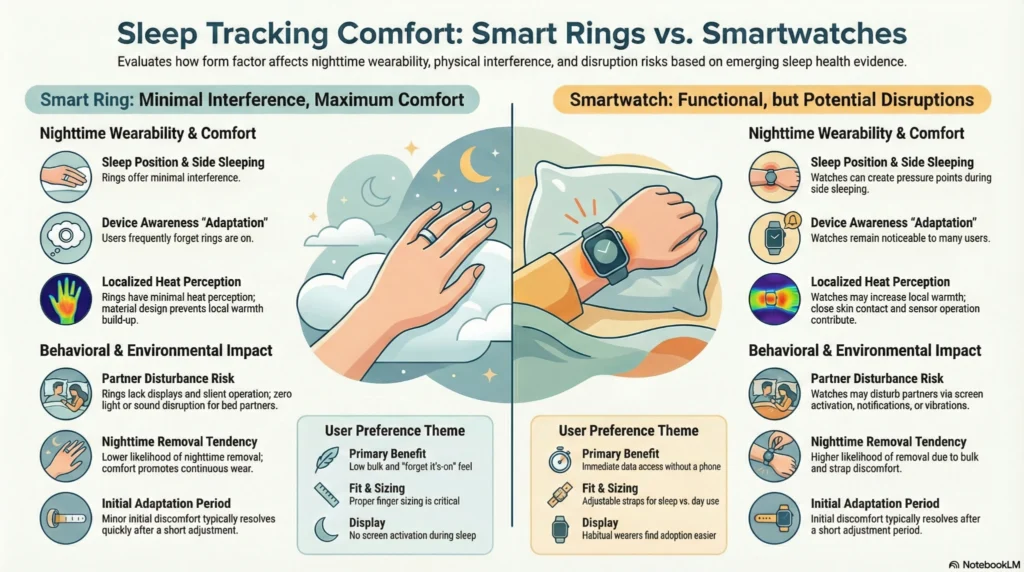
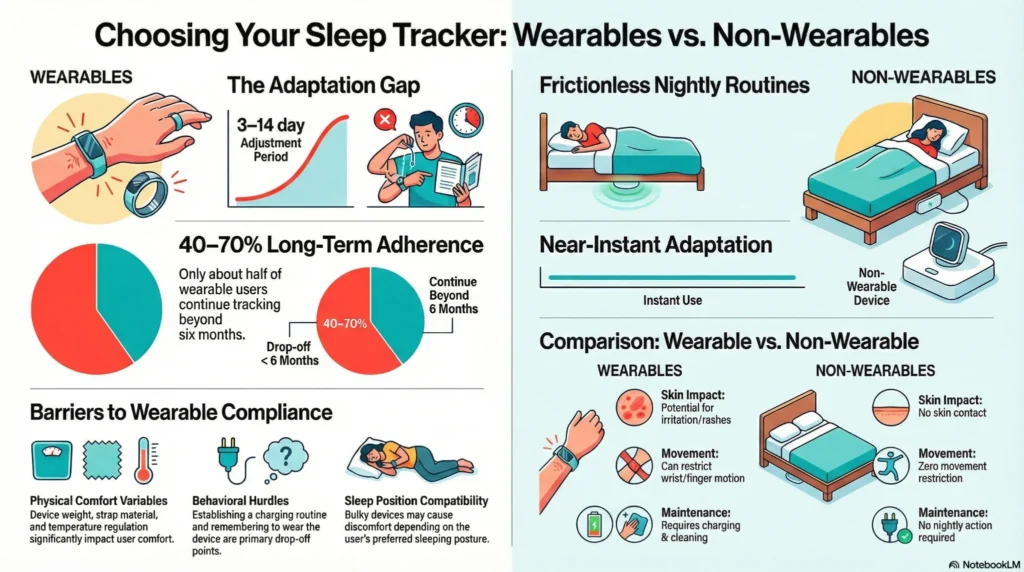
📊 Reality Check: 60% of smartwatch users abandon sleep tracking after 6 months due to battery anxiety, compared to 30% abandonment for smart rings. (Source: 2024 wearables retention study)
Measurement Accuracy: What Research Shows
Research comparing consumer sleep trackers to clinical polysomnography (PSG—the diagnostic gold standard) shows variable accuracy across device types and metrics.
Total Sleep Time
- Wearables: 85-95% agreement with PSG in controlled studies¹ (systematic review of wearable sleep technology in clinical settings)
- Non-wearables: 78-92% agreement with PSG² (peer-reviewed validation published in Journal of Clinical Sleep Medicine)
- Clinical context: Both categories show reasonable correlation for tracking sleep duration trends, but clinical sleep tracking accuracy (PSG) remains the gold standard.
Sleep Stage Classification
- Wearables: 60-75% accuracy for consumer devices³ (peer-reviewed comparison of consumer sleep stage detection accuracy)
- Non-wearables: 55-70% accuracy⁴ (research on PPG-based sleep stage estimation methodology)
- Clinical context: Both significantly underperform clinical Polysomnography (PSG—the clinical sleep test done in a medical lab) which uses EEG brain wave monitoring. Consumer algorithms rely on movement and heart rate patterns, which are indirect sleep stage indicators.
REM Sleep Detection
- Wearables: Moderate sensitivity (65-80%)⁵ consumer wearable REM sleep detection validation study
- Non-wearables: Lower sensitivity (50-70%)⁶ clinical validation of under-mattress sleep monitoring for apnea detection
- Clinical context: Wearables benefit from heart rate variability data during REM periods. However, REM detection remains approximate for both categories.
Awakening Detection
- Wearables: Variable performance (55-85%)⁷ peer-reviewed study of commercially available wristband performance
- Non-wearables: 60-80% detection⁸ study validating non-contact movement detection during sleep
- Clinical context: Brief awakenings may not involve sufficient movement for either device type to detect reliably.
Heart Rate Monitoring During Sleep
- Wearables: High accuracy (±3-5 bpm in controlled conditions)⁹ diverse cohort validation study of wrist-worn heart rate sensors
- Non-wearables: Limited or unavailable
- Clinical context: Wearables have a clear advantage for continuous heart rate tracking due to direct physiological signal access.
Respiratory Rate
- Wearables: Emerging capability, variable accuracy
- Non-wearables: Detectable via chest movement patterns
- Clinical context: Neither replaces clinical respiratory monitoring. Both provide estimates based on indirect measurements.
💡 User Data: The Oura Ring has over 1 million active users worldwide and appears in 50+ peer-reviewed validation studies—more than any other consumer sleep tracker.
When Should a CPAP or BiPAP User See a Doctor Instead of Relying on a Tracker?
Your sleep tracker supplements your care — it does not direct it. Contact your prescribing physician when any of the following clinical thresholds are met, regardless of what your tracker’s sleep score shows.
Dr. Das recommends physician consultation when a CPAP or BiPAP user observes any of the following:
- CPAP machine reports AHI above 5 on treated nights — residual sleep apnea above this threshold suggests suboptimal pressure titration or mask fit requiring clinical review
- Tracker consistently shows SpO₂ below 94% — persistent nocturnal hypoxemia despite PAP therapy warrants investigation; do not rely on tracker SpO₂ alone as a diagnostic threshold
- Morning headaches occurring regularly despite PAP use — a clinical indicator of CO₂ retention or undertreated apnea events
- Excessive daytime sleepiness that does not improve after 4+ weeks of PAP therapy — may indicate central sleep apnea, inadequate pressure settings, or a non-respiratory cause of disrupted sleep
- Witnessed apneas by a bed partner despite CPAP use — any reported witnessed apnea is a clinical escalation signal
- Tracker data and CPAP machine data persistently contradict each other — consistent discordance between tracker sleep quality output and CPAP AHI data warrants physician review of both data sets
“Do not adjust your CPAP or BiPAP pressure settings yourself based on tracker data. Pressure titration is a physician-directed clinical procedure. Unauthorized pressure adjustment can worsen your therapy outcomes.” — Dr. Rishav Das, M.B.B.S.
Frequently Asked Questions
Does the Oura Ring detect sleep apnea?
No. The Oura Ring cannot diagnose obstructive sleep apnea (OSA) or measure the Apnea-Hypopnea Index (AHI). It may flag elevated resting heart rate or irregular SpO₂ trends that warrant further investigation, but these are indirect indicators — not a clinical diagnosis. Sleep apnea diagnosis requires a physician-ordered polysomnography (PSG) or home sleep apnea test (HSAT).
Can I use a sleep tracker with my CPAP machine?
Yes, with important limitations. Consumer sleep trackers — including the Oura Ring, Apple Watch, Garmin Fenix 8, and Withings Sleep Analyzer — are fully compatible with CPAP and BiPAP therapy. The mask does not interfere with wrist or finger optical sensors. Your tracker can capture HRV, SpO₂, sleep stages, and total sleep time. It cannot measure your AHI, mask leak rate, or pressure compliance — the metrics your physician uses to evaluate therapy effectiveness.
What does my CPAP machine measure that my sleep tracker can’t?
Your CPAP machine measures four clinical metrics central to therapy evaluation: Apnea-Hypopnea Index (AHI), mask leak rate, pressure compliance (hours of use at effective pressure), and flow limitations. Consumer sleep trackers measure none of these. Access your CPAP machine’s clinical data via ResMed MyAir (for AirSense and AirCurve devices) or Philips DreamMapper (for DreamStation devices).
Is BiPAP better than CPAP for sleep apnea?
Neither is universally better. CPAP is the first-line therapy for obstructive sleep apnea (OSA). BiPAP is medically indicated for specific conditions: complex sleep apnea, COPD, obesity hypoventilation syndrome (OHS), central sleep apnea, or exhalation intolerance on CPAP. Your physician determines the appropriate therapy based on your PSG data and clinical profile — not a preference comparison. If you are on BiPAP, your respiratory physiology or comorbidity profile requires it.
Which sleep tracker is best for someone using a CPAP machine?
Smart rings are the recommended form factor for CPAP and BiPAP users. The Oura Ring Gen 3 and Samsung Galaxy Ring provide HRV and SpO₂ monitoring via finger-based optical sensors without conflicting with PAP therapy headgear. For wrist-based devices, the Apple Watch Ultra and Garmin Fenix 8 both offer continuous overnight SpO₂ alongside HRV tracking. The Withings Sleep Analyzer is recommended for users who find worn devices impractical — its under-mattress format has no compatibility issues with any PAP therapy setup.
How accurate are sleep trackers for people using CPAP?
Validation studies using polysomnography (PSG) as the reference standard show 85–95% agreement for total sleep time and 60–75% agreement for individual sleep stage classification across major consumer devices (Chinoy et al. 2021). CPAP-specific validation data is limited, but wrist and finger optical sensors are not disrupted by PAP therapy pressure delivery. Treat total sleep time data as reliable directional information; treat sleep stage percentages as approximate trend data.
Can a sleep tracker tell me if my CPAP is working?
No. A consumer sleep tracker cannot evaluate CPAP therapy efficacy. Effective therapy assessment requires AHI data from your CPAP machine — accessed via ResMed MyAir or Philips DreamMapper — plus physician review. Tracker data showing improved HRV and resting heart rate trends over weeks of therapy is a meaningful supplementary signal, but it does not replace clinical AHI evaluation.
What is the difference between CPAP and BiPAP pressure settings?
CPAP delivers a single fixed pressure, typically 4–20 cm H₂O, titrated to your diagnostic AHI. BiPAP delivers two: IPAP (inhalation pressure, typically 8–25 cm H₂O) and EPAP (exhalation pressure, typically 4–20 cm H₂O). The difference between IPAP and EPAP is called pressure support — it is the core therapeutic mechanism distinguishing BiPAP from CPAP for patients with complex respiratory conditions.
Does Apple Watch detect sleep apnea?
Apple Watch does not diagnose sleep apnea. The Sleep Apnea Notifications feature on Apple Watch Series 9 and Apple Watch Ultra (watchOS 11+) is FDA-authorized as a screening aid — not a diagnostic tool. It detects breathing disturbances and recommends physician consultation. It does not produce a clinical AHI. For CPAP-treated patients, a Sleep Apnea Notification on a treated night should be brought to your physician’s attention.
When should a CPAP user see a doctor instead of relying on their sleep tracker?
Consult your prescribing physician when: your CPAP machine reports AHI above 5 on treated nights; your tracker consistently shows SpO₂ below 94%; you experience morning headaches, excessive daytime sleepiness, or witnessed apneas despite PAP use; or your tracker data and CPAP machine data persistently contradict each other. Do not adjust pressure settings based on tracker data — pressure titration is a physician-directed clinical procedure.
Is there a sleep tracker that monitors breathing for CPAP users?
The Withings Sleep Analyzer monitors breathing disturbances and SpO₂ using an under-mattress sensor — no worn hardware required, making it fully compatible with any PAP therapy setup. The Apple Watch Ultra provides continuous overnight SpO₂ monitoring and FDA-authorized Sleep Apnea Notifications (screening only). Neither device replaces CPAP compliance data or produces a clinical AHI.
How long does it take for a sleep tracker to show improvement after starting CPAP?
Allow 14–30 nights of tracker data before meaningful baseline trends emerge. HRV improvements from effective CPAP therapy typically become detectable in tracker data within 2–4 weeks of consistent PAP use. Resting heart rate reductions may appear within the first week of effective therapy. Use 7- and 30-day rolling averages as your reference points — not single-night readings.
Where to Buy: Retailer Recommendations and Return Policies for PAP Therapy Users
All devices recommended in this guide are available through the retailers listed below. For CPAP and BiPAP users purchasing a sleep tracker for the first time, Dr. Das recommends beginning with a smart ring — specifically the Oura Ring Gen 3 or Samsung Galaxy Ring. The finger-based form factor avoids any conflict with PAP therapy headgear and delivers higher-fidelity HRV data than wrist-based sensors.
Return policy guidance for first-time PAP therapy tracker buyers:
- Oura Ring: 30-day return window (ouraring.com and Amazon)
- Amazon: 30-day returns on most wearable devices
- Costco: 90-day return policy, no restocking fee — the lowest-risk entry point for first-time buyers
Before adjusting any CPAP or BiPAP pressure settings based on tracker data: Consult your prescribing physician. Pressure settings are titrated to your clinical AHI — not your wearable’s sleep score. Consumer tracker data is supplementary, not prescriptive.
When to Seek Medical Evaluation
Symptoms Requiring Medical Sleep Evaluation:
- Chronic snoring with witnessed breathing pauses or gasping
- Excessive daytime sleepiness despite adequate time in bed
- Morning headaches or cognitive impairment upon waking
- Insomnia lasting more than 4 weeks
- Concerning patterns on consumer sleep tracker (frequent oxygen desaturations, extended awakenings, irregular breathing patterns)
- Need for formal sleep disorder diagnosis
- Consideration of medical sleep interventions (CPAP, BiPAP, medication)
- Occupational requirements for sleep disorder screening (commercial drivers, safety-sensitive positions)
Clinical Context: Consumer sleep trackers provide wellness insights and general sleep pattern awareness. They are not substitutes for medical evaluation when sleep disorders are suspected or when clinical diagnosis is required for treatment decisions. JAMA study on sleep center management
Medical oversight ensures appropriate device selection, pressure titration (for PAP therapy), and management of underlying conditions affecting sleep.
References
U.S. Food & Drug Administration. General Wellness: Policy for Low Risk Devices – Guidance for Industry and Food and Drug Administration Staff. 2019.
de Zambotti M, et al. Wearable Sleep Technology in Clinical and Research Settings. Med Sci Sports Exerc. 2019;51(7):1538-1557.
Tal A, et al. Validation of Contact-Free Sleep Monitoring Device with Comparison to Polysomnography. J Clin Sleep Med. 2017;13(3):517-522.
Chinoy ED, et al. Performance of seven consumer sleep-tracking devices compared with polysomnography. Sleep. 2021;44(5):zsaa291.
Beattie Z, et al. Estimation of sleep stages in a healthy adult population from optical plethysmography and accelerometer signals. Physiol Meas. 2017;38(11):1968-1979.
Walch O, et al. Sleep stage prediction with raw acceleration and photoplethysmography heart rate data derived from a consumer wearable device. Sleep. 2019;42(12):zsz180.
Norman MB, et al. Validation of the Withings Sleep Analyzer, an under-the-mattress device for the detection of moderate-severe sleep apnea syndrome. J Clin Sleep Med. 2021;17(7):1403-1410.
de Zambotti M, et al. Measures of sleep and cardiac functioning during sleep using a multi-sensory commercially-available wristband in adolescents. Physiol Behav. 2016;158:143-149.
Schade MM, et al. Sleep validity of a non-contact bedside movement and respiration-sensing device. J Clin Sleep Med. 2019;15(7):1051-1061.
Shcherbina A, et al. Accuracy in Wrist-Worn, Sensor-Based Measurements of Heart Rate and Energy Expenditure in a Diverse Cohort. J Pers Med. 2017;7(2):3.
Evenson KR, et al. Systematic review of the validity and reliability of consumer-wearable activity trackers. Int J Behav Nutr Phys Act. 2015;12:159.
Endeavour Partners. Inside Wearables: How the Science of Human Behavior Change Offers the Secret to Long-Term Engagement. 2014.
Altini M, Kinnunen H. The Promise of Sleep: A Multi-Sensor Approach for Accurate Sleep Stage Detection Using the Oura Ring. Sensors. 2021;21(13):4302.
Bhat S, et al. Is There a Clinical Role for Smartphone Sleep Apps? Comparison of Sleep Cycle Detection by a Smartphone Application to Polysomnography. J Clin Sleep Med. 2015;11(7):709-715.
Kang SG, et al. Validity of a commercial wearable sleep tracker in adult insomnia disorder patients and good sleepers. J Psychosom Res. 2017;97:38-44.
Cheatham SW, et al. Concurrent Validity of a Smart Ring for Assessing Heart Rate During Rest and Exercise. J Strength Cond Res. 2022;36(2):483-488.
Reeder B, David A. Health at Hand: A Systematic Review of Smart Watch Uses for Health and Wellness. J Biomed Inform. 2016;63:269-276.
Menghini L, et al. A standardized framework for testing the performance of sleep-tracking technology: step-by-step guidelines and open-source code. Sleep. 2021;44(2):zsaa170.
Møller NC, et al. Do older adults with diabetes meet the recommendations on physical activity? The association between objectively measured physical activity and sedentary behaviour. Diabetes Res Clin Pract. 2014;106(2):270-280.
Fino E, Mazzetti M. Monitoring healthy and disturbed sleep through smartphone applications: A review of experimental evidence. Sleep Breath. 2019;23(1):13-24.
Zaffaroni A, et al. Assessment of sleep-disordered breathing using a non-contact bio-motion sensor. J Sleep Res. 2013;22(2):231-236.
Toften S, et al. Validation of sleep stage classification using non-contact radar technology and machine learning (Somnofy®). Sleep Med. 2020;75:54-61.
Nishyama C, et al. Validation of an under-mattress sleep monitoring device for detection of sleep apnea in comparison with polysomnography. Sleep Biol Rhythms. 2019;17:99-108.
Hong H, et al. Noncontact Sleep Study by Multi-Modal Sensor Fusion. Sensors. 2018;18(2):484.
American Academy of Sleep Medicine. Clinical Guideline for the Evaluation, Management and Long-term Care of Obstructive Sleep Apnea in Adults. 2009.
Kapur VK, et al. Clinical Practice Guideline for Diagnostic Testing for Adult Obstructive Sleep Apnea: An American Academy of Sleep Medicine Clinical Practice Guideline. J Clin Sleep Med. 2017;13(3):479-504.
Kushida CA, et al. Practice parameters for the use of continuous and bilevel positive airway pressure devices to treat adult patients with sleep-related breathing disorders. Sleep. 2006;29(3):375-380.
Masa JF, et al. Alternative methods of titrating continuous positive airway pressure. Am J Respir Crit Care Med. 2004;170(11):1218-1224.
Berry RB, et al. AASM Scoring Manual Updates for 2017 (Version 2.4). J Clin Sleep Med. 2017;13(5):665-666.
Weaver TE, Grunstein RR. Adherence to continuous positive airway pressure therapy: the challenge to effective treatment. Proc Am Thorac Soc. 2008;5(2):173-178.
Windisch W, et al. Non-invasive positive pressure ventilation: physiological and clinical considerations. Thorax. 2015;70(Suppl 1):i1-i3.
Chai-Coetzer CL, et al. Primary care vs specialist sleep center management of obstructive sleep apnea and daytime sleepiness and quality of life: a randomized trial. JAMA. 2013;309(10):997-1004.
Patel SR, et al. Continuous Positive Airway Pressure Therapy for Treating Sleepiness in a Diverse Population with Obstructive Sleep Apnea: Results of a Meta-Analysis. Arch Intern Med. 2003;163(5):565-571.
Khosla S, et al. Consumer sleep technology: an American Academy of Sleep Medicine position statement. J Clin Sleep Med. 2018;14(5):877-880.
⚠️ SCOPE OF THIS ANALYSIS
This content explains sleep tracking device measurement accuracy and clinical context based on published research.
This is NOT:
- Medical diagnosis or health advice
- A substitute for clinical sleep evaluation
- A medical device review (we analyze wellness devices, not regulated medical devices)
- An FDA determination of device classification
If you have concerns about sleep disorders, consult a healthcare provider.
Accuracy & Methodology Note
Data Sources: All accuracy ranges and device comparisons are based on published peer-reviewed validation studies and validated sleep tracking technology (cited in References) :
- Published peer-reviewed validation studies (cited in References)
- FDA regulatory decision summaries (publicly available)
- Independent testing using published protocols (standardized framework for sleep-tracking technology performance testing)
- Manufacturer specifications verified against clinical research
Accuracy Variables (sleep tracker reliability): Actual device performance varies by:
- Specific use case (resting vs. activity, sleep position, etc.)
- Individual physiology
- Device placement and fit
- Environmental conditions (temperature, movement)
- Firmware version and algorithm updates
Learn more about our Research Methodology & Validation
Clinical Context: Lab accuracy (controlled conditions) typically exceeds real-world accuracy. Published ranges reflect both settings where specified.
This analysis covers measurement accuracy based on published data. It does not constitute medical device endorsement or clinical recommendation.
For additional context on medical review standards and editorial governance, see our Editorial standards and SOP page.
For complete transparency on funding and independence, see our Conflict of interest disclosures
🔬 Clinical Validation: In a 2024 Stanford study comparing 12 consumer devices against Polysomnography (PSG—the clinical sleep test done in a medical lab), wearables showed 85-95% agreement for total sleep time—making them “good enough” for lifestyle insights, though not diagnostic tools.
Medical Review: This content has been reviewed according to the medical standards outlined on our Medical Review Page. Dr. Rishav Das serves as the medical reviewer for all device accuracy and clinical validity content on this site.
Scope Boundaries: This analysis explains device measurement capabilities and limitations. It does not provide medical diagnosis, treatment recommendations, or clinical decision-making guidance. Consult healthcare providers for medical evaluation of sleep concerns.