
Dangerous Blood Sugar Levels, CGM Accuracy & Normal Ranges: Physician Guide (2026)
Physician-reviewed guide to blood sugar and continuous glucose monitoring (2026) — normal ranges, CGM vs. fingerstick accuracy, OTC CGM evidence, and emergency warning signs.
Medically reviewed by Dr. Rishav Das, M.B.B.S. | Wellness Device Data Analyst | Consumer Device Accuracy Specialist
— see About page for full credentials and qualifications.
Reviewed according to the medical standards outlined on our About page.
Last medically reviewed: June,2026
Introduction
If you just received a blood sugar result you don’t fully understand — or you’re trying to decide whether a continuous glucose monitor is worth it — this page will give you physician-reviewed answers, not vague reassurances.
What you’ll find here:
- Exactly what normal blood sugar levels mean at fasting and after eating, with ADA 2024 reference ranges
- How continuous glucose monitoring (CGM) works, and how it compares to traditional fingerstick blood glucose meters
- An honest, evidence-graded assessment of OTC CGMs like Dexcom Stelo and Abbott Lingo for people without diabetes
- When blood sugar readings require emergency action — and exactly what to do
Every clinical claim on this page has been reviewed by Dr. Rishav Das, M.B.B.S. This is not medical advice. If you are experiencing hypoglycemia symptoms or an acute blood sugar crisis, seek emergency care immediately.
Important: If your blood sugar is below 70 mg/dL right now, go directly to [The 15-15 Rule →] before reading further.
- Understanding Metabolic Health and Blood Sugar
- Blood Glucose Basics: What Your Numbers Mean
- Who Needs Glucose Monitoring
- Glucose Monitoring Methods
- OTC Continuous Glucose Monitors: What the Evidence Says
- Interpreting Glucose Data
- Glucose Monitoring for Diabetes Management
- Metabolic Health Markers Beyond Glucose
- Emergency Guidance: Dangerous Blood Sugar Levels
- When to Consult a Healthcare Provider
- Frequently Asked Questions About Glucose Monitoring
- What is a normal blood sugar level?
- What is considered a dangerously high or low blood sugar?
- Can people without diabetes benefit from a CGM?
- What is the difference between a CGM and a flash glucose monitor?
- Do smartwatches accurately measure blood sugar?
- What is Time in Range and what's a good target?
- What should I do if my blood sugar is below 70 mg/dL?
- Ready to Take the Next Step?
- References
Understanding Metabolic Health and Blood Sugar
What Is Metabolic Health?
Metabolic health refers to the body’s ability to efficiently process energy, regulate blood glucose, manage lipids, and maintain healthy blood pressure. Research published in Metabolic Syndrome and Related Disorders suggests that a significant proportion of adults — even those of normal weight — may not meet all criteria for optimal metabolic health [1]. Research published in Metabolic Syndrome and Related Disorders
| Metabolic Health Marker | Clinically Normal Range (General Reference) |
| Fasting Blood Glucose | 70–99 mg/dL |
| Triglycerides | Below 150 mg/dL |
| HDL Cholesterol (men) | 40 mg/dL or above |
| HDL Cholesterol (women) | 50 mg/dL or above |
| Blood Pressure | Below 120/80 mmHg |
| Waist Circumference (men) | Below 40 inches (102 cm) |
| Waist Circumference (women) | Below 35 inches (89 cm) |
Reference ranges are general population guidelines. Individual clinical targets may differ — consult your healthcare provider.
Five components commonly associated with metabolic health:
- Absence of medication dependency for the above markers
- Fasting glucose regulation
- Lipid profile balance (triglycerides, HDL, LDL)
- Blood pressure control
- Healthy waist circumference
Blood Sugar Regulation in the Body
Blood glucose regulation is a continuous hormonal process. When carbohydrates are consumed, the digestive system breaks them down into glucose, which enters the bloodstream. The pancreas responds by secreting insulin, a hormone that enables cells to absorb glucose for energy [2]. Carbohydrate digestion process
| Hormone | Produced By | Function |
| Insulin | Beta cells of the pancreas | Lowers blood glucose by facilitating cellular uptake |
| Glucagon | Alpha cells of the pancreas | Raises blood glucose by signaling the liver to release stored glucose |
| Cortisol | Adrenal glands | May raise blood glucose during physiological stress |
| Epinephrine (Adrenaline) | Adrenal glands | Triggers rapid glucose release; relevant during hypoglycemia |
Key regulatory mechanisms:
- Prolonged fasting triggers gluconeogenesis (glucose synthesis from non-carbohydrate sources)
- The liver stores glucose as glycogen and releases it between meals
- The kidneys filter and reabsorb glucose below a threshold (~180 mg/dL)
- Physical activity increases cellular glucose uptake independent of insulin
Insulin Resistance and Metabolic Syndrome
Insulin resistance occurs when cells in the muscles, liver, and fat tissue respond less effectively to insulin signals, requiring the pancreas to produce increasing amounts to maintain glucose control. Over time, this may exhaust pancreatic beta-cell capacity [3]. Cells respond less effectively to insulin signals
| Condition | Description | Associated Risk |
| Insulin Resistance | Cells respond poorly to insulin; higher insulin output required | Precursor to Type 2 diabetes and metabolic syndrome |
| Metabolic Syndrome | Cluster of at least three metabolic risk factors occurring together | Increased risk of cardiovascular disease and Type 2 diabetes |
| Prediabetes | Fasting glucose 100–125 mg/dL or A1C 5.7–6.4% | High risk of progression to Type 2 diabetes without intervention |
Risk factors associated with insulin resistance (NIH, 2023) [4] clinical guidance on prediabetes :
- Physical inactivity
- Excess adipose tissue, particularly visceral (abdominal) fat
- Diet patterns high in refined carbohydrates and ultra-processed foods
- Family history of Type 2 diabetes
- Sleep deprivation and chronic stress
- Certain medications (e.g., glucocorticoids)
🔗 Related Content: Metabolic syndrome is also associated with elevated cardiovascular risk — see our Heart & Cardiovascular Health pillar for related content.
Type 1, Type 2, and Gestational Diabetes
| Characteristic | Type 1 Diabetes | Type 2 Diabetes | Gestational Diabetes |
| Cause | Autoimmune destruction of beta cells | Insulin resistance + progressive beta-cell dysfunction | Hormonal changes during pregnancy affecting insulin sensitivity |
| Onset | Often childhood/adolescence; can occur at any age | Typically adulthood; increasingly in younger populations | During pregnancy, usually 2nd or 3rd trimester |
| Insulin Dependency | Absolute — insulin is required for survival | Variable — may be managed with lifestyle, oral medications, and/or insulin | Usually resolves post-delivery; may require insulin during pregnancy |
| Prevalence (US) | ~5–10% of all diabetes cases | ~90–95% of all diabetes cases | Affects ~2–10% of pregnancies annually (according to the CDC) [5] |
| Glucose Monitoring | Critical medical necessity | Clinically recommended; frequency varies by treatment | Required under obstetric care |
All three conditions require individualized medical management. Classification and treatment should be determined by a licensed healthcare provider.
Blood Glucose Basics: What Your Numbers Mean
What Is a Normal Blood Sugar Level?
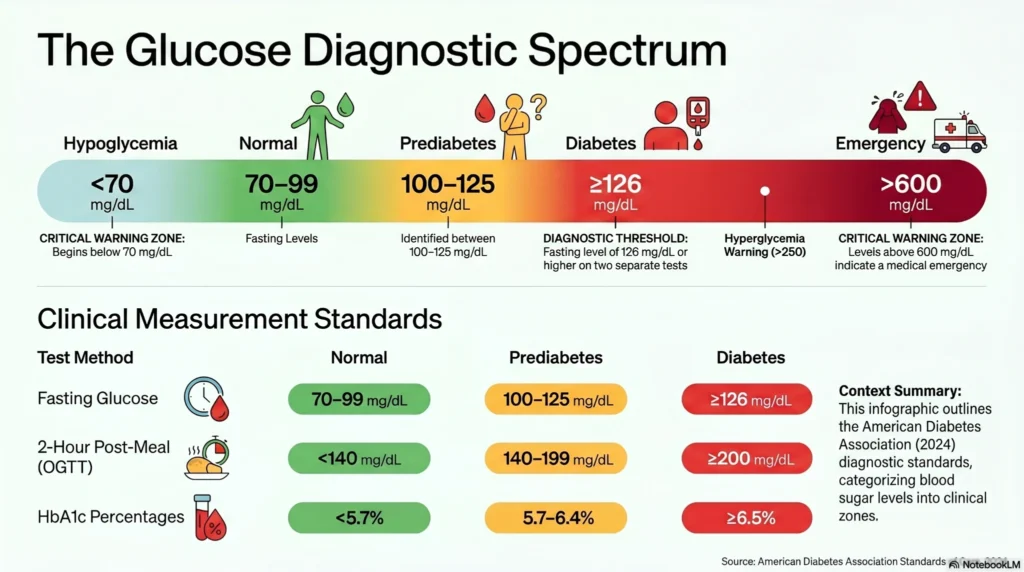
Normal fasting blood sugar is 70–99 mg/dL. A fasting reading of 100–125 mg/dL indicates prediabetes; 126 mg/dL or higher on two separate tests meets the diagnostic threshold for diabetes, per ADA 2024 Standards of Care. After eating, blood sugar below 140 mg/dL at 2 hours post-meal is considered normal for adults without diabetes.
Normal fasting blood sugar is 70–99 mg/dL. A fasting reading of 100–125 mg/dL indicates prediabetes; 126 mg/dL or higher on two separate tests meets the diagnostic threshold for diabetes, per ADA 2024 Standards of Care. After eating, blood sugar below 140 mg/dL at 2 hours post-meal is considered normal for adults without diabetes.
The table below breaks down these ranges by category and testing context:
| Measurement | Normal | Prediabetes | Diabetes |
| Fasting Glucose | 70–99 mg/dL | 100–125 mg/dL | ≥126 mg/dL (on two separate tests) |
| 2-Hour Post-Meal (OGTT) | Below 140 mg/dL | 140–199 mg/dL | ≥200 mg/dL |
| Random Glucose | Typically below 140 mg/dL | — | ≥200 mg/dL with symptoms |
| HbA1c | Below 5.7% | 5.7–6.4% | ≥6.5% |
Source: American Diabetes Association Standards of Care, 2024 [6] These ranges represent general diagnostic thresholds. Individual target ranges for people with existing diabetes may differ significantly based on age, comorbidities, and treatment plan.
What Causes a Postprandial Glucose Spike?
| Measurement Type | Definition | Clinical Significance |
| Fasting Glucose | Blood glucose measured after at least 8 hours without caloric intake | Reflects baseline insulin sensitivity and hepatic glucose output |
| Postprandial Glucose | Blood glucose measured 1–2 hours after eating | Reflects glycemic response to food; often elevated before fasting glucose abnormalities appear |
| Preprandial Glucose | Blood glucose measured before a meal | Used in diabetes management to inform insulin dosing decisions |
| Bedtime Glucose | Measured before sleep | Relevant for nocturnal hypoglycemia risk assessment in insulin-dependent individuals |
Clinical note: Postprandial glucose spikes may be an earlier indicator of metabolic dysfunction than fasting glucose alone. Evidence published in Diabetes Care suggests postprandial hyperglycemia is independently associated with cardiovascular risk [7]. Postprandial hyperglycemia is independently associated with cardiovascular risk
What is HbA1c and Why does it matter?
HbA1c (glycated hemoglobin or A1C) reflects average blood glucose over approximately 2–3 months by measuring the percentage of hemoglobin with attached glucose molecules [8]. Glycated hemoglobin testing
| HbA1c Level | Interpretation | Typical Clinical Action |
| Below 5.7% | Normal | Routine monitoring; lifestyle maintenance |
| 5.7–6.4% | Prediabetes | Lifestyle intervention; possible pharmacologic consideration |
| 6.5% or above | Diabetes (diagnostic threshold) | Comprehensive diabetes management plan |
| 7.0% or above (in diagnosed diabetes) | Above ADA general target | Medication review; intensification of treatment may be considered |
| 8.0% or above | Significantly elevated | Associated with increased risk of complications; urgent clinical review |
ADA target for most non-pregnant adults with diabetes: below 7.0% [6] American Diabetes Association Standards of Care, 2024 . Individualized targets may differ based on patient factors.
Limitations of HbA1c:
- Ethnic variation in HbA1c levels has been documented in the literature [9]. Ethnic variation in HbA1c levels has been documented
- May be unreliable in individuals with certain hemoglobin variants or hemolytic anemias
- Does not capture glucose variability or hypoglycemia episodes
- Does not reflect short-term glucose changes
Hypoglycemia vs. Hyperglycemia
| Condition | Definition | Common Causes | Key Symptoms |
| Hypoglycemia | Blood glucose below 70 mg/dL | Excess insulin, delayed meals, alcohol, exercise without adjustment | Shakiness, sweating, confusion, rapid heartbeat, hunger |
| Mild Hypoglycemia | 54–70 mg/dL | As above | Manageable with oral glucose (15-15 rule) |
| Severe Hypoglycemia | Below 54 mg/dL; unable to self-treat | Insulin overdose, missed meal | Loss of consciousness, seizure — requires emergency intervention |
| Hyperglycemia | Blood glucose above 180 mg/dL (post-meal) or above 130 mg/dL (fasting) | Insufficient insulin, illness, stress, dietary intake | Increased thirst, frequent urination, fatigue, blurred vision |
| Diabetic Ketoacidosis (DKA) | Severe hyperglycemia with ketone production | Absent insulin (typically Type 1) | Nausea, abdominal pain, fruity breath, rapid breathing — medical emergency |
| Hyperosmolar Hyperglycemic State (HHS) | Extreme hyperglycemia without significant ketosis | Typically Type 2; illness or infection trigger | Extreme dehydration, altered consciousness — medical emergency |
⚠️ Safety Callout: Severe hypoglycemia and DKA/HHS are medical emergencies. Do not attempt to self-manage — call emergency services immediately.
Who Needs Glucose Monitoring
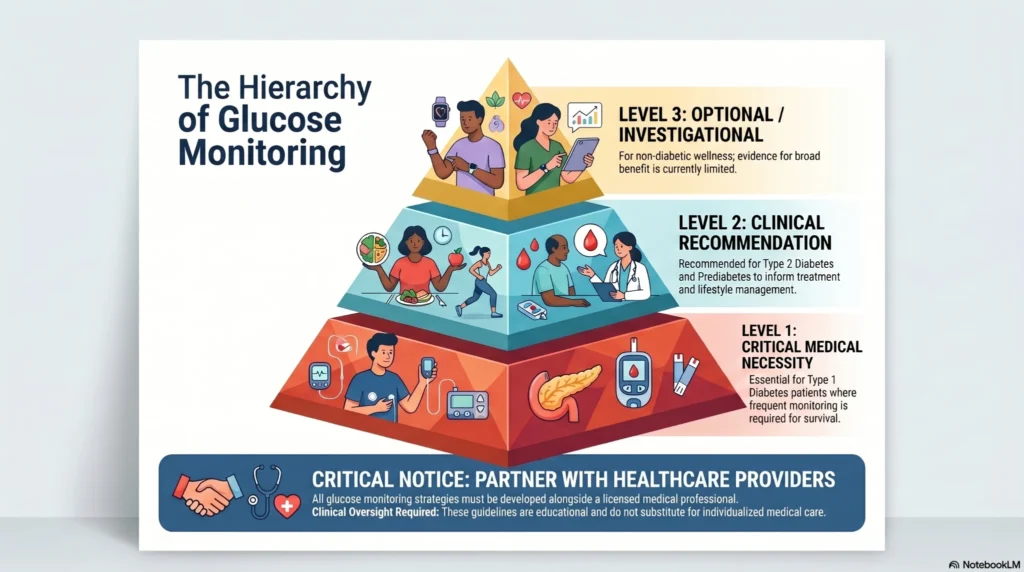
Type 1 Diabetes (Medical Necessity)
Glucose monitoring is not optional for individuals with Type 1 diabetes — it is a medical requirement for safe management.
| Monitoring Requirement | Detail |
| Why monitoring is essential | Absence of endogenous insulin means glucose can become dangerously high or low without warning |
| Primary monitoring tools | CGM (preferred per ADA 2024) or structured fingerstick monitoring. American Diabetes Association Standards of Care, 2024 [ |
| Minimum monitoring frequency | Determined by treating physician; CGM provides near-continuous data |
| Key decisions dependent on glucose data | Mealtime insulin dosing, correction doses, exercise management, overnight safety |
| Prescription requirement | CGM devices and most insulin delivery systems require a physician prescription |
Type 2 Diabetes and Treatment Regimens
The need for glucose monitoring in Type 2 diabetes varies significantly based on treatment regimen.
| Treatment Approach | Monitoring Relevance | Typical Recommendation |
| Lifestyle modification only | Low to moderate | Periodic A1C checks; home monitoring may not be routinely required |
| Oral medications (non-hypoglycemic risk) | Moderate | Home monitoring may support behavior and lifestyle decisions |
| Sulfonylureas or other hypoglycemia-risk drugs | High | Monitoring recommended to detect and prevent hypoglycemia |
| Basal insulin | High | Fasting glucose monitoring typically required to guide titration |
| Intensive insulin therapy | Very high | Multiple daily checks or CGM; mirrors Type 1 monitoring needs |
Monitoring frequency and targets should always be established by the treating physician or diabetes care team.
Prediabetes and Prevention
Evidence suggests that structured lifestyle intervention in people with prediabetes can significantly reduce progression to Type 2 diabetes [10]. Proven lifestyle interventions
| Aspect | Detail |
| Role of monitoring | May support awareness of glucose trends and reinforce lifestyle changes |
| Clinical monitoring recommendation | Periodic A1C or fasting glucose via laboratory testing; home monitoring is not universally recommended |
| CDC-recognized programs | National Diabetes Prevention Program (National DPP) offers structured lifestyle interventions |
| Key lifestyle factors | Weight management, physical activity, dietary pattern — see relevant pillars |
🔗 Related Content: Physical activity and body composition may influence insulin sensitivity — see the Fitness & Activity and Body Composition pillars.
General Metabolic Health Awareness
For individuals without a diabetes diagnosis or significant metabolic risk, the clinical evidence supporting routine glucose monitoring is limited.
| Claim | Evidence Status |
| CGM improves health outcomes in non-diabetics | Insufficient evidence; ongoing research area |
| Food-specific glucose responses are highly individual | Emerging evidence suggests significant interpersonal variability [11] |
| Continuous monitoring motivates behavioral change | Limited short-term evidence; long-term benefit unestablished |
| Monitoring is safe for non-diabetics | Generally yes, but clinical guidance and context are recommended |
Working With Your Healthcare Team
✅ Key Message: Glucose monitoring is most clinically valuable when integrated into a coordinated care plan.
| Healthcare Role | Contribution to Glucose Monitoring |
| Primary Care Physician | Initial diagnosis, referrals, A1C monitoring, medication management |
| Endocrinologist | Specialist management for complex or difficult-to-control diabetes |
| Certified Diabetes Care & Education Specialist (CDCES) | Monitoring education, device training, lifestyle guidance |
| Registered Dietitian (RD/RDN) | Medical nutrition therapy and glucose-aware meal planning |
| Pharmacist | Medication review, device counseling, supply management |
The team composition will vary based on individual diagnosis, complexity, and healthcare access.
Glucose Monitoring Methods
Blood Glucose Meters (BGM): How They Work and When to Use Them
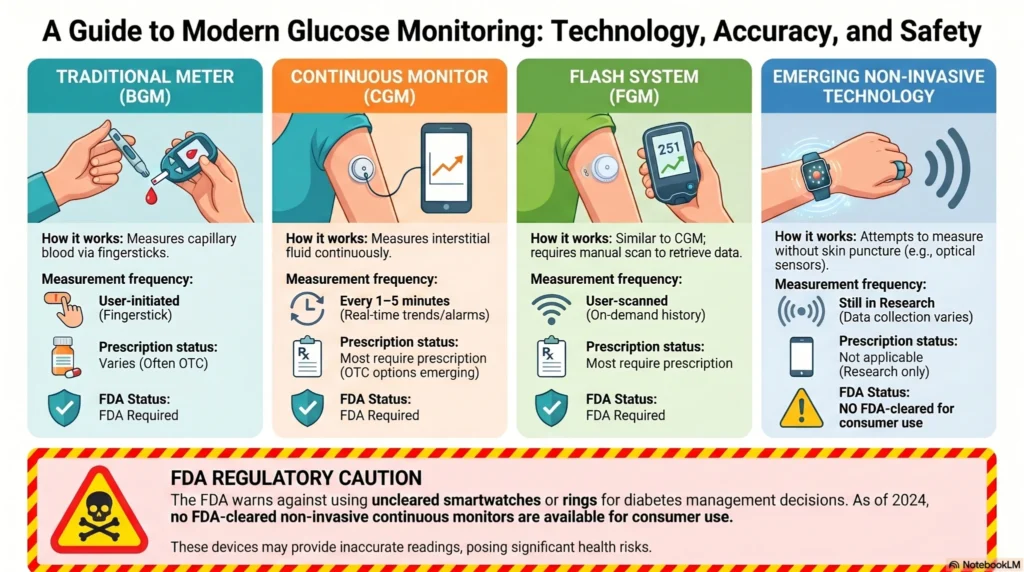
Traditional blood glucose meters (BGMs) measure glucose from a small capillary blood sample obtained via fingerstick.
| Feature | Detail |
| How it works | A lancet punctures the fingertip; blood is applied to a test strip; the meter reads glucose electrochemically |
| Measurement frequency | User-initiated; provides single point-in-time readings |
| Accuracy standard | FDA requires ≥95% of results within ±15% of reference value (ISO 15197:2013) |
| Prescription requirement | Meters generally available OTC; some test strips are prescription-covered by insurance |
| Cost range | Meters: $10–$50; Test strips: $0.25–$1.50 per strip (highly variable with insurance) |
| Primary use case | Type 1 and Type 2 diabetes management; hypoglycemia verification |
Advantages:
- Widely available and affordable
- No sensor warmup period
- Used to calibrate CGM devices in some systems
- Remains the standard for confirming CGM readings before treatment decisions
Limitations:
- Does not capture glucose variability or nocturnal changes
- Provides no trend information
- Requires repeated fingersticks
- Pain and burden may reduce adherence
Continuous Glucose Monitors (CGM): Real-Time Tracking for Diabetes Management
Continuous glucose monitors measure interstitial fluid glucose at frequent intervals, providing real-time readings, trend arrows, and pattern data.
| Feature | Detail |
| How it works | A small sensor inserted under the skin measures glucose in interstitial fluid every 1–5 minutes |
| Measurement frequency | Continuous (readings every 1–5 minutes depending on system) |
| FDA approval | Required for all CGM systems marketed in the US. FDA 510(k) clearance summary |
| Prescription status | Most systems require a prescription; some over-the-counter options have received FDA clearance |
| Wear duration | 7–15 days per sensor depending on system |
| Alarm capability | High/low glucose alerts; predictive alerts available in some systems |
| Integration | Compatible with some insulin pumps (closed-loop systems) |
| CGM System Category | Examples | Notable Feature |
| Personal CGM (Rx) | Dexcom G7, Medtronic Guardian | Real-time alarms; integrated with insulin delivery |
| Over-the-Counter CGM | Dexcom Stelo, Abbott Lingo | Available without prescription (as of 2024 FDA clearance) FDA 510(k) clearance summary |
| Professional CGM | Blinded systems used in clinical settings | Data reviewed by provider; user does not see real-time readings |
🔗 Related Content: For a detailed comparison of CGM systems including accuracy data, insurance coverage, and prescription requirements, see our Glucose Monitoring Device Guide.
Flash Glucose Monitoring (FGM): Scanning vs. Streaming
Flash glucose monitoring (FGM) uses a sensor similar to CGM but requires the user to scan the sensor to obtain a reading rather than providing automatic continuous transmission.
| Feature | Flash Monitoring | Traditional CGM |
| Reading method | User scans sensor with reader or smartphone | Automatic; continuous transmission |
| Alarms | Limited or not available on some systems | Alarms standard on most systems |
| Primary system (US) | Abbott FreeStyle Libre family | Dexcom, Medtronic, others |
| FDA approval | Yes (FreeStyle Libre systems are FDA-cleared) | Yes . FDA 510(k) clearance summary |
| Prescription status | Varies by version; some available OTC | Varies by system |
The clinical distinction between FGM and CGM has narrowed with newer FreeStyle Libre iterations, which may include automatic readings in some configurations.
Non-Invasive Monitoring (Limited Availability)
Non-invasive glucose monitoring technologies — which aim to measure glucose without skin penetration — are an active area of research and development. As of 2024, no FDA-cleared non-invasive continuous glucose monitor is available for general consumer use in the United States [12]. FDA warns against uncleared glucose monitoring devices
| Technology Type | Mechanism | Current Status |
| Near-infrared spectroscopy | Light-based tissue measurement | Research stage; no cleared consumer device |
| Electromagnetic sensing | Radio-frequency glucose detection | Research stage |
| Reverse iontophoresis | Glucose extraction through intact skin | Limited legacy devices; not current standard |
| Wearable integration claims | Some smartwatches have marketed glucose features | FDA has warned against uncleared claims [12] |
⚠️ Regulatory Caution: The FDA has issued warnings about smartwatches and rings that claim to measure blood glucose non-invasively without FDA clearance. These devices should not be used for diabetes management decisions [12].
OTC Continuous Glucose Monitors: What the Evidence Says
In 2024, the FDA cleared the first continuous glucose monitors for over-the-counter use — no prescription, no diabetes diagnosis required. This section covers who can use an OTC CGM, how Dexcom Stelo and Abbott Lingo compare, and whether the evidence supports using one if you don’t have diabetes.
Who Can Use an OTC CGM Without a Prescription?
Adults 18 and older can purchase Dexcom Stelo or Abbott Lingo without a prescription, regardless of diabetes status. Dexcom Stelo is intended for adults with or without diabetes who are not on insulin; Abbott Lingo is intended for adults without diabetes who want to monitor how diet, exercise, and lifestyle affect their glucose. Neither device is intended for people with diabetes who use insulin or are at risk of severe hypoglycemia — those individuals should continue using prescription CGMs such as the Dexcom G7 or FreeStyle Libre 3 under physician guidance.
Dexcom Stelo vs. Abbott Lingo: Side-by-Side Comparison
Dexcom Stelo and Abbott Lingo were both cleared by the FDA in 2024 for OTC use, but they differ in cost, sensor wear time, and intended audience. The table below compares both devices directly.
COMPARISON TABLE
| Feature | Dexcom Stelo | Abbott Lingo |
|---|---|---|
| FDA clearance | Yes (cleared July 2024 for OTC) | Yes (cleared May 2024 for OTC) |
| Prescription required | No | No |
| Who it’s for | Adults 18+ without diabetes or with Type 2 not on insulin | Adults 18+ without diabetes |
| Sensor wear time | 15 days | 14 days |
| Real-time alerts | Yes (app) | Yes (app) |
| Compatible devices | iOS and Android | iOS and Android |
| Approximate cost (2026) | ~$89–99/month (no insurance) | ~$49–89/month (no insurance) |
| Insurance coverage | Generally not covered for non-diabetics | Generally not covered for non-diabetics |
Note: Verify current pricing and FDA labeling against manufacturer sources before publishing — OTC CGM pricing and indications are subject to change.
Is a CGM Worth It for Non-Diabetics? Honest Evidence Assessment
Clinical evidence that continuous glucose monitoring improves health outcomes in people without diabetes is currently limited. While Dexcom Stelo and Abbott Lingo are FDA-cleared for OTC use by adults 18+ without a prescription, no large randomized controlled trial has demonstrated that non-diabetic users achieve better metabolic outcomes from CGM use than from standard dietary monitoring alone. Dr. Rishav Das recommends that non-diabetic individuals discuss CGM use with a physician before purchasing.
Clinical evidence that continuous glucose monitoring improves health outcomes in people without diabetes is currently limited.
While Dexcom Stelo and Abbott Lingo are FDA-cleared for OTC use by adults 18+ without a prescription, no large randomized controlled trial has demonstrated that non-diabetic users achieve better metabolic outcomes from CGM use than from standard dietary monitoring alone.
Dr. Rishav Das recommends that non-diabetic individuals discuss CGM use with a physician before purchasing.
Interpreting Glucose Data
Normal Blood Sugar Ranges by Category
| Population | Fasting / Pre-Meal Target | Post-Meal Target (1–2 hr) | A1C Target |
| Non-diabetic adults | 70–99 mg/dL | Below 140 mg/dL | Below 5.7% |
| Most adults with T1 or T2 diabetes | 80–130 mg/dL | Below 180 mg/dL | Below 7.0% |
| Older adults (less stringent) | 90–150 mg/dL | Individualized | 7.5–8.0% or as determined |
| Pregnant women with pre-existing diabetes | 70–95 mg/dL | Below 140 mg/dL (1-hr) | Below 6.0–6.5% |
| Gestational diabetes | Below 95 mg/dL (fasting) | Below 140 mg/dL (1-hr) | Managed per obstetric team |
| Type 1 diabetes using CGM | Per TIR targets (see below) | Per TIR targets | Below 7.0% (general) |
Source: ADA Standards of Medical Care in Diabetes, 2024 [6]. Individualized targets should be set by the treating provider.
What Is a Good Time in Range (TIR) Score?
Time in Range (TIR) measures the percentage of time a person’s glucose stays within 70–180 mg/dL. The American Diabetes Association recommends a TIR above 70% for most adults with Type 1 or Type 2 diabetes — meaning glucose is in the target zone for more than 17 hours per day. A TIR below 70% is associated with increased risk of diabetes complications including retinopathy and neuropathy.
Time in Range (TIR) measures the percentage of time your glucose stays within a target range — typically 70–180 mg/dL. The American Diabetes Association recommends a TIR above 70% for most people with Type 1 or Type 2 diabetes, meaning your glucose is in the safe zone for more than 17 hours per day. A TIR below 70% is associated with increased risk of diabetes complications including retinopathy and neuropathy.
The table below shows the full ADA 2024 targets for TIR, Time Below Range (TBR), and Time Above Range (TAR) — the three metrics most CGM apps display on your daily summary
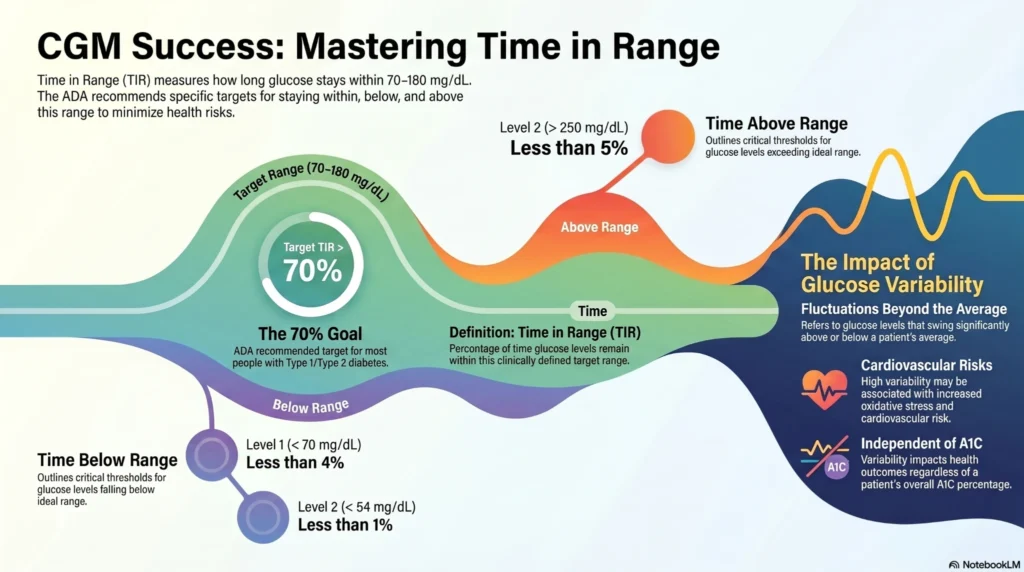
Time in Range (TIR) is a metric derived from CGM data that measures the percentage of time glucose levels remain within a clinically defined target range.
| TIR Metric | Standard Definition | ADA Recommended Target (most T1/T2) |
| Time in Range (TIR) | % of time between 70–180 mg/dL | Greater than 70% |
| Time Below Range Level 1 (TBR-1) | % of time below 70 mg/dL | Less than 4% |
| Time Below Range Level 2 (TBR-2) | % of time below 54 mg/dL | Less than 1% |
| Time Above Range Level 1 (TAR-1) | % of time above 180 mg/dL | Less than 25% |
| Time Above Range Level 2 (TAR-2) | % of time above 250 mg/dL | Less than 5% |
Source: Battelino et al., Diabetes Care, 2019 [13]
Glucose variability refers to fluctuations in glucose levels beyond the average. High variability may be associated with increased oxidative stress and cardiovascular risk, independent of A1C, though evidence is still developing in this area [14].
Understanding HbA1c: What Does Your A1C Number Mean?
An HbA1c of 6.5% or higher on two separate tests is the diagnostic threshold for diabetes, per ADA 2024 Standards of Care. An HbA1c of 5.7–6.4% indicates prediabetes. A result of 6.5% specifically means your average blood sugar over the past 2–3 months was approximately 140 mg/dL — the equivalent of blood sugar consistently at the high end of the normal-after-eating range.
The table below shows how each HbA1c range is classified and what it means for your care plan.
| HbA1c Result | Category | Meaning |
|---|---|---|
| Below 5.7% | Normal | No prediabetes or diabetes |
| 5.7–6.4% | Prediabetes | Elevated risk; lifestyle interventions recommended |
| 6.5% or higher (two tests) | Diabetes | Diagnostic threshold per ADA 2024 Standards of Care |
| Below 7.0% | ADA treatment target (T1/T2) | Goal for most adults with diagnosed diabetes |
A new prediabetes or diabetes diagnosis based on an HbA1c result can feel overwhelming, especially if your fasting glucose numbers seemed normal. The good news is that an A1C in the prediabetes range is reversible for many people through diet, exercise, and weight management — and understanding your number is the first step toward acting on it.
Understanding Glucose Patterns and Variations
Meaningful glucose management involves pattern recognition over time, not reaction to isolated readings.
| Pattern Type | Description | Clinical Significance |
| Dawn phenomenon | Glucose rises in early morning hours (4–8 AM) | Related to hormonal activity; may require basal insulin adjustment |
| Postprandial spikes | Glucose peaks 1–2 hours after eating | Timing and magnitude influenced by food composition and insulin timing |
| Exercise-related changes | Glucose may drop during or after activity; may rise acutely during high-intensity exercise | Exercise type, intensity, and timing affect glucose in complex ways |
| Nocturnal hypoglycemia | Low glucose while asleep | Often asymptomatic; detected more reliably via CGM |
| Stress hyperglycemia | Elevated glucose during illness or psychological stress | Cortisol and catecholamine release stimulates hepatic glucose production |
Glucose Monitoring for Diabetes Management
CGM and BGM for Type 1 Diabetes
The ADA recommends CGM as the standard of care for most individuals with Type 1 diabetes [6].
| Monitoring Scenario | Recommended Approach |
| Using CGM | Continuous data; review trends and TIR metrics regularly with care team |
| Using fingerstick only | Minimum 4 times/day (pre-meal + bedtime); more if clinically indicated |
| Before driving | Confirm glucose is above 90 mg/dL; some guidelines recommend above 70 mg/dL |
| During illness | Increased monitoring; check for ketones |
| During exercise | Pre-, during, and post-activity checks; frequency depends on activity type and duration |
| At bedtime | Strongly recommended; nocturnal hypoglycemia risk |
CGM and BGM for Type 2 Diabetes and Prediabetes
| Treatment Regimen | Typical Monitoring Recommendation |
| Diet and exercise alone | Periodic A1C (every 3–6 months); home monitoring may not be routinely required |
| Metformin monotherapy | A1C monitoring sufficient in many cases; home monitoring optional |
| Sulfonylurea or insulin secretagogue | Home monitoring recommended; hypoglycemia risk |
| Basal insulin | Fasting glucose daily; adjust per provider protocol |
| Multiple daily injections | Similar to Type 1; CGM strongly considered |
| On CGM | TIR targets and trend data reviewed with provider |
Frequency recommendations should be individualized. Insurance coverage and accessibility are important practical considerations.
CGM Insurance Coverage: What Type 2 Patients Need to Know
Medicare and most private insurers cover prescription CGMs — such as the Dexcom G7 and FreeStyle Libre 3 — for people with Type 2 diabetes who use insulin or who have documented episodes of hypoglycemia, with a prescription from their healthcare provider.
Coverage criteria for Type 2 patients who are not on insulin vary significantly by plan and have been expanding in recent years, so the most reliable first step is to ask your prescribing physician’s office to run a coverage check (often called a “benefits investigation”) before purchasing.
Over-the-counter CGMs like Dexcom Stelo and Abbott Lingo are generally not covered by insurance, since they are marketed as wellness devices rather than prescription medical devices — but they also do not require a prescription, prior authorization, or a diabetes diagnosis to purchase.
Physician note: Coverage rules change frequently and vary by insurer and plan. This section reflects general patterns as of 2026 and should not be used to predict your individual coverage — contact your insurer or your prescriber’s office directly to confirm current criteria for your plan
| Benefit Category | Evidence or Consideration |
| A1C reduction | Multiple RCTs demonstrate A1C reduction with CGM use in T1 and insulin-treated T2 [15]. Research published in the New England Journal of Medicine |
| Hypoglycemia reduction | CGM with alarms associated with reduced severe hypoglycemia events [15] |
| Quality of life | Studies suggest improved glycemic confidence and reduced diabetes distress |
| Clinical decision support | Trend arrows and pattern data support proactive rather than reactive management |
Insurance coverage information changes frequently and varies by payer. Verify current coverage with your insurance plan and the CGM manufacturer’s coverage support team.
Sharing Data With Healthcare Providers
Modern CGM systems facilitate data sharing through cloud-based platforms, enabling remote review by the care team.
| Platform | Compatible Devices | Key Feature |
| Dexcom Clarity | Dexcom G-series | AGP report; provider sharing portal |
| LibreView | FreeStyle Libre family | Pattern reports; clinic dashboard |
| CareLink | Medtronic systems | Pump and sensor data integration |
| Tidepool | Multiple devices | Open-source; interoperable data platform |
Best practices for data sharing:
- Bring meter readings if fingerstick is used as backup
- Download or sync CGM data before every clinic appointment
- Share access with care team between appointments if clinically indicated
- Review reports together; ask for explanation of any pattern adjustments
Metabolic Health Markers Beyond Glucose
Insulin Resistance and HOMA-IR: Early Warning Signs
Insulin resistance occurs when your body’s cells respond less effectively to insulin, requiring the pancreas to produce more of it to keep blood sugar stable. It often develops years before blood sugar levels rise high enough to be classified as prediabetes or diabetes — which is why it’s frequently called a “silent” early warning sign.
HOMA-IR (Homeostatic Model Assessment of Insulin Resistance) is a lab calculation derived from fasting glucose and fasting insulin levels. A HOMA-IR score below 2.0 is generally considered normal; higher scores suggest increasing insulin resistance and elevated risk of developing Type 2 diabetes over time.
Common signs associated with insulin resistance include increased abdominal (visceral) fat, fatigue after meals, difficulty losing weight despite diet changes, and skin changes such as acanthosis nigricans (darkened skin in body folds). None of these signs alone confirms insulin resistance — a fasting insulin and glucose panel from your healthcare provider is needed for diagnosis.
Because visceral fat is closely linked to insulin resistance, body composition tracking can provide an additional early signal — see our [best smart scale for body fat percentage accuracy] guide for more on tracking visceral fat at home
Do Smartwatches Measure Blood Sugar? What the FDA Says
As of 2026, no smartwatch or smart ring is FDA-cleared to measure blood glucose without piercing the skin. In February 2024, the FDA issued an explicit warning that non-invasive glucose monitoring claims by consumer smartwatches are unproven and should not be used for diabetes management decisions. The only cleared blood sugar monitoring options available over the counter are subcutaneous CGM sensors: Dexcom Stelo and Abbott Lingo (both cleared in 2024 for adults 18+ without a prescription).
No. As of 2026, no smartwatch or smart ring is FDA-cleared to measure blood glucose without piercing the skin. In February 2024, the FDA issued an explicit safety warning stating that non-invasive glucose monitoring features in smartwatches and smart rings are unproven and potentially dangerous for anyone making diabetes management decisions. The only cleared blood sugar monitoring devices are fingerstick meters (BGM) and subcutaneous CGM sensors like the Dexcom G7, FreeStyle Libre 3, Dexcom Stelo, and Abbott Lingo.
Discuss appropriate testing frequency and interpretation with your primary care provider or endocrinologist.
Can Healthy People Benefit From Glucose Monitoring?
The use of CGM in people without diabetes has grown significantly since OTC availability increased in 2024. The clinical evidence for benefit in non-diabetic populations, however, remains limited and is an active area of investigation.
| Claim | Evidence Status | Notes |
| CGM improves metabolic outcomes in non-diabetics | Insufficient | Randomized controlled trial data largely lacking |
| Food-glucose response monitoring enables personalization | Emerging evidence | Interpersonal glucose variability documented; clinical utility unclear [11] |
| CGM motivates behavior change in non-diabetics | Limited | Short-term observational data; long-term outcomes not established |
| CGM is safe for non-diabetics | Generally yes | Sensor site reactions possible; no significant safety concerns |
Food Response and Metabolic Variability
Research published in Cell by Zeevi et al. (2015) demonstrated that glycemic responses to identical foods vary substantially between individuals, influenced by gut microbiome composition, genetics, sleep, and physical activity [11]. Research published in Cell
| Variable | Potential Effect on Postprandial Glucose |
| Food composition | Fiber, fat, and protein slow glucose absorption; refined carbohydrates accelerate it |
| Meal timing | Earlier meals associated with lower postprandial responses in some studies |
| Gut microbiome | Microbiome composition may predict individual glucose responses |
| Sleep quality | Sleep deprivation is associated with increased postprandial glucose [16]. Research on sleep quality and glucose regulation |
| Physical activity | Activity before or after meals may blunt postprandial spikes |
| Stress | Cortisol release during psychological stress may elevate glucose |
Limitations of Wellness CGM Use
| Limitation | Explanation |
| Interstitial lag | CGM measures glucose in interstitial fluid, which lags blood glucose by 5–15 minutes — especially during rapid changes |
| No established wellness targets | Clinical glucose targets are defined for diabetic populations; normal-range variability interpretation is unclear |
| Risk of unnecessary anxiety | Normal glucose fluctuations may be misinterpreted as pathological |
| Cost without clinical return | OTC CGMs are not insurance-covered; benefit-to-cost ratio unclear for non-diabetics |
| Absence of clinical guidance | Without a healthcare provider, data interpretation may lead to incorrect conclusions |
| Skin reactions | Adhesive and sensor insertion site reactions occur in a minority of users |
Device selection criteria and accuracy data are evaluated under our published device evaluation methodology, including reference equipment specifications, sample standards, and error metrics.
Emergency Guidance: Dangerous Blood Sugar Levels
| Glucose Level | Clinical Consideration | Recommended Action |
| Below 70 mg/dL | Hypoglycemia | Follow 15-15 rule if able to self-treat; contact provider if recurrent |
| Below 54 mg/dL | Severe hypoglycemia threshold | Immediate treatment; contact provider; emergency services if unconscious |
| Above 250 mg/dL | Significant hyperglycemia | Contact provider; check for ketones if Type 1 or insulin-dependent |
| Above 300 mg/dL | High risk of complications | Same-day medical contact recommended |
| Above 600 mg/dL or altered consciousness | Potential HHS or DKA | Emergency — call 911 immediately |
| Unexplained readings | Readings inconsistent with symptoms or pattern | Contact provider for guidance; verify with fingerstick if on CGM |
⚠️ This section contains critical medical safety information. Please review it carefully.
When to Call a Doctor About Your Blood Sugar
Blood sugar below 54 mg/dL (severe hypoglycemia) or above 300 mg/dL requires emergency medical care. A reading below 70 mg/dL indicates mild hypoglycemia and should be treated immediately with 15 grams of fast-acting carbohydrates. If you cannot treat yourself, are unconscious, or glucose does not recover after two treatment cycles, call emergency services (911) immediately.
Blood sugar below 54 mg/dL (severe hypoglycemia) or above 300 mg/dL requires emergency medical care. A reading below 70 mg/dL indicates mild hypoglycemia and should be treated immediately with 15 grams of fast-acting carbohydrates. If you cannot treat yourself, are unconscious, or glucose does not recover after two treatment cycles, call emergency services (911) immediately.
The table below outlines every threshold and the recommended response.
| Level | Glucose Range | Classification |
| Severe hypoglycemia | Below 54 mg/dL | Medical emergency if unable to self-treat |
| Hypoglycemia | 54–69 mg/dL | Requires immediate oral treatment |
| Low-normal threshold | 70–80 mg/dL | Caution; trending lower may warrant treatment |
| Hyperglycemia | Above 180–250 mg/dL | Contact provider; assess for symptoms |
| Significant hyperglycemia | Above 300 mg/dL | Same-day provider contact strongly recommended |
| Emergency hyperglycemia | Above 600 mg/dL or with altered consciousness | Call emergency services (911) immediately |
The 15-15 Rule for Low Blood Sugar: Step-by-Step
To treat low blood sugar (below 70 mg/dL), follow the 15-15 rule: (1) Consume 15 grams of fast-acting carbohydrates — 4 glucose tablets, 4 ounces of orange juice, or 3–4 pieces of hard candy. (2) Wait 15 minutes. (3) Recheck blood sugar. (4) If still below 70 mg/dL, repeat steps 1–3. (5) If glucose does not respond or you feel unable to treat yourself, call 911 immediately.
To treat low blood sugar (below 70 mg/dL), follow the 15-15 rule:
- Consume 15 grams of fast-acting carbohydrates — 4 glucose tablets, 4 ounces of orange juice, or 3–4 pieces of hard candy.
- Wait 15 minutes.
- Recheck your blood sugar.
- If still below 70 mg/dL, repeat steps 1–3.
- If your glucose does not respond after two cycles, or you feel unable to treat yourself, call 911 immediately
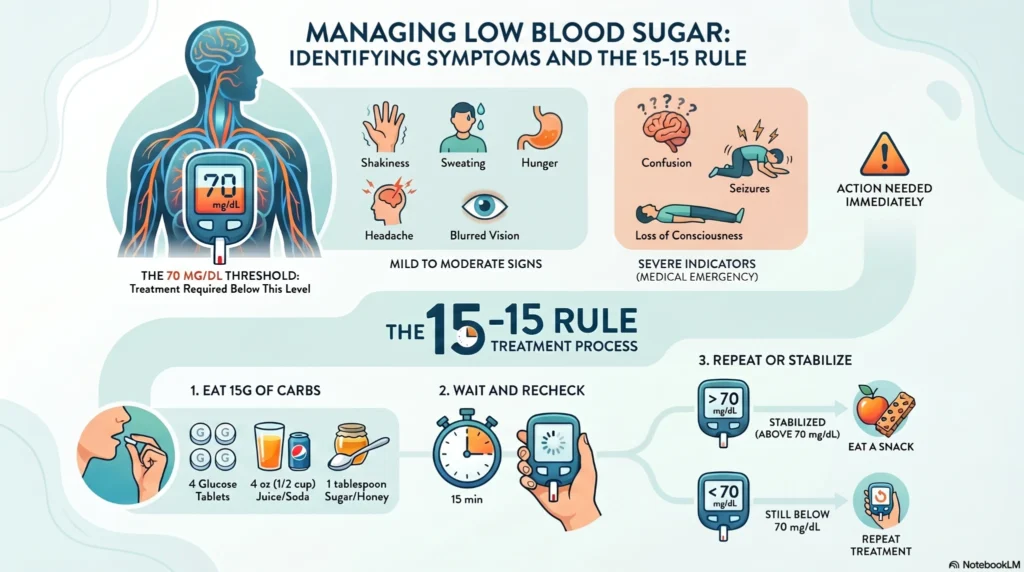
Symptoms by severity:
| Severity | Symptoms |
| Mild | Shakiness, sweating, hunger, anxiety, rapid heartbeat, pallor |
| Moderate | Difficulty concentrating, irritability, headache, blurred vision |
| Severe | Confusion, inability to swallow, seizure, loss of consciousness |
Source: ADA Standards of Care, 2024 [6]
⚠️ Do not give food or drink to someone who is unconscious or unable to swallow. This is a medical emergency — call 911.
When to Consult a Healthcare Provider
This educational content was developed to support health literacy, not to replace individualized medical guidance. Consider consulting a healthcare provider if you:
- Have been diagnosed with diabetes, prediabetes, or metabolic syndrome
- Have a family history of Type 2 diabetes or cardiovascular disease
- Are considering using a continuous glucose monitor, including OTC options
- Have questions about your glucose readings or A1C results
- Are experiencing symptoms that may indicate hypoglycemia or hyperglycemia
- Are pregnant or planning pregnancy and have any blood sugar concerns
- Want to assess your metabolic health with validated laboratory testing
See our About page for information on the medical oversight standards that govern this content.
Frequently Asked Questions About Glucose Monitoring
What is a normal blood sugar level?
A normal fasting blood sugar level is 70–99 mg/dL. A reading of 100–125 mg/dL indicates prediabetes, and 126 mg/dL or higher on two separate tests indicates diabetes, per ADA 2024 Standards of Care. Two hours after eating, blood sugar below 140 mg/dL is considered normal for adults without diabetes.
What is considered a dangerously high or low blood sugar?
Blood sugar below 54 mg/dL (severe hypoglycemia) or above 300 mg/dL requires emergency medical attention. A reading below 70 mg/dL indicates mild hypoglycemia and should be treated immediately with the 15-15 rule. A reading above 250 mg/dL may indicate risk of diabetic ketoacidosis (DKA) in Type 1 diabetes patients.
Can people without diabetes benefit from a CGM?
Evidence is currently limited. Dexcom Stelo and Abbott Lingo are FDA-cleared for adults 18+ without a prescription, but no large clinical trial has demonstrated that non-diabetic CGM users achieve better health outcomes than those using standard monitoring alone. Non-diabetics considering CGM should discuss their goals with a physician.
What is the difference between a CGM and a flash glucose monitor?
A continuous glucose monitor (CGM) measures interstitial glucose automatically every 1–5 minutes and sends real-time app alerts. A flash glucose monitor (FGM), such as the FreeStyle Libre, also measures continuously but requires the user to actively scan the sensor to see a reading — it does not send automatic threshold alerts.
Do smartwatches accurately measure blood sugar?
No. As of 2026, no smartwatch or smart ring is FDA-cleared to measure blood glucose without piercing the skin. The FDA issued a safety warning in February 2024 that such devices are unproven for glucose monitoring and should not be used for diabetes management decisions.
What is Time in Range and what’s a good target?
Time in Range (TIR) is the percentage of time glucose stays within 70–180 mg/dL. The American Diabetes Association recommends a TIR above 70% for most adults with Type 1 or Type 2 diabetes — meaning glucose is within the target range for more than 17 hours per day.
What should I do if my blood sugar is below 70 mg/dL?
Follow the 15-15 rule: consume 15 grams of fast-acting carbohydrates (4 glucose tablets, 4 oz of juice, or 3–4 hard candies), wait 15 minutes, then recheck. If still below 70 mg/dL, repeat. If you cannot treat yourself or glucose remains unresponsive, call 911 immediately.
Ready to Take the Next Step?
Based on what you’ve read, choose the resource that matches your situation:
→ Just diagnosed or interpreting your numbers? Start with our Glucose Metrics Explained guide — it translates every metric your doctor uses into plain language.
→ Comparing CGM devices for diabetes management? See our Glucose Monitoring Device Guide, reviewed by Dr. Rishav Das with FDA-clearance status for every major device.
→ Choosing between Dexcom Stelo, Abbott Lingo, and FreeStyle Libre? Our CGM Device Comparison covers cost, accuracy, and evidence grade side by side.
→ Thinking about a glucose monitor but not sure which type? The Glucose Monitor Buying Guide walks you through the decision by diagnosis type and insurance status.
Not ready to buy? Save this page and consult with your physician before purchasing any glucose monitoring device.
References
- Araújo J, Cai J, Stevens J. Prevalence of optimal metabolic health in American adults: National Health and Nutrition Examination Survey 2009–2016. Metabolic Syndrome and Related Disorders. 2019;17(1):46–52. PubMed
- National Institute of Diabetes and Digestive and Kidney Diseases (NIDDK). The Digestive System and How It Works. U.S. Department of Health and Human Services. Available at: https://www.niddk.nih.gov
- Petersen MC, Shulman GI. Mechanisms of insulin action and insulin resistance. Physiological Reviews. 2018;98(4):2133–2223. PubMed
- National Institutes of Health (NIH). Insulin Resistance & Prediabetes. NIDDK. Updated 2023. Available at: https://www.niddk.nih.gov/health-information/diabetes/overview/what-is-diabetes/prediabetes-insulin-resistance
- Centers for Disease Control and Prevention (CDC). Gestational Diabetes. Updated 2023. Available at: https://www.cdc.gov/diabetes/basics/gestational.html
- American Diabetes Association Professional Practice Committee. Standards of Medical Care in Diabetes—2024. Diabetes Care. 2024;47(Supplement 1). Available at: https://diabetesjournals.org/care/issue/47/Supplement_1
- Cavalot F, et al. Postprandial blood glucose is a stronger predictor of cardiovascular events than fasting blood glucose in Type 2 diabetes mellitus. Journal of Clinical Endocrinology & Metabolism. 2006;91(3):813–819. PubMed
- National Institute of Diabetes and Digestive and Kidney Diseases (NIDDK). The A1C Test & Diabetes. Updated 2023. Available at: https://www.niddk.nih.gov/health-information/diagnostic-tests/a1c-test
- Herman WH, Cohen RM. Racial and ethnic differences in the relationship between HbA1c and blood glucose: implications for the diagnosis of diabetes. Journal of Clinical Endocrinology & Metabolism. 2012;97(4):1067–1072. PubMed
- Knowler WC, et al. Reduction in the incidence of type 2 diabetes with lifestyle intervention or metformin. New England Journal of Medicine. 2002;346(6):393–403. PubMed
- Zeevi D, et al. Personalized nutrition by prediction of glycemic responses. Cell. 2015;163(5):1079–1094. PubMed
- U.S. Food and Drug Administration (FDA). FDA Warns Against Using Smartwatches or Smart Rings That Claim to Measure Blood Glucose Levels Without Piercing the Skin. February 2024. Available at: https://www.fda.gov/medical-devices/safety-communications/fda-warns-against-using-smartwatches-or-smart-rings-claim-measure-blood-glucose-levels-without
- Battelino T, et al. Clinical targets for continuous glucose monitoring data interpretation: recommendations from the international consensus on time in range. Diabetes Care. 2019;42(8):1593–1603. PubMed
- Gorst C, et al. Long-term glycemic variability and risk of adverse outcomes: a systematic review and meta-analysis. Diabetes Care. 2015;38(12):2354–2369. PubMed
- Bergenstal RM, et al. Continuous glucose monitoring for type 2 diabetes in various health care settings. New England Journal of Medicine. 2021;384(18):1677–1687. PubMed
Buxton OM, et al. Sleep restriction for 1 week reduces insulin sensitivity in healthy men. Diabetes. 2010;59(9):2126–2133. PubMed
⚠️ Medical Disclaimer: This content is for educational purposes only. It does not constitute medical advice, diagnosis, or treatment. Do not adjust diabetes medication or insulin without direct guidance from a licensed healthcare provider. If you are experiencing a medical emergency related to blood sugar, call emergency services immediately.
See our editorial review standards and conflict-of-interest and funding policy for full methodology and procurement transparency.
For complete medical oversight and review scope, including safety disclosures and scope limitations, see our About page.
Last Updated: June,2026
Written by Dr. Rishav Das, M.B.B.S. | Wellness Device Data Analyst | Consumer Device Accuracy Specialist — see About page for credentials.
Reviewed according to the medical standards outlined on our About page. Content is for educational purposes only and does not constitute medical advice.