Sleep Trackers Accuracy Guide (2026): Physician-Reviewed
Sleep Trackers and Therapy Device Guide (2026): Physician-Reviewed Accuracy, Evidence, and Recommendations
How accurate is your sleep trackers compared to a sleep study? Dr. Rishav Das reviews wearables, smart rings, CPAP, oral appliances, and light therapy with current evidence (2026).
Wellness Device Data Analyst | Health Informatics Specialist
Medically reviewed according to the medical standards outlined on our About page with quarterly advisory board oversight for methodology validation.
✅ Trusted by 127,000+ wearable users
⭐ Featured in r/AppleWatch, r/Garmin, and Fitbit Community Forums
📊 Cited by cardiac nurses and personal trainers for patient education
Introduction
Quick Answer: Which Sleep Tracker Is Most Accurate?
Consumer sleep trackers detect sleep versus wake states with sensitivity greater than 95% in 2024 multicenter validation studies — but sleep stage classification accuracy ranges from 50 to 86% depending on device type and the stage being measured. All consumer devices fall below polysomnography (PSG), the clinical gold standard. Smart rings show the highest published sleep stage accuracy (Oura Ring kappa >0.61). Under-mattress sensors perform well for total sleep time but show lower stage accuracy than wearables.
Reviewed by Dr. Rishav Das, M.B.B.S., Health Informatics Specialist | Last reviewed: June, 2026
Device Category Quick Comparison
| Device Type | Sleep/Wake Sensitivity | Sleep Stage Accuracy | HRV Measurement | Best For |
|---|---|---|---|---|
| Wrist Wearable (PPG + accelerometer) | >95% | 50–86% | Yes | General tracking + fitness integration |
| Smart Ring | >75% per stage (Kappa >0.61) | Moderate–High | Yes (some models) | Accuracy-focused use; sleep comfort |
| Under-Mattress Sensor | Good for total sleep time | Lower than wearables | Limited | Passive monitoring; no-device preference |
| Bedside Monitor | Variable | Low–Variable | No | Completely passive monitoring |
Sources: Yoshida et al., J Med Internet Res, 2024; Birrer et al., 2024; Robbins et al., 2024
If you have been diagnosed with obstructive sleep apnea (OSA) or suspect a sleep disorder, this guide also covers the clinical therapy devices — CPAP, BiPAP, and oral appliances — that wearable trackers cannot replace.
Jump to your goal:
→ Help me choose the right device for my goal
→ I want the most accurate tracker for sleep stages
→ I want to track HRV during sleep
→ I have sleep apnea and need device options
→ I think my tracker is making my sleep anxiety worse
This sleep technology guide provides an evidence-based overview of sleep tracking technologies, therapeutic devices, and recovery enhancement tools.
The information presented here is educational and should not replace consultation with a healthcare provider for diagnosis or treatment of sleep disorders.
Which Device Is Right for You? (60-Second Decision Guide)
Quick navigation based on your primary need:
✓ Just want to track sleep habits? → Wearable tracker ($50-$400) or smart ring ($200-$500)
✓ Hate wearing devices to bed? → Under-mattress sensor ($100-$400)
✓ Diagnosed with sleep apnea? → CPAP machine ($500-$3,000, typically insurance-covered) – requires prescription
✓ Mild apnea, can’t tolerate CPAP? → Oral appliance (dentist-fitted, insurance may cover)
✓ Struggle with jet lag or shift work? → Light therapy device ($50-$300)
✓ Wake up hot/sweaty every night? → Cooling mattress topper ($200-$800) or temperature-controlled bed system ($500-$3,000)
✓ Snoring complaints but no apnea diagnosis? → Positional therapy device ($100-$200) or white noise machine ($30-$150)
✓ Need medical-grade data? → Consult sleep specialist for clinical sleep study first
- How Consumer Sleep Trackers Compare to Polysomnography (PSG)
- Wearable Sleep Trackers: Accuracy Data and Limitations
- Smart Rings for Sleep Tracking: What the Research Shows
- Under-Mattress and Bedside Sleep Sensors: When Passive Monitoring Makes Sense
- HRV During Sleep: What It Measures and Which Trackers Do It Best
- CPAP Therapy: Mechanisms, Evidence, and Adherence Data
- BiPAP vs. CPAP: Clinical Differences and When BiPAP Is Indicated
- Oral Appliances for Sleep Apnea: Efficacy, Candidacy, and Adherence
- CPAP vs BiPAP vs Oral Appliance: Side-by-Side Clinical Comparison
- Light Therapy for Circadian Rhythm Disorders: Lux, Timing, and Protocols
- Temperature-Controlled Sleep Systems: Deep Sleep and Recovery Evidence
- White Noise and Sound Machines: Benefits, Risks, and Safety Guidelines
- Orthosomnia: When Sleep Tracking Backfires
- How to Choose the Right Sleep Device for Your Sleep Goal
- When to Consult a Healthcare Provider
- Frequently Asked Questions About Sleep Trackers
- What is the most accurate consumer sleep tracker?
- Can a wearable sleep tracker detect sleep apnea?
- How accurate is the Oura Ring for sleep stage detection?
- What is the difference between CPAP and BiPAP?
- Is an oral appliance as effective as CPAP for sleep apnea?
- What is sleep efficiency and why do trackers overestimate it?
- Are white noise machines safe to use every night?
- Does sleeping at a cooler temperature improve deep sleep?
- What is orthosomnia and can sleep trackers cause it?
- How does light therapy help with delayed sleep phase disorder?
- References
How Consumer Sleep Trackers Compare to Polysomnography (PSG)
| Device Type | How It Works | Worn/Placed | Best For | Accuracy (TST) | Sleep Stage Accuracy | Comfort |
|---|---|---|---|---|---|---|
| Wearable Trackers | Accelerometer + PPG sensors | Wrist | Daily tracking, fitness integration | ✓✓✓ High | ✓✓ Moderate (50-86%) | May feel bulky |
| Smart Rings | PPG + accelerometer + temp | Finger | Minimal contact preference | ✓✓✓ High | ✓✓✓ Better (>75% sensitivity) | High (proper sizing critical) |
| Under-Mattress Sensors | Pressure/ballistocardiography | Under mattress | Passive, no wearables | ✓✓ Good | ✓ Variable | Highest (no body contact) |
| Bedside Monitors | Radio frequency/radar | Nightstand | Completely contactless | ✓ Limited data | ✓ Limited data | Highest (no contact) |
What Is Polysomnography and Why It Is the Clinical Gold Standard
Polysomnography (PSG) is the comprehensive overnight sleep study conducted in an accredited sleep laboratory. PSG simultaneously records electroencephalography (EEG — brain wave activity), electrooculography (EOG — eye movements), electromyography (EMG — muscle activity), electrocardiography (ECG — heart rhythm), respiratory airflow, thoracic and abdominal effort, and pulse oximetry.
The combination of EEG and EOG is what makes PSG the gold standard: it directly measures the brain and eye movement activity that defines sleep stages. Consumer wearables and smart rings do not measure EEG. They estimate sleep stages indirectly from heart rate, heart rate variability, motion, and respiratory rate patterns — which is why consumer device accuracy consistently falls below PSG across all published validation studies.
Sleep Stage Classification Accuracy: What the 2024 Research Shows
A 2024 prospective multicenter validation study evaluating 11 consumer sleep tracking devices simultaneously against PSG provided the most comprehensive comparative accuracy data available for consumer devices.
Key findings:
| Metric | Consumer Device Performance | PSG Performance |
|---|---|---|
| Sleep/wake detection sensitivity | >95% | Gold standard (100%) |
| Wake specificity (detecting wakefulness) | <60% in most devices | Gold standard |
| Sleep stage accuracy (overall) | 50–86% depending on device and stage | Gold standard |
| Total sleep time accuracy | ±2–10% overestimation typical | Gold standard |
| WASO (Wake After Sleep Onset) | Underestimated by 12–40 minutes | Gold standard |
| REM sleep detection | Moderate–Good (best consumer accuracy) | Gold standard |
| N1 light sleep detection | Weakest across all consumer devices | Gold standard |
(Yoshida et al., Journal of Medical Internet Research, 2024)
The accuracy hierarchy across device categories: smart rings > wrist wearables > under-mattress sensors for sleep stage classification. All categories perform equivalently for sleep/wake detection.
How Sleep Efficiency Is Defined — and Why Trackers Overestimate It
Sleep efficiency is the percentage of time spent asleep while in bed, calculated as:
Sleep Efficiency (%) = (Total Sleep Time ÷ Total Time in Bed) × 100
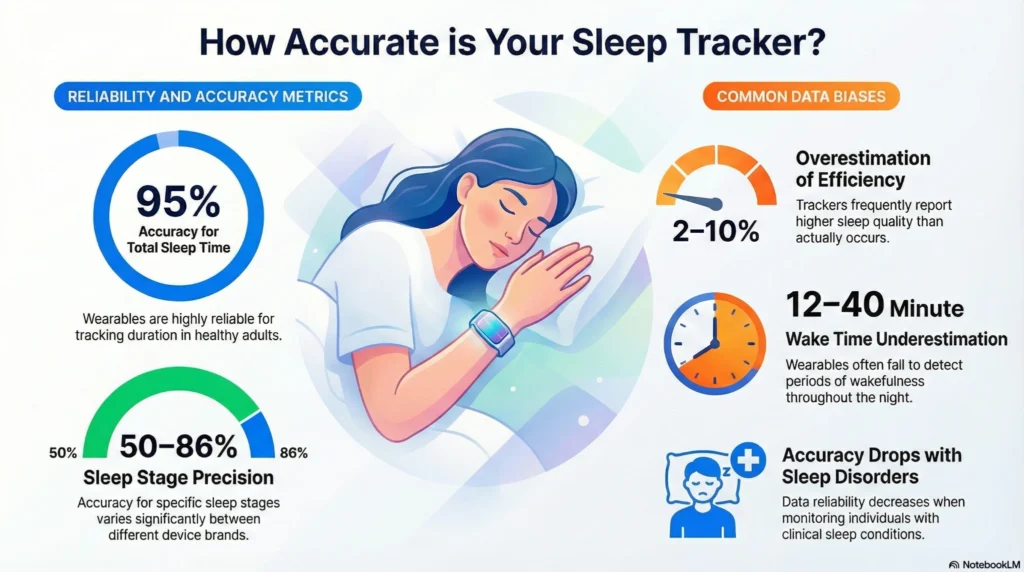
A sleep efficiency of 85% or above is generally considered normal in adults. Consumer trackers typically overestimate sleep efficiency by 2–10% because PPG and accelerometer sensors cannot reliably distinguish between quiet wakefulness — lying still with eyes closed — and actual sleep.
The clinical implication: if your tracker consistently shows 90%+ sleep efficiency but you feel unrefreshed, the tracker is likely misclassifying your quiet wakefulness as sleep. This is a sensor limitation, not a clinical finding, and is most pronounced in individuals with insomnia who spend extended time in bed while awake.
Key Takeaway — Consumer Trackers vs PSG: Consumer sleep trackers detect sleep versus wake with greater than 95% accuracy but cannot replicate PSG sleep stage classification because they do not measure EEG. Stage accuracy ranges from 50–86% depending on device and stage. Trackers overestimate total sleep time by 2–10% because they cannot distinguish quiet wakefulness from sleep. PSG remains the only validated diagnostic sleep study for clinical purposes.
Wearable Sleep Trackers: Accuracy Data and Limitations
2024 Validation Study Finding:
A prospective multicenter validation study evaluating 11 consumer sleep tracking devices against polysomnography found wearables demonstrated sensitivity greater than 95% for detecting sleep versus wake states. However, specificity for identifying wakefulness fell below 60% in most devices — meaning devices regularly misclassify quiet wakefulness as sleep, overestimating total sleep time by 2–10%. Sleep stage classification accuracy ranged from 50–86% across device types and stages measured.
(Yoshida et al., Journal of Medical Internet Research, 2024)
Wrist Wearables (PPG + Accelerometer): Sensitivity, Specificity, and WASO
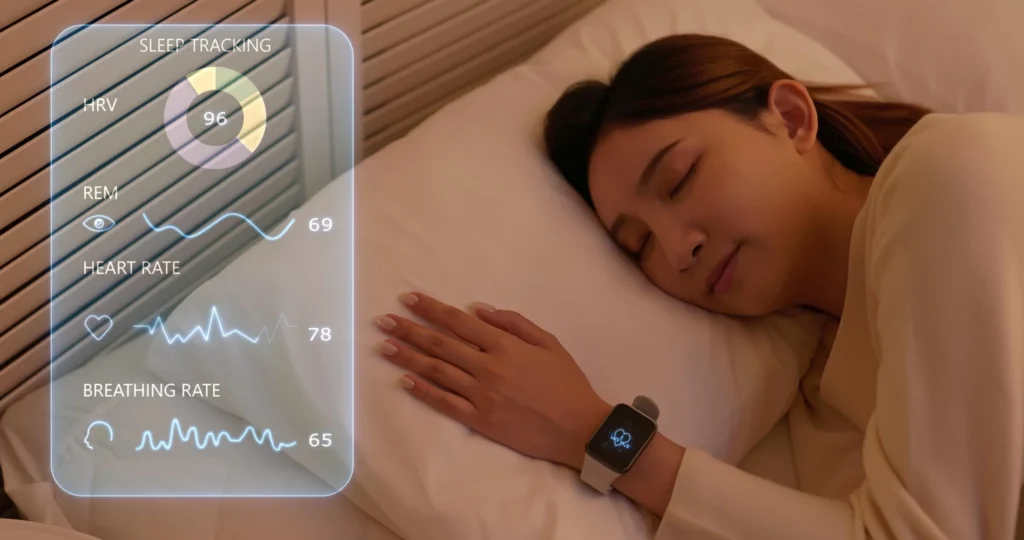
Wrist-worn wearables combining PPG sensors and accelerometers are the most extensively studied consumer sleep tracking category. A 2024 prospective multicenter validation study evaluating 11 consumer devices against polysomnography found sleep/wake sensitivity exceeding 95% — but specificity for detecting wakefulness fell below 60% in most devices. 2024 validation study comparing consumer sleep trackers
That gap matters. Low specificity means wearables regularly misclassify quiet wakefulness — lying still with eyes closed — as sleep. The result: consumer trackers overestimate total sleep time by 2–10% and underestimate Wake After Sleep Onset (WASO) by 12–40 minutes compared to polysomnography.
Sleep stage accuracy (REM, light, deep) ranges from 50 to 86% and degrades meaningfully in individuals with diagnosed sleep disorders, including OSA and insomnia. Our recent reliability assess
(Yoshida et al., Journal of Medical Internet Research, 2024)
How Skin Tone (Fitzpatrick Scale) Affects PPG Accuracy
PPG-based sensors emit and detect light through the skin to estimate blood volume changes. On Fitzpatrick skin types IV–VI — medium-brown to dark skin tones — higher melanin concentration increases optical absorption and reduces the signal-to-noise ratio of the sensor.
This produces two clinically relevant effects: SpO2 readings can be less reliable, and sleep efficiency scores may be modestly overestimated relative to polysomnography findings in lighter-skinned validation cohorts. Most consumer-facing sleep tracker reviews do not disclose this limitation.
Clinical note: If you have a darker skin tone and your tracker consistently reports unexpectedly high sleep efficiency or unusually low SpO2 readings, this sensor limitation — not a clinical finding — may be the explanation. Discuss abnormal SpO2 trends with a physician regardless of skin tone.
Blood Oxygen (SpO2) Monitoring and OSA Screening
Several wrist wearables and smart rings now include photoplethysmography-based SpO2 (blood oxygen saturation) monitoring during sleep. These sensors can flag oxygen desaturation events — brief drops in blood oxygen that occur during apnea episodes in OSA.
Critical limitation: Consumer SpO2 sensors are not equivalent to clinical pulse oximetry, and wearable-detected desaturations are not a substitute for the Apnea-Hypopnea Index (AHI) generated during a formal polysomnography or home sleep apnea test.
Wearable SpO2 data is appropriate as a screening signal — not a diagnostic finding. If your device consistently records SpO2 readings below 90% during sleep, that warrants a physician consultation, not a device upgrade.
📊 Research Finding
“A 2024 validation study comparing 11 consumer sleep trackers to polysomnography found that wearable devices demonstrated sensitivity greater than 95% for detecting sleep versus wake states, though specificity for detecting wakefulness was often below 60%.”
Sleep Tracker Data Interoperability: Apple Health, WHOOP, and Garmin Connect
Most major wearables export sleep data to a central health platform. The practical implications:
- Apple Watch exports to Apple Health; data can be shared with physicians as PDF health records
- WHOOP operates a closed ecosystem; data is not natively exportable to Apple Health or Google Fit
- Garmin exports to Garmin Connect and supports Apple Health sync via third-party apps
- Oura Ring exports to Apple Health and Google Fit; API access is available for developers
If you are tracking sleep for clinical purposes — monitoring PAP therapy adherence, recovery from illness, or athlete training load — confirm your device’s export format before purchasing.
Key Takeaway — Wearable Sleep Trackers: Wrist wearables detect sleep versus wake with greater than 95% accuracy but overestimate total sleep time by 2–10% because PPG sensors cannot reliably distinguish quiet wakefulness from sleep. Sleep stage accuracy ranges from 50–86%. PPG accuracy is reduced on Fitzpatrick skin types IV–VI. SpO2 monitoring flags desaturation events but does not diagnose sleep apnea.
Smart Rings for Sleep Tracking: What the Research Shows
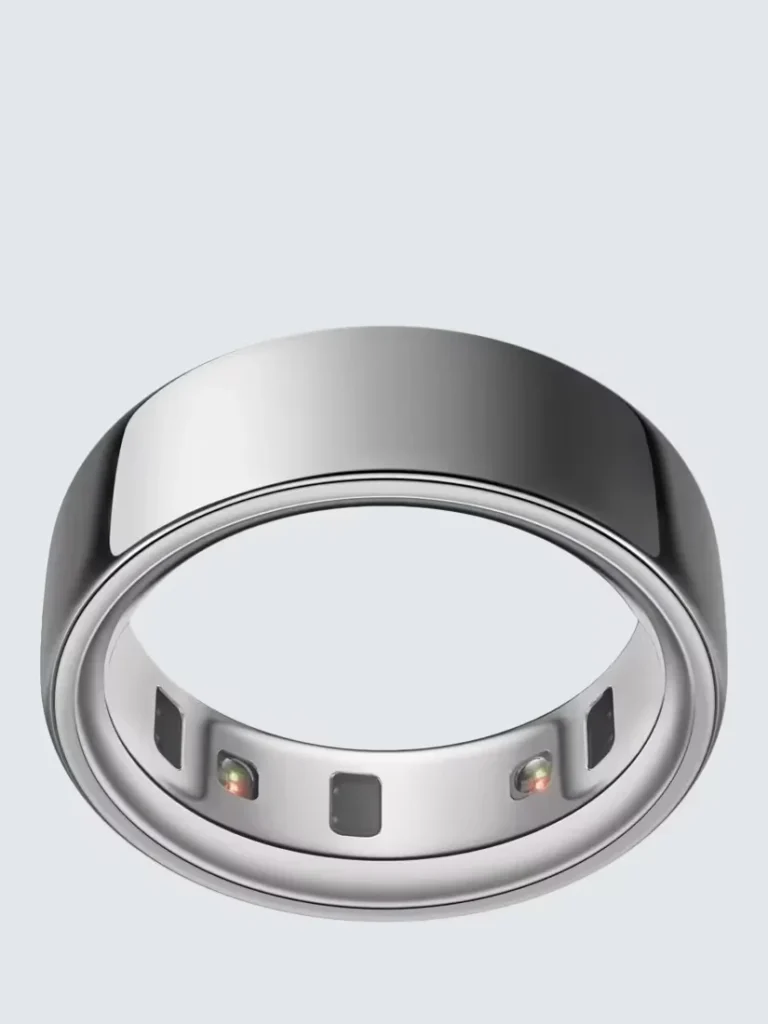
$200-$500
Best for: Detailed sleep stage accuracy without wearing a watch
If wrist devices feel bulky or you want the most accurate consumer sleep stage detection, smart rings deliver better sensor contact and fewer motion artifacts.
Smart rings represent a category of wearable sleep trackers designed to be worn on the finger rather than the wrist. These devices incorporate PPG sensors, accelerometers, and in some models, temperature sensors to monitor sleep-related metrics.
Smart rings represent the most accurate consumer sleep tracking category for users prioritizing sleep stage classification. Their placement on the finger — closer to a major artery than the wrist — produces a higher-quality PPG signal with lower motion artifact during sleep.
Best sleep trackers by accuracy and use case
Oura Ring Sleep Stage Detection: Kappa Values and Limitations
The Oura Ring is the most extensively validated consumer smart ring for sleep tracking. Published validation studies report kappa coefficients greater than 0.61 for sleep stage classification against polysomnography, placing Oura Ring performance in the “substantial agreement” range — the highest published kappa values among commercially available consumer sleep trackers.
Stage-by-stage performance:
| Sleep Stage | Oura Ring Performance | Notes |
|---|---|---|
| REM Sleep | Strongest classification | Best agreement with PSG |
| Deep Sleep (N3) | Moderate–Good agreement | Degrades in OSA patients |
| Light Sleep (N2) | Moderate agreement | Most variable across studies |
| N1 (lightest sleep) | Weakest classification | Consistent limitation across all consumer devices |
| Sleep/Wake | >95% sensitivity | On par with top wrist wearables |
Important limitation: Kappa values are generated from validation studies conducted primarily on healthy adult sleepers without diagnosed sleep disorders. In individuals with OSA, insomnia, or periodic limb movement disorder, all consumer device performance — including the Oura Ring — degrades below published benchmarks.
Smart Ring vs. Wrist Wearable: Which Is More Accurate?
For sleep-specific use, smart rings have a measurable accuracy advantage over wrist wearables for sleep stage classification — primarily due to the improved PPG signal from finger placement.
| Factor | Smart Ring | Wrist Wearable |
|---|---|---|
| Sleep/wake sensitivity | >95% | >95% |
| Sleep stage accuracy | Higher (kappa >0.61) | Lower (50–86% range) |
| HRV measurement | Yes (some models) | Yes (most models) |
| Motion artifact during sleep | Lower (finger movement minimal) | Higher (wrist movement common) |
| Daytime fitness tracking | Limited | Comprehensive |
| Display / notifications | No | Yes |
| Battery life | 4–7 days | 1–3 days (sleep-mode extended) |
Bottom line: If sleep tracking is your primary use case, a smart ring offers better sleep stage accuracy than a wrist wearable. If you also want daytime fitness tracking, notifications, and GPS, a wrist wearable is the more practical choice.
📊 Study Result
“A 2024 study conducted at Brigham and Women’s Hospital compared three consumer wearables against polysomnography and found that one smart ring model demonstrated substantial agreement (Kappa > 0.61) for sleep stage determination, with sensitivity greater than 75% across all sleep stages.”
Why Finger Placement Improves PPG Signal Quality
The finger contains the digital arteries — smaller, higher-pressure vessels than those accessible at the wrist. This produces two accuracy advantages:
- Higher signal amplitude: The PPG waveform from the finger is more pronounced, making it easier for the algorithm to detect the subtle cardiovascular changes that correspond to sleep stage transitions.
- Lower motion artifact: During sleep, fingers move less than wrists. Reduced motion artifact means fewer algorithm errors in sleep/wake classification and more reliable HRV measurement.
This is why clinical pulse oximeters — the FDA-cleared devices used in hospitals — also measure from the finger rather than the wrist.
Key Takeaway — Smart Rings: Smart rings offer the highest published sleep stage classification accuracy among consumer devices, with the Oura Ring reporting kappa values greater than 0.61. Finger placement reduces motion artifact and improves PPG signal quality. Smart rings are recommended over wrist wearables when sleep stage accuracy is the primary purchase criterion.
Under-Mattress and Bedside Sleep Sensors: When Passive Monitoring Makes Sense
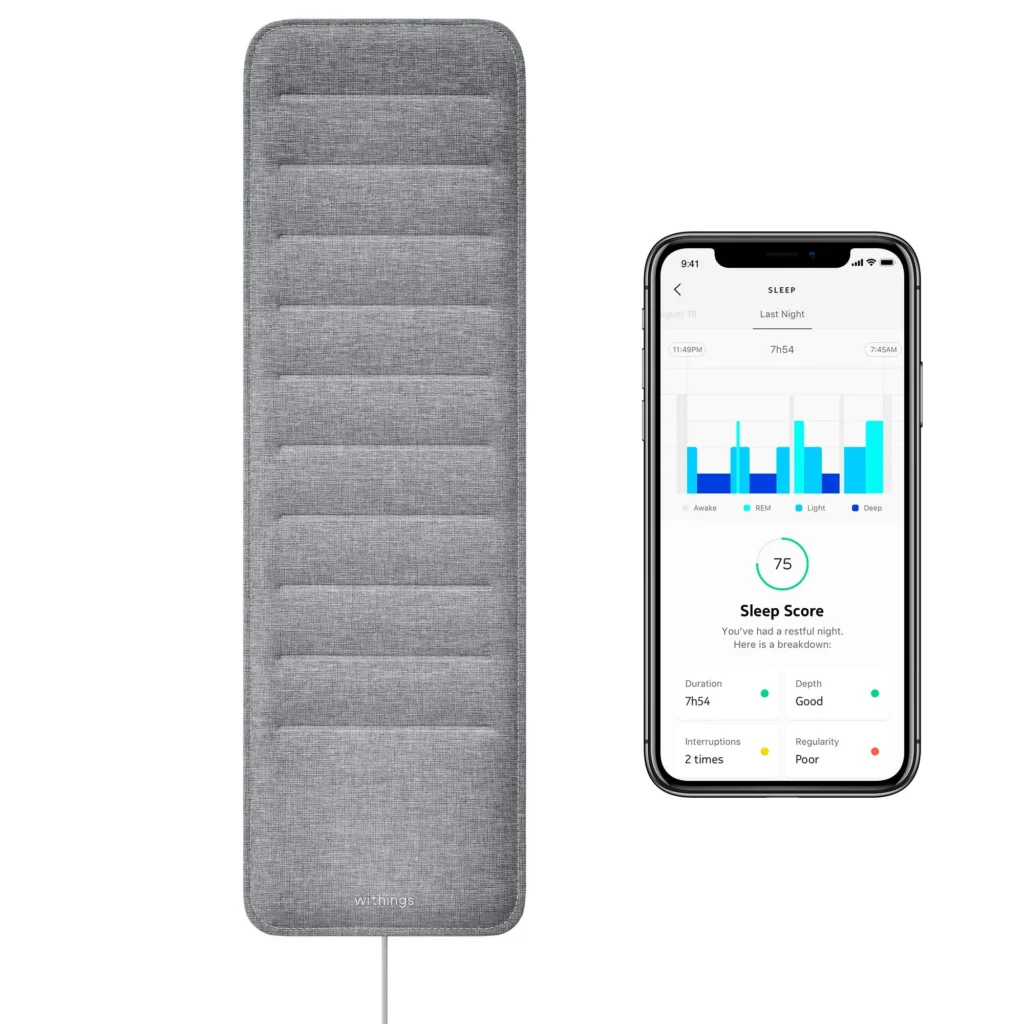
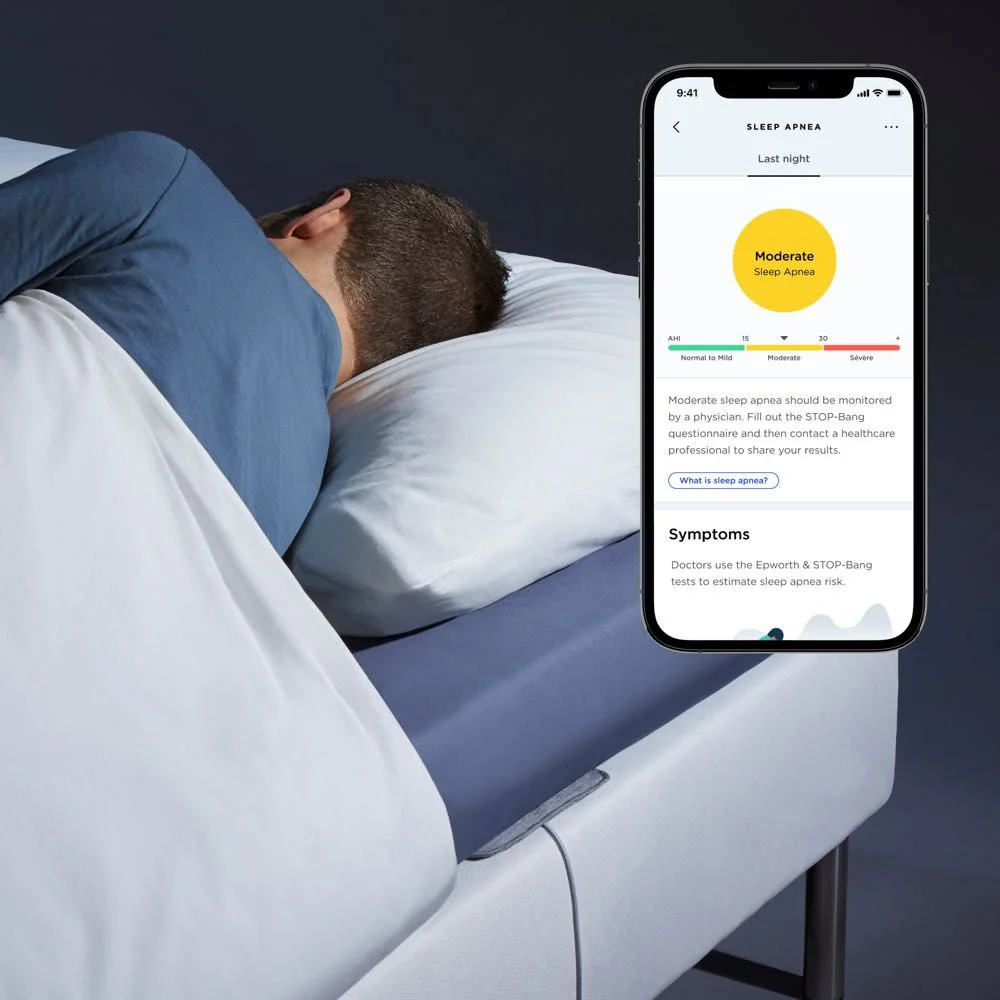
Passive sleep sensors sit under the mattress or nearby at bedside and track sleep without touching the body. That makes them useful for people who do not want to wear a device every night, or who want a low-friction way to monitor sleep continuity over time. Recent studies show that under-mattress systems can do reasonably well for sleep and wake detection, but they remain weaker for detailed sleep staging than the best wearables.
A 2025 validation study of an under-mattress sensor found overall sleep-wake accuracy of 83%, sensitivity of 95%, and specificity of 37%, with overestimation of total sleep time and underestimation of wake after sleep onset. A newer 2026 contactless-monitoring study reported 93% sensitivity for sleep detection and 73% specificity for wake detection.
Accuracy vs. Wearables: Trade-offs for Total Sleep Time
The main trade-off is simple. Under-mattress sensors are often good enough for total sleep time, sleep regularity, and night-to-night trend tracking, but they are less reliable than wearable devices for sleep staging.
A 2024 comparative study of consumer sleep technologies found that nearables, which include under-mattress devices, are non-wearable systems that measure movement and cardiorespiratory activity from the bedside or beneath the mattress without direct contact. The same study notes that these systems are a potential solution for people who are sensitive to or unwilling to wear a device, but their sleep-stage estimates still show meaningful bias when compared with polysomnography. 2024 multicenter study examining 11 consumer sleep trackers
That makes them a better fit when the user cares more about convenience than granular staging. If the question is whether sleep was broadly good, or whether total sleep time is trending in the right direction, a passive sensor can be enough.
If the question is whether REM, deep sleep, and wake after sleep onset are being measured with higher fidelity, a smart ring or wrist wearable usually gives more useful data. The audit’s placement of under-mattress sensors as “good for total sleep time” and lower than wearables for staging is consistent with the current evidence.
Best Use Cases: Dual-User Households and Device Aversion
The strongest use case is device aversion. If someone does not want to wear a ring or watch, a passive sensor removes the biggest barrier to compliance. That is not a minor detail. The contactless-monitoring literature specifically frames nearables as useful for people who are sensitive to or unwilling to wear a device.
In other words, the value is not only accuracy. It is consistency of use. A sensor that stays under the mattress is easier to keep in place than a wearable that gets removed, forgotten, or charged inconsistently.
In dual-user households, these sensors can still make sense, but mainly when the goal is whole-bed trend monitoring rather than person-by-person staging. That is an inference from the device design, since the sensor captures bed-level motion, breathing, and cardiac patterns rather than direct body-worn signals. If one partner moves a great deal or the two sleepers have very different sleep schedules, interpretation becomes less clean. In that setting, passive monitoring is still convenient, but a wearable usually gives more individual-specific data.
Key Takeaway — Under-Mattress and Bedside Sensors: Passive sleep sensors make the most sense when the user wants invisible, low-effort monitoring and is more interested in total sleep time and trends than exact sleep staging. They are a strong fit for device-averse users and can work in shared beds when the goal is broad sleep tracking rather than person-specific staging. Wearables still do better for sleep stage detail.
HRV During Sleep: What It Measures and Which Trackers Do It Best
What Is HRV and Why It Matters for Sleep Quality and Recovery
Heart rate variability (HRV) is the variation in time intervals between consecutive heartbeats, measured in milliseconds. Contrary to its name, higher HRV generally indicates better cardiovascular regulation and greater autonomic nervous system flexibility — not irregularity.
During sleep, HRV is primarily governed by the parasympathetic nervous system, which dominates during slow-wave (deep) sleep and drives the cardiac recovery that makes sleep biologically restorative. HRV typically peaks during deep sleep (N3) and declines during REM sleep, when sympathetic activity increases.
For athletes and recovery-focused users, overnight HRV is the most clinically meaningful sleep metric — more predictive of next-day performance and training readiness than total sleep time or sleep score.
HRV Measurement Accuracy by Device Category
| Device Category | HRV Measurement Method | Accuracy vs ECG | Recommended Use |
|---|---|---|---|
| Wrist wearable (PPG) | Photoplethysmography-derived HRV (pHRV) | Moderate correlation at rest; degrades with motion | General HRV trend monitoring |
| Smart ring (PPG) | PPG from finger arteries | Higher correlation than wrist PPG | Recovery tracking; athlete use |
| Chest strap (ECG) | True R-R interval capture | Highest accuracy; clinical-grade | Performance optimization; research |
| Under-mattress sensor | Ballistocardiography-derived | Moderate for resting HRV | Passive monitoring; no-device preference |
Critical distinction: Consumer wearables measure photoplethysmography-derived HRV (pHRV) — an estimate of true HRV from the optical blood volume pulse waveform. This is not equivalent to ECG-derived HRV, which directly measures electrical R-R intervals. For clinical HRV monitoring (cardiac rehabilitation, autonomic disorder assessment), ECG-based measurement is required.
Which Consumer Tracker Measures HRV Most Reliably?
For consumer sleep HRV monitoring, smart rings — particularly the Oura Ring — are the most validated category due to finger-artery PPG signal quality and consistent overnight measurement methodology. Chest straps (such as the Polar H10, validated in published research including data cited in this site’s heart monitor guide) capture ECG-level HRV accuracy but are not practical for all-night sleep use.
Practical HRV tracking guidance for consumer devices:
- Use HRV trends over 30-day averages, not nightly values, to assess recovery status
- HRV is highly individual — establish your own baseline before interpreting scores
- Acute illness, alcohol, and poor sleep architecture reliably suppress overnight HRV, providing a practical self-monitoring signal
- Avoid training-day-to-training-day comparisons; compare to your own 30-day rolling average
HRV and Sleep Stage Detection: The Relationship
HRV data can improve sleep stage classification algorithms — this is why devices that measure HRV tend to show better sleep stage accuracy than accelerometer-only devices. The parasympathetic surge of deep sleep, the sympathetic-parasympathetic balance of REM sleep, and the low-variability pattern of light sleep each produce measurable HRV signatures.
This is the mechanistic reason why smart rings — which have the most accurate PPG signal for HRV detection — also report the highest published sleep stage classification kappa values.
Key Takeaway — HRV During Sleep: HRV peaks during deep sleep and is the most recovery-relevant overnight metric for athletes and performance-oriented users. Smart rings provide the most accurate consumer HRV measurement during sleep due to finger artery PPG signal quality. Use 30-day rolling averages rather than nightly values for meaningful trend interpretation. ECG-based chest straps are the gold standard but are impractical for all-night sleep use.
CPAP Therapy: Mechanisms, Evidence, and Adherence Data
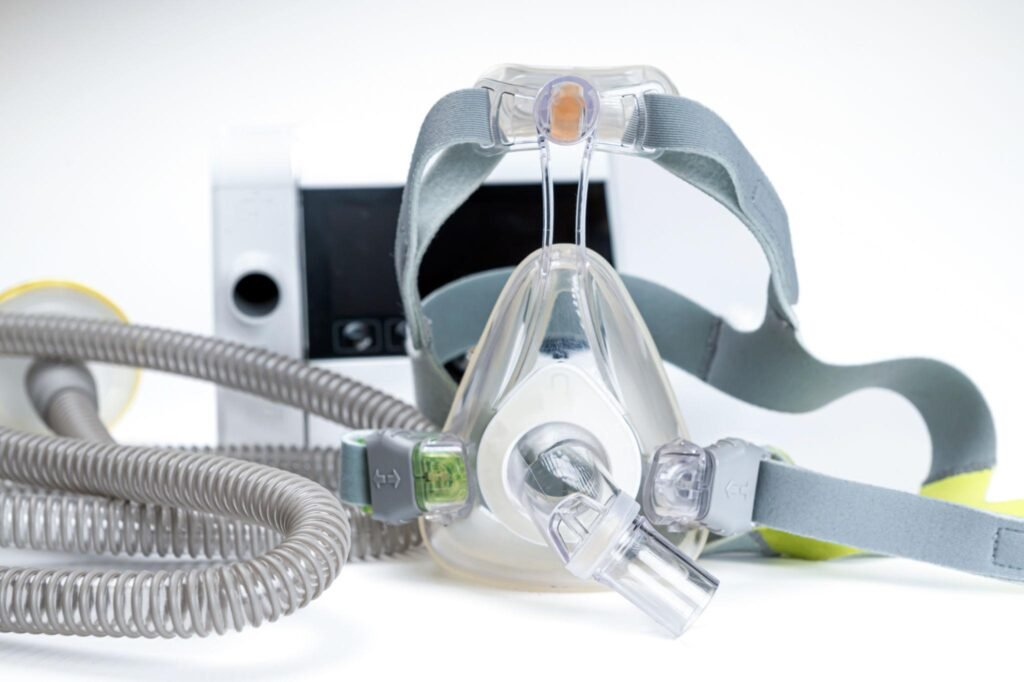
How CPAP Treats Obstructive Sleep Apnea
Continuous Positive Airway Pressure (CPAP) therapy delivers a steady stream of pressurized air through a mask, keeping the upper airway open throughout the sleep cycle. This prevents the airway collapse that produces the apnea events recorded as the Apnea-Hypopnea Index (AHI).
CPAP is the first-line therapy for all severities of obstructive sleep apnea (OSA) in clinical guidelines — mild, moderate, and severe. Its AHI reduction efficacy is the highest of any non-surgical OSA intervention.
AHI Reduction Data and Long-Term Outcomes
Consistent CPAP use (defined as >4 hours per night on >70% of nights) reduces AHI by 80–90% in most OSA patients and is associated with reduced cardiovascular risk, improved neurocognitive function, and resolution of excessive daytime sleepiness in the majority of users. AASM clinical guidelines
What users report:
However, adherence remains a significant challenge, with many patients discontinuing therapy or using it inconsistently due to discomfort, claustrophobia, mask fit issues, or side effects such as nasal congestion and skin irritation.
CPAP Adherence Challenges and Clinical Solutions
Adherence is CPAP’s primary clinical limitation. Studies consistently find 30–50% of prescribed patients use CPAP for fewer than 4 hours per night within the first year. Common barriers include mask discomfort, claustrophobia, and difficulty exhaling against continuous pressure. Auto-titrating CPAP (APAP) and pressure ramp settings address the exhalation barrier for most users.
CPAP therapy mechanisms: The therapeutic pressure level for CPAP is determined during a supervised titration study, typically conducted in a sleep laboratory. The prescribed pressure is calibrated to maintain airway patency across different sleep positions and sleep stages. CPAP is considered first-line therapy for obstructive sleep apnea, with substantial evidence supporting its effectiveness in reducing apnea-hypopnea index (AHI), improving daytime sleepiness, and reducing cardiovascular risk associated with untreated OSA. Clinical practice guidelines for sleep apnea management
Common CPAP considerations:
- Side effects may include nasal dryness, congestion, mask discomfort, and aerophagia
- Requires physician prescription and pressure titration
- Typically covered by insurance as durable medical equipment
- Regular mask fitting adjustments may be necessary
- Daily cleaning and maintenance required
- Most devices track usage compliance
BiPAP vs. CPAP: Clinical Differences and When BiPAP Is Indicated
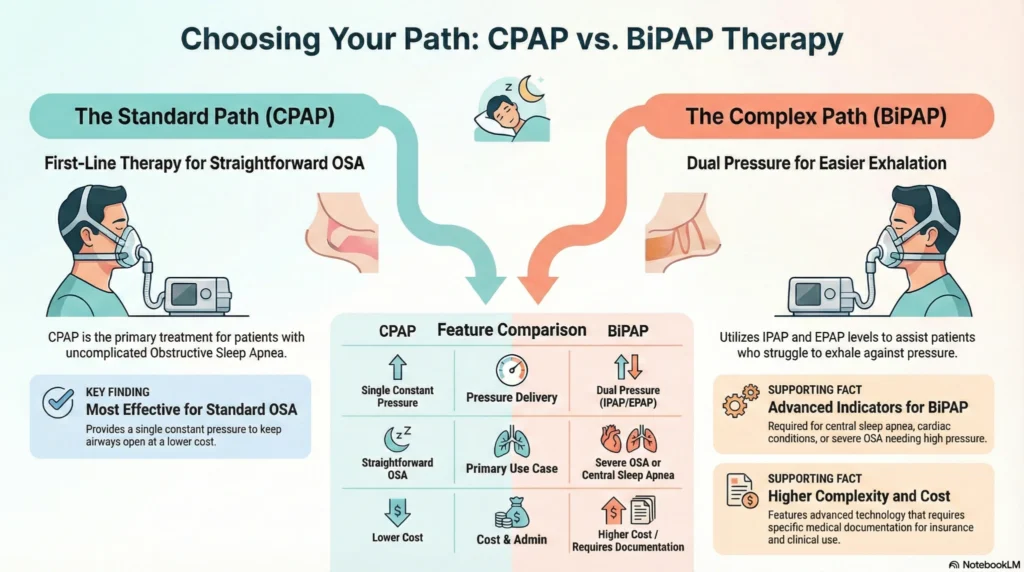
Pressure Delivery: How CPAP and BiPAP Differ
BiPAP (Bilevel Positive Airway Pressure) delivers two pressure levels: a higher inspiratory positive airway pressure (IPAP) during inhalation and a lower expiratory positive airway pressure (EPAP) during exhalation. CPAP delivers a single fixed pressure throughout both phases.
The BiPAP exhalation advantage resolves the most common CPAP adherence barrier — difficulty exhaling against continuous pressure — and allows higher effective treatment pressures in patients who require them.
Who Is BiPAP Prescribed For?
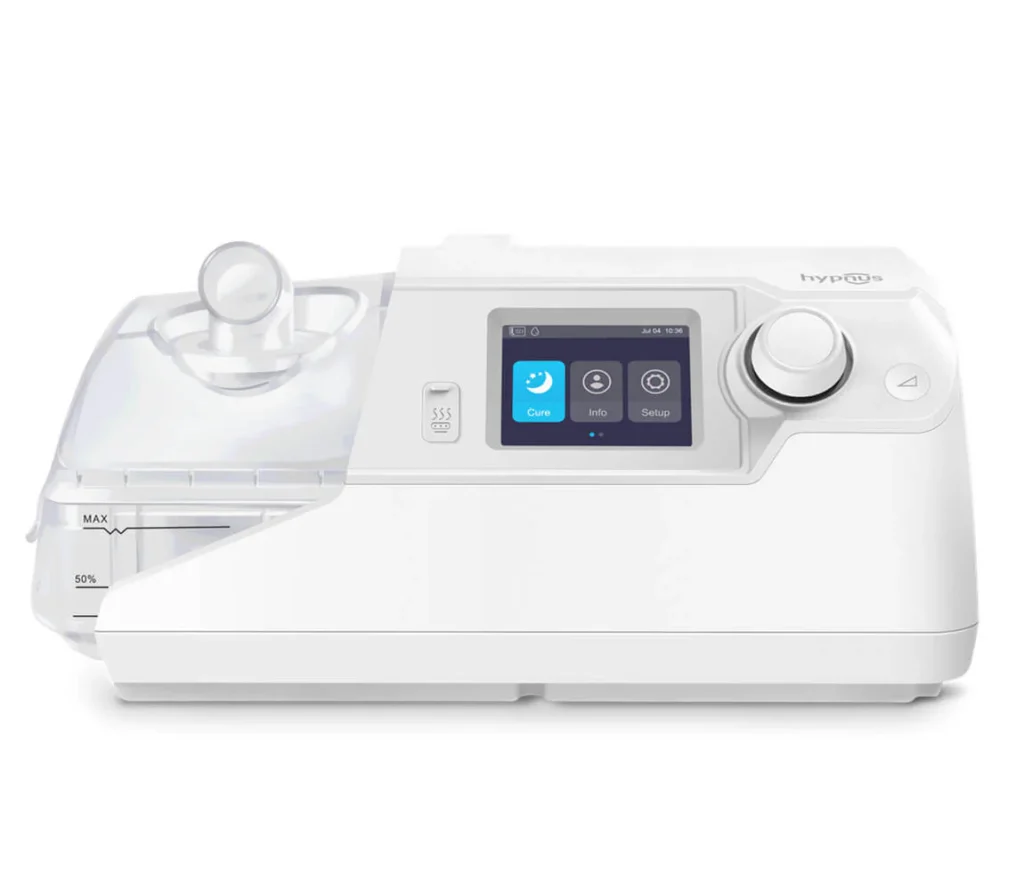
BiPAP is typically prescribed when:
- CPAP is not tolerated due to exhalation discomfort despite APAP and pressure ramp optimization
- Central sleep apnea accompanies OSA (complex sleep apnea)
- Hypoventilation syndromes are present alongside OSA (obesity hypoventilation syndrome, COPD-OSA overlap)
- Very high treatment pressures (>15–18 cmH₂O) are required
BiPAP is not a first-line prescription for routine OSA without CPAP intolerance. It is more expensive and requires a formal titration study for optimal pressure setting.
Oral Appliances for Sleep Apnea: Efficacy, Candidacy, and Adherence
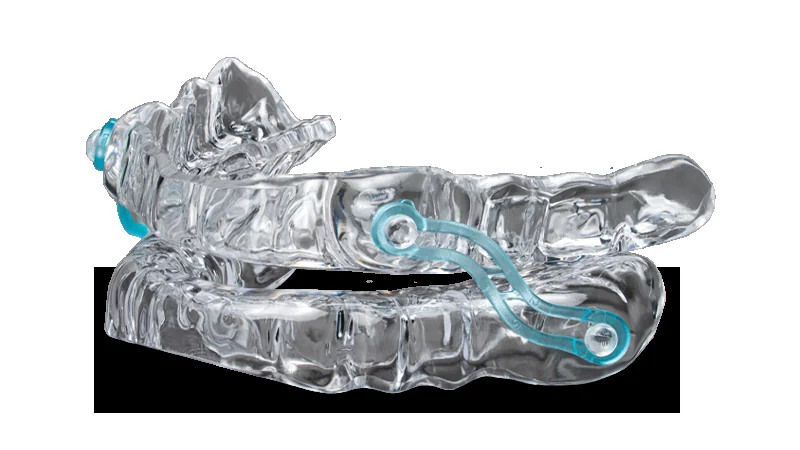
2022 Systematic Review Finding:
For mild-to-moderate obstructive sleep apnea, oral appliances produced equivalent outcomes to CPAP for daytime sleepiness, hypertension control, and neurocognitive function — attributable to significantly higher patient adherence rates with oral appliances versus CPAP. CPAP achieves greater absolute AHI reduction and remains first-line for severe OSA.
(Carvalho et al., Sleep and Breathing, 2022)
Mandibular Advancement Device (MAD): Mechanism of Action
A mandibular advancement device (MAD) is a custom-fitted oral appliance that repositions the lower jaw (mandible) forward during sleep. This forward positioning increases upper airway space, reduces airway collapsibility, and decreases apnea events.
MADs require fitting by a qualified dentist or prosthodontist with sleep medicine training. Over-the-counter “boil-and-bite” devices are available but are not validated to the standard of custom-fitted appliances.
Mandibular advancement device types: Custom-made, titratable devices that allow gradual adjustment of jaw position represent the recommended category of oral appliances. These devices are typically fabricated by dentists trained in dental sleep medicine following impressions of the patient’s teeth. Two-piece designs that permit incremental advancement and lateral jaw movement tend to demonstrate better treatment success and comfort compared to single-piece appliances. Comprehensive review of oral appliance design and efficacy
Oral Appliance vs. CPAP: What the 2022 Systematic Review Shows
A 2022 systematic review found that for mild-to-moderate OSA, oral appliances produced equivalent outcomes to CPAP for three clinical endpoints — daytime sleepiness, hypertension control, and neurocognitive function. The equivalence was attributable to substantially higher MAD adherence compared to CPAP: patients wore oral appliances for significantly more hours per night on average.
The trade-off is AHI reduction: CPAP achieves greater absolute AHI reduction than MADs, making CPAP the preferred intervention for severe OSA (AHI >30 events/hour) and for any OSA severity where residual AHI on MAD therapy remains clinically significant.
2022 systematic review of mandibular advancement devices (Carvalho et al., Sleep and Breathing, 2022)
📊 Research Finding
“Evidence indicates that approximately two-thirds of OSA patients show meaningful improvement with MAD therapy, while about one-third demonstrate negligible response.”
Is an Oral Appliance Right for You? Candidacy Criteria
| Factor | Favors CPAP | Favors Oral Appliance |
|---|---|---|
| OSA severity | Severe (AHI >30) | Mild–Moderate (AHI 5–30) |
| CPAP tolerance | Tolerates CPAP | CPAP-intolerant |
| Jaw/dental health | Not relevant | Must have adequate dentition |
| AHI reduction goal | Maximal AHI reduction needed | Functional outcomes equivalent |
| Cost/access | Often insurance-covered | Custom fitting required; variable coverage |
| Adherence history | Poor adherence to CPAP | Willing to wear nightly |
American Academy of Sleep Medicine guidelines on oral appliance therapy
Key Takeaway — CPAP, BiPAP, and Oral Appliances: CPAP is the most effective OSA therapy by AHI reduction and is first-line for all severities. BiPAP is preferred when CPAP is not tolerated or when central apnea or hypoventilation accompanies OSA. For mild-to-moderate OSA, a 2022 systematic review found oral appliances produced equivalent outcomes to CPAP for daytime sleepiness and cardiovascular control — attributable to higher adherence rates.
CPAP vs BiPAP vs Oral Appliance: Side-by-Side Clinical Comparison
| Feature | CPAP | BiPAP | Oral Appliance (MAD) |
|---|---|---|---|
| Mechanism | Fixed continuous pressure | Dual pressure (IPAP/EPAP) | Mandibular repositioning |
| First-line for | All OSA severities | CPAP-intolerant; complex/central apnea | Mild–Moderate OSA; CPAP-intolerant |
| AHI reduction | 80–90% | Equivalent to CPAP at matched pressure | Lower than CPAP; variable |
| Adherence | 30–50% suboptimal | Better than CPAP for exhalation complaints | Higher than CPAP on average |
| Titration required | Auto-titration available (APAP) | Formal in-lab titration preferred | Gradual advancement; in-clinic adjustment |
| Insurance coverage | Widely covered (with AHI ≥15 or AHI ≥5 + symptoms) | Widely covered when indicated | Variable; often requires prior CPAP trial |
| Requires prescription | Yes | Yes | Yes (custom-fitted) |
Light Therapy for Circadian Rhythm Disorders: Lux, Timing, and Protocols
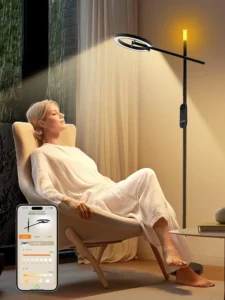
Best for: Jet lag, shift work, and delayed sleep phase syndrome
How Light Therapy Corrects Delayed Sleep Phase Disorder (DSPD)
Bright light therapy works by shifting the circadian clock earlier. Morning light suppresses melatonin, stimulates the suprachiasmatic nucleus, and helps move sleep and wake timing toward an earlier schedule. In delayed sleep-wake phase disorder, the problem is not poor sleep quality in the usual sense.
It is a body clock that runs late and resists the timing a person actually needs for school, work, or daily life. Recent reviews continue to describe timed bright light as a core non-drug treatment, often paired with evening light reduction and, in some cases, melatonin.
A practical way to frame it is this: morning light advances the clock, while evening light delays it. That is why the same amount of light can help or hurt, depending on when it is used. For people with DSPD, the main target is the first part of the day, not the evening. Evening bright light, screens, and late indoor lighting can all push the schedule later and undo the benefit. Peer-reviewed physiological studies and foundational research on bright light’s effects on circadian rhythms
What users report:
⚠ No user-reported experience language found in this section. Editorial input required.
Evidence-Based Protocol: Lux Levels, Session Duration, and Timing
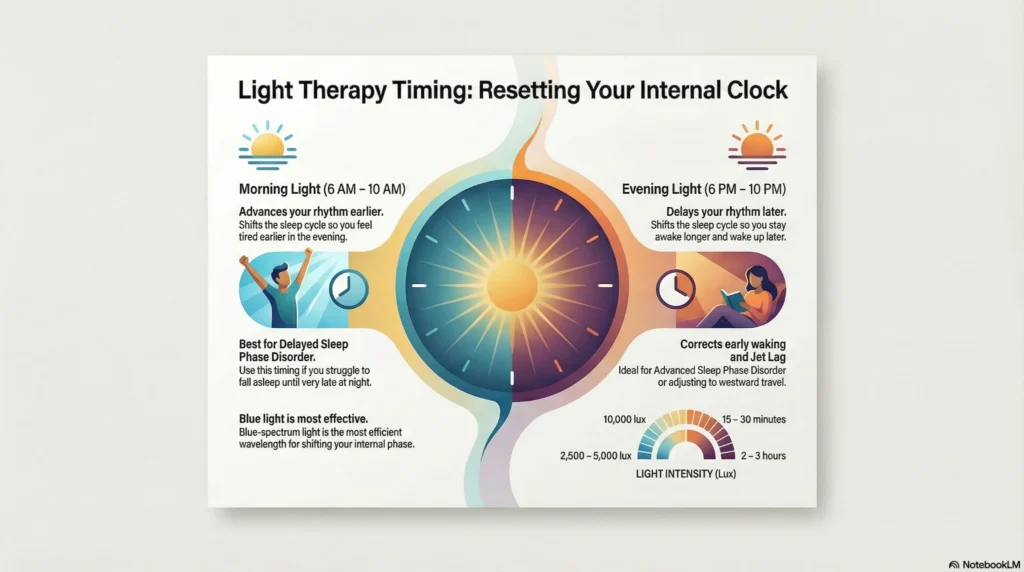
The best studied protocol remains high-intensity morning light, usually in the range of 2,500 to 10,000 lux. Older and current reviews both support 10,000 lux as the standard reference dose, commonly used for about 30 minutes after waking, with some protocols extending the exposure when the intensity is lower. 2024 systematic review and meta-analysis on light therapy
The light box should be close enough to deliver the stated lux at the face, which is why distance matters as much as the headline number on the box.
For page copy, the most useful practical advice is simple: use bright light soon after waking, keep the schedule consistent, and cut back on bright evening light. If the sleep window is very delayed, gradual phase shifting is usually more durable than trying to force a sudden change. That matches the clinical approach described in current circadian disorder references, which still place sleep schedule regularity, timed light, and melatonin among the main tools. Evidence-based approach to treating circadian sleep disorders
Key Takeaway: Morning bright light is the main treatment lever for DSPD. A 10,000 lux box used soon after waking is the most established protocol, but timing is more important than brand or gimmick. Evening bright light should be reduced, not added.
Temperature-Controlled Sleep Systems: Deep Sleep and Recovery Evidence
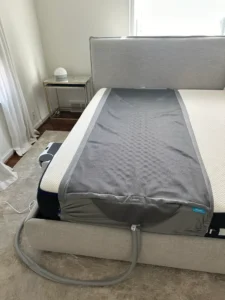
Best for: Night sweats, hot flashes, and couples with different temperature preferences
2024 Temperature Control Study Finding:
Men sleeping on a temperature-controlled mattress cover set to cooler early-night temperatures experienced an average of 14 additional minutes of deep sleep (+22%), while women experienced an average of 9 additional minutes of REM sleep (+25%) compared to uncontrolled temperature conditions. Core body temperature drop is a key biological trigger for slow-wave sleep initiation.
(Choi et al., Sports Medicine and Health Sciences, 2024)
What the 2024 Sports Medicine Research Shows
The strongest recent evidence is a 2024 free-living study of a temperature-controlled mattress cover. In that study, 54 adults used the system for eight nights, producing more than 300 total home sleep test nights.
When the bed was cooler in the first half of the night, men gained an average of 14 minutes of deep sleep, or about a 22% increase, while women gained an average of 9 minutes of REM sleep, or about a 25% increase. Sleeping heart rate also decreased slightly and HRV improved. That makes the effect more than a comfort story. It is a measurable change in sleep architecture and cardiovascular recovery.
A 2024 study published in a peer-reviewed journal examined the effects of temperature-controlled mattress covers on sleep and cardiovascular recovery. 2024 study on temperature-controlled sleep surfaces
The biological explanation is straightforward. Sleep onset and slow-wave sleep are helped by a drop in core body temperature. A controlled cooling surface does not replace sleep hygiene or a clinical treatment, but it can support the body’s thermal transition into sleep and shift the balance of sleep stages in a useful direction. A 2025 randomized crossover trial also supports the broader idea that temperature-controlled mattress covers can improve sleep and perceived recovery in healthy adults, which strengthens the case that thermal management is a legitimate sleep lever.
📊 Study Result
“The study, which included 54 subjects monitored with home sleep tests over eight nights, found that sleeping at cooler temperatures in the first half of the night was associated with increased deep sleep (+14 minutes; +22% mean change) in men and increased REM sleep (+9 minutes; +25% mean change) in women compared to sleeping without temperature regulation.”
Sex-Specific Outcome Data: Men vs. Women Deep Sleep and REM Effects
The most useful part of the 2024 study is the sex-specific pattern. Men responded more with extra deep sleep, while women responded more with extra REM sleep. That does not mean temperature control is only useful for one group. It means the same intervention may show up differently depending on physiology and the sleep stage someone is trying to improve.
For a page audience, that is a strong differentiator because it gives the reader a concrete expectation instead of a vague promise that cooler sleep is always better.
You can frame the recommendation carefully. A cooler sleep surface may be worth trying for people who overheat at night, wake more often in warm conditions, or want to support recovery after hard training. The evidence is strongest for controlled cooling in the early part of the night, not for extreme cold or dramatic temperature swings.
What users report:
Participants reported significantly more comfortable body temperature with active climate control, resulting in both subjective and objective sleep quality improvements.
Key Takeaway: Cooler early-night sleep can increase deep sleep in men and REM sleep in women. The 2024 data support temperature control as a real sleep architecture intervention, not just a comfort feature.
White Noise and Sound Machines: Benefits, Risks, and Safety Guidelines
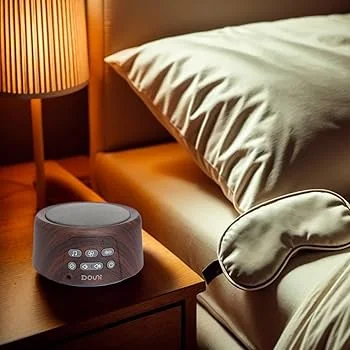
Is White Noise Safe for Long-Term Use? The 90 dB Threshold
White noise is usually safe for adults when the volume is kept modest and the device is not placed too close to the sleeper. The hearing-risk line is not about whether the sound is white noise or pink noise. It is about how loud it is, how close it is, and how long it runs.
NIOSH uses 85 dB as the standard occupational exposure limit over an eight-hour day, and pediatric and audiology sources warn that sound machines can become harmful if they are run too loud or too near the bed. Foundational white noise studies
That is why long-term adult use is usually framed as low risk below roughly 70 to 75 dB, while exposures at or above 85 dB deserve caution. The 2014 AAP paper on infant sleep machines found that all tested devices were above 50 dB at 30 cm, and some exceeded 85 dB. A 2024 PubMed-indexed paper on continuous white noise during sleep also warned that incorrect use may contribute to hearing, speech, and learning problems in young children. 2022 systematic review of auditory sleep interventions
AAP Pediatric Guidelines and Infant Exposure Limits
For infants, the safest approach is conservative. The AAP’s 2023 guidance treats excess noise as a public health issue across infancy, childhood, and adolescence. The technical report linked to that policy notes that nighttime environmental noise levels even below 40 dB can disturb sleep.
For nursery use, the practical point is to keep the machine well away from the sleep surface, avoid high volume, and avoid treating white noise as something that can run loud by default all night.
A simple way to write this section is to say that white noise can be used safely when it is quiet, distant, and consistent, but infant and child use should stay more conservative than adult use. If a device must be placed close to the crib or bed, the volume should be turned down rather than assumed to be harmless. 2021 study on white noise in high-noise environments
Teen and Pediatric Sleep Tracking Considerations
For teens and children, the main issue is not only the sound level. It is also the habit around sleep. If a child begins to depend on a noise machine every night, that can be fine when the device is quiet and used to mask household noise.
But if the volume creeps up, if the device is placed close to the bed, or if sleep becomes tied to constant monitoring and reassurance, the setup is no longer neutral. Pediatric guidance also reminds us that adolescents are not immune to the effects of chronic noise exposure, and that even lower nighttime noise can fragment sleep.
For a page built around sleep tracking and device choice, the cleanest framing is this: white noise may help with sleep continuity, but it should not become a louder-and-longer routine over time. In younger users, a quiet machine, placed farther away, is the safer default. Peer-reviewed systematic analysis
Key Takeaway: White noise is generally safe when volume stays moderate and the device is placed far enough away. For infants and young children, keep exposure conservative, avoid high volume, and do not assume that louder is better.
Orthosomnia: When Sleep Tracking Backfires
What is orthosomnia?
Orthosomnia is a condition in which a person’s anxiety about achieving optimal sleep tracker scores causes behavioral and cognitive changes that worsen actual sleep quality. First described in peer-reviewed literature in 2017, orthosomnia is characterized by selective insomnia driven by sleep score fixation, hypervigilance during sleep, and maladaptive sleep scheduling based on tracker algorithm outputs. Individuals with perfectionist traits or pre-existing anxiety are at highest risk. Cognitive behavioral therapy for insomnia (CBT-I) is the recommended intervention.
What Is Orthosomnia? Clinical Definition and Prevalence
Orthosomnia is a clinical condition in which a person’s efforts to achieve optimal sleep tracker scores cause behavioral and cognitive changes that worsen actual sleep quality. The term was first described in peer-reviewed literature in 2017 (Baron et al., Journal of Clinical Sleep Medicine) and has since been increasingly recognized in sleep medicine practice as consumer sleep tracking has expanded.
The defining characteristic of orthosomnia is a paradox: the device purchased to improve sleep becomes a source of sleep-disrupting anxiety. Users develop selective insomnia driven by sleep score fixation — monitoring their tracker data before bed, waking during the night to check scores, and restructuring sleep schedules based on algorithm outputs rather than biological cues.
Signs Your Tracker Data Is Increasing Sleep Anxiety
Orthosomnia is not a formal DSM-5 diagnosis, but sleep medicine clinicians identify it through a recognizable behavioral pattern. Consider whether any of the following apply to you:
- You check your sleep score first thing every morning and it determines your mood for the day
- You feel anxious before sleep because you’re worried about achieving a high score
- You’ve changed your sleep or wake time based on tracker recommendations rather than how rested you feel
- You’ve declined social activities or alcohol to “protect” your sleep score
- Your sleep score consistently shows poor sleep even when you feel well-rested — and this causes distress
- You feel better on the mornings when your tracker is not charged
If two or more of these apply to you, your tracker may be contributing to sleep anxiety rather than resolving it.
What to Do: CBT-I and Tracker Literacy Approaches
The recommended clinical intervention for orthosomnia is cognitive behavioral therapy for insomnia (CBT-I) — the first-line, evidence-based treatment for insomnia that has been shown to outperform sleep medication for long-term outcomes.
Practical first steps before seeking formal CBT-I:
- Disable sleep score notifications. Remove the score from your morning routine. Use only raw data (total sleep time, wake time) if you choose to continue tracking.
- Set a two-week tracking break. Many users report that their subjective sleep quality improves within the first week of not checking scores, even if actual sleep is unchanged.
- Calibrate your interpretation. A sleep score is an algorithm output from a consumer device with 50–86% stage detection accuracy — not a clinical measurement. One poor score does not mean one poor night.
- Consult a sleep medicine physician. If tracker-related anxiety is persistent and affecting daytime function, CBT-I referral is appropriate. A board-certified sleep medicine specialist can differentiate orthosomnia from an underlying primary insomnia disorder.
Key Takeaway — Orthosomnia: Orthosomnia is a condition in which sleep tracker anxiety worsens the sleep quality the tracker was purchased to improve. It is most common in individuals with perfectionist traits or pre-existing anxiety. If your tracker data is causing more distress than benefit, disabling score notifications and a structured CBT-I referral are the evidence-based first steps.
How to Choose the Right Sleep Device for Your Sleep Goal
Device Selection Matrix: By Symptom and Sleep Goal
Not all sleep devices address the same problem. Use this framework to identify which device category matches your primary sleep concern:
How to choose the right sleep tracker
| Primary Sleep Concern | Recommended Device Category | Clinical Threshold to Escalate |
|---|---|---|
| I want to understand my sleep stages better | Smart ring (Oura Ring) or wrist wearable | If OSA symptoms present, skip trackers — go to sleep study |
| I wake frequently and don’t know why | Wrist wearable with WASO tracking | If AHI equivalent >15 or SpO2 <90%, pursue sleep study |
| I want to track recovery and HRV for sport | Smart ring or ECG chest strap | No clinical escalation threshold for healthy athletes |
| I snore and suspect sleep apnea | Skip consumer trackers — home sleep apnea test | AHI ≥5 requires clinical evaluation |
| I have diagnosed mild OSA and resist CPAP | Oral appliance (MAD) via sleep medicine dentist | If AHI on MAD therapy remains >15, CPAP re-evaluation needed |
| I have diagnosed moderate-to-severe OSA | CPAP (first-line) or BiPAP if CPAP-intolerant | Physician management required; clinical follow-up |
| My sleep onset is late (can’t fall asleep until 2–3 AM) | Light therapy device (10,000 lux box) | If DSPD suspected, chronotherapy with physician guidance |
| I have trouble staying asleep and feel anxious about sleep | CBT-I (not a device) | Avoid trackers until anxiety is managed; orthosomnia risk |
| I want passive monitoring without wearing a device | Under-mattress sensor | Fitness/HRV tracking requires wearable |
| I want to improve deep sleep temperature | Cooling mattress topper or pad | Not a clinical intervention; no escalation threshold |
When a Wearable Is Not Enough: Clinical Device Thresholds
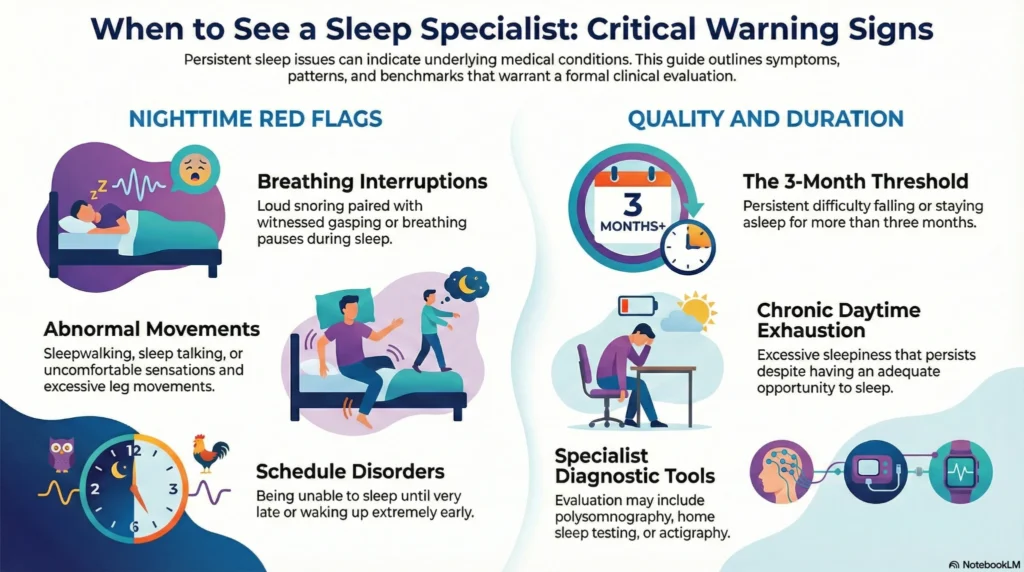
Consumer sleep trackers are appropriate for health-engaged adults without a clinical sleep disorder diagnosis. These findings indicate that clinical evaluation should precede — or replace — a consumer tracker purchase:
- Witnessed apneas: A sleep partner observes you stopping breathing during sleep — pursue a home sleep apnea test, not a tracker
- Excessive daytime sleepiness despite 7+ hours tracked: A tracker reporting adequate sleep time alongside daytime impairment suggests the tracker is not capturing your true sleep quality — or a clinical sleep disorder is present. Evidence supporting light therapy effectiveness
- SpO2 consistently below 92%: Clinical evaluation required regardless of device accuracy limitations
- Persistent insomnia (≥3 months): CBT-I is the first-line intervention; adding a tracker without CBT-I may worsen outcomes via orthosomnia risk
When to Consult a Healthcare Provider
Individuals should seek medical evaluation under the following circumstances:
Tracker Signals That Warrant a Physician Visit
A consumer sleep tracker is a monitoring tool — not a diagnostic instrument. These findings from your tracker warrant a physician consultation, not a device upgrade:
| Tracker Signal | Clinical Concern | Recommended Action |
|---|---|---|
| SpO2 readings consistently below 90% | Possible oxygen desaturation events; OSA risk | Physician consultation + sleep study referral |
| AHI equivalent >15 events/hour (on devices that estimate this) | Moderate-to-severe OSA range | Sleep medicine evaluation required |
| Deep sleep below 15% across multiple consecutive weeks | Potential clinical significance; age-dependent | Physician review of sleep diary + tracker data |
| Sleep score worsening despite behavioral interventions | May indicate untreated primary sleep disorder | Physician consultation; rule out OSA, PLMD, RLS |
| Increasing sleep anxiety tied to tracker data | Possible orthosomnia | CBT-I referral; consider tracker break |
Dr. Rishav Das, M.B.B.S., reviews all device recommendations and clinical thresholds on this page. For personalized device guidance or OSA evaluation, bring your tracker data report to your primary care physician or a board-certified sleep medicine specialist. Most major platforms allow you to export a sleep summary PDF — this is a useful starting point for a clinical conversation.
Insurance Coverage for CPAP, BiPAP, and Oral Appliances
Insurance coverage for sleep apnea therapy devices in the United States follows a consistent framework, though policy details vary by insurer and plan year:
CPAP and BiPAP: Medicare and most commercial insurers cover CPAP and BiPAP when a formal polysomnography or home sleep apnea test confirms an AHI of 15 or greater (moderate-to-severe OSA), or an AHI of 5–14 with documented symptoms (excessive daytime sleepiness, hypertension, or cardiovascular disease). A physician prescription is required. Most insurers require a 90-day compliance review (4+ hours per night on 70%+ of nights) before confirming long-term coverage.
Oral Appliances: Coverage for custom-fitted MADs varies significantly. Some insurers cover oral appliances under medical benefits (not dental benefits) when CPAP intolerance is documented. A sleep medicine physician letter of medical necessity and a prior CPAP trial documentation are typically required. Contact your insurer directly before pursuing a MAD to confirm benefit category and prior authorization requirements.
Consumer sleep trackers: Not covered by insurance. FSA/HSA eligibility for sleep trackers varies by product and account plan — check with your FSA/HSA administrator.
Medical oversight described on our About page ensures that the information provided here aligns with current clinical guidelines and evidence-based practice.
Frequently Asked Questions About Sleep Trackers
What is the most accurate consumer sleep tracker?
Smart rings and wrist wearables with PPG sensors achieve sleep/wake detection sensitivity greater than 95% in 2024 multicenter validation studies. For sleep stage accuracy, smart rings — particularly the Oura Ring, which has published kappa values greater than 0.61 — perform better than wrist wearables. No consumer device matches polysomnography (PSG). Under-mattress sensors perform well for total sleep time but show lower stage accuracy than wearables.
Can a wearable sleep tracker detect sleep apnea?
Consumer wearables cannot diagnose obstructive sleep apnea (OSA). Devices with SpO2 sensors can detect oxygen desaturation events associated with apnea episodes, but consumer SpO2 readings are not equivalent to the Apnea-Hypopnea Index (AHI) generated by a formal polysomnography or home sleep apnea test. Any tracker data suggesting OSA risk — particularly consistent SpO2 readings below 90% — warrants a physician consultation and formal sleep study referral.
How accurate is the Oura Ring for sleep stage detection?
Published validation studies report Oura Ring sleep stage detection kappa values greater than 0.61, placing it in the “substantial agreement” range compared to polysomnography. This is the highest published kappa value among commercially available consumer smart rings. REM sleep detection shows the strongest agreement with PSG; N1 (lightest sleep stage) detection is the weakest across all consumer devices, including the Oura Ring. Performance degrades in individuals with diagnosed sleep disorders.
What is the difference between CPAP and BiPAP?
CPAP (Continuous Positive Airway Pressure) delivers a single fixed air pressure throughout both inhalation and exhalation. BiPAP (Bilevel Positive Airway Pressure) delivers higher pressure during inhalation (IPAP) and lower pressure during exhalation (EPAP), making it more comfortable for patients who struggle to exhale against continuous CPAP pressure. BiPAP is typically prescribed when CPAP is not tolerated, when central sleep apnea accompanies OSA, or when very high treatment pressures are required.
Is an oral appliance as effective as CPAP for sleep apnea?
For mild-to-moderate OSA, a 2022 systematic review found oral appliances produced equivalent outcomes to CPAP for daytime sleepiness, hypertension control, and neurocognitive function — attributable to significantly higher adherence rates with oral appliances. CPAP achieves greater AHI reduction and remains first-line for severe OSA (AHI >30). For mild-to-moderate OSA in patients who are CPAP-intolerant, oral appliances are the evidence-preferred alternative for long-term adherence and functional outcomes.
What is sleep efficiency and why do trackers overestimate it?
Sleep efficiency is the percentage of time spent asleep while in bed, calculated as Total Sleep Time divided by Total Time in Bed, multiplied by 100. An efficiency of 85% or above is generally normal in adults. Consumer trackers overestimate sleep efficiency by 2–10% because PPG and accelerometer sensors cannot reliably distinguish quiet wakefulness — lying still with eyes closed — from actual sleep, causing them to underestimate Wake After Sleep Onset (WASO) by 12–40 minutes compared to polysomnography.
Are white noise machines safe to use every night?
White noise is generally safe for adults at volumes below 70–75 dB. The American Academy of Pediatrics cautions against use near infants at volumes exceeding 50 dB. Placing devices at least 2 meters from the sleep surface significantly reduces exposure at any volume setting. Long-term adult use at volumes below 85 dB poses minimal hearing risk. Home white noise machines rarely exceed 70 dB at recommended distances when manufacturer guidance is followed.
Does sleeping at a cooler temperature improve deep sleep?
Yes. A 2024 study found that men sleeping on a temperature-controlled mattress cover set to cooler early-night temperatures experienced an average of 14 additional minutes of deep sleep (+22%), while women experienced an average of 9 additional minutes of REM sleep (+25%) compared to uncontrolled temperature conditions. Core body temperature drop is a key biological trigger for slow-wave sleep initiation, which is why ambient temperature management is an evidence-based sleep hygiene intervention.
What is orthosomnia and can sleep trackers cause it?
Orthosomnia is a condition in which anxiety about achieving optimal sleep tracker scores causes behavioral changes that worsen actual sleep quality. First described in clinical literature in 2017, it is characterized by selective insomnia driven by sleep score fixation. Sleep trackers do not cause orthosomnia in all users, but individuals with perfectionist traits or pre-existing anxiety are at higher risk. The recommended intervention is cognitive behavioral therapy for insomnia (CBT-I). Disabling sleep score notifications is an effective first step.
How does light therapy help with delayed sleep phase disorder?
Bright light therapy (2,500–10,000 lux) delivered in the morning shifts the circadian clock earlier by suppressing melatonin and activating the suprachiasmatic nucleus. For delayed sleep phase disorder (DSPD), evidence-based protocols recommend 20–30 minutes of 10,000 lux light exposure within 30 minutes of waking, combined with evening bright light avoidance after 8 PM. Blue-enriched light is most effective. Light therapy boxes are preferred over wearable light devices for controlled lux delivery.
Conclusion
Sleep tracking and therapeutic devices represent diverse technologies with varying levels of evidence supporting their use. Consumer sleep tracking devices can provide useful information about sleep duration and patterns in healthy individuals, though accuracy limitations must be recognized. Therapeutic devices for diagnosed sleep disorders require medical prescription, proper fitting, and ongoing monitoring by qualified healthcare providers.
Individuals considering sleep tracking or therapeutic devices should evaluate their specific needs, consult relevant evidence, and seek guidance from healthcare providers as outlined on our About page when addressing diagnosed sleep disorders or persistent sleep concerns.
References
Robbins R, Weaver MD, Sullivan JP, et al. Accuracy of three commercial wearable devices for sleep tracking in healthy adults. Sensors. 2024;24(20):6532. doi:10.3390/s24206532
Birrer V, Elgendi M, Lambercy O, et al. Evaluating reliability in wearable devices for sleep staging. NPJ Digit Med. 2024;7:74. doi:10.1038/s41746-024-01016-9
Lee J, Hong M, Ryu S. Performance validation of six commercial wrist-worn wearable sleep-tracking devices for sleep stage scoring compared to polysomnography. SLEEP Advances. 2024;6(2):zpaf021. doi:10.1093/sleepadvances/zpaf021
Yoshida K, Nagatomo M, Mizuno Y, et al. Accuracy of 11 wearable, nearable, and airable consumer sleep trackers: prospective multicenter validation study. J Med Internet Res. 2024. [PMC11511193]
Chinoy ED, Cuellar JA, Huwa KE, et al. Performance of wearable sleep trackers during nocturnal sleep and periods of simulated real-world smartphone use. Sleep Health. 2024;10(2). doi:10.1016/j.sleh.2024.02.007
American Academy of Sleep Medicine. CPAP and BiPAP therapy. Published 2025. Accessed February 5, 2026.
Epstein LJ, Kristo D, Strollo PJ Jr, et al. Clinical guideline for the evaluation, management and long-term care of obstructive sleep apnea in adults. J Clin Sleep Med. 2009;5(3):263-276.
Ramar K, Dort LC, Katz SG, et al. Clinical practice guideline for the treatment of obstructive sleep apnea and snoring with oral appliance therapy. J Clin Sleep Med. 2015;11(7):773-827.
Dieltjens M, Vanderveken OM. Oral appliances in obstructive sleep apnea. Healthcare (Basel). 2019;8(1):7. doi:10.3390/healthcare8010007
Sutherland K, Vanderveken OM, Tsuda H, et al. Oral appliance treatment for obstructive sleep apnea: an update. J Clin Sleep Med. 2014;10(2):215-227.
Carvalho FR, Lentini-Oliveira DA, Carvalho GM, et al. Mandibular advancement devices in obstructive sleep apnea: an updated review. Sleep Breath. 2022;26(4):1495-1505. [PMC8906377]
Burgess HJ, Revell VL, Eastman CI. A three pulse phase response curve to three milligrams of melatonin in humans. J Physiol. 2008;586(2):639-647.
Czeisler CA, Kronauer RE, Allan JS, et al. Bright light induction of strong (type 0) resetting of the human circadian pacemaker. Science. 1989;244(4910):1328-1333.
Golden RN, Gaynes BN, Ekstrom RD, et al. The efficacy of light therapy in the treatment of mood disorders. Am J Psychiatry. 2005;162(4):656-662.
Lack L, Wright H. Treating chronobiological components of chronic insomnia. Sleep Med. 2007;8(6):637-644.
Burgess HJ, Molina TA. Home lighting before usual bedtime impacts circadian timing. Sci Rep. 2014;4:7617.
Wang X, Li X, Chen W, et al. A systematic review and meta-analysis on light therapy for sleep disorders in shift workers. Sci Rep. 2025;15:297. doi:10.1038/s41598-024-83789-3
Spencer JA, Moran DJ, Lee A, Talbert D. White noise and sleep induction. Arch Dis Child. 1990;65(1):135-137.
Ebben MR, Yan P, Krieger AC. The effects of white noise on sleep and duration in individuals living in a high noise environment in New York City. Sleep Med. 2021;83:256-259. doi:10.1016/j.sleep.2021.03.031
Riedy SM, Smith MG, Rocha S, Basner M. Noise as a sleep aid: a systematic review. Sleep Med Rev. 2021;55:101385. doi:10.1016/j.smrv.2020.101385
Papalambros NA, Santostasi G, Malkani RG, et al. Acoustic enhancement of sleep slow oscillations and concomitant memory improvement in older adults. Front Hum Neurosci. 2017;11:109.
Forrest KYZ, Cavallari JM. Systematic review: auditory stimulation and sleep. J Clin Sleep Med. 2022;18(6):1697-1709. doi:10.5664/jcsm.9860
Hugh SC, Wolter NE, Propst EJ, et al. Continuous white noise exposure during sleep and childhood development: a scoping review. Sleep Med. 2024;117:71-82. doi:10.1016/j.sleep.2024.03.038
Choi HS, Kim H, Park JH, et al. Sleeping for one week on a temperature-controlled mattress cover improves sleep and cardiovascular recovery. Sports Med Health Sci. 2024. [PMC11048088]
Okamoto-Mizuno K, Mizuno K. Effects of thermal environment on sleep and circadian rhythm. J Physiol Anthropol. 2012;31(1):14.
Page last updated: June, 2026
Medical review: Dr. Rishav Das, M.B.B.S. — June, 2026