

Are Smart Scales Accurate? BIA vs. DEXA, Physician-Tested (2026)
Smart Scale vs DEXA Accuracy: Complete BIA Guide + Physician Review 2026
Dr. Rishav Das, M.B.B.S., tested 50+ smart scales and body fat analyzers. Learn exactly how accurate BIA vs. DEXA are, which features actually matter, and the best scale for your specific goal. Updated June 2026.
Medical Review: This analysis explains device measurement accuracy and clinical validity. Not a medical diagnosis or recommendation.
QUICK FACTS: Smart Scale Accuracy (Physician-Reviewed)
- BIA smart scales show ±3–5% body fat variance vs. DEXA — the clinical gold standard
- Trend tracking is reliable; absolute numbers carry a hydration-dependent offset
- Hydration is the #1 accuracy variable — measure fasted, morning, post-bathroom
- Contraindicated for: pacemakers/ICDs, active pregnancy, severe edema
- Best value range for body fat trend tracking: $50–$100 BIA scales (physician-tested)
Introduction
The best smart scales for body fat tracking tell you what scale weight alone cannot: whether the mass you are losing is fat, muscle, or water. Body composition tracking is the difference between knowing your weight is down and knowing your body is actually improving.
Consumer BIA scales now offer accuracy within ±3–5% of DEXA scan results for most adults — enough precision to detect meaningful fat loss and muscle gain trends over weeks and months. The catch: accuracy depends almost entirely on how consistently you use them, not on which brand you buy.
Real example: Sarah lost 8 pounds in two months. Her weight-only scale said “success!” Her BIA scale revealed she’d lost 10 pounds of muscle and gained 2 pounds of fat. She was doing everything wrong—under-eating protein, over-doing cardio. Without body composition data, she would’ve continued sabotaging herself.
Adequate protein intake is essential for preserving lean mass during caloric restriction [one-year study published in the Journal of Nutrition and Metabolism]—something her weight-only tracking couldn’t reveal.
This guide, reviewed by Dr. Rishav Das, M.B.B.S. (50+ analyzers tested using our standardized testing protocol), tells you exactly which smart scale matches your goal, what accuracy numbers actually mean in practice, and the one morning protocol that makes any mid-range BIA device reliable
Quick Picks: Best Smart Scale by Goal (2026)
Not ready to read the full guide? These are the physician-reviewed starting points by goal. Full accuracy analysis and device comparisons follow below.
| Goal | Minimum Feature Required | Price Range | Key Metric to Track |
|---|---|---|---|
| Fat loss | Body fat % + skeletal muscle mass (separate readouts) | $50–$100 | Weekly fat mass trend |
| Muscle building | Skeletal muscle mass + total body water | $70–$150 | Skeletal muscle mass trend |
| General health monitoring (40+) | Skeletal muscle mass + visceral fat score | $70–$150 | Muscle mass trend + visceral fat index |
| Athletic performance | Segmental body composition + body water % | $150–$300 | Regional muscle mass + hydration status [systematic review of strength and hypertrophy adaptations] |
| Weight-only (pacemaker / pregnancy) | Weight + BMI only | $30–$60 | Weight trend |
Physician-reviewed by Dr. Rishav Das, M.B.B.S. | Accuracy, feature sets, and price ranges reflect physician-tested devices as of June 2026.
💰 Transparency Note: This guide contains product recommendations. See our conflict of interest and funding disclosure for details on how we maintain editorial independence.
Device Comparison at a Glance
Smart Scale Types: BIA Accuracy vs. DEXA (2026)
Device Type Accuracy vs. DEXA Best For Price Range Key Limitation Basic Smart Scale N/A (weight only) Weight trend tracking $30–$50 No body composition data BIA Body Fat Scale ±3–5% Fat loss / general monitoring $50–$150 Hydration-sensitive Segmental Analyzer ±5–8% per region Athletes / muscle imbalance $150–$300 Higher cost; complexity Handheld BIA ±4–7% Travelers / upper-body trends $20–$80 Upper body only Medical-Grade BIA ±1–2% Clinical / research use $100–$300/test Requires clinical facility
Five categories of body composition scale are available to consumers. The table below compares each by accuracy vs. DEXA, best use case, price, and key limitation — so you can identify the right device type before reading detailed sections on each.
| Device Type | Accuracy vs. DEXA | Best For | Price Range (2026) | Key Limitation |
|---|---|---|---|---|
| Basic Smart Scale | N/A (weight only) | Weight trend tracking | $30–$50 | No body composition data |
| BIA Body Fat Scale | ±3–5% | Fat loss / general monitoring | $50–$150 | Hydration-sensitive readings |
| Segmental Body Composition Analyzer | ±5–8% per region | Athletes / muscle imbalance detection | $150–$300 | Higher cost; measurement complexity |
| Handheld BIA Analyzer | ±4–7% | Travelers / upper-body composition | $20–$80 | Upper body only — no lower body data |
| Medical-Grade BIA | ±1–2% | Clinical / research settings | $100–$300/test | Requires clinical facility |
Curated smart scale picks by goal
💡 Quick Takeaway: For 80% of users, a BIA scale ($50-100) provides the best balance of features, accuracy, and cost.
Detailed sections on each device type follow below.
- Quick Picks: Best Smart Scale by Goal (2026)
- Device Comparison at a Glance
- What Body Composition Scales Actually Measure (and What They Don't)
- BIA Body Fat Scales: Accuracy, Technology, and What ±3–5% Really Means for You
- Segmental Body Fat Analyzers: When Regional Data Is Worth the Extra Cost
- Handheld Body Fat Analyzers: Portable Option or Accuracy Trade-Off?
- BIA vs. DEXA: When to Use a Consumer Scale vs. Clinical Assessment
- Measurement Protocol: How to Get Consistent Smart Scale Results
- Who Should Not Use BIA Scales: Contraindications and Safe Alternatives
- Smart Scales for Specific Goals: Fat Loss, Muscle Building, and Healthy Aging
- Frequently Asked Questions
- Can I use a smart scale if I have a pacemaker?
- What is the best time of day to use a body fat scale?
- How often should I measure body fat at home?
- What does visceral fat mean on a smart scale?
- Is a cheap smart scale as accurate as an expensive one?
- What is the difference between a segmental analyzer and a regular BIA scale?
- Are smart scales safe to use during pregnancy?
- Can a smart scale detect muscle loss or sarcopenia?
- How does hydration affect smart scale body fat readings?
- How accurate is BIA vs. DEXA for body fat?
- What is a normal body fat percentage for men and women?
- References
What Body Composition Scales Actually Measure (and What They Don’t)
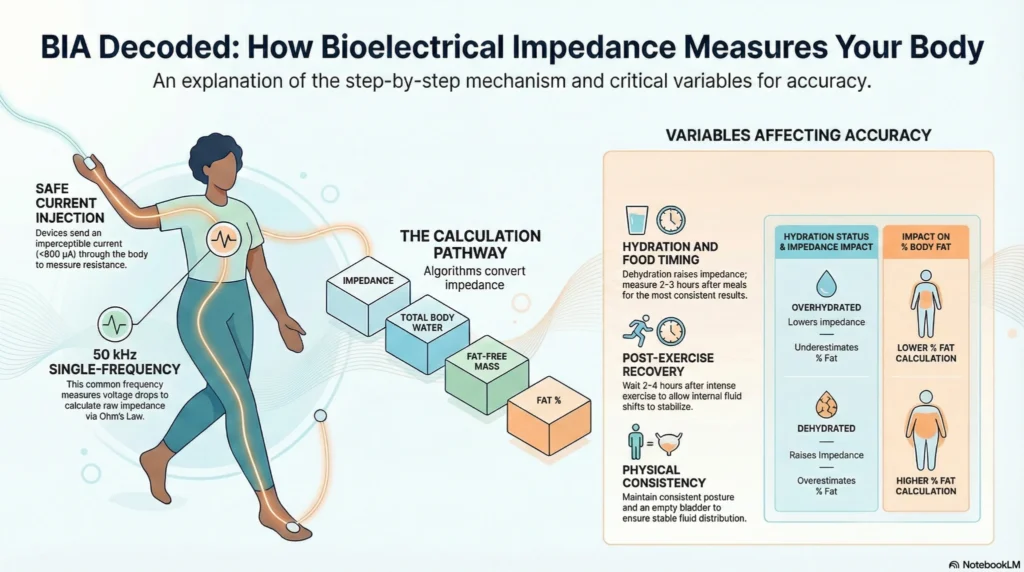
How does a BIA body fat scale work?
BIA body fat scales estimate body composition by measuring how electrical resistance differs between fat tissue and lean tissue in the body. Fat resists electrical current; lean muscle, which is mostly water, conducts it. When you step on a BIA scale barefoot, a safe and imperceptible signal — 50 kHz, under 1 mA — passes upward through your body. The scale measures resistance at each tissue type, then applies population-derived equations to estimate body fat percentage, skeletal muscle mass, and body water percentage. Users do not feel the current.
BIA body fat scales estimate body composition by measuring how electrical resistance differs between fat tissue and lean tissue in the body. Fat resists electrical current; lean muscle, which is mostly water, conducts it. When you step on a BIA scale barefoot, a safe and imperceptible signal — 50 kHz, under 1 mA — passes upward through your body.
The scale measures resistance at each tissue type, then applies population-derived equations to estimate body fat percentage, skeletal muscle mass, and body water percentage. Users do not feel the current.
The result is an estimate — not a direct measurement. BIA scales calculate body composition from resistance data, using validated prediction equations developed from large population studies.
This is why the accuracy of any BIA device depends partly on whether your body matches the population the equations were built from — a limitation that matters most for athletes, older adults, and individuals outside the average height-weight distribution.
Fat Mass vs. Fat-Free Mass: The Two Numbers That Matter
BIA scales calculate two primary values: fat mass (the weight of stored body fat) and fat-free mass (everything else — muscle, bone, organs, and water). Fat-free mass is the output variable BIA actually measures directly; fat mass is derived from it.
Understanding this distinction matters because fat-free mass is the metric most sensitive to real changes in muscle or water — and it is the number that shifts first when your body composition changes, before fat percentage reflects the change.
What BIA Cannot Measure: Bone Density, Organ Volume, Regional Subcutaneous Fat
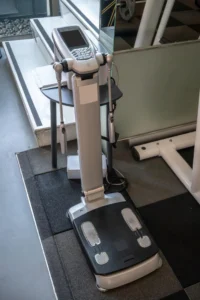
Consumer BIA scales do not measure bone density, individual organ volume, or the precise distribution of subcutaneous fat across body regions. They estimate total fat mass and total lean mass as whole-body values.
For bone density assessment, DEXA remains the clinical standard. For regional subcutaneous fat distribution or precise visceral fat volume, CT and MRI are the reference methods. BIA’s value is not in replicating these clinical tools — it is in providing consistent, weekly trend data that home users can act on.
BIA Body Fat Scales: Accuracy, Technology, and What ±3–5% Really Means for You
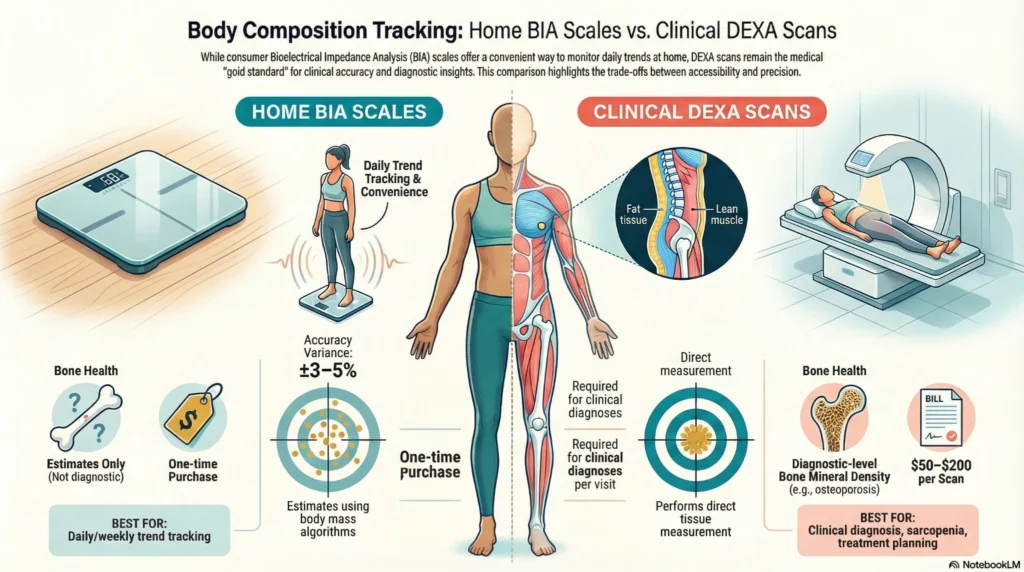
Are BIA smart scales accurate for body fat measurement?
Consumer BIA scales show an average body fat error of ±3–5 percentage points compared to DEXA — the clinical reference standard for body composition. If DEXA measures your body fat at 20%, a BIA scale may read anywhere from 15% to 25%. However, when used consistently — same time of day, same hydration state, same day each week — BIA scales reliably track changes in body fat over time. The trend direction isaccurate even when the absolute number carries an offset.
Reviewed by Dr. Rishav Das, M.B.B.S. (ORCID: 0009-0007-2692-4542)
BIA smart scales show an average body fat error of ±3–5 percentage points compared to DEXA — the clinical gold standard. In practical terms: if a DEXA scan measures your body fat at 20%, a BIA scale will typically read between 15% and 25%.
This range sounds wide, but it does not make home BIA scales useless. When measurements are taken at the same time of day, in the same hydration state, on the same day each week, BIA trend data is reliable — meaning the direction and magnitude of change over time are accurate even when the absolute number carries an offset
How BIA Calculates Body Fat: The Fat-Free Mass Method Explained
BIA scales do not measure fat directly. They measure fat-free mass — the resistance-conducting lean tissue in your body — and subtract it from your total body weight to estimate fat mass.
The accuracy of this calculation depends on how closely your hydration level, body geometry, and tissue distribution match the population equations built into the device’s firmware.
Most consumer BIA equations were developed from average adult populations; this creates systematic offsets for athletes (who are typically denser and more hydrated than average) and for adults over 60 (who have lower muscle water content per kilogram of lean mass)
Accuracy Considerations:
Weight measurement accuracy on consumer smart scales typically falls within ±0.1-0.5 kg compared to calibrated medical scales.
Best results: Hard, level surfaces
Reduced accuracy: Carpeted or uneven flooring
💡 KEY TAKEAWAY: Place your scale on a hard, flat surface and weigh yourself in the same spot each time for consistent readings.
Consumer BIA vs. DEXA Scan: Accuracy Gaps and When Each Is Appropriate
Metric Consumer BIA Scale DEXA Scan Body Fat % Accuracy ±3–5% vs. clinical standard Reference standard (±1–2%) Skeletal Muscle Mass Estimated Measured directly Visceral Fat Proprietary index (1–59) Not quantified (CT/MRI required) Bone Density Not measured Measured directly Cost $50–$300 (device) $100–$300 per scan Frequency Daily/weekly at home Clinical appointment required Best For Trend tracking over weeks/months Baseline assessment; clinical precision Use a consumer BIA scale for weekly trend monitoring. Use a DEXA scan for an annual baseline measurement or when clinical precision is required — for example, before and after a structured fat-loss or muscle-building program of 12+ weeks.
What This Means for Users:
If DEXA measures your body fat at 20%, a consumer BIA scale might read anywhere from 15% to 25%.
The important insight:
The absolute number is less meaningful than the trend over time.
Example:
- Your scale reads 22% in January
- DEXA scan shows your “true” body fat is 18%
- Scale is off by 4 percentage points
But this is OK because:
- When your scale drops to 19% in April, you’ve genuinely lost 3% body fat
- The scale remains consistently wrong in the same direction
- The trend (22% → 19%) is reliable even if the absolute numbers are offset
💡 KEY TAKEAWAY: Don’t obsess over whether you’re “really” 18% or 22% body fat. Focus on whether the number is moving in your desired direction over time.
Why Your BIA Scale Reads Differently Each Day: Hydration’s Role in Impedance Measurement
Why does my smart scale give different readings every day?
Hydration is the single largest variable affecting BIA accuracy — a 2% reduction in body water from dehydration can shift body fat readings by 3–4 percentage points. Exercise, alcohol consumption, food and water intake, and time of day all alter body water distribution. Daily BIA measurements produce noisy data that can appear to show fat gain or loss that is not real. The solution is a consistent once-per-week morning measurement protocol, not a more expensive scale.
Hydration is the single largest variable affecting BIA accuracy — a 2% reduction in body water from dehydration can shift body fat readings by 3–4 percentage points.
Exercise, alcohol consumption, food and water intake, and even the time of day all alter body water distribution. This is why daily BIA measurements produce noisy, unreadable data that can appear to show fat gain or loss that is not real.
The solution is not a more expensive scale — it is a consistent measurement protocol that controls hydration variables (see Measurement Protocol below)
Interpretation Guidance
Consumer BIA devices are appropriate for:
- Tracking relative changes over time (trends more reliable than absolute values)
- General health awareness about body composition patterns
- Motivation and goal-setting in weight management programs
- Home wellness monitoring without clinical diagnostic needs
DEXA or medical-grade assessment is appropriate when:
- Clinical diagnosis is required (sarcopenia, osteoporosis, body composition-related conditions)
- Medical treatment planning requires precise body composition data
- Research studies requiring validated measurement methods
- Elite athletic performance assessment with precision requirements
- BIA contraindications prevent use of consumer devices
Cost and Accessibility Comparison:
| Method | Cost | Frequency | Accuracy | Accessibility |
|---|---|---|---|---|
| Consumer BIA Scale | $50-150 one-time | Daily at home | ±3-5% | High |
| DEXA Scan | $50-200 per scan | Quarterly | ±1-2% (reference standard) | Medium (requires appointment) |
| Hydrostatic Weighing | $50-100 per session | As needed | ±2-3% | Low (limited facilities) |
💡 KEY TAKEAWAY: For general wellness, a consumer BIA scale used daily provides useful trends. For precise baseline or clinical diagnosis, invest in periodic DEXA scans (2-4 times per year).
Recommendation:
For general wellness tracking, a consumer BIA scale used consistently can provide useful trend data. For clinical decisions or precise baseline assessment, invest in periodic DEXA scans and compare against home BIA trends.
Segmental Body Fat Analyzers: When Regional Data Is Worth the Extra Cost
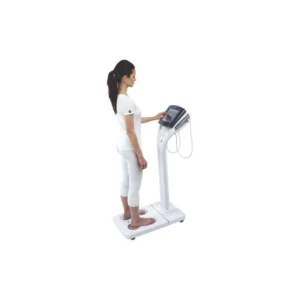
Segmental body fat analyzers measure body fat and muscle mass separately in the trunk, arms, and legs — providing regional composition data that whole-body BIA scales cannot.
They use multiple electrode contacts (typically hand-to-foot or foot-only multi-frequency arrays) to isolate impedance readings by body segment. This regional data is most relevant for athletes detecting muscle asymmetries, rehabilitation patients monitoring site-specific recovery, and anyone whose goal requires understanding how fat or muscle is distributed across body regions rather than total body averages.
How Segmental Analysis Differs From Whole-Body BIA
Standard BIA scales measure a single whole-body impedance path — typically from foot to foot through the lower body. Segmental analyzers measure multiple paths: leg-to-leg, arm-to-arm (via hand electrodes), and trunk (estimated from the difference).
Each segment’s fat mass and muscle mass are reported separately. The limitation: segmental accuracy per region is ±5–8% vs. DEXA, compared to ±3–5% for whole-body BIA [four-compartment model validation of segmental body fat estimates]. More data does not mean more accuracy — it means more granular data at a wider individual accuracy band.
Segmental Analyzer vs. Regular BIA Scale: Which Is Right for You?
| Feature | Segmental Analyzer | Standard BIA Scale |
|---|---|---|
| Accuracy vs. DEXA | ±5–8% per region | ±3–5% whole body |
| Regional data | Trunk, arms, legs separately | Whole body only |
| Electrode contacts | 4–8 (foot + hand required) | 2–4 (foot only) |
| Best for | Athletes, rehab monitoring, muscle asymmetry | Fat loss, general health, trend monitoring |
| Price range (2026) | $150–$300 | $50–$150 |
| App complexity | High | Low–Medium |
Choose a segmental analyzer if you train specifically for athletic performance, are recovering from an injury affecting one side of your body, or need to monitor regional muscle changes. Choose a standard BIA scale if your goal is fat loss, general health monitoring, or weekly trend tracking — the standard device is cheaper, simpler, and provides sufficient data for most non-athletic use cases.
Handheld Body Fat Analyzers: Portable Option or Accuracy Trade-Off?
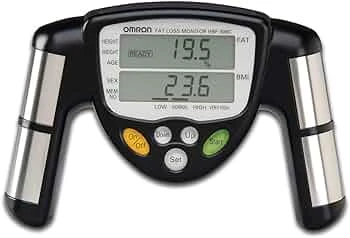
Price Range: $20-$80 USD (market prices as of 2026)
Handheld body fat analyzers measure upper-body composition only — and that single limitation determines whether one is right for you. Unlike a floor-standing BIA scale, which passes an electrical signal up through both legs and across the trunk, a handheld device routes current from one hand through the arms and across the chest to the other hand. The lower body — where the majority of skeletal muscle mass sits in most adults — is never measured. The device estimates whole-body composition by extrapolating from the upper-body signal using population-derived equations, which introduces a systematic accuracy gap that no amount of product engineering has fully closed.
Measured against DEXA, handheld BIA devices show an accuracy range of ±4–7% for whole-body fat percentage — wider than the ±3–5% range of a floor-standing BIA scale, and significantly wider for individuals with well-developed lower-body musculature. For a dedicated runner or cyclist whose legs represent a disproportionate share of lean mass, a handheld device will underestimate muscle mass and overestimate fat percentage relative to their actual body composition.
How the Accuracy Gap Plays Out in Practice
The extrapolation problem is most acute in two user groups. Athletes with significant lower-body development will see systematically higher body fat readings because the device is, in effect, reading a body that stops at the waist. Sedentary users with proportionally similar upper- and lower-body fat distribution will see readings closer to floor-scale accuracy, since the extrapolation equation is built for a population closer to their composition profile.
For the core ICP user — a 28–55 year-old tracking fat loss or muscle preservation, not a competitive athlete — a handheld device provides usable trend data if used with the same consistency protocol as a floor scale: morning, fasted, post-bathroom, same day each week. The trend direction will be meaningful. The absolute numbers will carry a larger offset than a floor scale.
Handheld BIA vs. Floor-Standing BIA Scale: Comparison
| Feature | Handheld Body Fat Analyzer | Floor-Standing BIA Scale |
|---|---|---|
| Accuracy vs. DEXA | ±4–7% (whole-body estimate) | ±3–5% (whole-body) |
| Body regions measured | Upper body only (hand-to-hand circuit) | Lower + upper body (foot-to-foot or 8-electrode) |
| Best for | Travelers; upper-body trend monitoring | Fat loss tracking; muscle monitoring; general health |
| Price range | $20–$80 | $50–$300 |
| Key limitation | Underestimates lower-body muscle mass | Requires consistent access to the same scale |
| App / connectivity | Varies; most basic models display-only | Most mid-range+ models include app sync |
| Who it suits | Users who travel frequently and need portable readings | Home users prioritizing trend accuracy |
Who Should Choose a Handheld Body Fat Analyzer
Choose a handheld device if:
- You travel frequently and cannot maintain consistency with a home floor scale
- You want a secondary reading to supplement your scale data, not replace it
- Your fitness goal does not depend on precise lower-body muscle mass tracking
- Your budget is under $50 and a basic body fat trend is sufficient
Do not choose a handheld device as your primary composition tracker if:
- You are actively building lower-body muscle mass and need accurate skeletal muscle mass tracking
- You are monitoring body composition changes post-surgery, post-injury, or in a clinical context
- You are an athlete whose lower body represents a significant proportion of lean mass
For users seeking segmental body fat analysis that separates trunk, arm, and leg composition independently, a segmental floor-standing analyzer is a more appropriate step up than a handheld device at any price point.
Dr. Das’s assessment: A handheld analyzer is a travel accessory, not a primary composition tool. If you own one and use a floor scale at home, treat the two readings as independent trend lines — not a number to average. The floor scale’s trend is the one to act on.
BIA vs. DEXA: When to Use a Consumer Scale vs. Clinical Assessment
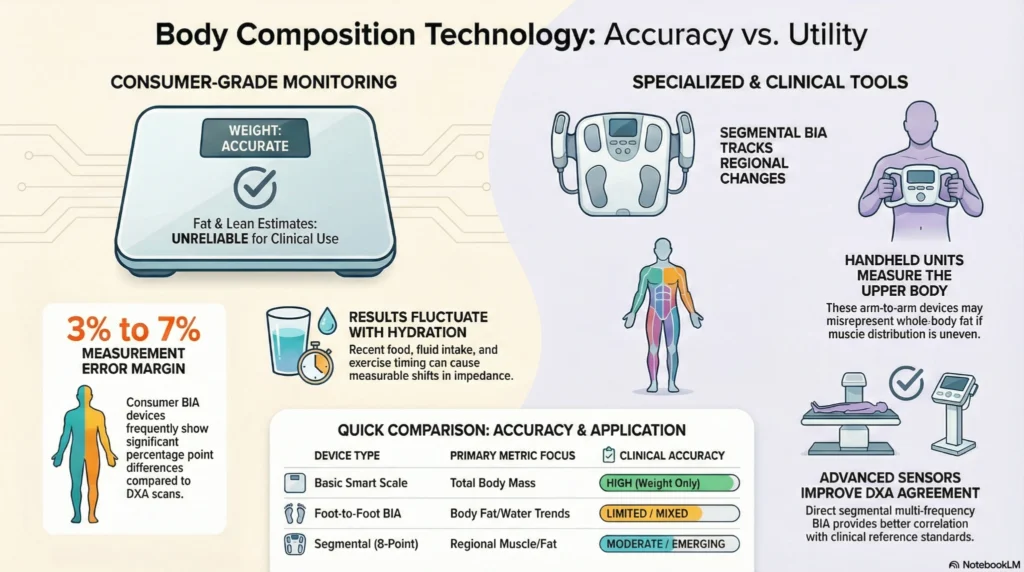
A consumer BIA smart scale is a trend-tracking tool. A DEXA scan is a diagnostic snapshot. These two methods answer different questions — and knowing which question you are actually asking determines which one you need. BIA measures the direction and rate of body composition change over time, with an accuracy of ±3–5% against the DEXA reference standard. DEXA provides a single-point, high-precision measurement of fat mass, lean mass, and bone mineral density at clinical accuracy — but it captures one moment, not a trajectory.
Most fitness-motivated adults do not need DEXA. They need reliable trend data, which a consistently-used BIA scale provides within its documented accuracy window.
What DEXA Measures That Home BIA Scales Cannot
DEXA (Dual-Energy X-Ray Absorptiometry) uses two low-dose X-ray beams at different energy levels to differentiate fat tissue, lean tissue, and bone mineral content across individual body regions. This allows DEXA to produce separate fat and lean mass figures for the arms, legs, android region (abdomen), and gynoid region (hips/thighs) with a precision no consumer BIA device matches.
Three measurements remain outside reliable BIA capability regardless of device tier:
- Bone mineral density (BMD) — BIA cannot measure skeletal density; DEXA is the clinical standard for osteoporosis screening
- Regional lean mass to clinical precision — Segmental BIA scales estimate regional composition; DEXA quantifies it with significantly higher reliability
- Android/gynoid fat distribution ratio — Clinically relevant for metabolic and cardiovascular risk stratification; BIA visceral fat scores approximate this, DEXA measures it directly
BIA vs. DEXA: Accuracy, Cost, and Use-Case Comparison
| Dimension | Consumer BIA Scale | DEXA Scan |
|---|---|---|
| Accuracy vs. DEXA reference | ±3–5% body fat (whole-body) | Reference standard (±1–2% test-retest precision) |
| What it measures | Body fat %, skeletal muscle mass, body water %, visceral fat index | Fat mass, lean mass, BMD — by region |
| Bone mineral density | ❌ Not available | ✅ Full BMD assessment |
| Regional body composition | ⚠️ Segmental models only; ±5–8% per region | ✅ Android, gynoid, trunk, limb — all separated |
| Trend tracking | ✅ Reliable when used consistently | ⚠️ Single-point; repeat scans needed for trends |
| Frequency of use | Weekly (home; no appointment) | Annually or semi-annually (clinical facility) |
| Accessibility | ✅ Home use; no appointment required | ⚠️ Radiology center, sports medicine clinic, or specialist facility |
| Best for | Fat loss tracking; muscle monitoring; general health; weekly trend data | Baseline body composition; osteoporosis screening; pre/post surgical assessment; research |
When BIA Is Sufficient
For the majority of fitness-motivated adults, a consistently used BIA smart scale provides all the body composition data required to make informed decisions about training and nutrition. The ±3–5% accuracy offset vs. DEXA does not become clinically meaningful when the user’s goal is to confirm the direction of change — whether they are losing fat, preserving muscle, or trending toward both simultaneously. A body fat reading that moves from 28% to 24% over 16 weeks on a BIA scale reflects a real compositional shift that a DEXA scan would confirm directionally, even if the absolute numbers differ.
BIA is sufficient when:
- The goal is fat loss, muscle preservation, or general health monitoring over 4–16+ weeks
- The user can commit to a consistent weekly measurement protocol (same time, same hydration state, same day)
- Absolute body fat percentage precision to within 1–2% is not clinically required
- The user is not being monitored for bone density, osteoporosis risk, or regional lean mass asymmetry
When to Get a DEXA Scan Instead
DEXA is the appropriate choice — not a supplement to BIA — in four clinical scenarios:
- Osteoporosis screening or bone health monitoring — BIA provides no bone mineral density data; DEXA is the only appropriate tool
- Post-surgical or rehabilitative body composition assessment — Regional lean mass precision matters when monitoring limb atrophy or asymmetric recovery; DEXA provides this, BIA approximates it
- Establishing a high-precision baseline — If a physician requires a precise body fat percentage for a clinical decision (bariatric surgery candidacy, hormone therapy dosing, competitive athletic assessment), DEXA provides the reference measurement
- Validating that a BIA scale is tracking correctly — A single DEXA scan taken alongside a month of BIA readings can confirm whether the BIA device’s offset is consistent enough to trust for ongoing trend tracking
The Trend vs. Absolute Distinction — The Most Misunderstood Point in Body Composition Tracking
The ±3–5% accuracy gap between BIA and DEXA is the most frequently misused statistic in consumer body composition content. Competitors cite it as a reason to distrust BIA. This framing is clinically incorrect.
The accuracy offset in BIA is largely systematic and consistent for a given individual — meaning it shifts absolute readings but does not prevent reliable trend detection. If a BIA scale reads your body fat at 25% when DEXA would read 22%, the same scale will read 21% when DEXA would read 18% — four weeks and four percentage points of real fat loss later. The trend is preserved even when the absolute number carries an offset.
The offset matters only when the absolute number itself is the clinical variable — which is rarely the case for home fitness users. It does not matter for the core use case this page’s audience has: confirming that a training and nutrition program is changing body composition in the intended direction.
Reviewed by Dr. Rishav Das, M.B.B.S. — For readers who want the precision of DEXA with the convenience of home tracking, a practical approach is to use a BIA scale weekly for trend data and schedule one DEXA scan annually at a sports medicine or radiology facility to calibrate your understanding of where your absolute numbers actually sit.
Measurement Protocol: How to Get Consistent Smart Scale Results
How to Get Consistent Smart Scale Readings
- Measure once per week — not daily; choose the same day each week
- Measure first thing in the morning, immediately after waking
- Use the bathroom first — bladder empty before stepping on the scale
- Do not eat or drink anything — measure in a fasted state
- Stand barefoot on clean, dry scale electrodes
- Avoid exercise for 12 hours prior to measurement
- Avoid alcohol for 24 hours prior to measurement
Following this protocol eliminates hydration-driven fluctuation and produces reliable trend data within 4–6 weeks.
The most reliable smart scale readings come from a consistent morning protocol measured once per week — not from daily measurement. Daily measurements introduce hydration-driven noise that makes trends unreadable. Weekly measurements on the same day, at the same time, in the same fasted state produce reliable trend data within 4–6 weeks.
7-Step Measurement Protocol
- Measure once per week — not daily; choose the same day each week
- Measure first thing in the morning — immediately after waking, before any activity
- Use the bathroom first — bladder empty before stepping on the scale
- Do not eat or drink anything — measure in a fasted state
- Stand barefoot on clean, dry electrodes — moisture on feet reduces conductivity and skews readings
- Avoid exercise for 12 hours prior — post-exercise fluid shifts alter impedance significantly
- Avoid alcohol for 24 hours prior — alcohol causes systemic dehydration that inflates body fat readings
Following this protocol eliminates the hydration variables responsible for day-to-day fluctuation. After 4–6 weeks of consistent weekly measurements, you will have enough data points to identify whether your body composition is genuinely changing — regardless of whether the absolute number matches a DEXA scan.
Who Should Not Use BIA Scales: Contraindications and Safe Alternatives
Who Should Not Use BIA Scales
Condition BIA Scale Safe? Recommended Alternative Pacemaker / ICD ❌ Contraindicated Weight-only smart scale Pregnancy ⚠️ Not validated Weight-only tracking; consult OB Severe edema / ascites ❌ Unreliable Clinical assessment only Large metal implants ⚠️ Consult manufacturer Medical consultation Children under 13 ❌ Not validated Pediatric clinical assessment
Most BIA scale manufacturers explicitly contraindicate use for individuals with pacemakers or implantable cardioverter-defibrillators (ICDs). The low-frequency electrical current (typically 50 kHz, under 1 mA) may interfere with device function. If you have any of the conditions listed below, consult a physician before using a BIA body fat scale. Weight-only smart scales, which use no electrical current, are the safe alternative for weight trend monitoring in most contraindicated populations.
| Condition | BIA Scale Safe? | Recommended Alternative |
|---|---|---|
| Pacemaker / ICD | ❌ Contraindicated | Weight-only smart scale |
| Pregnancy | ⚠️ Not validated | Weight-only tracking; consult OB |
| Severe edema / ascites | ❌ Unreliable readings | Clinical assessment only |
| Large metal implants | ⚠️ Consult manufacturer | Medical consultation required |
| Children under 13 | ❌ Not validated | Pediatric clinical assessment |
Reviewed by Dr. Rishav Das, M.B.B.S. — Consult your physician before use if any of the above conditions apply.
Visceral Fat Ratings on Smart Scales: What the Numbers Actually Mean
What does visceral fat mean on a smart scale?
BIA smart scales estimate visceral fat using a proprietary numerical index — typically scored 1 to 59 — rather than a direct volumetric measurement. This index correlates with MRI-based visceral fat area measurements but has not been validated to clinical precision. A score
above 13 on most BIA devices aligns with elevated metabolic risk. For clinical visceral fat quantification, CT or MRI remains the reference standard.Reviewed by Dr. Rishav Das, M.B.B.S. (ORCID: 0009-0007-2692-4542)
BIA smart scales estimate visceral fat using a proprietary numerical index — typically scored 1 to 59 — rather than a direct volumetric measurement. This index correlates with MRI- and CT-based visceral fat area measurements in published validation studies, but carries higher uncertainty than whole-body fat percentage estimates. The correlation is meaningful enough for trend monitoring; it is not precise enough for clinical diagnostic use.
A score above 13 on most BIA devices aligns with a visceral fat area associated with elevated metabolic risk, though exact thresholds vary by manufacturer algorithm. If your visceral fat score remains consistently above 13, this warrants a conversation with a physician — not necessarily a clinical imaging referral, but a review of cardiovascular risk factors.
For clinical visceral fat quantification, CT or MRI remains the reference standard. BIA visceral fat scores are most useful as a directional trend indicator: a score moving from 14 to 10 over 12 weeks on a consistent protocol is meaningful progress, regardless of the absolute number’s clinical precision.
Smart Scales for Specific Goals: Fat Loss, Muscle Building, and Healthy Aging
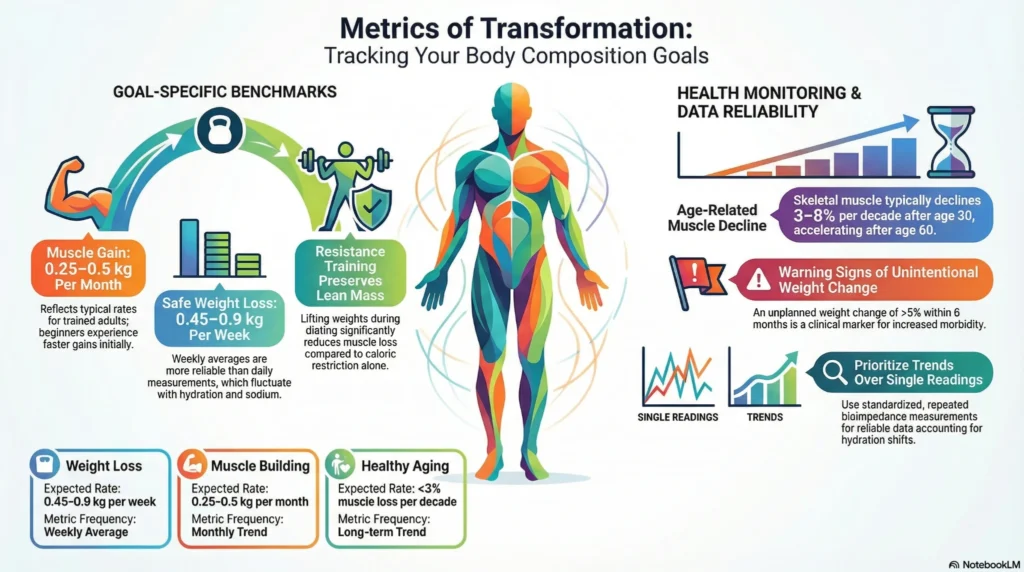
Decision tree suited to your goal
START HERE: What’s your primary goal?
→ “Just track weight, nothing else”
✓ Choose: Basic Smart Scale ($30-50)
✓ Skip: All body composition features
→ “Lose fat, preserve muscle”
✓ Choose: BIA Scale ($50-100)
✓ You need: Body fat % + muscle mass tracking
→ “Build muscle, track gains by body part”
✓ Choose: Segmental Analyzer ($150-300)
✓ You need: Regional muscle distribution data
→ “Track whole family, including teenagers”
✓ Choose: Multi-user BIA Scale ($80-150)
✓ You need: 8+ profiles, auto-recognition, teen mode
→ “Travel frequently, need portable option”
✓ Choose: Handheld BIA Device ($40-80)
✓ Trade-off: Less accurate, upper body only
Best Smart Scale for Fat Loss Tracking
Recommended Device Features:
- Accurate weight measurement (±0.2 kg precision minimum)
- Body fat percentage tracking (BIA technology)
- Muscle mass measurement to ensure fat loss, not muscle loss
- Hydration percentage to monitor adequate water intake
- App integration for trend visualization (weekly, monthly graphs)
- Goal-setting features with progress tracking
Metrics to Monitor:
Weight Trend:
- Weekly average more meaningful than daily weight
- Healthy weight loss: 0.5-1 kg per week (may vary by starting weight)
- Day-to-day fluctuations of 1-2 kg are normal (hydration, food timing, hormones)
Body Fat Percentage Trend:
- Healthy fat loss: 0.5-1% body fat reduction per month (may vary)
- More important than weight change alone
- Differentiates fat loss from muscle or water loss
Muscle Mass Stability or Increase:
- Goal: Muscle mass should remain stable or increase during weight loss
- Muscle preservation indicates healthy weight loss (fat loss, not muscle loss)
- If muscle mass decreases >5%, may indicate inadequate protein intake or excessive calorie restriction
Body Water Percentage:
- Sudden changes may indicate dehydration (decrease) or medical issue (increase)
- Stable or slightly increased hydration is ideal during weight loss
- Dehydration can slow metabolism and impair fat loss
Appropriate Expectations:
- Healthy Fat Loss Rate:
0.5-1% body fat reduction per month is sustainable. Faster fat loss may include muscle loss or be unsustainable long-term. - Muscle Preservation:
Muscle mass should remain stable or increase with resistance training during weight loss. Strength training 2-3 times per week helps preserve muscle. - Scale Fluctuations:
Daily weight may vary 1-2 kg due to multiple factors:
Normal causes of fluctuation:
- Hydration status
- Food timing (gut contents)
- Sodium intake (water retention)
- Menstrual cycle (for menstruating individuals)
- Bowel movements
- Exercise-induced inflammation
The solution: Weekly averages provide clearer trends than daily readings.
Example:
- Monday: 72.5 kg
- Wednesday: 73.8 kg (ate salty meal yesterday)
- Friday: 71.9 kg
- Week 1 average: 72.7 kg
Compare weekly averages, not daily weights.
💡 KEY TAKEAWAY: A 1-2 kg jump overnight is usually water weight, not fat gain. Don’t panic over daily fluctuations—track weekly trends.
When to Consult Healthcare Provider:
Schedule physician consultation if:
- Development of symptoms (fatigue, hair loss, mood changes, menstrual irregularities)
- Weight loss exceeds 1-1.5 kg per week consistently (may indicate unsafe rate)
- Muscle mass decreases significantly (>5% over 1 month)
- Unexpected changes in body composition metrics not explained by diet or exercise
- Plateau lasting >6 weeks despite continued effort
Best Smart Scale for Muscle Building Progress
Recommended Device Features:
- Skeletal muscle mass measurement (BIA technology)
- Segmental analysis (if budget allows) to track limb-specific muscle growth
- Body fat percentage to monitor whether muscle gain is “clean” or includes excess fat
- High weight capacity (if anticipating significant muscle mass gain)
- Frequent measurement capability (weekly tracking recommended)
Metrics to Monitor:
Skeletal Muscle Mass (Primary Indicator):
- Most important metric for muscle building goals
- Measured separately from total weight
- Segmental muscle distribution helpful for identifying imbalances
Body Fat Percentage:
- Should decrease or remain stable during clean muscle gain
- If body fat increases >1% per month, may indicate excess calorie surplus
- “Lean bulking” aims for muscle gain with minimal fat gain
Total Body Weight:
- May increase due to muscle density and volume
- Muscle tissue is denser than fat; gaining muscle may increase weight even if fat decreases
- Weight plateau or decrease during muscle building may indicate inadequate calorie intake
Hydration Levels:
- Muscle tissue is ~75% water
- Adequate hydration essential for muscle recovery and growth
- Dehydration impairs muscle protein synthesis
Appropriate Expectations:
Muscle Gain Rate:
Research indicates realistic muscle gain rates are 0.25-0.5 kg per month for trained individuals. Beginners may gain 0.5-1 kg muscle per month initially. Rate slows with training experience.
BIA Accuracy for Athletes:
BIA scales may underestimate muscle mass in highly trained athletes with very low body fat. Absolute numbers may be offset, but trends remain reliable.
Body Weight Changes:
Body weight may increase or remain stable while body composition improves (muscle gain, fat loss). Do not rely on scale weight alone; prioritize body composition metrics.
Measurement Timing Considerations:
Avoid Post-Workout Measurements:
Fluid shifts to muscles after exercise affect impedance readings. Muscle mass may appear artificially elevated immediately post-workout, or body fat may appear artificially reduced.
Consistent Weekly Measurement:
Measure same day each week (e.g., Sunday morning) for reliable trend tracking. Avoid daily measurements as muscle building is gradual.
Consider DEXA Validation:
If budget allows, periodic DEXA scans (every 3-6 months) provide validation of BIA scale trends and precise muscle mass quantification.
When to Consult Healthcare Provider:
Schedule consultation if:
- Questions about appropriate muscle building strategies for specific health conditions
- Muscle mass fails to increase despite consistent training and adequate nutrition for >3 months
- Unexplained muscle loss occurs
- Body fat increases excessively during muscle building phase
Best Body Composition Scale for Women Over 40
For women over 40, the most valuable BIA scale feature is skeletal muscle mass tracking — not body fat percentage. The hormonal changes of perimenopause and menopause reduce the reliability of fat percentage readings (estrogen fluctuations affect body water distribution, which directly affects BIA impedance). Simultaneously, age-related muscle loss accelerates in this demographic, making skeletal muscle mass the metric with the highest clinical relevance.
Choose a scale that reports skeletal muscle mass as an absolute value (in kilograms or pounds) with a trend graph in the companion app. Visceral fat monitoring is a secondary priority: women over 40 experience a documented shift in fat distribution from subcutaneous to visceral following menopause, making visceral fat score a meaningful cardiovascular risk indicator in this group.
Avoid scale rankings that are not explicitly calibrated for this demographic. Most consumer BIA equations were developed from mixed-sex, average-age adult populations — they systematically underestimate fat mass in post-menopausal women. The practical implication: use the BIA trend, not the absolute fat percentage number, as your progress metric.
For General Health Monitoring and Healthy aging
Recommended Device Features:
- All-in-one body composition measurement (weight, body fat, muscle, hydration)
- Long-term trend tracking (multi-year data storage)
- Ease of use for routine daily or weekly measurements
- Data export capability for sharing with healthcare providers
- Reliable app with clear visualizations
Metrics to Monitor:
Weight Stability:
- Unexplained weight changes (gain or loss >5% body weight in 6 months) may warrant medical evaluation
- Gradual, intentional changes are expected with lifestyle modifications
- Sudden changes require investigation
Body Fat Percentage:
- Gradual increases over years may indicate need for lifestyle adjustments (increased physical activity, dietary changes)
- Excessive increases may correlate with cardiovascular risk factors
- Trends more important than absolute values
Muscle Mass Trends:
- Age-related muscle loss (sarcopenia) typically begins after age 30-40
- Loss of >0.5-1% muscle mass per year may signal need for strength training intervention
- Strength training can prevent or reverse sarcopenia in older adults
Hydration Levels:
- Chronic low hydration may affect kidney function, cognition, and overall health
- Sudden increases in body water may indicate medical conditions (edema, heart failure, kidney issues)
- Stable hydration indicates adequate fluid intake
Appropriate Use Cases:
Annual Health Checkups:
Share body composition trend data with healthcare provider during annual physical exams. Trends may inform health risk assessment and preventive interventions.
Age-Related Changes:
Monitor muscle mass loss (sarcopenia) in adults over 40. Early detection enables intervention with strength training and protein intake optimization.
Medication Effects:
Some medications alter body composition (steroids increase fat and water, certain antidepressants affect weight). Tracking provides objective data for discussion with prescribing physician.
Lifestyle Interventions:
Assess impact of diet changes, new exercise programs, stress management, or sleep improvements. Body composition changes may lag behind scale weight changes.
When to Consult Healthcare Provider:
Schedule consultation if:
- Body composition changes do not align with lifestyle modifications (e.g., weight loss plateau despite consistent diet and exercise)
- Unintentional weight changes occur (>5% body weight in 6 months without dietary or activity changes)
- Persistent abnormal hydration readings (very high or very low) are displayed
- Significant muscle mass loss occurs without dietary changes or reduced activity
- Questions arise about interpreting body composition trends in context of diagnosed medical conditions (diabetes, heart disease, thyroid disorders, etc.)
How Smart Scales Detect Early Sarcopenia: Muscle Mass Trends Over Time
Can a smart scale detect muscle loss or sarcopenia?
A BIA smart scale cannot diagnose sarcopenia clinically, but it can detect a consistent downward trend in the skeletal muscle mass metric
over 12–24 weeks — which is the earliest observable sign of age- related muscle loss. For adults 40 and older, tracking the skeletal muscle mass trend monthly provides a meaningful early warning signal that warrants discussion with a physician.Reviewed by Dr. Rishav Das, M.B.B.S. (ORCID: 0009-0007-2692-4542)
For adults 40 and older, tracking skeletal muscle mass trend on a BIA scale is more clinically meaningful than body fat percentage alone — sarcopenia (age-related muscle loss) is detectable as a consistent downward trend in the “muscle mass” metric over 12–24 weeks. A BIA scale cannot diagnose sarcopenia clinically, but it can provide an early warning signal that warrants clinical evaluation.
Sarcopenia progresses at an estimated rate of 1–2% muscle mass loss per year after age 50 in inactive adults. On a weekly BIA protocol, this rate of loss is below the measurement noise of any consumer device in a single week — but it becomes visible as a directional trend over 12–24 weeks of consistent measurement.
If your skeletal muscle mass metric shows a consistent downward trend over this period, discuss it with a physician. The appropriate clinical response is resistance training assessment, dietary protein evaluation, and, if indicated, a DEXA scan or clinical BIA assessment.
Look for smart scales that report skeletal muscle mass as a separate metric in kilograms or pounds — not just as a percentage of body weight. Absolute mass values are more sensitive to real changes than percentage values, which fluctuate as fat mass changes.
Ready to choose? Your goal determines your minimum feature set — not your budget tier.
- Losing fat and preserving muscle: You need a BIA scale that tracks fat mass and skeletal muscle mass separately. Any $50–$100 BIA device in our tested picks does this reliably with consistent weekly measurement.
- Building muscle and tracking gains: You need a device that measures skeletal muscle mass and total body water — not just weight and fat percentage. Look for a scale with a dedicated “muscle mass” metric in its companion app.
- Monitoring general health (40+): Prioritize skeletal muscle mass trend tracking for early sarcopenia detection. Add a visceral fat metric if cardiovascular risk is a concern — look for devices that report a visceral fat score, not just a body fat percentage.
Jump to Goal-Specific Recommendations → or browse All Tested Devices →, reviewed by Dr. Rishav Das, M.B.B.S.
Frequently Asked Questions
Can I use a smart scale if I have a pacemaker?
Most BIA scale manufacturers explicitly contraindicate use for individuals with pacemakers or implantable cardioverter-defibrillators (ICDs). The low-frequency electrical current (typically 50 kHz, under 1 mA) may interfere with device function. Consult your cardiologist before use. Weight-only smart scales, which use no electrical current, are the safe alternative for weight trend monitoring.
What is the best time of day to use a body fat scale?
The most consistent smart scale readings come from a morning protocol: measure once per week, first thing in the morning, after using the bathroom, before eating or drinking. Avoid exercise for 12 hours prior and alcohol for 24 hours prior. This protocol eliminates the hydration variables responsible for day-to-day fluctuation and produces reliable trend data within 4–6 weeks.
How often should I measure body fat at home?
Measure body fat once per week, not daily. Daily measurements introduce hydration-driven noise that makes trends unreadable. Weekly measurements on the same day, at the same time, in the same fasted state produce reliable trend data within 4–6 weeks.
What does visceral fat mean on a smart scale?
BIA smart scales estimate visceral fat using a proprietary numerical index — typically scored 1 to 59 — rather than a direct volumetric measurement. This index correlates with MRI-based visceral fat area measurements but has not been validated to clinical precision. A score above 13 on most BIA devices aligns with elevated metabolic risk. For clinical visceral fat quantification, CT or MRI remains the reference standard.
Is a cheap smart scale as accurate as an expensive one?
For body fat trend tracking, mid-range BIA scales ($50–$100) perform comparably to $200+ devices for most adults. The ±3–5% accuracy range vs. DEXA applies across most consumer BIA devices regardless of price. Higher-priced scales add features (segmental analysis, larger electrode arrays, multi-person profiles) but do not significantly narrow the absolute accuracy gap. Buy the cheapest device that tracks your target metrics.
What is the difference between a segmental analyzer and a regular BIA scale?
A segmental body fat analyzer measures body fat and muscle mass separately in the trunk, arms, and legs, using multiple electrode contacts. A standard BIA scale measures whole-body composition using two foot electrodes. Segmental analyzers provide regional data useful for detecting muscle imbalances; they carry an accuracy range of ±5–8% per region vs. DEXA, compared to ±3–5% for whole-body BIA.
Are smart scales safe to use during pregnancy?
BIA scales have not been validated for use during pregnancy. The electrical current and the significant fluid distribution changes of pregnancy create unpredictable measurement errors. Most manufacturers recommend against BIA use during pregnancy. Weight-only tracking with physician guidance is the recommended alternative during this period.
Can a smart scale detect muscle loss or sarcopenia?
A BIA smart scale cannot diagnose sarcopenia clinically, but it can detect a consistent downward trend in the skeletal muscle mass metric over 12–24 weeks — which is the earliest observable sign of age-related muscle loss. For adults 40 and older, tracking the skeletal muscle mass trend monthly provides a meaningful early warning signal that warrants discussion with a physician.
How does hydration affect smart scale body fat readings?
Hydration is the single largest variable affecting BIA accuracy. A 2% reduction in body water from dehydration can shift body fat readings by 3–4 percentage points — enough to obscure real progress or create false improvement signals. Measuring fasted, in the morning, after using the bathroom, eliminates the majority of hydration-driven fluctuation.
How accurate is BIA vs. DEXA for body fat?
Consumer BIA scales show ±3–5% variance vs. DEXA for whole-body fat percentage. DEXA’s margin is approximately ±1–2%. BIA is sufficient for trend monitoring over weeks and months; DEXA is required for clinical precision. The most practical approach is to use BIA weekly for trend data and DEXA annually or before/after a structured program to verify the trend with a clinical measurement.
What is a normal body fat percentage for men and women?
Healthy body fat ranges vary by age and sex. For adult men: 10–20% is considered healthy, with athletic ranges at 6–13% and obesity thresholds above 25%. For adult women: 18–28% is considered healthy, with athletic ranges at 14–20% and obesity thresholds above 32%. These ranges are population reference points — individual clinical context may differ. Consult a physician for a personal body composition assessment if values fall outside these ranges.
References
[1] Marra, M., Sammarco, R., De Lorenzo, A., Iellamo, F., Siervo, M., Pietrobelli, A., Donini, L. M., Santarpia, L., Cataldi, M., Pasanisi, F., & Contaldo, F. (2019). Assessment of body composition in health and disease using bioelectrical impedance analysis (BIA) and dual energy X-ray absorptiometry (DXA): A critical overview. Contrast Media & Molecular Imaging, 2019, 3548284. https://doi.org/10.1155/2019/3548284
[2] Kyle, U. G., Bosaeus, I., De Lorenzo, A. D., Deurenberg, P., Elia, M., Gómez, J. M., Heitmann, B. L., Kent-Smith, L., Melchior, J. C., Pirlich, M., Scharfetter, H., Schols, A. M., & Pichard, C. (2004). Bioelectrical impedance analysis—part I: review of principles and methods. Clinical Nutrition, 23(5), 1226-1243. https://doi.org/10.1016/j.clnu.2004.06.004
[3] Nickerson, B. S., Esco, M. R., Bishop, P. A., Fedewa, M. V., Snarr, R. L., Kliszczewicz, B. M., & Park, K. S. (2017). Validity of four-compartment model body fat in physically active men and women when using DXA for body volume. International Journal of Sport Nutrition and Exercise Metabolism, 27(6), 520-527. https://doi.org/10.1123/ijsnem.2016-0259
[4] Schoenfeld, B. J., Grgic, J., Ogborn, D., & Krieger, J. W. (2017). Strength and hypertrophy adaptations between low- vs. high-load resistance training: A systematic review and meta-analysis. Journal of Strength and Conditioning Research, 31(12), 3508-3523. https://doi.org/10.1519/JSC.0000000000002200
[5] Antonio, J., Ellerbroek, A., Silver, T., Vargas, L., Tamayo, A., Buehn, R., & Peacock, C. A. (2016). A high protein diet has no harmful effects: A one-year crossover study in resistance-trained males. Journal of Nutrition and Metabolism, 2016, 9104792. https://doi.org/10.1155/2016/9104792
Additional Resources
Government Health Organizations:
- National Institutes of Health (NIH) – Body Composition Information: https://www.nhlbi.nih.gov/health/educational/lose_wt/risk.htm
- Centers for Disease Control and Prevention (CDC) – Healthy Weight Resources: https://www.cdc.gov/healthyweight/
Professional Medical Organizations:
- Mayo Clinic – Body Fat Scales: Step Right Up?: https://www.mayoclinic.org/healthy-lifestyle/fitness/expert-answers/body-fat-scales/faq-20058251
- American College of Sports Medicine – Body Composition Resources
For Device Testing Methodology:
- See our Research Methodology & Validation page for complete testing protocols
- All testing follows standardized procedures outlined on our methodology page
- Raw test data available upon request for research validation
About This Analysis
Author Credentials:
Dr. Rishav Das, M.B.B.S., serves as the lead medical reviewer for Wearable Wellness Guide. His qualifications include:
- M.B.B.S. (Bachelor of Medicine, Bachelor of Surgery), Grant Government Medical College, Mumbai (2024)
- Post-Graduate Certificate in Health Informatics, Columbia University (2025)
- Specialization in Immunology, Imperial College London (2025)
- Post-Graduate Diploma in Neuroscience, Johns Hopkins University (2025)
- Former Medical Officer, Sir J.J. Group of Hospitals, Mumbai (2024-2025)
- License: Medical Council of India (MCI) and Maharashtra Medical Council (MMC) — License No: PR/7466/2024
Scope of Review:
Dr. Das translates clinical validation research on consumer wellness devices into consumer-accessible analysis. This includes testing methodology development, measurement accuracy assessment, and clinical context explanation.
What Dr. Das Does NOT Provide:
- Medical diagnosis or disease interpretation
- Clinical treatment recommendations
- Individual health data interpretation
- FDA regulatory determinations
- Substitute for healthcare provider consultation
For complete credentials and editorial standards, see our About page.
Medical Disclaimer
The information on this page is for educational purposes and general wellness information. It should not replace professional medical advice, diagnosis, or treatment.
Always consult a qualified healthcare provider for:
- Medical diagnosis or clinical interpretation of body composition data
- Treatment recommendations for diagnosed conditions
- Personalized medical advice based on individual health history
- Questions about device appropriateness for specific medical conditions
Body composition devices are general wellness products, not medical devices. They detect patterns for wellness tracking—NOT diagnose medical conditions. Professional medical evaluation is required for clinical decision-making.
⚠️ SCOPE OF THIS ANALYSIS
This content explains:
- What body composition devices measure and how they work
- Measurement accuracy compared to clinical reference standards
- Factors affecting measurement reliability
- Appropriate use cases for different device types
This content is NOT:
- Medical diagnosis or health advice
- A substitute for clinical body composition assessment
- A recommendation for specific medical interventions
- An FDA determination of device classification
If you have health concerns or need clinical body composition assessment, consult a qualified healthcare provider.
Page Last Updated: June, 2026
Medical Review: Dr. Rishav Das, M.B.B.S. — June, 2026
This page follows the editorial standards, medical review procedures, and conflict of interest policies outlined on our About page.