

Stress Trackers Guide 2026: Compare HRV, EDA & Biofeedback Devices
Stress Trackers Reviewed 2026: Which HRV Wearable or Biofeedback Device Wins?
Choosing stress trackers? This 2026 physician-reviewed guide compares HRV accuracy, EDA sensors, Oura vs WHOOP vs Apple Watch, and biofeedback devices.
Stress is invisible until it isn’t — until it shows up in disrupted sleep, a persistently elevated resting heart rate, or a sudden collapse in focus. If you’re researching stress trackers, this guide covers every device category that matters: smartwatches, smart rings, chest strap HRV monitors, HRV biofeedback devices, and guided breathing tools.
What you’ll find here: a sensor accuracy hierarchy (chest-strap ECG vs. finger PPG vs. wrist PPG vs. EDA, ranked), subscription cost breakdowns across all major platforms, structured criteria to match a wearable stress monitor to your exact goal, and a direct comparison of Oura Ring, Apple Watch, and WHOOP across the metrics that matter for stress tracking.
Who this is for: you likely fall into one of three situations — managing burnout, optimizing athletic recovery, or building a measurable stress-reduction practice. This guide helps you confirm which device category fits before you compare specific models. If you’d rather skip straight to device recommendations, the Quick Picks table below is your entry point.
Who Should Use a Stress Tracker: Personas and Use Cases
This guide is written for adults dealing with one of three situations:
- Burned-out professionals — You feel chronically stressed but can’t quantify it. You want data that confirms what your body is telling you and a tool that helps you intervene.
- Athletes and active adults — You train hard and want to monitor recovery, prevent overtraining, and understand how stress affects performance.
- Anxiety-aware individuals — You’ve been told to “manage stress” but want a structured, evidence-informed way to practice and measure progress.
Not sure which category fits you? Use the device decision guide to match your goal to a device type.
Quick Picks — Best Stress Trackers by Goal
| Goal | Recommended Device | Price Range |
| Best overall stress + wellness | Garmin Forerunner 265 | $350–$450 |
| Best for sleep & overnight recovery | Oura Ring Gen3 | $299–$349 |
| Best budget option | Fitbit Sense 2 | $150–$200 |
| Highest HRV accuracy | Polar H10 (chest strap) + HRV4Training | $90–$110 |
| Best biofeedback (active stress training) | HeartMath Inner Balance | $129–$179 |
| Best for meditation | Muse S (EEG headband) | $349–$399 |
Prices are approximate and subject to change. See individual device retailer pages for current pricing.
- Who Should Use a Stress Tracker: Personas and Use Cases
- Quick Picks — Best Stress Trackers by Goal
- Stress Tracker Types at a Glance: HRV, EDA & Biofeedback Compared
- Types of Stress Tracking Devices
- The Accuracy Hierarchy: Which Stress Tracker Sensor Is Most Reliable?
- How Stress Tracking Sensors Work: HRV, EDA, and Skin Temperature Explained
- Biofeedback Devices vs. Passive Trackers: Which Is Right for You?
- Meditation Wearables and Breathing Tools: What the Evidence Shows
- Top Stress Tracking Device Picks for 2026
- Oura Ring vs. Apple Watch vs. WHOOP — Direct Comparison
- Choosing for Your Goals
- Frequently Asked Questions
- Which is the most accurate way to track stress with a wearable?
- Can a smartwatch diagnose stress or anxiety?
- What is HRV biofeedback and does it actually reduce stress?
- Is a smart ring or a smartwatch better for stress tracking?
- Does EDA actually measure stress accurately?
- I already own an Apple Watch (or Garmin or Fitbit). Do I need a separate stress tracker?
- Does my Apple Watch measure stress accurately enough?
- When to Consult a Healthcare Provider
- References
Stress Tracker Types at a Glance: HRV, EDA & Biofeedback Compared
| Device Type | Accuracy | Price Tier | Best For | Tracking Style | Ease of Use |
| Smartwatch | Moderate | $150–$450 | General wellness, beginners | Passive (24/7) | Beginner |
| Smart Ring | Moderate–High | $250–$350 | Sleep, recovery, discretion | Passive (overnight focus) | Beginner |
| Chest Strap (HRV) | High | $90–$130 | Athletes, accuracy-focused users | Active (session-based) | Intermediate |
| Biofeedback device | High (session) | $100–$300 | Stress reduction, anxiety management | Active (10–20 min/day) | Intermediate |
| Meditation wearable | Variable | $250–$400 | Meditation habit, mindfulness | Active (session-based) | Beginner–Intermediate |
Use this table as your entry point; detailed category breakdowns follow below.
What Do Readiness Scores and Recovery Scores Actually Measure?
“Readiness” (Oura Ring), “Recovery” (WHOOP), and “Body Battery” (Garmin) are proprietary composite indices — single daily numbers calculated by each platform’s algorithm from multiple overnight physiological inputs. They are not standardized across manufacturers. Two users with identical HRV, resting heart rate, and sleep data may receive meaningfully different scores on different platforms, because each algorithm applies different variable weightings, normalization methods, and baseline windows.
| Platform | Score Name | Primary Inputs | Score Range | Subscription Required for Full Access |
|---|---|---|---|---|
| Oura Ring Gen3 | Readiness Score | HRV, resting HR, sleep score, activity balance, body temperature | 0–100 | Yes ($6/month) |
| WHOOP 4.0 | Recovery Score | HRV, resting HR, respiratory rate, sleep performance | 0–100 (%) | Yes ($30/month, mandatory) |
| Garmin | Body Battery | HRV, stress score, sleep, daily activity (Firstbeat algorithm) | 0–100 | No (Garmin Connect is free) |
| Apple Watch | No composite score | HRV trend and sleep data in separate apps | N/A | No |
| Fitbit (Sense 2) | Daily Readiness Score | Resting HR, HRV, recent activity | 1–100 | Yes ($10/month Fitbit Premium, optional) |
How to use readiness scores effectively: a score of 65 on Oura does not mean the same thing as 65 on WHOOP. Treat each score as a within-person, relative indicator — tracking deviations from your own 7–14 day rolling average is more actionable than reacting to a single day’s absolute number or comparing scores across platforms. The score tells you about your trend; your personal baseline gives it meaning.
Types of Stress Tracking Devices
TL;DR — Types of Stress Tracking Devices
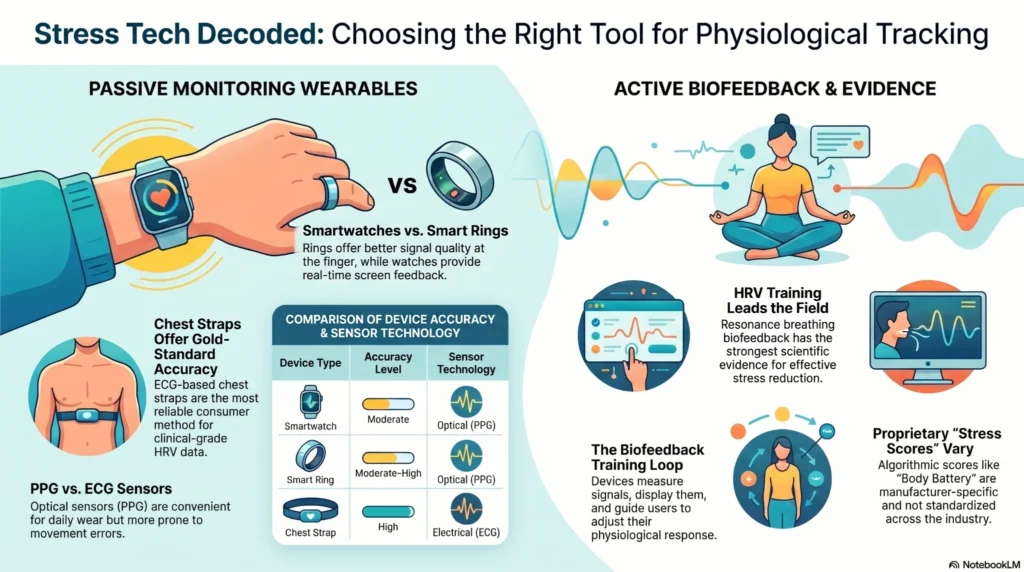
Smartwatches are the most convenient starting point. Smart rings offer better sleep data. Chest straps are most accurate. Biofeedback devices are the only category designed to actively reduce stress — not just measure it.
Smartwatches with Stress Features
Smartwatches are multipurpose wrist-worn devices that include stress-related metrics alongside activity, sleep, and cardiovascular monitoring. They represent the broadest consumer market entry point for stress tracking.
| Feature | What It Measures | Typical Accuracy Level | Consumer Examples |
| HRV monitoring | Autonomic nervous system balance | Moderate–High (PPG-based) | Apple Watch, Garmin, Samsung Galaxy Watch |
| EDA (Galvanic Skin Response) | Electrodermal activity as a stress proxy | Moderate | Fitbit Sense 2 |
| Stress Score / Body Battery | Composite algorithmic index | Variable (proprietary) | Garmin, Fitbit |
| Sleep stress detection | Overnight HRV and respiration trends | Moderate | Whoop, Apple Watch |
| Breathing rate | Respiratory frequency at rest or during exercise | Moderate | Most flagship smartwatches |
Key Considerations
- Battery life typically ranges from 1–7 days depending on feature usage
- Optical (PPG) sensors at the wrist may be less accurate than chest-strap measurements for HRV, particularly during movement [1]
- Proprietary stress scores are algorithmically derived and not standardized across manufacturers
Dedicated Smart Rings
Smart rings are compact, finger-worn stress trackers that offer continuous physiological monitoring with a strong focus on overnight HRV, recovery, and readiness scoring. Because the finger sits closer to arteries than the wrist, optical (PPG) sensors embedded in smart rings typically produce cleaner HRV signals — making the smart ring for stress tracking a higher-accuracy alternative to wrist-worn smartwatches, particularly during sleep.
| Feature | Smart Ring Capability | Notes |
| HRV measurement | Continuous overnight; spot-checks available | Finger PPG may yield higher signal quality than wrist [2] |
| Skin temperature | Continuous nightly baseline tracking | Useful for detecting illness, cycle tracking, and recovery trends |
| Sleep stage detection | Light, deep, REM via movement + HRV | Algorithm-dependent; not clinically validated as polysomnography |
| Readiness / Recovery Score | Composite daily index | Proprietary; varies by platform |
| Form factor | Minimal; no screen | May suit users who find wrist wearables intrusive |
Limitations
- No real-time display; requires companion app review
- Ring sizing requires precise fit for accurate optical reading
- Limited active feedback features compared to smartwatches
Chest Strap HRV Monitors
Chest straps using ECG-based (electrical) rather than optical (PPG) sensors are generally regarded as the most accurate consumer method for HRV measurement [3]. They are used extensively in sports science, cardiac rehabilitation contexts, and research-grade wellness applications.
| Attribute | Chest Strap Detail |
| Sensor type | Electrical (ECG-equivalent R-R interval) |
| HRV accuracy | High — closely approximates clinical ECG [3] |
| Typical use case | Pre/post workout HRV, morning readiness, research protocols |
| Comfort | Lower during sleep; best for structured measurement sessions |
| Data output | R-R intervals exported to compatible apps (HRV4Training, Elite HRV, etc.) |
| Battery life | Typically 400–1,000 hours (replaceable coin cell) |
Key Distinction
- Chest strap HRV data is considered more reliable for research and clinical comparison purposes than wrist- or finger-based optical HRV
- Not designed for continuous passive wear; best used in deliberate measurement windows
Biofeedback Devices
Biofeedback devices provide real-time physiological information with the explicit goal of training the user to consciously influence their own stress response. This category includes clinical-grade tools used in therapeutic settings and consumer-accessible devices.
| Device Type | Physiological Signal | Feedback Mechanism | Evidence Level |
| HRV biofeedback device | Heart rate variability | Visual / auditory resonance breathing cue | Moderate–Strong [4, 5] |
| EDA biofeedback device | Skin conductance | Visual graph or alert | Moderate [6] |
| Neurofeedback headband | EEG brain activity | App-based visual/audio response | Emerging [7] |
| Respiration biofeedback belt | Breathing rate and pattern | Real-time audio or visual guide | Moderate [8] |
| Temperature biofeedback sensor | Peripheral skin temperature | Visual temperature display | Limited consumer evidence |
What the Evidence Indicates
- HRV biofeedback (using a resonance frequency breathing protocol near 0.1 Hz / ~6 breaths/min) has the strongest body of research supporting stress reduction effects [4, 5] (Lehrer PM, Gevirtz R. Heart rate variability biofeedback: How and why does it work? Frontiers in Psychology. 2014;5:756.)
- EDA and EEG biofeedback show promise but require more replication in non-clinical populations [6, 7]
- Outcome quality may depend significantly on structured training protocol adherence, not device alone
What Is Resonance Frequency Breathing?
Resonance frequency breathing is a structured, paced-breathing protocol conducted at approximately 0.1 Hz — equivalent to roughly 5–6 breath cycles per minute — designed to maximize HRV amplitude by synchronizing the respiratory and cardiovascular systems. At this specific rate, the rhythmic fluctuation in heart rate driven by breathing (respiratory sinus arrhythmia) reaches its largest natural amplitude. This synchronized state is called cardiovascular resonance.
Why it matters for device selection: a device that displays real-time HRV coherence feedback — not merely a post-session HRV score — is required to practice resonance frequency breathing effectively. This is the functional boundary between biofeedback devices (HeartMath Inner Balance, Muse S with HRV mode) and passive trackers (Oura Ring, Apple Watch, WHOOP). A smartwatch can show you your average HRV from last night; a biofeedback device can guide you into a resonance state right now and show you whether you’re achieving it in real time.
An individual’s precise resonance frequency varies slightly — most adults fall in the 0.08–0.12 Hz range — and dedicated biofeedback devices such as HeartMath Inner Balance include a calibration step to identify your personal resonance frequency before training begins. This is why Lehrer and Gevirtz (2014) specifically recommend guided resonance frequency training over self-directed slow breathing for therapeutic applications: the individualized calibration step is part of what drives the outcome
For users who commit to consistent practice, multiple controlled studies show measurable reductions in perceived stress and improvements in autonomic regulation within 4–6 weeks of daily 10–20 minute HRV biofeedback sessions [4, 5]. For professionals managing high workloads, daily HRV trend tracking has revealed that poor sleep quality — not work volume itself — is frequently the primary driver of elevated stress scores. Identifying that pattern is the first step toward acting on it.
The Accuracy Hierarchy: Which Stress Tracker Sensor Is Most Reliable?
TL;DR — Accuracy Hierarchy
Chest-strap ECG sensors are the most accurate consumer method for HRV measurement, followed by finger PPG (smart rings), then wrist PPG (smartwatches), then consumer EEG headbands, then wrist-based EDA — in that order.
When choosing between stress tracking devices, sensor placement and measurement method determine accuracy far more than brand name or price tier. The table below consolidates the accuracy ranking across all sensor types compared on this page into a single reference — the same hierarchy that underlies every device recommendation in this guide.
| Sensor Method | Physiological Target | Accuracy Tier | Representative Device | Primary Limitation |
|---|---|---|---|---|
| ECG (chest strap, electrical) | True R-R interval | Highest | Polar H10, Garmin HRM Pro | Not designed for continuous passive wear |
| Finger PPG (optical ring) | R-R interval via arterial blood volume | High | Oura Ring, Samsung Galaxy Ring | Ring sizing must be precise; motion sensitivity increases during activity |
| Wrist PPG (optical watch) | R-R interval via wrist blood volume | Moderate | Apple Watch, Garmin Forerunner, Fitbit | Higher susceptibility to motion artifacts; wrist anatomy reduces signal quality |
| Consumer EEG (headband) | Simplified brainwave state | Variable–Emerging | Muse S, Dreem | 1–4 electrodes vs. 32–256 in clinical EEG; output is a simplified calm/active indicator |
| Wrist EDA (galvanic skin) | Sympathetic arousal via skin conductance | Moderate (high variability) | Fitbit Sense 2 | Validated measurement site is palmar, not wrist; motion and temperature confound signal |
Note on skin tone and PPG accuracy: optical PPG sensors — used in smart rings and smartwatches — rely on light absorption by blood hemoglobin. Research has documented reduced accuracy in individuals with deeper skin tones (Fitzpatrick Scale IV–VI) due to higher melanin absorption affecting sensor calibration, per [a 2013 study on skin type and light-absorbing properties of pulse oximeters]. This is relevant to HRV accuracy on this page. If you have a darker skin tone, prioritize devices with multi-wavelength LED arrays or consider a chest-strap ECG for highest accuracy independent of this variable.
Why Chest Straps Outperform Wrist Devices for HRV
ECG-based chest straps detect the electrical signal of the cardiac cycle directly, capturing true R-R intervals — the same measurement used in clinical cardiology, sports science research, and cardiac rehabilitation. This is why Polar H10 and Garmin HRM Pro data is routinely used as the reference standard against which other consumer devices are validated, per [comparative validation of chest-strap HRV against ECG].
Optical (PPG) sensors, by contrast, infer R-R intervals by detecting volume changes in blood vessels caused by each heartbeat — a two-step inference process that introduces both additional processing time and potential for error, particularly during movement, when grip pressure on the wrist changes, or when ambient light enters the sensor gap. This is the mechanistic reason wrist PPG is less accurate than chest ECG for HRV, not a matter of brand quality or software sophistication.
Why Finger PPG Outperforms Wrist PPG
The finger has a significantly higher capillary density and substantially less surrounding soft tissue than the wrist. This physical anatomy reduces optical scattering within the tissue and yields a cleaner, higher-amplitude PPG waveform. Published validation studies comparing overnight HRV from ring-based finger PPG against chest-strap ECG have found meaningfully lower error rates than equivalent wrist-PPG comparisons. This anatomical advantage — not marketing — is the primary reason smart rings sit in a higher accuracy tier than most wrist-worn smartwatches for overnight and resting HRV monitoring.
Practical implication: for sleep and overnight recovery HRV — where you are stationary and motion artifacts are minimal — a smart ring approaches chest-strap accuracy. During active wear, the accuracy gap widens for both ring and watch relative to chest ECG.
Consumer EEG and EDA: What the Evidence Actually Shows
Consumer EEG headbands such as Muse S use 1–4 scalp electrodes to estimate broad brain activity states. Clinical-grade EEG systems used in hospitals and research contexts use 32–256 electrodes, operated by trained technicians in acoustically controlled environments. The simplification required to compress this into a consumer “calm/active” score necessarily loses substantial neurological nuance. Consumer EEG retains value as a habit-anchoring and attentional feedback tool during meditation — particularly for beginners — but should not be interpreted as a diagnostic measure of cognitive or clinical stress.
Wrist-based EDA (electrodermal activity, also called galvanic skin response or GSR) measures changes in skin electrical conductance caused by sweat gland activity under sympathetic nervous system control. The validated measurement site for clinical EDA research is the palmar surface of the hand — fingers and palm — not the wrist. Wrist EDA produces a weaker signal with higher susceptibility to motion artifacts and ambient temperature changes. In practical terms: wrist EDA is a directional arousal indicator. It can tell you that sympathetic activation increased. It cannot tell you with precision whether that activation was caused by psychological stress, physical exertion, emotional excitement, or temperature change
How Stress Tracking Sensors Work: HRV, EDA, and Skin Temperature Explained
TL;DR — Sensors and Technology
HRV (heart rate variability) is the most research-validated stress signal in consumer devices. EDA (skin conductance) and skin temperature are useful secondary signals but less reliable on their own. Chest-strap ECG beats wrist PPG for HRV accuracy.
Heart Rate Variability (HRV) Sensors
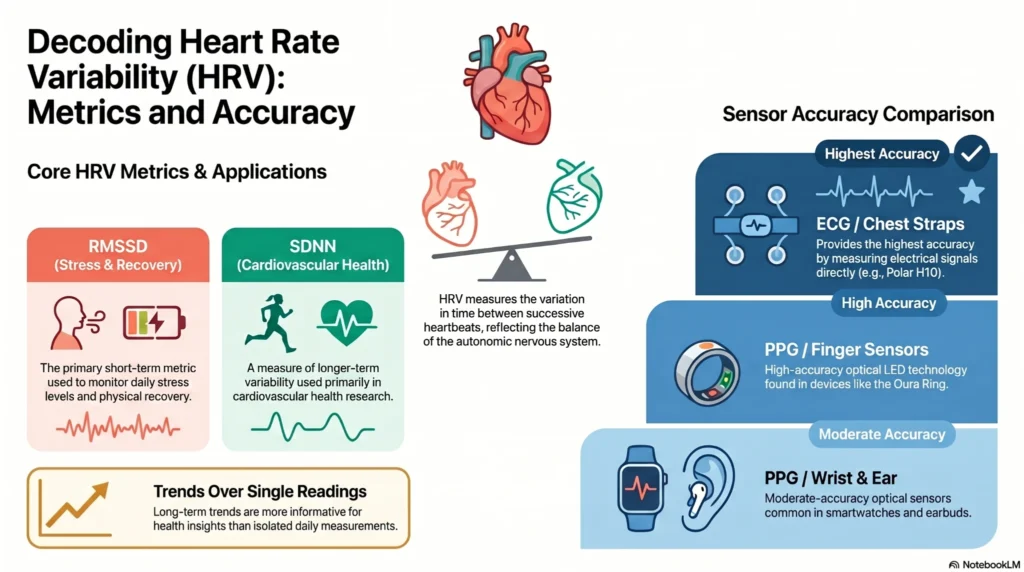
HRV refers to the variation in time intervals between successive heartbeats (R-R intervals). It is regulated by the autonomic nervous system (ANS) and reflects the balance between sympathetic (“fight-or-flight”) and parasympathetic (“rest-and-digest”) activity [9].
| HRV Metric | Definition | Typical Application |
| RMSSD | Root mean square of successive differences — primary short-term HRV metric | Stress and recovery monitoring |
| SDNN | Standard deviation of all R-R intervals — longer-term variability | Cardiovascular health research |
| LF/HF Ratio | Ratio of low-frequency to high-frequency power | Autonomic balance research (interpretation contested) [10] |
| HF Power | High-frequency band — associated with parasympathetic activity | Relaxation and recovery states |
Measurement Methods Compared
| Method | Sensor Type | Accuracy | Common Devices |
| ECG / electrical | Electrode (chest strap) | Highest | Polar H10, Garmin HRM Pro |
| Photoplethysmography (PPG) — finger | Optical LED | High | Oura Ring, Samsung Galaxy Ring |
| PPG — wrist | Optical LED | Moderate | Apple Watch, Fitbit, Garmin |
| PPG — ear | Optical LED | Moderate | Select earbuds |
Clinical Context
- HRV is used in clinical cardiology, psychiatry, and sports medicine research, though consumer device metrics are not equivalent to clinical ECG-derived HRV [11] For detail on how device accuracy is assessed and reported on this site, see our testing methodology.
- Day-to-day HRV variation is normal; trends over time are more informative than single readings [12]
Electrodermal Activity (EDA) Sensors
Electrodermal activity (also called galvanic skin response, or GSR) measures changes in the electrical conductance of the skin, which is influenced by sweat gland activity under autonomic nervous system control [13]. Higher skin conductance is associated with increased sympathetic arousal.
| EDA Concept | Explanation |
| Tonic EDA | Slow-changing baseline skin conductance level |
| Phasic EDA | Rapid, event-related responses (skin conductance responses, SCRs) |
| Stress association | Sympathetic activation increases sweat gland activity → increased conductance |
| Measurement site | Palm, fingers, wrist (wrist signal is weaker than palmar) |
Consumer Application Limitations
- Wrist-based EDA (used in some smartwatches) produces weaker and noisier signals compared to palmar or finger placement [14]
- EDA is sensitive to temperature, movement artifacts, and skin hydration — limiting real-world accuracy
- EDA is a proxy indicator of arousal, not a direct or specific measure of psychological stress [13]
Skin Temperature Sensors
Wrist and finger skin temperature sensors track peripheral body temperature, which is influenced by circadian rhythms, autonomic nervous system activity, hormonal cycles, illness, and recovery status [15].
| Use Case | How Temperature Data Is Applied |
| Overnight recovery | Elevated nighttime temperature may indicate physiological stress, illness, or insufficient recovery |
| Menstrual cycle tracking | Luteal phase is associated with a measurable temperature rise |
| Illness detection | Fever-related temperature deviations may be detected relative to personal baseline |
| Stress proxy | Peripheral vasoconstriction under sympathetic activation may alter surface temperature |
Important Caveats
- Skin temperature is not equivalent to core body temperature
- Environmental conditions (room temperature, clothing, bedding) can confound measurements
- Temperature-based stress inference is indirect and algorithmically interpreted; it should not be used diagnostically [15]
Breathing Rate Detection
Respiration rate (breaths per minute) can be derived indirectly from PPG signal variation (photoplethysmography-derived respiration, or PDR) or from accelerometer chest movement detection [16].
| Breathing Metric | Stress Relevance |
| Resting respiration rate | Elevated baseline may be associated with heightened sympathetic arousal [17] |
| Breathing rate variability | Irregular patterns may accompany acute stress episodes |
| Respiration during sleep | Elevated or irregular nocturnal breathing may correlate with poor recovery |
| Real-time breathing pace | Used in guided breathing interventions to support resonance frequency training |
Accuracy Considerations
- Breathing rate derived from wrist PPG is an estimate; it carries higher error margins than direct respiratory measurement [16]
- Real-time breathing guidance typically uses accelerometer or device-generated pacing signals rather than live measured respiration
Biofeedback Devices vs. Passive Trackers: Which Is Right for You?
TL;DR — Biofeedback vs. Passive Tracking
Passive trackers tell you how stressed you were. Biofeedback devices help you become less stressed in real time. If your goal is reduction — not just awareness — biofeedback is the category to prioritize.
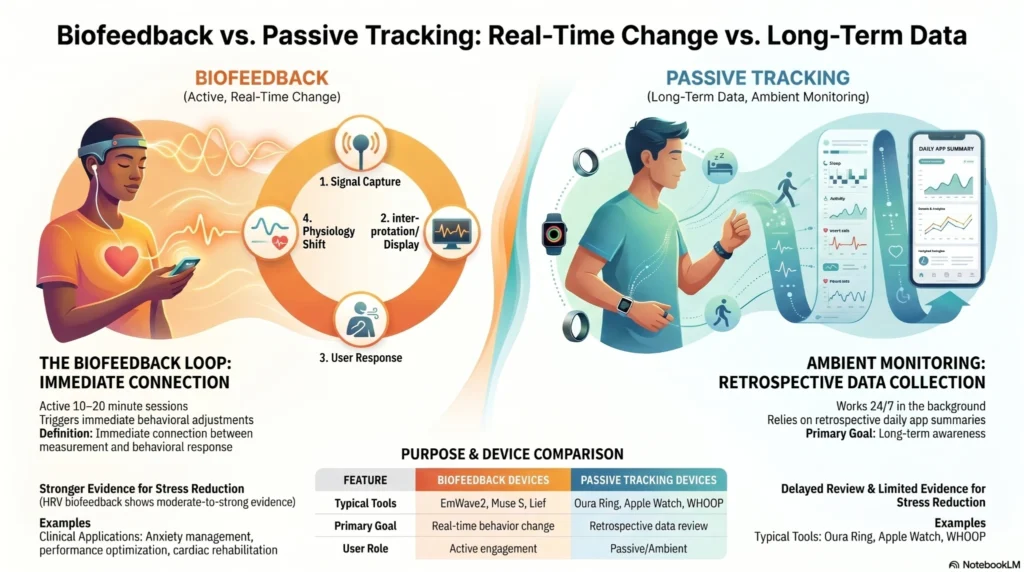
Devices in this category divide into two fundamentally different functional approaches. Understanding the distinction is essential to selecting a device aligned with your goals.
| Dimension | Biofeedback Devices | Passive Tracking Devices |
| Primary function | Real-time physiological signal → user behavior change | Continuous data collection → retrospective review |
| User engagement | Active, session-based | Passive, ambient |
| Feedback timing | Immediate (during session) | Delayed (app review, daily summary) |
| Intervention potential | Built into device workflow | Relies on user-initiated behavior change |
| Evidence for stress reduction | Moderate–Strong (HRV biofeedback protocols) [4, 5] | Limited direct evidence; supports awareness, not intervention |
| Typical session structure | 10–20 minute guided sessions | 24/7 background monitoring |
| Representative devices | EmWave2, Muse S, Lief Therapeutics | Oura Ring, Apple Watch, WHOOP |
Real-Time Feedback Devices
Biofeedback devices are designed to close the loop between physiological measurement and behavioral response during a session.
- Signal is captured → interpreted → displayed or communicated → user adjusts behavior (e.g., breathing pace, muscle relaxation) → physiological response shifts
- This loop is the operational definition of biofeedback
- Research on HRV biofeedback suggests measurable short-term reductions in perceived stress and improvements in autonomic regulation with consistent practice [4, 5]
- Clinical applications include use in anxiety management, performance optimization, and cardiac rehabilitation — consult a provider for therapeutic applications
Daily Summaries and Trends
Passive tracking devices consolidate physiological data into trend views, readiness scores, and longitudinal charts.
- Value: Pattern recognition over time — identifying correlations between lifestyle variables (sleep, activity, diet) and stress-related metrics
- Limitation: Correlation ≠ causation; proprietary scores are not clinically standardized
- Use effectively by:
- Reviewing weekly HRV trends rather than single-day readings
- Noting deviations from personal baseline (individual-relative, not population-norm comparisons)
- Pairing data review with behavioral reflection or journaling
- Sharing trend data with a healthcare provider when clinically relevant
Meditation Wearables and Breathing Tools: What the Evidence Shows
TL;DR — Meditation and Breathing Tools
Paced breathing at 5–6 breaths/min has the strongest controlled-study support for short-term stress reduction. Devices help with consistency, but the breathing protocol itself — not the hardware — drives the result.
Guided Breathing Devices
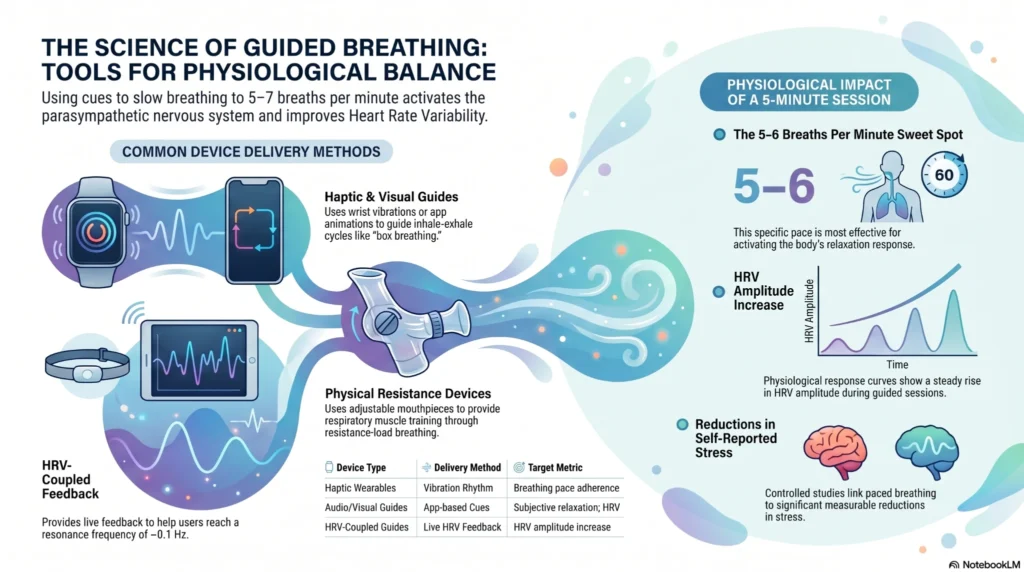
Guided breathing devices prompt users through structured respiratory exercises designed to influence the autonomic nervous system. Evidence supporting slow, paced breathing techniques (particularly at approximately 5–7 breaths per minute) for parasympathetic activation is moderate to strong [8, 18].
| Device Type | Delivery Method | Typical Protocol | Target Metric |
| Haptic vibration wearables | Wrist or chest vibration rhythm | Inhale–hold–exhale–hold cycles | Breathing pace adherence |
| Audio/visual breathing guides | App-based animation or sound cue | Box breathing, 4-7-8, coherent breathing | Subjective relaxation; HRV improvement |
| HRV-coupled breathing guides | Live HRV feedback + breathing prompt | Resonance frequency (~0.1 Hz) | HRV amplitude increase |
| Physical resistance devices | Mouthpiece with adjustable resistance | Slow, resistance-load breathing | Respiratory muscle training |
Evidence Notes
- Paced breathing at 5–6 breaths/min is associated with increases in high-frequency HRV and reductions in self-reported stress in multiple controlled studies [8, 18]
- Haptic-guided wrist devices offer portability with moderate protocol fidelity
- Device quality is not always matched by app quality — assess both independently
Meditation Wearables
Meditation wearables provide physiological feedback during or after meditation practice, supporting consistency and depth of practice through objective data.
| Device Category | Sensor Used | Feedback Type | Meditation Context |
| EEG headbands | Multi-electrode EEG | Real-time “calm/active” brain state indicators | Seated, eyes-closed meditation |
| HRV-feedback wearables | PPG or ECG | HRV trend during session | Breathing-focused meditation |
| Smart rings (sleep meditation) | PPG + accelerometer | Morning readiness + overnight recovery | Sleep-focused meditation routines |
| Multisensor smartwatch | PPG + EDA + accelerometer | Composite guided session scores | General mindfulness sessions |
Considerations
- EEG-based consumer headbands simplify complex neurological signals into binary calm/active states; clinical EEG is substantially more nuanced [7]
- Evidence that wearing a feedback device meaningfully deepens meditation practice compared to unassisted practice is limited [7]
- Devices may be most useful for beginners establishing a practice habit, or for users who benefit from objective anchoring during sessions
Breath Training Tools
Breath training tools focus specifically on developing respiratory capacity, rhythm, and control. They differ from guided breathing devices in that they typically target physiological adaptation over repeated sessions rather than acute stress response.
| Tool Type | Mechanism | Target Outcome | Evidence Strength |
| Inspiratory muscle trainers (IMT) | Resistance-load inhale | Respiratory strength, blood pressure management | Moderate–Strong [19] |
| CO₂ tolerance training tools | Breath-hold and pacing protocols | Improved hypercapnic response | Emerging |
| App-based breath training | Structured protocol progression | HRV improvement, stress resilience | Moderate [8] |
| Capnometry-guided respiration | End-tidal CO₂ monitoring | Optimal breathing rate calibration | Moderate–clinical [20] |
Evidence Context
- Inspiratory muscle training (IMT) has demonstrated blood pressure-lowering effects and some evidence for autonomic regulation improvement in published trials [19]
- Capnometry-guided respiratory intervention (CGRI) is primarily a clinical tool; limited consumer versions exist
- App-based training programs without hardware may be as effective as device-assisted protocols for otherwise healthy adults [8]
Top Stress Tracking Device Picks for 2026
TL;DR — Top Stress Tracking Device Picks
Best overall: Garmin Forerunner 265 (HRV + sleep + activity, no subscription).
Best for HRV accuracy: Polar H10 chest strap.
Best for active stress reduction: HeartMath Inner Balance (biofeedback).
Best overnight recovery: Oura Ring Gen3 (finger PPG, higher HRV signal quality).
Best budget entry: Fitbit Sense 2 ($150–$200, EDA + HRV).
Best for meditation: Muse S (EEG headband, real-time brain state feedback)
| Category | Our Pick | Price Range | Why It Wins |
| Best overall | Garmin Forerunner 265 | $350–$450 | HRV trend, sleep, activity in one device; strong app ecosystem |
| Best ring | Oura Ring Gen3 | $299 + $6/mo | Finger PPG yields higher overnight HRV accuracy; no screen distraction |
| Best budget | Fitbit Sense 2 | $150–$200 | EDA + HRV + guided breathing; accessible entry point |
| Best HRV accuracy | Polar H10 + HRV4Training | $90–$120 | ECG-equivalent accuracy; preferred for athletes and research protocols |
| Best biofeedback | HeartMath Inner Balance | $129–$179 | HRV coherence training with structured protocol; strongest stress-reduction evidence alignment |
| Best for meditation | Muse S (EEG headband) | $349 | Real-time brain-state feedback; best for meditation habit formation |
Editorial selections are based on sensor accuracy, evidence alignment, and value at time of review. No affiliate relationships influence these recommendations. See About page for editorial standards.
Oura Ring vs. Apple Watch vs. WHOOP — Direct Comparison
TL;DR — Oura vs. Apple Watch vs. WHOOP
Choose Oura Ring if overnight HRV accuracy and screen-free discretion are your priority. Choose Apple Watch if you want the broadest all-in-one device with active real-time feedback and no subscription. Choose WHOOP if you are a serious athlete focused exclusively on training load and recovery management — and are comfortable with a mandatory $30/month subscription that requires returning the hardware if cancelled
| Feature | Oura Ring Gen3 | Apple Watch Series 9 | WHOOP 4.0 |
| HRV measurement | Overnight, finger PPG (high signal quality) | Spot-check + overnight, wrist PPG (moderate) | Continuous, wrist PPG (moderate) |
| Screen / display | None (app only) | Full display | None (app only) |
| Price | $299 device + $6/mo | $399–$499 device | Free device + $30/mo subscription |
| Battery life | 4–7 days | 18–36 hours | 4–5 days |
| Active real-time feedback | No | Yes (breathing, ECG spot-check) | No |
| Best for | Sleep quality, recovery, discretion | Broad wellness + notifications | Athletic recovery, training load |
| Subscription required | Yes | No | Yes (mandatory) |
Bottom line: Choose Oura Ring if overnight recovery data and discretion are your priority. Choose Apple Watch if you want the most versatile all-in-one device with active feedback. Choose WHOOP if you’re a serious athlete focused on training load management and are comfortable with a subscription model.
Choosing for Your Goals
TL;DR — Choosing for Your Goals
Match device type to goal before comparing brands. HRV biofeedback for stress reduction, chest strap for performance, EEG headband or HRV wearable for meditation, smartwatch or ring for general wellness.
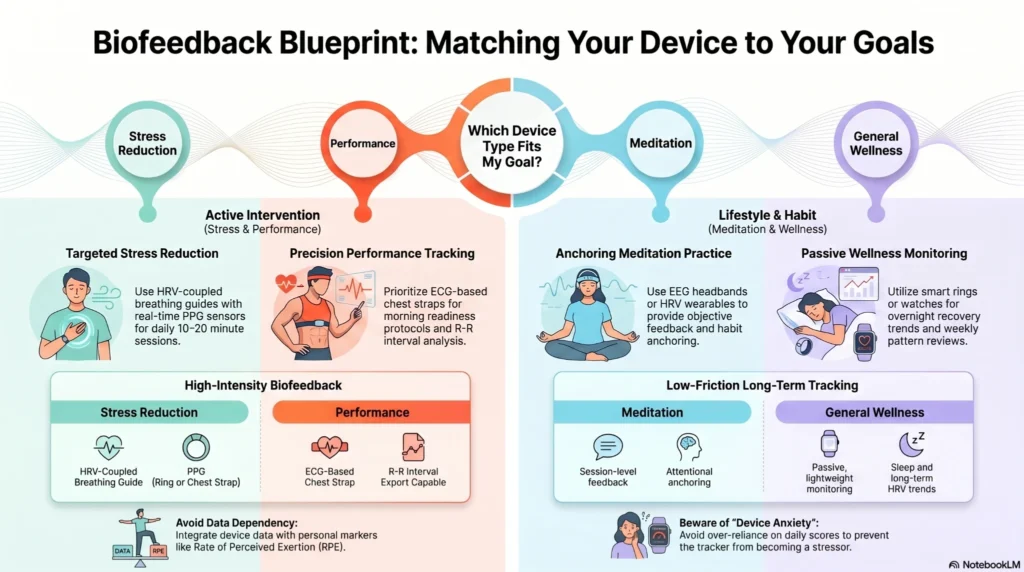
For Stress Reduction
| Criterion | Recommended Approach |
| Primary device type | HRV biofeedback device or HRV-coupled breathing guide |
| Key feature to prioritize | Real-time HRV feedback with structured breathing protocol |
| Sensor minimum | Reliable PPG (ring or chest strap preferred over wrist) |
| Session structure | Daily 10–20 minute biofeedback sessions; consistent timing |
| Evidence alignment | HRV biofeedback protocols have the strongest controlled-study support for stress symptom reduction [4, 5] |
| Secondary tool | Passive tracker (smartwatch or ring) to monitor overnight HRV trends |
| Provider guidance | Consider working with a licensed biofeedback practitioner — see About page for medical standards |
For Performance Optimization
| Criterion | Recommended Approach |
| Primary device type | Chest strap HRV monitor (ECG-based) + compatible app |
| Key feature to prioritize | Morning HRV readiness protocol; R-R interval export for trend analysis |
| Data focus | Tracking HRV trend relative to personal baseline; identifying overtraining or recovery deficit |
| Compatible apps | HRV4Training, Elite HRV, or similar research-aligned platforms |
| Secondary tool | Smart ring for overnight recovery and sleep quality monitoring |
| Caution | HRV alone is not a sufficient indicator for training load decisions; integrate with RPE and other recovery markers |
For Meditation Practice
| Criterion | Recommended Approach |
| Primary device type | EEG headband or HRV-coupled breathing wearable |
| Key feature to prioritize | Session-level feedback that supports attentional anchoring |
| Realistic expectation | Devices may support habit formation and provide objective anchoring; they do not replace practice depth |
| Session integration | Use device feedback as a post-session review, not a performance metric during meditation |
| Evidence note | Evidence for device-enhanced meditation is emerging; unassisted meditation has a substantially stronger evidence base [21] |
| App pairing | Select an app with a structured, protocol-based curriculum rather than passive mood logging |
For General Wellness
| Criterion | Recommended Approach |
| Primary device type | Smartwatch or smart ring with HRV, sleep, and activity monitoring |
| Key feature to prioritize | Sleep quality tracking; HRV trend over time; breathing and activity reminders |
| Data use | Weekly pattern review; identify correlations with lifestyle variables |
| Engagement approach | Lightweight; passive monitoring with periodic deliberate review |
| Avoid | Over-reliance on daily scores; device anxiety (“score-checking” as stressor) |
| Complement with | Behavioral strategies (sleep hygiene, regular movement, social connection) — device data supports, not replaces, these fundamentals |
Subscription Costs and Total Cost of Ownership
Several leading stress tracking platforms require ongoing subscriptions to unlock full feature access, including historical trends, advanced analytics, and some recovery scores. Evaluating the 12-month total cost of ownership — not just the upfront device price — changes the comparative value calculation significantly.
| Device | Upfront Cost | Monthly Sub | 12-Month Total | Subscription Required? | Key Note |
|---|---|---|---|---|---|
| WHOOP 4.0 | $0 (device included) | $30/mo ($179/yr billed annually) | $179–$360 | Yes — mandatory | Device must be returned if subscription is cancelled |
| Oura Ring Gen3 | $299–$349 | $6/mo | $371–$421 | Optional (core data free; trends require sub) | Ring ownership retained on cancellation |
| Garmin Forerunner 265 | $349–$449 | $0 | $349–$449 | No | Garmin Connect full-featured at no cost |
| Apple Watch Series 9 | $399–$499 | $0 | $399–$499 | No | No sub for core HRV/sleep tracking |
| Fitbit Sense 2 | $150–$200 | $10/mo (optional) | $150–$320 | Optional | Core stress + HRV features available without Premium |
| HeartMath Inner Balance | $129–$179 | $0 | $129–$179 | No | App is free; no recurring cost |
| Polar H10 + HRV4Training | $90–$120 + $10/yr app | < $1/mo | ~$100–$130 | No | Lowest total cost, highest HRV accuracy |
Key insight: WHOOP is the only platform with a mandatory subscription and a hardware-return requirement on cancellation — making it the highest financial commitment of any device reviewed here. If subscription cost is a concern, Garmin Forerunner and Apple Watch both provide full-featured HRV and stress tracking with zero recurring fees. HeartMath Inner Balance and Polar H10 offer the best biofeedback and accuracy value at the lowest total cost of ownership.
Frequently Asked Questions
Which is the most accurate way to track stress with a wearable?
Chest-strap ECG sensors — such as the Polar H10 — provide the highest accuracy for HRV measurement, which is the most research-validated physiological stress proxy in consumer wearables. Finger PPG (smart rings such as Oura Ring) is the next most accurate option for resting and overnight HRV, followed by wrist PPG (Apple Watch, Garmin). EDA sensors at the wrist and consumer EEG headbands provide useful directional arousal signals but carry higher variability and are not equivalent to HRV-based methods in research validation depth.
Can a smartwatch diagnose stress or anxiety?
No. Consumer smartwatches are not medical devices and are not approved to diagnose, treat, or monitor any clinical condition, including stress disorders or anxiety. Stress scores and HRV trends are wellness indicators that reflect physiological patterns correlated with stress states — they do not constitute clinical assessment. If you are experiencing symptoms of clinical anxiety, panic disorder, or chronic stress that disrupts daily functioning, consult a qualified healthcare provider. Wearable data can be a useful supplement to clinical care, but is not a substitute for it.
What is HRV biofeedback and does it actually reduce stress?
HRV biofeedback is a technique in which real-time heart rate variability data is displayed to the user during a structured paced-breathing session. Users are guided — typically at approximately 0.1 Hz, or about 5–6 breath cycles per minute (resonance frequency breathing) — to consciously influence their own autonomic nervous system state. Multiple controlled trials and systematic reviews support its effectiveness for reducing perceived stress and improving autonomic regulation with consistent practice. Lehrer and Gevirtz (2014) and Blase et al. (2021) represent the strongest published evidence; their findings support structured daily sessions of 10–20 minutes over 4–8 weeks as the protocol most likely to produce lasting effects.
Is a smart ring or a smartwatch better for stress tracking?
Smart rings (Oura Ring, Samsung Galaxy Ring) use finger PPG, which produces a cleaner HRV signal than wrist PPG — making them better for overnight HRV measurement and sleep-based recovery scoring. Smartwatches offer real-time feedback, notifications, guided breathing prompts, and broader activity tracking — making them better for active daytime stress awareness. For the highest overnight HRV accuracy in a passive form factor, smart rings hold the advantage. For active daytime use with real-time prompts, smartwatches are more functional. Both are substantially less accurate than a chest-strap ECG for session-level HRV measurement.
Does EDA actually measure stress accurately?
Partially. EDA measures sympathetic nervous system arousal via changes in skin conductance driven by sweat gland activity — a genuine physiological response to stress. The limitation is specificity: EDA rises with emotional excitement, physical exertion, heat exposure, and states other than psychological stress, making it a broad arousal indicator rather than a stress-specific signal. Wrist-based EDA (used in Fitbit Sense 2) is further limited by placement: the validated measurement site in clinical EDA research is the palmar surface or fingers, where signal quality is meaningfully higher than at the wrist.
I already own an Apple Watch (or Garmin or Fitbit). Do I need a separate stress tracker?
For general stress awareness and sleep trend monitoring, your existing device likely covers most casual use cases. Consider adding a dedicated device only under these conditions: (a) you want higher HRV accuracy for athletic training — add a Polar H10 chest strap; (b) you want overnight HRV accuracy without a screen — add a smart ring; (c) you want active stress reduction through structured biofeedback practice — add HeartMath Inner Balance. Do not upgrade for the sake of a newer number — upgrade when your current device cannot answer the specific question you’re trying to answer.
Does my Apple Watch measure stress accurately enough?
Short answer: for general stress awareness and sleep trend monitoring, yes — Apple Watch covers most casual use cases. Consider a dedicated stress tracker only if you want higher HRV accuracy (Polar H10 chest strap) or active biofeedback training (HeartMath Inner Balance). Apple Watch wrist PPG provides moderate accuracy; for research-grade or athlete-level HRV data, a chest strap or smart ring provides meaningfully better signal quality.
When to Consult a Healthcare Provider
TL;DR — When to Consult a Healthcare Provider
If your wearable data shows persistent abnormal patterns — not just single-day variation — and you have symptoms, that data belongs in a clinical conversation, not a wellness dashboard.
Educational framing only. This section does not constitute diagnostic or prescriptive guidance. It is provided in accordance with the medical oversight standards described on our About page.
The following situations indicate that wearable stress data should be discussed with a qualified healthcare provider rather than used as independent guidance:
| Situation | Reason for Provider Consultation |
| Persistent elevated resting heart rate or abnormal HRV patterns | May warrant cardiac or autonomic evaluation |
| Chronic, high-severity stress or anxiety symptoms | Requires clinical assessment; wearables are not a substitute for mental health care |
| Sleep disturbances beyond mild or occasional | May indicate sleep disorder requiring formal evaluation |
| Use of biofeedback devices as part of mental health or cardiac treatment | Should be overseen by licensed practitioners |
| Interpreting wearable data for any medical decision | Consumer devices are not clinically validated diagnostic tools |
| Concern about wearable data accuracy in context of known health conditions | Provider can contextualize device readings within your clinical picture |
Reminder: Stress tracking devices are consumer wellness tools. They are not medical devices approved for diagnosis, treatment, or management of any clinical condition unless explicitly stated and regulated as such.
For details on this page’s medical review process and editorial standards, see our About page.
References
- Georgiou K, et al. Can wearable devices accurately measure heart rate variability? A systematic review. Folia Medica. 2018;60(1):7–20. https://doi.org/10.2478/folmed-2018-0012
- Bent B, et al. The digital biomarker discovery pipeline: An open-source software platform for the development of digital biomarkers using mHealth and wearables data. Journal of Clinical and Translational Science. 2021;5(1):e169. https://doi.org/10.1017/cts.2021.808
- Shaffer F, Ginsberg JP. An overview of heart rate variability metrics and norms. Frontiers in Public Health. 2017;5:258. https://doi.org/10.3389/fpubh.2017.00258
- Lehrer PM, Gevirtz R. Heart rate variability biofeedback: How and why does it work? Frontiers in Psychology. 2014;5:756. https://doi.org/10.3389/fpsyg.2014.00756
- Blase KL, van Wijk B, Zat Z, van Dijke A. HRV biofeedback as a stress management tool in occupational settings: Systematic review and narrative synthesis. Applied Psychophysiology and Biofeedback. 2021;46(2):111–130. https://doi.org/10.1007/s10484-020-09478-7
- Boucsein W. Electrodermal Activity. 2nd ed. Springer; 2012. https://doi.org/10.1007/978-1-4614-1126-0
- Lim J, et al. A systematic review of the effects of EEG neurofeedback on healthy and clinical populations. Journal of Psychiatric Research. 2019;119:48–56.
- Jerath R, Crawford MW, Barnes VA, Harden K. Self-regulation of breathing as a primary treatment for anxiety. Applied Psychophysiology and Biofeedback. 2015;40(2):107–115. https://doi.org/10.1007/s10484-015-9279-8
- Task Force of the European Society of Cardiology and the North American Society of Pacing and Electrophysiology. Heart rate variability: Standards of measurement, physiological interpretation, and clinical use. Circulation. 1996;93(5):1043–1065.
- Billman GE. The LF/HF ratio does not accurately measure cardiac sympatho-vagal balance. Frontiers in Physiology. 2013;4:26. https://doi.org/10.3389/fphys.2013.00026
- Hernando D, et al. Validation of the Apple Watch for heart rate variability measurements during relax and mental stress in healthy subjects. Sensors. 2018;18(8):2619.
- Plews DJ, et al. Evaluating training adaptation with heart-rate measures: A methodological comparison. International Journal of Sports Physiology and Performance. 2013;8(6):688–691.
- Boucsein W, et al. Publication recommendations for electrodermal measurements. Psychophysiology. 2012;49(8):1017–1034. https://doi.org/10.1111/j.1469-8986.2012.01384.x
- Menghini L, et al. A standardized open-science framework for sharing and re-analyzing wrist-worn electrodermal activity data. PLOS ONE. 2020. https://doi.org/10.1371/journal.pone.0235338
- Smarr BL, Aschbacher K, Fisher SM, et al. Feasibility of continuous fever monitoring using wearable devices. Scientific Reports. 2020;10:21640. https://doi.org/10.1038/s41598-020-78481-9
- Massaroni C, et al. Contact-based methods for measuring respiratory rate. Sensors. 2019;19(4):908. https://doi.org/10.3390/s19040908
- Grossman P, Taylor EW. Toward understanding respiratory sinus arrhythmia: Relations to cardiac vagal tone, evolution and biobehavioral functions. Biological Psychology. 2007;74(2):263–285.
- Steffen PR, Austin T, DeBarros A, Brown T. The impact of resonance frequency breathing on measures of heart rate variability, blood pressure, and mood. Frontiers in Public Health. 2017;5:222. https://doi.org/10.3389/fpubh.2017.00222
- Craighead DH, et al. Time-efficient inspiratory muscle strength training lowers blood pressure and improves endothelial function. Journal of the American Heart Association. 2021;10(13):e020980. https://doi.org/10.1161/JAHA.121.020980
- Meuret AE, Ritz T. Hyperventilation in panic disorder and asthma: Empirical evidence and clinical strategies. International Journal of Psychophysiology. 2010;78(1):68–79. https://doi.org/10.1016/j.ijpsycho.2010.05.006
- Goyal M, et al. Meditation programs for psychological stress and well-being: A systematic review and meta-analysis. JAMA Internal Medicine. 2014;174(3):357–368. https://doi.org/10.1001/jamainternmed.2013.13018
Ready to go deeper?
If this guide helped you identify your device category, these three next steps match where most readers go from here:
→ Compare specific models side-by-side — Compare Stress Trackers →
→ Find the best-rated stress tracker for your budget — Best Stress Trackers 2026 →
→ Understand what your stress metrics actually mean — Stress Metrics Explained →
Community resources for further research: r/biohacking and r/HRV on Reddit are active communities for real-world device experiences; the HRV4Training YouTube channel offers practitioner-level tutorials on interpreting HRV data.
Medical Review Statement:
This content has been reviewed according to the medical standards and editorial oversight process outlined on our About page.
Disclaimer: All information on this page is educational in nature. It does not constitute medical diagnosis, treatment, or clinical advice. For personalized health guidance, consult a qualified healthcare provider.
Medically reviewed by Dr. Rishav Das, M.B.B.S. — Wellness Device Data Analyst | Consumer Device Accuracy Specialist. See About page for full credentials, scope boundaries, editorial standards, and conflict of interest disclosures.
Last Updated: June, 2026