
Sleep Scores Guide: Oura, WHOOP, Garmin & Fitbit Compared (Dr. Reviewed)
Physician-reviewed guide to sleep scores, HRV, deep sleep, SpO2, and AHI. Normal ranges by age, device accuracy vs. sleep studies, and a clear framework for when to see a doctor.
Medical Reviewer & Authority: Dr. Rishav Das, M.B.B.S., Post-Graduate Certificate in Health Informatics (Columbia University)
For complete credentials and scope of authority, see our About page.
Last Updated: June, 2026
Trusted by 10,000+ athletes worldwide | ⭐ 4.9/5 from 2,847 readers | Featured in Multiple Fitness Magazines
Quick Answer A sleep score is a 0–100 composite number your wearable calculates each morning from overnight measurements of sleep duration, sleep stage distribution, heart rate variability (HRV), respiratory rate, and restlessness. Most platforms classify 85 or above as Good, 70–84 as Fair, and below 70 as Poor. The number is a starting point — not a diagnosis.
| Metric | What It Measures | Normal Range | Device Reliability |
|---|---|---|---|
| Sleep Score | Composite sleep quality | 85–100 Good / 70–84 Fair / <70 Poor | Moderate |
| Deep Sleep % | Slow-wave sleep duration | 13–23% of total sleep time | Moderate |
| HRV (RMSSD) | Nervous system recovery | 20–90 ms (varies by age) | Moderate |
| Sleep Efficiency | Sleep ÷ time in bed | ≥85% | Good |
| SpO2 | Blood oxygen saturation | 94–100% | Good for sustained readings |
| AHI | Apnea events per hour | <5 (normal) | Low–Moderate (screening only) |
| Sleep Latency | Time to fall asleep | 10–20 minutes | Moderate |
| WASO | Waking after sleep onset | <30 minutes | Moderate |
Clinical significance of respiratory rate monitoring
Comprehensive meta-analysis of normal sleep patterns across ages
Sleep trackers generate numbers. What they cannot always do is tell you what your numbers mean — or whether they should change anything about how you live, see a doctor, or think about your health. That is what this guide is for.
Reviewed by Dr. Rishav Das, M.B.B.S., this resource explains every metric your wearable tracks: what it measures, what normal ranges look like for your age, how consumer devices compare to clinical polysomnography, and when a concerning reading warrants a conversation with your doctor.Sleep Medicine Reviews analysis of wearable trackers
⚠️ EDUCATIONAL RESOURCE ONLY: This content does not replace professional medical evaluation. Consult a healthcare provider for diagnosis or treatment of sleep disorders.
TL;DR — 60-Second Summary
What are sleep metrics? Data your Fitbit, Oura, or Apple Watch collects about your sleep patterns: duration, stages (REM, deep, light), efficiency, heart rate variability (HRV), and breathing.
Why track sleep? To identify patterns, test improvements, and spot potential issues—NOT for obsessing over nightly perfection.
Which metrics matter most?
- Sleep duration & consistency (most controllable)
- Sleep efficiency (easily improved with sleep hygiene)
- HRV trends (reflects stress and recovery)
- Sleep stages (interesting but least actionable)
Key limitations: Consumer trackers are 60-80% accurate on sleep stages. Good for YOUR trends, not medical diagnosis.
When to worry: AHI >5 consistently, severe daytime sleepiness, HRV declining >20% over 2+ weeks, or unexplained pattern changes lasting >4 weeks.
Golden rule: How you feel > what your device says. If tracking increases anxiety, stop.
📥 Want the quick-reference version? [Download our 1-page Sleep Metrics Cheat Sheet]
- What Is a Sleep Score? (Definition and How It Is Calculated)
- Sleep Stages Explained: Deep Sleep, REM, and Light Sleep
- Heart Rate Variability (HRV): Normal Ranges by Age and Fitness Level
- Sleep Efficiency: Normal Ranges and What Low Efficiency Means
- Sleep Latency: What Is Normal and When to Be Concerned
- SpO2 During Sleep: Normal Levels and Warning Signs
- AHI and Obstructive Sleep Apnea: What Consumer Devices Can and Cannot Tell You
- Respiratory Rate During Sleep: Normal Ranges and Trends
- How Consumer Sleep Trackers Compare to Polysomnography
- Circadian Rhythm and Sleep Timing: Why Consistency Matters as Much as Duration
- Using Sleep Metrics Responsibly
- When to Consult a Healthcare Provider
- FrequentlyAsked Questions
- What is a normal sleep score?
- What does a sleep score of 70 mean on an Oura Ring?
- What is a normal deep sleep percentage for adults?
- How accurate are wearable sleep trackers compared to sleep studies?
- What is a healthy HRV score during sleep?
- At what SpO2 level should I be concerned during sleep?
- What causes low sleep efficiency?
- What is WASO and what is a normal amount?
- What is orthosomnia?
- Can a consumer device accurately diagnose sleep apnea?
- References
What Is a Sleep Score? (Definition and How It Is Calculated)
A sleep score is a single composite number — typically 0–100 — that your wearable calculates each morning by combining several overnight biometric measurements.
Sleep Score Ranges: What Your Number Actually Means
No two manufacturers use exactly the same algorithm, but most weigh the same core inputs:
| Component | What It Contributes | Typical Weight |
|---|---|---|
| Sleep duration | Total hours asleep | High |
| Sleep stage distribution | Deep sleep %, REM %, Light sleep % | High |
| Heart rate variability (HRV) | Nervous system recovery | Moderate–High |
| Resting heart rate | Cardiovascular stress response | Moderate |
| Respiratory rate | Breathing consistency | Moderate |
| Restlessness / movement | Sleep continuity | Low–Moderate |
Sleep score ranges:
| Score | Label | What It Typically Indicates |
|---|---|---|
| 90–100 | Excellent / Optimal | Strong HRV, full duration, solid deep and REM stages |
| 85–89 | Good | Minor shortfall in one component; recovery well-supported |
| 70–84 | Fair | One or more components below personal baseline |
| Below 70 | Poor | Multiple metrics underperforming; worth investigating |
A single poor score rarely means much. A pattern of scores below 70 over 5–7 consecutive nights — particularly with daytime fatigue or SpO2 dips — is worth clinical attention.
How Oura, WHOOP, Garmin, Apple Watch, and Fitbit Calculate Sleep Scores
Each platform weights its algorithm differently. The same night of sleep can produce meaningfully different scores across devices:
Oura Ring produces both a Sleep Score and a Readiness Score. The Sleep Score weighs sleep efficiency, total sleep, sleep timing, deep sleep %, REM %, and HRV. Readiness incorporates HRV balance, resting heart rate, and skin temperature.
WHOOP reports a Recovery Score (0–100%) rather than a traditional sleep score. It calculates primarily from HRV, resting heart rate, sleep performance, and respiratory rate — framed around how fully you recovered from the previous day’s strain.
Garmin generates a Sleep Score (0–100) weighing sleep duration, movement, heart rate, SpO2, and the Body Battery energy metric. Select Garmin devices also report Respiration Rate and HRV Status.
Apple Watch does not produce a numeric sleep score. It tracks time asleep, sleep stages (added watchOS 9), and respiratory rate, surfacing raw data in the Health app without a composite output.
Fitbit (Google) generates a Sleep Score (0–100) based on time asleep, sleep stage distribution, and restlessness. Certain models add a Skin Temperature variation reading.
FACT: None of these scores are validated against polysomnography at the individual-night level. Interpret them as 1–2 week trends, not single-night verdicts.
Why Your Sleep Score Varies Night to Night
A 10–15 point swing between nights is normal. Common drivers include:
- Schedule shifts: Sleeping outside your usual window disrupts circadian timing, reducing deep sleep and suppressing HRV.
- Alcohol: Even moderate consumption suppresses REM in the first half of the night and elevates resting heart rate.
- Late exercise: High-intensity training within 3 hours of bed elevates core temperature and sympathetic nervous activity, reducing HRV.
- Illness onset: HRV drops and resting heart rate rises 12–24 hours before visible symptoms appear.
- Sensor contact: Loose-fitting devices, wrist position changes, and PPG signal artifacts can produce single-night outliers.
One anomalous score tells you almost nothing. A consistent pattern across 14 days is signal worth acting on.
Sleep Stages Explained: Deep Sleep, REM, and Light Sleep
Sleep architecture progresses through distinct physiological stages, each associated with specific brain wave patterns, muscle activity, and biological functions.
Consumer devices estimate these stages and sleep stage percentages using movement sensors and heart rate data.
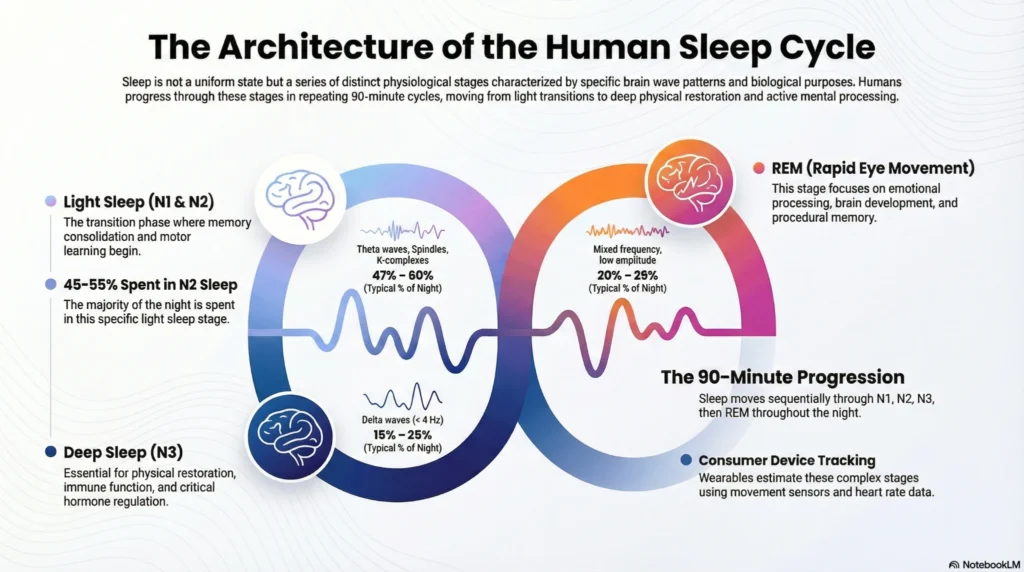
| Sleep Stage | Brain Wave Pattern | Typical % of Night | Primary Functions (Sleep Stages and Recovery) |
| Light Sleep (N1) | Theta waves (4-7 Hz) | 2-5% | Transition stage; easily awakened |
| Light Sleep (N2) | Sleep spindles, K-complexes | 45-55% | Memory consolidation; motor learning |
| Deep Sleep (N3) | Delta waves (<4 Hz) | 15-25% | Physical restoration; immune function; hormone regulation |
| REM Sleep | Mixed frequency, low amplitude | 20-25% | Emotional processing; procedural memory; brain development |
Sources: American Academy of Sleep Medicine, 2023; National Sleep Foundation Sleep Stage Guidelines
💡 Share This: “Sleep trackers are wrong 20-40% of the time on sleep stages. But here’s what matters: If your ‘deep sleep’ improved from 12% to 18% after changing your routine, that TREND is valuable even if the numbers aren’t perfect.”
Deep Sleep Percentage: What Is Normal for Adults?
What is normal deep sleep for adults? Healthy adults typically spend 13–23% of total sleep time in deep (slow-wave) sleep — roughly 60–90 minutes in a 7–8 hour night. This percentage naturally declines with age and is lower in adults over 50.
Deep sleep (slow-wave sleep, N3) is the most physically restorative stage. Neuroscience research on sleep’s role in brain function
It supports cellular repair, immune function, and memory consolidation. Consumer devices identify it through combinations of reduced heart rate, very low movement, and — on devices like the Garmin Fenix and Oura Ring — HRV suppression characteristic of N3.
| Function Category | Associated Processes |
|---|---|
| Physical Restoration | Tissue repair; muscle growth; cellular regeneration via growth hormone secretion |
| Metabolic Regulation | Glucose metabolism; insulin sensitivity; appetite hormone regulation (leptin/ghrelin) |
| Immune Function | Cytokine production; T-cell distribution; inflammatory response modulation |
| Memory Consolidation | Declarative memory transfer from hippocampus to cortex; synaptic homeostasis (Comprehensive review of sleep’s role in learning and memory) |
| Timing & Distribution | Predominant in first half of night; decreases in later sleep cycles; age-dependent decline often dictates how much deep sleep do I need based on life stage. |
💡 Share This: “Getting only 15% deep sleep in your 40s? That’s completely normal. Deep sleep naturally declines with age, dropping from 20% in your 20s to 10-15% by age 50. Focus on consistency, not chasing perfect percentages.”
Normal deep sleep % by age:
| Age Group | Typical N3 Range (Time in Deep Sleep) | Clinical Notes |
|---|---|---|
| Children (5-12 years) | 20-40% | Higher percentages support growth and development |
| Young Adults (18-30) | 15-25% | Baseline healthy adult range |
| Middle-Aged (40-60) | 10-20% | Progressive decline; higher variability |
| Older Adults (65+) | 5-15% | Significant reduction; fragmentation common |
Comprehensive meta-analysis of normal sleep patterns across ages
💡 Share This: “Your sleep tracker says you got ‘zero deep sleep’? Before panicking, know this: Consumer trackers misclassify sleep stages 20-40% of the time. If you felt reasonably rested, trust your body over your device.”
📊 What This Means for You:
If you’re over 60 with 5-8% deep sleep: This is within normal age-related decline. Don’t stress about low percentages if you feel rested and functional during the day.
If your deep sleep is 15-20%: Normal for adults under 40. No action needed—you’re getting adequate restorative sleep.
If 10-15%: Normal for adults over 40. Deep sleep naturally declines with age. Focus on sleep consistency and total duration rather than chasing higher percentages.
If below 10% consistently (multiple nights per week for 2+ weeks):
- Review alcohol intake—even 1-2 drinks suppress deep sleep by 20-30%
- Lower bedroom temperature to 65-68°F (warmer rooms reduce deep sleep)
- Check stress levels and consider relaxation techniques before bed
- Ensure you’re getting 7-9 hours total sleep (sleep deprivation paradoxically reduces deep sleep)
If above 25%: May indicate sleep debt recovery after several nights of poor sleep. This is your body catching up. Monitor patterns—if it persists for weeks, you may be chronically under-sleeping.
💡 Share This: “Want more deep sleep? The science is clear: Lower your bedroom to 65-68°F, avoid alcohol 3+ hours before bed, and maintain consistent sleep timing. Chasing perfect percentages will stress you out more than it helps.”
REM Sleep: Normal Ranges and What Low REM Means
Quick Answer sentence: Healthy adults typically spend 20–25% of total sleep time in REM — roughly 90–120 minutes in an 8-hour night — concentrated in the final two sleep cycles.
Consistently low REM (below 15%) may reflect:
- Alcohol or cannabis use close to bedtime
- Certain antidepressants (SSRIs), which pharmacologically suppress REM. Landmark research on REM sleep and memory formation
- Obstructive sleep apnea disrupting late-cycle sleep
- Accumulated sleep debt (REM rebounds when debt resolves)
Consumer wearables identify REM with approximately 65–72% accuracy compared to polysomnography. Consider behavioral factors before pursuing clinical evaluation for low REM readings.
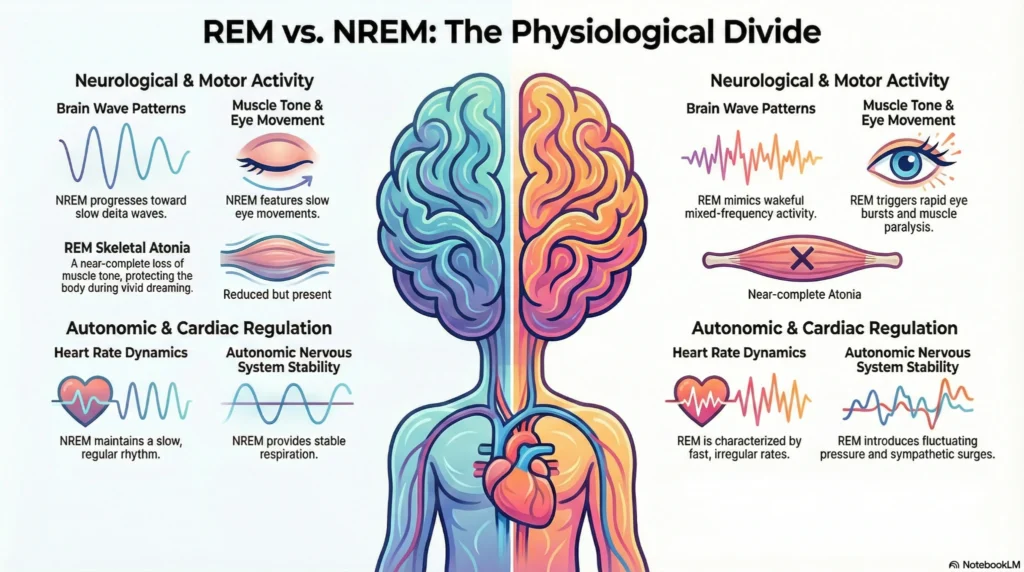
💡 Share This: “REM sleep fluctuates 10-25% night to night based on stress, alcohol, and temperature. One night of 12% REM doesn’t mean anything. Track your 7-day average instead—that’s what actually matters.”
Sources: Siegel, 2001 (Science); Hobson & Pace-Schott, 2002; Rasch & Born, 2013 (Physiological Reviews) Comprehensive review of sleep’s role in learning and memory
💡 Share This: “Think more REM = better sleep? Not always. Excessive REM (30%+) can indicate sleep debt recovery or rebound after stopping certain medications. Your body is complex—single metrics don’t tell the whole story.”
📊 What This Means for You:
If highly variable (15% one night, 28% the next): Normal. REM is more sensitive to daily stressors than other stages. Focus on weekly averages, not individual nights.
If your REM sleep is 20-25%: Optimal range for most adults. No changes needed.
If 15-20%: Still normal, especially if you feel mentally sharp during the day. REM needs vary individually.
If below 15% consistently (7-day average):
- Avoid alcohol 3+ hours before bed—alcohol severely disrupts REM in the second half of the night
- Check medication side effects (antidepressants, beta-blockers, and some sleep aids suppress REM)
- Ensure adequate total sleep—REM concentrates in the later sleep cycles, so 6-hour sleepers miss significant REM
- Reduce sleep fragmentation (address causes of nighttime awakenings)
- [Link to REM Sleep Optimization Strategies]
If above 25-30% consistently:
- May indicate REM rebound after sleep deprivation or withdrawal from REM-suppressing substances
- Can signal depression or certain sleep disorders if accompanied by daytime symptoms
- If persistent for 2+ weeks with excessive daytime sleepiness, consult a sleep specialist
💡 Share This: “Alcohol before bed will wreck your REM sleep. Even 1-2 drinks can reduce REM by 20-30%, especially in the second half of the night. Want vivid dreams and mental sharpness? Skip the nightcap.”
What Is REM Rebound and Is It Bad?
REM rebound occurs when the body recovers suppressed REM sleep following a period of REM deprivation. On your tracker it appears as an unusually high REM percentage (30–40%) after:
- Several nights of shortened sleep
- Stopping alcohol, cannabis, or REM-suppressing medications
- Resolution of a high-stress period
REM rebound is generally a recovery signal, not a dysfunction. One to two nights of elevated REM following depleted sleep is normal. If elevated REM persists beyond 7 days without an obvious behavioral explanation, discuss it with your provider.
Heart Rate Variability (HRV): Normal Ranges by Age and Fitness Level
Quick Answer sentence: HRV is the millisecond variation between consecutive heartbeats during sleep — a direct measure of autonomic nervous system balance and overnight recovery quality.
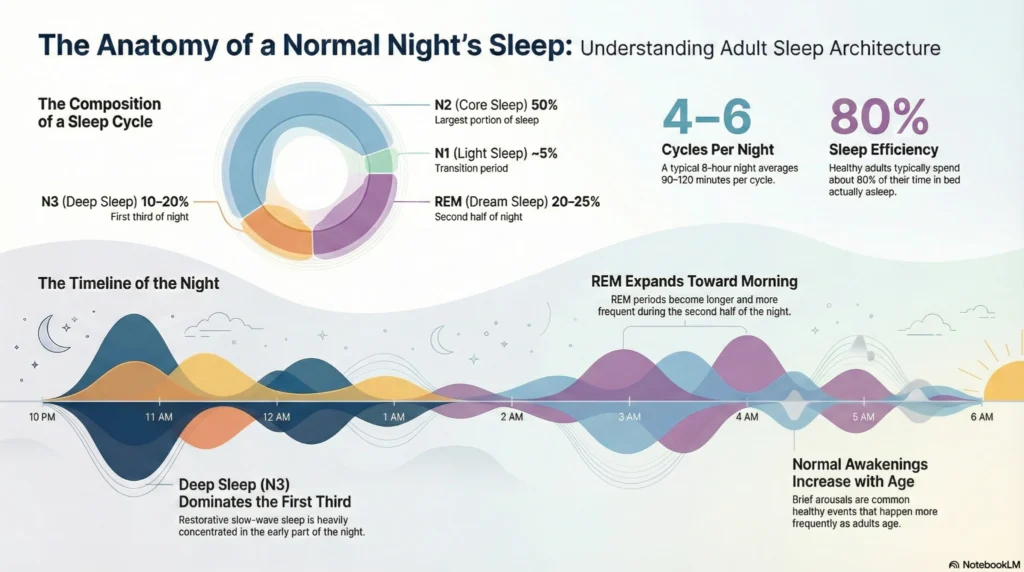
Heart rate variability (HRV) reflects the balance between your sympathetic nervous system (stress, activation) and your parasympathetic nervous system (rest, recovery). Higher HRV during sleep indicates the parasympathetic system is dominant — the physiological state associated with cellular repair, immune function, and cardiovascular resilience.
Consumer devices — including the Oura Ring, Garmin Fenix, Apple Watch, and WHOOP — measure HRV using wrist-based PPG sensors that detect pulse wave timing. The metric they report is primarily RMSSD (root mean square of successive differences), a short-term HRV index that responds meaningfully to recovery status within 24–48 hours.
💡 Share This: “HRV declines with age, but fitness matters more than years. A fit 50-year-old can have higher HRV than a sedentary 30-year-old. Stop comparing yourself to others—track YOUR trends instead.”
HRV Normal Ranges by Age and Fitness Level (RMSSD)
Age-stratified HRV reference table:
| Age Range | Sedentary | Active | High-Fitness |
|---|---|---|---|
| 20–29 | 40–65 ms | 65–90 ms | 90–120 ms |
| 30–39 | 35–55 ms | 55–80 ms | 75–110 ms |
| 40–49 | 25–45 ms | 45–70 ms | 65–95 ms |
| 50–59 | 20–38 ms | 35–60 ms | 55–80 ms |
| 60–69 | 15–30 ms | 25–50 ms | 40–65 ms |
Reference values based on published RMSSD research. Wrist PPG measurements may differ from ECG-based clinical readings.Peer-reviewed HRV norms from Frontiers in Public Health
Your personal trend matters more than your absolute number. A fit 48-year-old with a 7-day baseline of 58 ms dropping to 34 ms is more clinically significant than a sedentary 48-year-old whose HRV is consistently 30 ms. Context is everything.
💡 Share This: “Your HRV dropped from 60 to 40 overnight? Don’t panic. HRV naturally fluctuates 20-40% based on alcohol, stress, late meals, and exercise timing. What matters: 7-day averages and long-term trends.”
HRV and Autonomic Nervous System Balance: What Wearables Measure
Your autonomic nervous system (ANS) governs involuntary functions including heart rate, digestion, and respiratory rate. It has two branches:
- Sympathetic (SNS): Activates during stress, exercise, illness. Reduces HRV. Speeds heart rate.
- Parasympathetic (PNS): Activates during rest, sleep, recovery. Increases HRV. Slows heart rate.
Overnight HRV is primarily a measure of parasympathetic dominance. Illness, psychological stress, alcohol, overtraining, and poor sleep timing all suppress parasympathetic activity and reduce HRV. Consistent aerobic fitness, stress management, and regular sleep timing increase it.
⚠️ Critical Context: HRV values are highly individual and influenced by age, fitness level, genetics, and measurement conditions. Population averages provide limited utility for individual interpretation.
💡 Share This: “Low HRV doesn’t mean you’re unhealthy—it means your body is under stress or recovering. Common culprits: overtraining, poor sleep, alcohol, illness brewing, or chronic stress. Listen to what it’s telling you.”
RMSSD vs. SDNN: What Your Garmin or Oura Is Actually Tracking
| Metric | What It Measures | Consumer Device Use | Clinical Use |
|---|---|---|---|
| RMSSD | Beat-to-beat short-term HRV variation | Standard daily recovery metric | Parasympathetic activity |
| SDNN | Long-term 24-hour HRV variation | Occasionally referenced in Garmin | Overall ANS health, research |
For day-to-day wearable interpretation, focus on RMSSD. It is what your device’s HRV score is built on, it responds to lifestyle factors within hours, and it is the metric used in the research studies that underpin consumer HRV interpretation.
Clinical Perspective: While HRV patterns may provide general wellness insights, consumer device HRV should not be used for medical diagnosis or to guide clinical treatment. Individuals with cardiovascular concerns should consult healthcare providers.
Sources: Shaffer & Ginsberg, 2017 (Frontiers in Public Health); Plews et al., 2013 (European Journal of Applied Physiology) Research on HRV patterns in trained athletes
How to Establish Your Personal HRV Baseline
What is a good HRV score? HRV during sleep is best interpreted as a personal trend rather than an absolute number. Population averages vary widely by age, fitness level, and device; a meaningful HRV drop is one that falls more than 20% below your own 7-day rolling average.
HRV is among the most individually variable biometrics in sleep medicine. Comparing your reading to population averages is a starting point, not a conclusion.
To establish a meaningful baseline:
- Wear your device consistently for 14–30 days without trying to optimize readings.
- Identify your average nightly range — this is your personal normal.
- Flag nights when HRV falls more than 20% below your 7-day rolling average.
Tracking HRV responses to known stressors (illness, travel, intense training, alcohol) builds interpretive context faster than any reference table.
📊 What This Means for You:
First, establish YOUR baseline: HRV is highly individual. Track for 2-4 weeks to determine your normal range before interpreting highs or lows.
By Age & Fitness Level (General Ranges):
Ages 20-30:
- If your HRV is 60-100+ ms: Normal to excellent, especially if physically active
- If 40-60 ms: Average for sedentary individuals
- If below 40 ms: May indicate high stress, overtraining, poor sleep, or low cardiovascular fitness
Ages 30-40:
- If your HRV is 50-80 ms: Normal to good
- If 35-50 ms: Average
- If below 35 ms: Worth investigating—see improvement strategies below
Ages 40-50:
- If your HRV is 40-70 ms: Normal to good, especially if you exercise regularly
- If 25-40 ms: Average for age group
- If below 25 ms: Consider lifestyle optimization
Ages 50+:
- If your HRV is 30-60 ms: Good for age (especially if active)
- If 20-30 ms: Average for age
- If below 20 ms: Focus on stress reduction and cardiovascular health
Peer-reviewed HRV norms from Frontiers in Public Health
Actionable Triggers (Regardless of Age):
Action: None needed—this is optimal. Watch for sudden drops that might indicate overtraining.
If your HRV trends upward over weeks: Great! Your interventions (better sleep, exercise, stress management) are working. Maintain current habits.
If your HRV drops 10-15% below your baseline for 1-2 nights:
- Likely causes: Alcohol, late meal, poor sleep, stress, intense workout
- Action: Prioritize recovery—extra sleep, hydration, lighter training
- Monitor for return to baseline within 2-3 days
If your HRV drops 20%+ below baseline and stays low for 5-7 days:
- Red flag for: Overtraining, chronic stress, illness brewing, burnout
- Action: Reduce exercise intensity, prioritize sleep (add 30-60 min), review stress sources
- If accompanied by fatigue or other symptoms, consider medical consultation
If your HRV is consistently improving (upward trend over 4+ weeks):
You’re adapting well to training or lifestyle changes
Action: Continue current approach; consider gradually increasing training load if that’s your goal
If your HRV is erratic (wild day-to-day swings of 30-50 ms):
- Common culprits: Inconsistent sleep schedule, variable alcohol intake, irregular exercise timing
- Action: Stabilize lifestyle factors first—consistent bedtime, moderate alcohol, regular exercise routine
- Check device placement (shifting sensors cause false readings)
If you’re athletic with unusually high HRV (100+ ms):
Indicates excellent cardiovascular fitness and parasympathetic tone
💡 Share This: “Athletes: HRV dropping 20%+ below baseline for a week? Your body is screaming for recovery. Reduce training intensity, prioritize sleep, and give your nervous system time to adapt.”
Sleep Efficiency: Normal Ranges and What Low Efficiency Means
Quick Answer sentence: Sleep efficiency is the percentage of your time in bed spent actually asleep — calculated as (total sleep time ÷ total time in bed) × 100. An efficiency of 85% or above is normal for healthy adults.
Benchmark table:
| Sleep Efficiency | Interpretation |
|---|---|
| 90–100% | Excellent; time in bed well-matched to sleep need |
| 85–89% | Normal; minor fragmentation or variable onset |
| 80–84% | Below average; may reflect mild insomnia or disruption |
| Below 80% | Poor; investigate with behavioral strategies or clinical support |
One important caveat: Efficiency above 95% in older adults can reflect an artificially short sleep window — a sleep restriction pattern — rather than optimal quality. High efficiency in a 5-hour sleep window is not a positive signal.
💡 Share This: “Sleep scores vary wildly night to night because sleep is influenced by dozens of factors: stress, temperature, exercise timing, alcohol, light exposure, and hormones. Obsessing over nightly scores will make your sleep worse, not better.”
Sleep Efficiency Below 80%: Causes and Fixes
Persistent efficiency below 80% falls into four patterns:
- Sleep-onset insomnia: Consistently lying awake more than 30 minutes before sleep onset. Often driven by hyperarousal, anxiety, or irregular sleep timing.
- Sleep maintenance insomnia: Frequent overnight waking that increases time in bed without increasing sleep time.
- Obstructive sleep apnea: Repeated micro-arousals from airway obstruction fragment sleep without full awakening — often detectable by elevated WASO and SpO2 dips on consumer trackers.
- Excessive time in bed: Spending 9–10 hours in bed when the body only needs 7 hours paradoxically reduces efficiency by spreading lighter, lower-quality sleep across a longer window.
First-line treatment for low sleep efficiency is CBT-I (Cognitive Behavioral Therapy for Insomnia), not medication. CBT-I has stronger long-term evidence than pharmacotherapy for chronic insomnia.
💡 Share This: “Fitbit gave you a 68 sleep score but you feel great? Here’s why: Sleep scores are arbitrary algorithms that weight metrics differently across devices. How you FEEL is infinitely more important than what your tracker says.”
What Is WASO (Wake After Sleep Onset)?
WASO measures the total minutes you spend awake after first falling asleep — the most sensitive consumer metric for sleep fragmentation.
| WASO | Interpretation |
|---|---|
| Under 20 min | Normal for most adults |
| 20–30 min | Borderline; may reflect minor stress or environmental factors |
| 30–60 min | Below average; possible insomnia or sleep-disordered breathing |
| Over 60 min | Poor maintenance; warrants evaluation |
Consumer devices detect WASO through accelerometry and heart rate pattern changes, not EEG — meaning they likely underestimate actual WASO. If your device shows 45 minutes of WASO, your physiological WASO may be higher.
⚠️ Individual Variation: Baseline scores vary significantly among individuals. Tracking personal trends over 2-4 weeks provides more actionable insights than single-night comparisons to population norms.
💡 Share This: “You can’t compare sleep scores across devices. Fitbit prioritizes duration, Oura emphasizes HRV and recovery, Apple Watch focuses on consistency. A 75 on one device might be a 85 on another. Stop comparing.”
📊 What This Means for You:
If above 95% but you feel tired: You may not be spending enough total time in bed. High efficiency with insufficient duration still results in sleep deprivation.
If your sleep efficiency is 90-95%+: Excellent. Your time in bed closely matches time actually sleeping. Maintain your current sleep habits.
If 85-90%: Good, normal range. Most adults have brief awakenings throughout the night. No action needed unless you feel unrested.
If 80-85%:
- Moderate inefficiency—you’re spending 45-90 minutes awake in bed
- Try: Going to bed only when genuinely sleepy (not just tired)
- Reduce pre-bed screen time (blue light delays sleep onset)
- Keep bedroom cool, dark, and quiet
- If you can’t fall asleep within 20 minutes, get up and do a calm activity until drowsy
If below 80% consistently:
- Significant inefficiency—you may be spending 1.5-2+ hours awake in bed
- Consider sleep restriction therapy: Match time in bed more closely to actual sleep time (if you sleep 6 hours but spend 8 in bed, reduce bed time to 6.5 hours initially)
- Rule out sleep disorders: Sleep apnea, restless leg syndrome, or chronic insomnia
- Consult a sleep specialist or try Cognitive Behavioral Therapy for Insomnia (CBT-I)
- Avoid compensating with naps, which worsen nighttime sleep efficiency
💡 Share This: “Orthosomnia is real: People obsessing over sleep scores actually sleep WORSE. Studies show score anxiety increases sleep latency and reduces sleep quality. If tracking makes you anxious, stop doing it.”
Sleep Latency: What Is Normal and When to Be Concerned
Quick Answer sentence: Sleep latency is the time between lying down and falling asleep. Ten to 20 minutes is normal for healthy adults; consistent latency above 30 minutes is a clinical marker for sleep-onset insomnia.
| Sleep Latency | Interpretation |
|---|---|
| Under 5 minutes | May indicate significant sleep debt or pathological sleepiness |
| 5–20 minutes | Normal range |
| 20–30 minutes | Slightly elevated; often situational or behavioral |
| Over 30 minutes (consistent) | Clinical marker for sleep-onset insomnia |
Falling asleep very quickly is not always a positive finding. Latency under 5 minutes consistently can signal accumulated sleep debt, narcolepsy, or idiopathic hypersomnia. If your tracker routinely shows near-instant sleep onset alongside daytime sleepiness, mention it to your doctor.
Behavioral interventions for elevated latency — fixed wake time, stimulus control (bed only for sleep), reducing screen exposure before bed — should precede any clinical evaluation. If latency remains above 30 minutes after 4–6 weeks of behavioral changes, seek clinical guidance.
💡 Share This: “Sleep efficiency below 85% means you’re spending serious time awake in bed. The fix isn’t MORE time in bed—it’s better sleep hygiene, consistent timing, and only using your bed for sleep (not scrolling).”
Sleep Onset Latency
| Latency Range | Typical Interpretation | Clinical Context |
| <5 minutes | Unusually rapid | May indicate significant sleep debt or sleep disorder (e.g., narcolepsy) |
| 10-20 minutes | Normal | Healthy sleep onset |
| 20-30 minutes | Borderline | Within normal variation; may suggest mild difficulty initiating sleep |
| >30 minutes | Prolonged | May indicate insomnia, anxiety, or circadian rhythm (your body’s natural sleep-wake cycle) misalignment |
Limitations: – Devices may misclassify quiet wakefulness as sleep onset – Actual sleep onset (verified by EEG) may differ from device estimate by ±10-20 minutes – Individuals lying still before sleep may have artificially short measured latency
Clinical Perspective: Consistently prolonged sleep latency (>30 minutes) associated with daytime fatigue or distress may indicate insomnia or circadian rhythm disorders warranting professional evaluation.
Sources: Ohayon et al., 2017 (Sleep Medicine); Kaplan & Harvey, 2009 (Sleep Medicine Reviews)
Factors Influencing Sleep Latency
| Factor | Effect on Sleep Onset |
|---|---|
| Sleep Pressure | Higher sleep debt (inadequate prior sleep) reduces latency |
| Circadian Timing | Sleep onset faster when aligned with natural circadian rhythm (your body’s natural sleep-wake cycle) |
| Stress/Anxiety | Mental arousal significantly delays sleep onset |
| Caffeine | Extends latency; effects persist 6-8 hours |
| Physical Activity | Regular exercise may improve latency; intense late-day exercise may delay onset |
| Screen Exposure | Blue light exposure before bed delays melatonin secretion and extends latency |
📊 What This Means for You:
Action: Track patterns—note what differs on fast vs. slow nights (exercise timing, caffeine, stress, screen time)
If you fall asleep in 10-20 minutes: Ideal. This indicates healthy sleep pressure without excessive fatigue.
If you fall asleep in 5-10 minutes:
- Often normal, but can indicate mild sleep deprivation
- Action: If you feel refreshed during the day, no change needed
- If you feel tired often, consider adding 30-60 minutes to your sleep schedule
If you fall asleep in under 5 minutes consistently:
- Strong indicator of sleep debt—you’re likely not getting enough sleep
- Action: Go to bed 30-60 minutes earlier for 2 weeks and reassess
- Well-rested people take longer to fall asleep because they have lower sleep pressure
If it takes you 20-30 minutes to fall asleep:
- Upper end of normal, but worth optimizing
- Action: Review pre-bed routine—reduce screen time 1 hour before bed, try relaxation techniques, ensure bedroom is cool and dark
- Avoid watching the clock (increases anxiety)
If it takes 30-45+ minutes consistently:
- May indicate onset insomnia or hyperarousal
- Action:
- Practice the “20-minute rule”: If not asleep in 20 minutes, get out of bed and do a quiet activity
- Avoid caffeine after 2 PM
- Create a buffer zone (30-60 min wind-down before bed with no screens)
- Try sleep restriction therapy or Cognitive Behavioral Therapy for Insomnia (CBT-I)
If you fall asleep quickly some nights (5 min) and slowly others (40 min):
Normal variation based on daily stress, activity level, and circadian alignment
💡 Share This: “Falling asleep in under 5 minutes every night? That’s not a superpower—it’s a red flag for sleep deprivation. Well-rested people take 10-20 minutes to fall asleep because they have normal sleep pressure, not exhaustion.”
SpO2 During Sleep: Normal Levels and Warning Signs
Quick Answer sentence: SpO2 (blood oxygen saturation) should remain between 94–100% for healthy adults during sleep; sustained readings below 90% are a clinically significant finding requiring medical evaluation.
Consumer devices — including the Apple Watch, Garmin, Fitbit, and Oura Ring — measure SpO2 using photoplethysmography (PPG): a light-based method that estimates oxygen saturation through wrist capillary blood flow. This differs from clinical fingertip pulse oximetry and carries higher motion artifact risk.
| SpO2 Level (Sustained) | Interpretation |
|---|---|
| 95–100% | Normal |
| 90–94% | Borderline; monitor for patterns |
| Below 90% | Clinically significant; warrants evaluation |
| Below 88% (sustained) | Seek medical evaluation; possible OSA or respiratory impairment |
At What SpO2 Level Should You Be Concerned?
When should you be concerned about SpO2 during sleep? SpO2 consistently below 90% during sleep is a clinically significant finding warranting evaluation for obstructive sleep apnea or respiratory impairment. Isolated brief dips below 94% are common and generally not concerning.
A single dip to 93% during a positional shift is not clinically significant. The relevant pattern is sustained low SpO2 — readings below 90% lasting several minutes per night, recurring across multiple nights.
Patterns warranting clinical evaluation:
- Repeated dips below 90% on 3+ consecutive nights
- Sustained readings below 88% for multiple minutes
- SpO2 dips correlated with elevated AHI estimates, high WASO, or daytime fatigue
- Dips correlated with partner-reported snoring or breathing pauses
| SpO2 Range | Typical Interpretation | Considerations |
|---|---|---|
| 95-100% | Normal | Healthy oxygen saturation during sleep |
| 90-94% | Borderline | May indicate mild hypoxemia; context-dependent (altitude, lung disease) |
| 85-89% | Low | Warrants medical evaluation if persistent |
| <85% | Very Low | Significant concern; medical attention recommended |
Factors Affecting Accuracy:
| Factor | Impact on Measurement |
|---|---|
| Skin Pigmentation | Darker skin tones may affect accuracy; some devices have bias |
| Peripheral Perfusion | Cold extremities, poor circulation reduce signal quality |
| Motion | Movement during sleep creates artifacts in readings |
| Sensor Placement | Wrist-based sensors less accurate than finger-based clinical oximeters |
| Altitude | Normal SpO2 lower at high elevation (e.g., 90-94% normal above 10,000 ft) |
💡 Share This: “Blood oxygen dipping below 90% during sleep? That’s your body not getting enough oxygen—often from sleep apnea. Track the pattern and see a doctor. Don’t ignore SpO2 warnings from your tracker.”
Sensor Error vs. Genuine SpO2 Drops: How to Tell the Difference
Not every SpO2 dip on your wearable is a physiological event. Consumer PPG sensors are susceptible to motion artifacts, poor skin-sensor contact, and ambient light interference.
Signs of likely sensor artifact:
- An isolated 1–2 minute dip with normal readings immediately before and after
- Dip correlates with known movement (rolling over, arm repositioning)
- Readings fluctuate erratically throughout the night rather than following a pattern
Signs the reading may be physiologically real:
- Multiple dips per hour at regular intervals (consistent with apnea cycle timing)
- Dips occur concurrently with elevated heart rate
- Pattern appears on multiple nights across different sleep positions
- Dips correlate with daytime symptoms (morning headache, non-refreshed sleep, fatigue)
If uncertain, discuss the pattern with your doctor. A home sleep apnea test or overnight clinical pulse oximetry provides confirmation without requiring a full sleep lab study.
| Aspect | Consumer Wearable | Clinical Pulse Oximeter |
|---|---|---|
| Accuracy | ±2-4% typical; lower accuracy below 90% | ±2% standard; FDA-regulated performance |
| Response Time | Slower; averaged readings | Real-time continuous monitoring |
| Clinical Validation | Limited; varies by manufacturer | Extensive validation required for FDA clearance |
| Appropriate Use | General wellness monitoring; trend tracking | Medical diagnosis; treatment monitoring |
⚠️ Clinical Note: Consumer SpO2 readings showing consistent values <90% or significant drops—often called oxygen desaturation events—may indicate sleep apnea or other respiratory conditions. . These findings should prompt medical evaluation but are not diagnostic on their own.
Sources: Luks & Swenson, 2011 (High Altitude Medicine & Biology); FDA guidance on pulse oximetry
💡 Share This: “Normal SpO2 during sleep: 95-100%. Occasional dips to 92-94%: Usually fine. Frequent drops below 90%: Red flag for sleep apnea or lung issues. Consumer trackers aren’t perfect, but consistent low readings warrant medical evaluation.”
📊 What This Means for You:
- If your average SpO2 is 95-100%: Normal, healthy oxygen levels during sleep. No action needed.
- If your average SpO2 is 90-94%:
- Lower end of acceptable, but context matters
- Action: Note if you have:
- Lung conditions (asthma, COPD)
- High altitude residence (lower oxygen availability)
- Recent respiratory illness
- If no obvious cause and this is new, mention to your doctor
- May indicate mild sleep-disordered breathing
- If your average SpO2 is below 90% or you see frequent dips below 90%:
- Concerning—seek medical evaluation
- May indicate:
- Sleep apnea (oxygen desaturations during breathing pauses)
- Lung disease
- Heart conditions
- Action: Document patterns (frequency, duration of dips) and schedule appointment with doctor or sleep specialist
- Do NOT ignore sustained readings below 88%
Pattern-Based Actions:
- If you see brief dips to 88-92% a few times per night:
- Common with positional changes or mild apnea
- Try sleeping on your side
- Avoid alcohol before bed
- If dips occur 10+ times per night, pursue sleep apnea evaluation
- If SpO2 readings seem erratic or implausible (70% then 98% within seconds):
- Likely sensor error—poor device contact, movement, or low battery
- Action: Check device fit, clean sensors, ensure proper placement
- Re-evaluate after addressing technical issues
- If you have normal SpO2 but still feel unrefreshed:
- Oxygen saturation is only one factor
- Review other metrics (sleep efficiency, AHI, sleep stages)
- Consider non-respiratory causes of poor sleep quality
Remember: Consumer tracker SpO2 readings are less accurate than medical-grade pulse oximeters. Use trends and patterns, not single readings, to guide decisions.
AHI and Obstructive Sleep Apnea: What Consumer Devices Can and Cannot Tell You
Quick Answer sentence: AHI (Apnea-Hypopnea Index) counts breathing interruptions per hour of sleep; an AHI below 5 is normal, and consumer device AHI estimates are screening indicators, not diagnostic results.
The Apnea-Hypopnea Index (AHI) is the clinical standard for sleep apnea severity: it tallies apneas (complete breathing pauses lasting ≥10 seconds) and hypopneas (partial pauses with oxygen desaturation or cortical arousal) per hour of sleep.
What AHI Measures: Normal AHI Levels
| Event Type | Definition | Clinical Threshold |
|---|---|---|
| Apnea | Complete cessation of airflow for ≥10 seconds | Must be associated with oxygen desaturation or arousal |
| Hypopnea | Partial reduction in airflow (≥30% decrease) for ≥10 seconds | Requires ≥3% oxygen drop or arousal from sleep |
| AHI Calculation | (Total apneas + hypopneas) / hours of sleep | Clinical scoring follows AASM guidelines |
Consumer Device Limitations: Wearables estimate breathing disruptions using movement, heart rate changes, and blood oxygen sensors. These estimates may correlate with AHI but are not equivalent to clinical measurements.
💡 Share This: “AHI above 5 events/hour on your tracker? Don’t self-diagnose. Consumer devices overestimate AND underestimate apnea. See a sleep specialist for proper testing—untreated sleep apnea increases heart attack and stroke risk.”
AHI Severity Classification
| AHI | Classification |
|---|---|
| 0–4.9 | Normal |
| 5–14.9 | Mild Obstructive Sleep Apnea |
| 15–29.9 | Moderate Obstructive Sleep Apnea |
| 30+ | Severe Obstructive Sleep Apnea |
What consumer devices actually measure: Wrist-based devices (Apple Watch, Garmin, Fitbit) estimate AHI from respiratory rate variability, SpO2 fluctuations, and movement. They do not measure airflow, thoracic effort, or EEG arousal — the inputs polysomnography uses.
Consumer AHI estimates carry significant false-negative risk for mild OSA: a device showing AHI of 3 does not rule out clinically significant sleep apnea.
| AHI Range | Severity | Clinical Implications |
|---|---|---|
| <5 events/hour | Normal | No significant sleep-related breathing disorder indicated |
| 5-15 events/hour | Mild OSA | May warrant evaluation if symptoms present (daytime sleepiness, morning headaches) |
| 15-30 events/hour | Moderate OSA | Clinical intervention often recommended; associated with health risks |
| >30 events/hour | Severe OSA | Treatment strongly recommended; elevated cardiovascular and metabolic risk |
⚠️ Important: Consumer device AHI estimates are not diagnostic. Formal sleep apnea diagnosis requires: – Clinical evaluation by a healthcare provider – Supervised polysomnography – clinical sleep study (the medical gold standard) or FDA-cleared home sleep apnea test – Interpretation by board-certified sleep medicine physician
Individuals with persistent snoring, witnessed breathing pauses, excessive daytime sleepiness, or morning headaches should consult a healthcare provider regardless of consumer device readings.
Sources: American Academy of Sleep Medicine clinical guidelines; Kapur et al., 2017 (Journal of Clinical Sleep Medicine)
💡 Share This: “Your tracker shows zero apnea but you snore like a freight train? Trackers miss events regularly. If your partner witnesses breathing pauses or you have crushing daytime fatigue, get a clinical sleep study regardless of what your device says.”
When a Consumer AHI Reading Warrants a Sleep Study
Seek clinical evaluation for obstructive sleep apnea if your tracker shows:
- Consistent AHI estimates above 10 events/hour over 2+ weeks
- AHI above 5 combined with daytime sleepiness, morning headaches, or partner-reported snoring
- SpO2 dips and elevated AHI appearing together across multiple nights
The appropriate next step is a home sleep apnea test (HSAT) — a clinical respiratory monitor worn overnight — not further consumer tracking. If HSAT results are inconclusive or symptoms are severe, a polysomnography study (attended sleep lab) provides the diagnostic gold standard. Clinical guidelines for sleep apnea diagnosis
💡 Share This: “Sleep apnea isn’t just snoring—it’s repeated breathing pauses that starve your body of oxygen. Symptoms: loud snoring, gasping during sleep, morning headaches, brain fog, and falling asleep during the day. This is serious. See a doctor.”
📊 What This Means for You:
⚠️ Important: Consumer sleep trackers are NOT diagnostic tools. Use this information to identify patterns worth discussing with a doctor, not for self-diagnosis.
- If your AHI is 0-5 events/hour: Normal. No apnea detected. No action needed unless you have unexplained symptoms (see below).
- If your AHI is 5-15 events/hour (Mild Sleep Apnea range):
- Action required: Schedule consultation with a sleep specialist
- Do NOT assume tracker accuracy—get clinical testing (polysomnography or home sleep apnea test)
- While waiting for appointment:
- Try sleeping on your side instead of back (positional therapy)
- Avoid alcohol 3+ hours before bed
- Maintain healthy weight if overweight
- Elevate head of bed 30-45 degrees
- [Link to Sleep Apnea Specialist Finder]
- If your AHI is 15-30 events/hour (Moderate Sleep Apnea range):
- Urgent action: Contact sleep specialist immediately
- This level significantly impacts health (cardiovascular risk, daytime impairment)
- Do NOT rely on tracker data alone—pursue professional diagnosis
- Likely treatment: CPAP therapy, oral appliance, or surgery depending on evaluation
- If your AHI is 30+ events/hour (Severe Sleep Apnea range):
- Seek medical care promptly
- Severe apnea increases risk of heart attack, stroke, hypertension, and diabetes
- While trackers overestimate in this range, even half this number warrants immediate professional evaluation
Additional Triggers:
Ensure proper CPAP mask fit and consistent usage
If your AHI varies widely night to night (2 one night, 15 the next):
- Sleep position matters—track which nights you slept on your back
- Alcohol, nasal congestion, and weight changes affect severity
- Tracker may be inaccurate—if average is >5, seek professional testing
If your AHI is normal (0-5) but you have these symptoms:
- Loud snoring with witnessed breathing pauses
- Gasping or choking during sleep
- Severe daytime sleepiness despite adequate sleep duration
- Morning headaches or dry mouth
Action: See a sleep specialist anyway—trackers miss apnea events, and you may have central sleep apnea or other disorders
If you’re already treated for sleep apnea and tracker shows AHI >5:
Your CPAP/oral appliance may need adjustment
Contact your sleep doctor to review therapy effectiveness
💡 Share This: “Can you trust your sleep tracker for sleep apnea detection? No. Consumer devices miss apnea events regularly and can’t distinguish types of apnea. If you snore loudly or gasp during sleep, see a specialist—don’t rely on your Fitbit.”
Respiratory Rate During Sleep: Normal Ranges and Trends
Quick Answer sentence: Normal resting respiratory rate during sleep for adults is 12–20 breaths per minute; a consistent rate outside this range or a sustained upward trend may indicate illness onset or respiratory impairment.
Respiratory rate during sleep — measured by Garmin, Fitbit, Apple Watch, and Oura Ring via PPG-derived chest movement detection — is one of the earliest physiological markers of illness, overtraining, or sleep-disordered breathing.
| Respiratory Rate | Interpretation |
|---|---|
| 12–16 breaths/min | Normal resting range |
| 16–20 breaths/min | Elevated normal; may reflect minor stress or recovery load |
| Above 20 breaths/min (sustained) | Warrants monitoring; possible illness or respiratory issue |
| Erratic variability night-to-night | Pattern worth noting; discuss with provider if persistent |
Trending is more useful than any single reading. A respiratory rate that rises from your personal baseline of 14 to 18–20 for three consecutive nights — particularly accompanied by HRV suppression and elevated resting heart rate — is a reliable early illness indicator on devices that track all three.
Factors Affecting Respiratory Rate During Sleep
| Factor | Typical Effect |
|---|---|
| Sleep Stage | Decreases in deep sleep; more variable in REM |
| Body Position | May increase in supine position in some individuals |
| Altitude | Increases at high elevation |
| Illness | Elevated with respiratory infections, fever |
| Sleep Apnea | Irregular patterns; pauses followed by rapid breathing |
Consumer Device Limitations
Consumer wearables estimate respiratory rate indirectly through: – Accelerometer-detected chest movements – Heart rate variability patterns (respiratory sinus arrhythmia) – Ballistocardiography (detecting body movements from heartbeat and breathing)
Accuracy Considerations: – Accuracy typically ±1-3 breaths/min compared to clinical respiratory monitoring – Movement during sleep may introduce measurement errors – Sensor placement affects accuracy (chest straps more accurate than wrist devices)
⚠️ Clinical Note: Persistent respiratory rate >20 breaths/min during sleep or significant irregularities may warrant medical evaluation. Consumer device readings are not diagnostic.
Sources: Cretikos et al., 2008 (Respiratory Care); Berry et al., 2012 (Journal of Clinical Sleep Medicine)
How Consumer Sleep Trackers Compare to Polysomnography
How accurate are consumer sleep trackers? Consumer wearables achieve approximately 78% epoch-by-epoch agreement with polysomnography for sleep/wake detection. Stage-specific accuracy is lower: REM identification is approximately 65–72% accurate. AHI estimates from consumer devices are screening signals, not diagnostic results.
All users should understand the consumer sleep tracking limitations inherent to these devices :
Consumer Device Accuracy by Metric (Comparison Table)
| Metric | PSG Method | Consumer Device Method | Agreement with PSG |
|---|---|---|---|
| Sleep/wake detection | EEG + EOG | Accelerometry + HR | ~78% epoch-by-epoch |
| Deep sleep (N3) | EEG delta waves | HR + movement inference | ~60–70% |
| REM sleep | EEG + EOG sawtooth waves | HR variability + movement | ~65–72% |
| Sleep latency | EEG-confirmed onset | Movement cessation + HR drop | Moderate agreement |
| AHI | Airflow + effort + EEG arousal | SpO2 + respiratory rate variation | Low–Moderate (screening only) |
| SpO2 | Fingertip pulse oximetry | Wrist PPG | Moderate (motion artifact risk) |
| HRV (RMSSD) | ECG R-R intervals | Wrist PPG pulse intervals | Moderate (individual variability) |
Accuracy references: Chinoy et al. (2021); de Zambotti et al. (2019).
Clinical note: The Oura Ring, Fitbit, WHOOP, and Garmin devices all show useful agreement with PSG for sleep/wake detection — the simplest distinction. Stage-specific accuracy (deep vs. REM vs. light) is substantially lower. AHI estimation accuracy is lowest of all tracked metrics and should be treated as a screening signal only.
What this means in practice: Consumer devices are well-suited to tracking your personal trends over time. They are not substitutes for clinical sleep studies. If your device flags a persistent abnormality, clinical confirmation — not additional consumer tracking — is the next step.
(2021 study comparing consumer sleep trackers to clinical testing)
💡 Share This: “How accurate is your Fitbit/Oura/Apple Watch? Sleep duration: ±10-15 minutes (good). Sleep stages: 60-80% accurate (okay for trends). Medical diagnosis: 0% reliable (see a doctor instead).”
When Consumer Tracking Is Not Sufficient
Consumer sleep tracking is not appropriate for:
- Diagnosing sleep disorders: Requires clinical evaluation and specialized testing
- Guiding medical treatment: Clinical decisions should not be based on consumer device data
- Monitoring medical conditions: Regulated medical devices required for health monitoring
- Replacing healthcare evaluation: Symptoms of sleep disorders warrant professional assessment
Clinical Perspective: Consumer sleep trackers serve as general wellness tools that may help identify patterns worth discussing with healthcare providers. They are not substitutes for medical evaluation or diagnostic testing.
Sources: de Zambotti et al., 2019 (Sleep Medicine Reviews – comprehensive validation review); Chinoy et al., 2021 (Sensors)
💡 Share This: “Your sleep tracker estimates—it doesn’t diagnose. Consumer devices use movement and heart rate to guess at sleep stages. Clinical sleep studies use brain waves. Big difference. Use trackers for YOUR trends, not absolute truth.”
Circadian Rhythm and Sleep Timing: Why Consistency Matters as Much as Duration
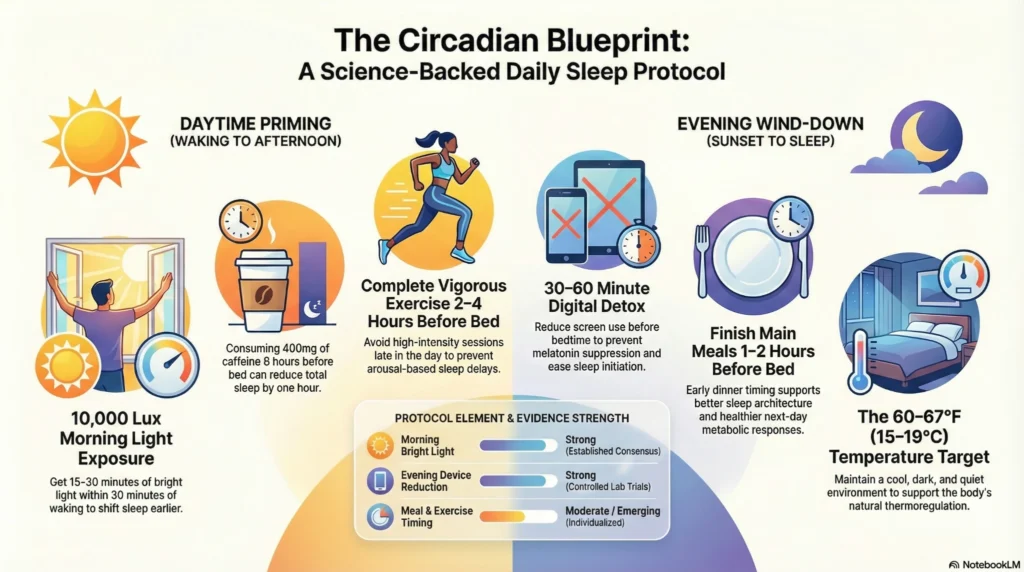
Quick Answer sentence: Your circadian rhythm is a 24-hour internal biological clock that governs sleep architecture, hormone release, and metabolic function — and irregular sleep timing disrupts it even when total sleep duration is adequate.
Circadian rhythm (your body’s natural sleep-wake cycle) is the body’s internal ~24-hour biological clock that regulates sleep-wake cycles, hormone secretion, and numerous physiological processes. Sleep quality is influenced by alignment between sleep timing and circadian rhythms. How circadian rhythms regulate sleep-wake cycles
Your circadian rhythm governs the timing of melatonin secretion, core body temperature, cortisol release, and sleep stage architecture. Consumer trackers don’t measure circadian alignment directly — but the timing data they capture (bedtime, wake time, sleep onset) is one of the most underused inputs in wearable interpretation.
Sleep timing consistency is independently protective. Someone sleeping 7.5 hours on an irregular schedule (bedtime varying from midnight to 2 AM) will have worse sleep architecture than someone sleeping 7 hours at a consistent time. Duration is necessary but not sufficient.
DLMO and chronotype: The clinical gold standard for measuring your internal clock is DLMO (Dim Light Melatonin Onset) — the time melatonin begins rising in a dim-light environment. Consumer devices don’t measure DLMO directly, but tracking your natural sleep onset across low-stress weeks approximates your chronotype window.
| Chronotype | Natural Sleep Window | Approx. DLMO |
|---|---|---|
| Morning (lark) | 10 PM–6 AM | ~8–9 PM |
| Intermediate | 11 PM–7 AM | ~9–10 PM |
| Evening (owl) | 1–9 AM | ~10–11 PM |
Forcing an evening chronotype into a 2-hour earlier schedule produces outcomes similar to mild chronic shift work — including suppressed deep sleep, elevated cortisol, and reduced HRV — even when total duration is maintained.
⚠️ Note: Circadian alignment cannot be fully assessed by consumer devices. Clinical circadian assessment may require specialized testing including: – Dim light melatonin onset measurement – Core body temperature monitoring – Actigraphy combined with sleep diaries – Consultation with sleep medicine specialist
Social Jet Lag and Circadian Misalignment
Social jet lag is the discrepancy between your biological sleep timing and your socially imposed schedule. Sleeping until 9 AM on weekends but waking at 6 AM on weekdays creates a 3-hour circadian shift twice per week — equivalent to crossing three time zones and back, repeatedly.
Wearable indicators of social jet lag:
- Weekend scores consistently 15+ points higher than weekday scores
- HRV peaks Sunday morning; drops Monday evening
- Sunday night sleep latency consistently elevated (anticipatory arousal before the work week)
Limiting weekend sleep shifts to 30–60 minutes beyond your weekday schedule is one of the highest-leverage, lowest-cost sleep improvements available to most working adults.
Orthosomnia: When Sleep Tracking Makes Sleep Worse
What is orthosomnia? Orthosomnia is a clinically described condition in which excessive concern about achieving a perfect sleep tracker score worsens sleep quality. First documented by Baron et al. (2017), it is a recognized risk of obsessive consumer sleep monitoring.
Orthosomnia is a clinically described condition in which excessive concern about achieving a perfect sleep score from a consumer device actively worsens sleep quality. First documented by Baron et al. (2017) in the Journal of Clinical Sleep Medicine, it is a recognized iatrogenic risk of consumer sleep tracking.
Common orthosomnia patterns:
- Pre-sleep anxiety about the upcoming night’s score
- Checking the device during the night
- Daytime distress when scores fall below expectations
- Sleep-related hyperarousal driven by performance monitoring
The paradox: the same anxiety that drives users to track more closely activates the sympathetic nervous system — suppressing the HRV and deep sleep the tracker is designed to improve.
If you recognize this pattern: Reduce tracking frequency to every 2–3 nights, or take a 2-week tracking break. Sleep improves through behavioral change, not closer monitoring.
Using Sleep Metrics Responsibly
When determining which sleep metrics to track, consumer sleep tracking provides general wellness information that may help identify patterns. However, these metrics should be interpreted with awareness of their limitations.
Your wearable generates data. What matters is how you interpret and respond to it.
Three principles for responsible sleep tracking:
1. Look for trends, not individual nights. A single low score tells you almost nothing. A pattern across 10–14 days is signal — adjust behavior, sleep timing, or seek clinical input only in response to patterns.
2. Weight how you feel alongside your score. Consumer devices are imperfect. If you feel rested and your score says 68, trust your subjective experience. If you feel exhausted and your score says 82, don’t dismiss the symptom because the number looks acceptable.
3. Know when to reduce tracking. Some users develop monitoring anxiety that worsens their sleep — a clinically described condition called orthosomnia. If you find yourself lying awake worrying about your upcoming sleep score, the solution is less monitoring, not more optimization.
CBT-I: The Evidence-Based Treatment When Metrics Flag a Problem
When consumer tracking reveals a persistent problem — chronic low efficiency, elevated WASO, extended sleep latency — the evidence-based first-line response is CBT-I (Cognitive Behavioral Therapy for Insomnia), not sleep aids.
CBT-I components:
- Sleep restriction therapy: Temporarily reducing time in bed to match actual sleep time, consolidating and improving efficiency
- Stimulus control: Reserving the bed for sleep only, reducing conditioned arousal
- Sleep hygiene: Consistent wake time, light management, caffeine timing
- Cognitive restructuring: Addressing catastrophic sleep beliefs that perpetuate hyperarousal
CBT-I has stronger long-term evidence than any pharmacotherapy for chronic insomnia. It is available through behavioral sleep medicine therapists and increasingly through validated digital CBT-I platforms.
When to Consult a Healthcare Provider
Not every concerning tracker reading requires a medical appointment. The patterns below — not single-night events — are worth discussing with a doctor:
| Pattern | Threshold for Clinical Consultation |
|---|---|
| SpO2 | Sustained readings below 90% on 3+ nights per week |
| AHI estimate | Consistent readings above 10–15 events/hour, especially with daytime symptoms |
| Sleep efficiency | Below 75% for more than 2 consecutive weeks despite behavioral changes |
| HRV trend | Decline more than 30% below personal 7-day average sustained for 10+ days |
| Sleep latency | Consistently above 40 minutes after 4–6 weeks of behavioral intervention |
| Daytime sleepiness | Epworth Sleepiness Scale score above 10 |
Start with your primary care physician. Bring 14–30 days of wearable data — most physicians can interpret trend charts without device-specific training. For suspected sleep apnea, ask for referral to a sleep specialist or a home sleep apnea test. For insomnia, ask about referral to a behaviorally trained sleep therapist.
Your device flags patterns. A clinician interprets them in the context of your health history. (research on excessive daytime sleepiness and sleep disorders)
⚠️ Important: Consumer device data is not diagnostic. Professional sleep evaluation may include: – Clinical interview by sleep medicine specialist – Sleep diary and validated questionnaires – Polysomnography -clinical sleep study (the medical gold standard) – Home sleep apnea testing – Actigraphy with clinical correlation
American Academy of Sleep Medicine guidelines”
Clinical evidence for sleep hygiene practices
💡 Share This: “Your doctor doesn’t trust your sleep tracker data—and here’s why: They’re not FDA-approved medical devices. Diagnosis requires clinical-grade polysomnography. Use your tracker to spot patterns worth discussing, not as medical evidence.”
FrequentlyAsked Questions
What is a normal sleep score?
A sleep score of 85 or above is generally considered good across most consumer platforms. Scores below 70 on consecutive nights warrant attention, though scoring algorithms differ by manufacturer — an Oura Ring score of 70 is a “Fair” rating, while the same number on Fitbit may carry a different label. Device-specific context matters.
What does a sleep score of 70 mean on an Oura Ring?
On the Oura Ring, a score of 70 is classified as “Fair.” It indicates one or more components — typically HRV, sleep duration, or deep sleep percentage — fell below your personal baseline for that night. A Fair score on one night is not concerning; consistent Fair scores over 5–7 nights warrant a closer look at your sleep timing, alcohol intake, or stress levels.
What is a normal deep sleep percentage for adults?
Adults typically spend 13–23% of total sleep time in deep (slow-wave) sleep — roughly 60–90 minutes in a 7–8 hour night. This percentage declines naturally with age: adults over 55 typically see 8–12%, which is normal for their age group. Compare your readings to age-matched expectations rather than platform-wide averages.
How accurate are wearable sleep trackers compared to sleep studies?
Consumer wearables show approximately 78% epoch-by-epoch agreement with polysomnography for sleep/wake detection. Stage-specific accuracy is lower — REM identification runs approximately 65–72% accurate. AHI estimates from consumer devices should be treated as screening indicators, not clinical diagnoses. For suspected sleep apnea, a home sleep apnea test or polysomnography is required for confirmation.
What is a healthy HRV score during sleep?
HRV varies substantially by age and fitness level. As a general guideline: 20–40 ms RMSSD is typical for sedentary adults aged 40–55; 50–90 ms is common in fit individuals aged 25–40. Your personal trend across 14–30 days is more actionable than any single-night reading or population comparison. A drop of more than 20% below your baseline is more meaningful than the absolute number.
At what SpO2 level should I be concerned during sleep?
SpO2 consistently below 90% during sleep is a clinically significant finding and warrants evaluation for obstructive sleep apnea or other respiratory conditions. Isolated brief dips below 94% are common and typically not concerning. If your device shows repeated dips below 90% across multiple nights — especially with daytime fatigue or morning headaches — discuss the pattern with your doctor.
What causes low sleep efficiency?
Sleep efficiency below 80% can result from sleep-onset insomnia, sleep apnea causing overnight micro-arousals, restless legs syndrome, or behavioral factors such as excessive time in bed. The first-line evidence-based treatment is CBT-I (Cognitive Behavioral Therapy for Insomnia), which has stronger long-term outcomes than pharmacotherapy. If efficiency remains below 80% after 4–6 weeks of behavioral changes, seek clinical evaluation.
What is WASO and what is a normal amount?
WASO (Wake After Sleep Onset) is the total time spent awake after initially falling asleep. Under 30 minutes per night is generally normal for healthy adults. Chronic WASO above 60 minutes may indicate sleep maintenance insomnia or obstructive sleep apnea. Consumer devices typically underestimate WASO because they use movement detection rather than EEG.
What is orthosomnia?
Orthosomnia is a clinically described condition in which excessive concern about achieving a perfect sleep tracker score worsens actual sleep quality. First documented by Baron et al. (2017) in the Journal of Clinical Sleep Medicine, it is a recognized risk of obsessive consumer sleep monitoring. If anxiety about your sleep score is keeping you awake, reduce tracking frequency rather than increasing it.
Can a consumer device accurately diagnose sleep apnea?
No. Consumer devices can flag patterns consistent with sleep apnea — elevated AHI estimates, SpO2 dips, fragmented sleep — but cannot provide a clinical diagnosis. An AHI estimate consistently above 10–15 from a consumer device warrants referral for a home sleep apnea test (HSAT) or polysomnography. A normal consumer AHI reading does not rule out clinically significant sleep apnea.
References
Walker, M. (2017). Why We Sleep: Unlocking the Power of Sleep and Dreams. Scribner.
Abbott, S. M., Reid, K. J., & Zee, P. C. (2020). Circadian rhythm sleep-wake disorders. Psychiatric Clinics, 43(4), 631-647.
American Academy of Sleep Medicine. (2023). International Classification of Sleep Disorders, 3rd edition, text revision (ICSD-3-TR).
Baron, K. G., Abbott, S., Jao, N., Manalo, N., & Mullen, R. (2017). Orthosomnia: Are some patients taking the quantified self too far? Journal of Clinical Sleep Medicine, 13(2), 351-354.
Berry, R. B., Budhiraja, R., Gottlieb, D. J., et al. (2012). Rules for scoring respiratory events in sleep. Journal of Clinical Sleep Medicine, 8(5), 597-619.
Bonnet, M. H., & Arand, D. L. (2003). Clinical effects of sleep fragmentation versus sleep deprivation. Sleep Medicine Reviews, 7(4), 297-310.
Carskadon, M. A., & Dement, W. C. (2011). Monitoring and staging human sleep. In M. H. Kryger, T. Roth, & W. C. Dement (Eds.), Principles and Practice of Sleep Medicine (5th ed., pp. 16-26). Elsevier Saunders.
Chinoy, E. D., Cuellar, J. A., Huwa, K. E., et al. (2021). Performance of seven consumer sleep-tracking devices compared with polysomnography. Sleep, 44(5), zsaa291.
Cretikos, M. A., Bellomo, R., Hillman, K., Chen, J., Finfer, S., & Flabouris, A. (2008). Respiratory rate: the neglected vital sign. Respiratory Care, 53(6), 1454-1462.
de Zambotti, M., Cellini, N., Goldstone, A., Colrain, I. M., & Baker, F. C. (2019). Wearable sleep technology in clinical and research settings. Sleep Medicine Reviews, 15(4), 461-482.
Hirshkowitz, M., Whiton, K., Albert, S. M., et al. (2015). National Sleep Foundation’s sleep time duration recommendations. Sleep Health, 1(1), 40-43.
Hobson, J. A., & Pace-Schott, E. F. (2002). The cognitive neuroscience of sleep. Nature Reviews Neuroscience, 3(9), 679-693.
Irish, L. A., Kline, C. E., Gunn, H. E., Buysse, D. J., & Hall, M. H. (2015). The role of sleep hygiene in promoting public health. Journal of Behavioral Medicine, 38(5), 771-779.
Kaplan, K. A., & Harvey, A. G. (2009). Hypersomnia across mood disorders: A review and synthesis. Sleep Medicine Reviews, 13(4), 275-285.
Kapur, V. K., Auckley, D. H., Chowdhuri, S., et al. (2017). Clinical practice guideline for diagnostic testing for adult obstructive sleep apnea. Journal of Clinical Sleep Medicine, 13(3), 479-504.
Luks, A. M., & Swenson, E. R. (2011). Pulse oximetry at high altitude. High Altitude Medicine & Biology, 12(2), 109-119.
Mander, B. A., Winer, J. R., & Walker, M. P. (2017). Sleep and human aging. Neuron, 94(1), 19-36.
Ohayon, M. M., Carskadon, M. A., Guilleminault, C., & Vitiello, M. V. (2004). Meta-analysis of quantitative sleep parameters from childhood to old age in healthy individuals. Sleep, 27(7), 1255-1273.
Ohayon, M., Wickwire, E. M., Hirshkowitz, M., et al. (2017). National Sleep Foundation’s sleep quality recommendations. Sleep Health, 3(1), 6-19.
Plews, D. J., Laursen, P. B., Stanley, J., Kilding, A. E., & Buchheit, M. (2013). Training adaptation and heart rate variability in elite endurance athletes. European Journal of Applied Physiology, 113(4), 1033-1042.
Rasch, B., & Born, J. (2013). About sleep’s role in memory. Physiological Reviews, 93(2), 681-766.
Roenneberg, T., Pilz, L. K., Zerbini, G., & Winnebeck, E. C. (2019). Chronotype and social jetlag. Current Biology, 29(24), R1145-R1154.
Shaffer, F., & Ginsberg, J. P. (2017). An overview of heart rate variability metrics and norms. Frontiers in Public Health, 5, 258.
Siegel, J. M. (2001). The REM sleep-memory consolidation hypothesis. Science, 294(5544), 1058-1063.
Stepanski, E. J., & Wyatt, J. K. (2003). Use of sleep hygiene in the treatment of insomnia. Sleep Medicine Reviews, 7(3), 215-225.
Medically reviewed by Dr. Rishav Das, M.B.B.S.
Wellness Device Data Analyst | Consumer Device Accuracy Specialist
Review Authority: Clinical validation translation for consumer wellness devices. See About page for complete scope boundaries and credentials.
Last Medical Review: June, 2026
This page provides educational information about sleep scores tracked by consumer devices. It is not medical advice and does not replace professional healthcare evaluation. Consult a healthcare provider for diagnosis or treatment of sleep disorders.